


How to Choose the Perfect Window Coverings for Your Home
Window coverings are more than just decorative features. They influence


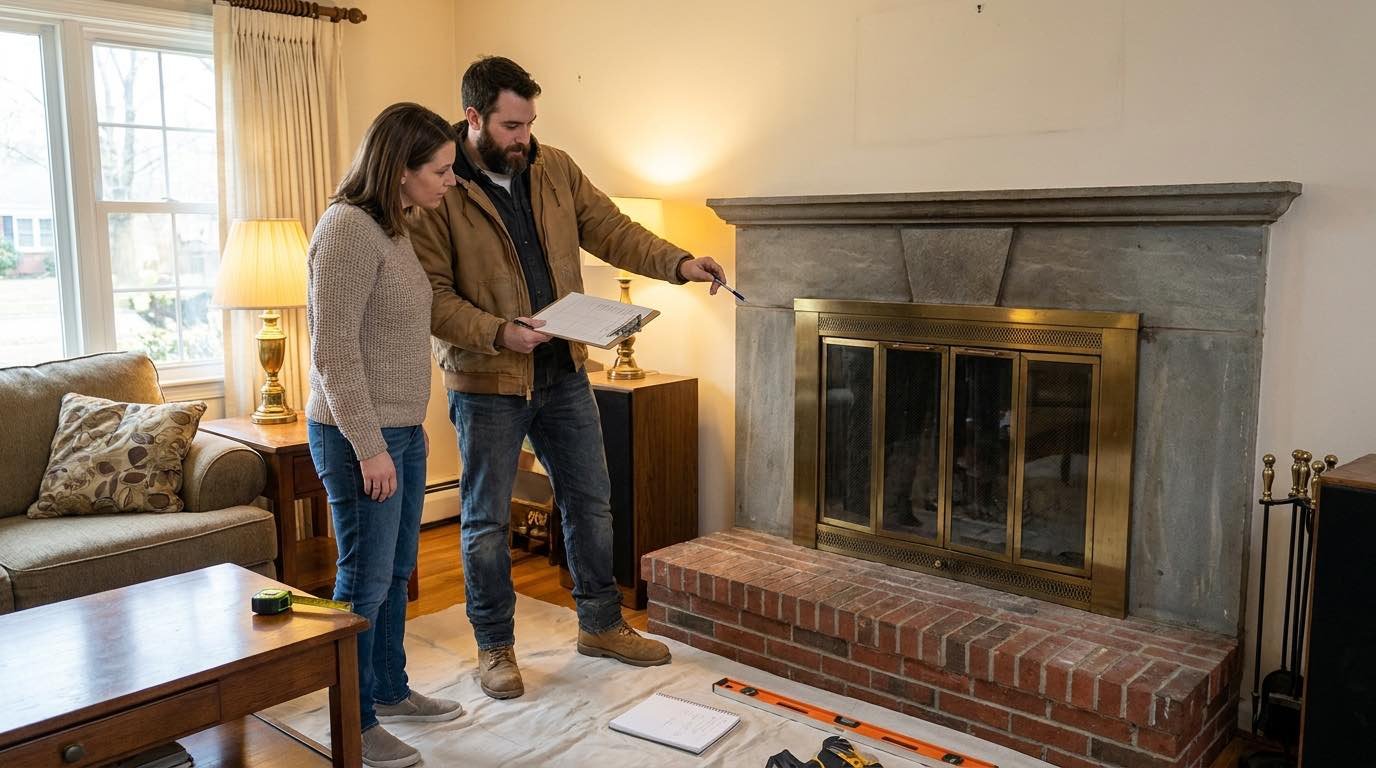
If you're staring at a tired, outdated, or broken fireplace, you've probably already asked yourself: how much does it actually cost to replace a fireplace? The honest answer is "it depends," but that's not very helpful when you're trying to plan a budget.
The cost to replace a fireplace can range from a simple insert swap for a couple thousand dollars to a full demolition-and-rebuild project that runs well into five figures. What you pay depends on the fireplace type, how much labor is involved, whether your chimney or venting needs work, the materials you choose, and whether permits or electrical/gas upgrades are required.
This guide breaks replacement costs down by fireplace type and project scope, so you can figure out what a realistic budget looks like for your home before you start calling contractors.
Fireplace replacement isn't a one-size-fits-all project. On one end, you might just be swapping out an old insert for a new one. On the other, you could be tearing out the entire fireplace, chimney, and surround down to the studs and starting fresh. That's why the price range for "fireplace replacement" is so wide.
Here's a general breakdown of what different replacement projects typically cost:
| Replacement project | Typical cost |
| Fireplace insert replacement | $1,500–$7,500 |
| Electric fireplace replacement | $1,200–$6,000 |
| Gas fireplace replacement | $3,000–$16,000 |
| Wood-burning fireplace replacement | $1,000–$8,000+ |
| Fireplace surround replacement | $600–$4,500 |
| Complete fireplace replacement | $2,000–$8,100 |
| Fireplace removal | $500–$2,500 |
| Chimney/venting work | $900–$15,000 |
Cost data methodology: Pricing ranges in this guide are compiled from published national cost data, including HomeGuide, Angi, and Homewyse cost reports, and are intended as planning estimates rather than quotes. Actual costs vary by location, fireplace type, project scope, labor rates, and site conditions.
Typical fireplace replacement: Most straightforward replacement projects, like swapping an insert or an electric unit, cost several thousand dollars. Complex projects involving masonry, chimney rebuilding, or major structural changes can exceed $10,000.
Your actual price will depend heavily on local labor rates, the condition of your existing chimney or venting, and how much of the surrounding structure needs to be touched. A contractor in a major metro area will typically charge more than one in a rural area, and older homes often carry surprise costs once walls or chimneys are opened up.
When you get a quote for fireplace replacement, it should spell out exactly what's covered. A complete, transparent estimate usually includes:
If a quote seems unusually low compared to others, check whether it's leaving out one of these steps. Missing line items are one of the most common reasons fireplace replacement projects go over budget.

The type of fireplace you're installing has the single biggest impact on your total cost. Here's what to expect for each major category.
Gas fireplace replacement typically costs $3,000 to $10,000, with complex projects involving new gas lines, venting changes, or premium units reaching $16,000 or more. The appliance itself can run from around $1,600 for a basic manual insert to $5,700 or more for a premium linear model with advanced controls.
Your final price depends on:
Direct-vent gas fireplaces pull combustion air from outside and vent exhaust outside, which makes them safer and more efficient, but the venting work can add cost if you're switching fireplace types. Vent-free units skip that step, which keeps installation simpler, though not every state allows them.
Wood-burning fireplace replacement tends to have the widest cost swing of any category, generally landing between $1,000 and $8,000 or more. The reason is simple: a traditional masonry fireplace and a prefabricated (factory-built) wood-burning fireplace are very different projects.
Replacing a prefabricated wood-burning unit is relatively contained, since it slides into an existing metal chase. Masonry fireplaces are a different story: if the firebox, flue, or chimney liner has deteriorated, replacement can involve significant demolition and rebuilding, which pushes costs much higher.
Before committing to a wood-burning replacement, have your chimney inspected. A damaged flue liner can turn what looked like a simple appliance swap into a much bigger structural project.
Electric fireplace replacement is usually the most budget-friendly option, typically ranging from $1,200 to $6,000 installed. Inserts and wall-mounted units cost less because they don't require venting, gas lines, or chimney work.
Costs vary based on:
Because electric fireplaces skip venting entirely, they're often the fastest and least disruptive replacement option. Custom-built electric fireplaces with framing and premium finishes can climb well past the basic range.
A fireplace insert is a self-contained appliance that fits inside your existing masonry firebox, turning an inefficient open fireplace into a more efficient, enclosed heat source. Replacing an existing insert generally costs $1,500 to $7,500, depending on fuel type.
Key considerations when replacing an insert:
Gas and wood inserts typically cost more to install than electric inserts because of the venting and gas-line work involved.
"Replace a fireplace" can mean very different things depending on what you're actually changing. Understanding the scope of your project helps you get accurate quotes and avoid paying for work you don't need.
This is the simplest and usually least expensive option. You keep the existing chimney, surround, and hearth, and only swap out the appliance itself. This route works well when your fireplace's structure is in good shape and you just want a more efficient or updated unit.
Surround replacement means updating the material around the firebox opening, such as:
This is a cosmetic project, not a functional one. You're not touching the fireplace appliance or venting, just changing how it looks, so make sure your contractor quote reflects that narrower scope.
A complete fireplace replacement is the most involved option. It typically includes:
If you're getting quotes, make sure everyone is bidding on the same scope of work, since "replacement" means something different to every contractor until it's spelled out.
Removal is worth discussing on its own because many homeowners planning a replacement will also need some level of demolition, and it's often priced separately from installation. Fireplace removal typically costs $500 to $2,500, depending on scope.
Removal projects can include:
Important distinction: replacing a fireplace is not the same as removing one. Many homeowners replace only the appliance while keeping the existing opening, surround, and chimney intact. If a contractor's quote includes full demolition and you only need an insert swap, ask why.

This deserves its own section because chimney work is one of the biggest cost variables in any fireplace project. A chimney inspection often reveals issues that aren't visible from inside the room, and those issues can significantly change your total budget.
Chimney-related costs to plan for include:
An old or damaged chimney can make replacement significantly more expensive than the appliance cost alone suggests. If your home is older or you haven't had the chimney inspected in several years, budget for the possibility of liner or masonry work before you finalize your fireplace choice.
Labor is a major piece of any fireplace replacement budget, and depending on the project, you may need more than one type of professional involved. Complex replacements often require:
What drives labor pricing:
Rather than focusing on a single hourly rate, think about how many trades your project realistically needs. A straightforward insert replacement might only need one installer for a day. A full chimney-to-hearth rebuild could involve a mason, an installer, and possibly an electrician or gas technician across several days.
Several variables combine to determine your final price. Here's what matters most.
Gas, electric, wood-burning, and pellet fireplaces all have different equipment costs and installation requirements, making type the single biggest cost driver.
Larger fireplaces and units with higher heat output (measured in BTUs) generally cost more, both for the appliance and for any venting sized to match.
Reusing a chimney or venting system that's already in good condition and compatible with the new fireplace can save you significantly.
Running a new gas line or upgrading an electrical circuit adds licensed-trade labor that isn't part of a simple appliance swap.
Surround material choice, from basic tile to natural stone, affects cost independently of the fireplace appliance itself.
Any bricklaying, repointing, or stonework adds skilled labor time and material costs, especially on older or damaged fireplaces.
Fireplaces that are hard to access, or that require tearing out existing structure, take more time and labor than a straightforward swap.
The same project can cost noticeably more in a high cost-of-living area than in a rural one.
Gas, electrical, and structural work often trigger permit and inspection requirements, adding both cost and time.
Some homeowners aren't just replacing a fireplace, they're switching fuel types entirely. This is common when an old wood-burning fireplace feels impractical, or when a gas fireplace needs to go all-electric.
Converting from wood to gas involves running a gas line, installing a gas fireplace or insert, updating venting to match code, and meeting local gas appliance requirements. This is one of the more involved conversions since it touches fuel supply, venting, and the appliance itself.
Converting to electric is usually simpler. It requires meeting electrical requirements for the new unit, closing off or capping the old flue if it's no longer needed, and installing an insert or built-in unit. Venting requirements are typically minimal or nonexistent, which keeps this conversion more contained.
This conversion involves disconnecting and capping the existing gas line, meeting electrical requirements for the new unit, installing the new fireplace, and finishing the surrounding area. Since electric units don't need venting, this can simplify the project compared to the original gas setup.
Not sure if your fireplace has reached the end of its useful life? These are the warning signs worth taking seriously:
If you're seeing one or two of these signs, a repair may still be enough. But if several apply at once, especially anything involving smoke, gas, or structural cracks, it's worth asking a professional whether repair, refacing, or full replacement makes more sense for your situation.
Not every fireplace problem calls for a full replacement. Here's how to think through your options.
| Option | Best for | Typical scope |
| Repair | Minor functional problems | Fix existing fireplace |
| Refacing | Cosmetic changes | Update appearance |
| Insert replacement | Aging insert | Replace appliance |
| Complete replacement | Major deterioration/outdated system | Replace fireplace |
| Full rebuild | Structural/masonry problems | Reconstruct fireplace |
Replacement generally makes more financial sense than repeated repairs when the fireplace is old enough that parts are hard to source, when repair costs start approaching a meaningful fraction of replacement cost, or when the unit is inefficient and driving up energy bills. If you're mostly unhappy with how your fireplace looks rather than how it functions, refacing is almost always the more cost-effective choice.
This decision often comes down to condition versus appearance: a fireplace that works fine but looks dated is a refacing candidate, while one that's inefficient, unsafe, or unreliable points toward replacement.

A new fireplace can make a home more appealing to buyers, but it's not a guaranteed dollar-for-dollar return. A few factors tend to matter most:
There's no reliable way to say a fireplace replacement will increase home value by a specific percentage. Return on investment depends on your property, your local market, and the quality of the installation. It's best to treat replacement primarily as an investment in your own comfort and safety, with resale appeal as a secondary benefit.
Fireplace replacement doesn't have to blow your budget. A few practical strategies can help keep costs down without cutting corners on safety.
One thing to avoid: don't try to save money by doing gas, electrical, chimney, or structural work yourself. These are safety-critical systems, and mistakes can lead to fire risk, carbon monoxide issues, or code violations that cost more to fix later.
A vague estimate is one of the biggest reasons fireplace replacement projects go over budget. Before you sign off on a quote, make sure it clearly breaks down:
Asking these questions upfront helps you compare quotes apples-to-apples and avoid surprise costs partway through the project.
The cost to replace a fireplace depends far more on scope than on any single price tag. A simple insert swap might run a couple thousand dollars, while a full fireplace-and-chimney rebuild can climb into five figures. The best way to budget accurately is to identify exactly what you're replacing, whether it's just the appliance, the surround, or the entire system, and get detailed, itemized estimates from a few qualified contractors before committing.
Whether you're upgrading an aging wood-burning fireplace, switching fuel types, or simply want a more efficient unit, understanding these cost factors upfront will help you plan a realistic budget and avoid surprises once the work begins.
A simple insert replacement can often be completed in a single day, especially if no venting or gas line changes are needed. Larger projects involving demolition, masonry work, or a full rebuild can take anywhere from several days to a couple of weeks. Delays are usually caused by permit approval times, hidden chimney damage discovered mid-project, or backordered fireplace units.
Permit requirements vary by location and depend on the type of project. Gas line work, electrical upgrades, structural changes, and chimney modifications are more likely to trigger permit requirements than a straightforward appliance swap. Always check with your local building department and confirm with your contractor whether permits are included in your quote.
It might, but that depends on several factors: the chimney's condition, whether the liner is compatible with the new fireplace's fuel type, the venting method required, the appliance manufacturer's specifications, and local building code. A chimney inspection before you buy a new unit is the best way to confirm compatibility.
Lifespan varies by type. Gas fireplace appliances typically last 15 to 20 years with regular maintenance. Electric fireplaces often last a similar span, though components like LED flame effects may need replacement sooner. Fireplace inserts generally last 10 to 20 years depending on fuel type and usage. Masonry fireplace structures themselves can last decades or longer, but components like liners, dampers, and fireboxes wear out well before the structure does.
Sometimes, but it depends on the dimensions and clearance requirements of the new unit. Not every replacement fireplace is a direct drop-in match for your existing opening. If the new unit's size, venting location, or clearance-to-combustible requirements differ from your old one, some surround modification may be unavoidable even if that wasn't your original plan.
Olivia Bennett has over 12 years of experience helping homeowners transform their spaces with practical, thoughtful solutions. She guides projects of all scales, blending creativity with efficiency and attention to detail to achieve lasting results. Olivia holds a degree in Interior Architecture from the University of Michigan and draws inspiration from global design trends and architecture, ensuring every space is both functional and beautifully considered.






No Comments