

How to Choose the Perfect Window Coverings for Your Home
Window coverings are more than just decorative features. They influence


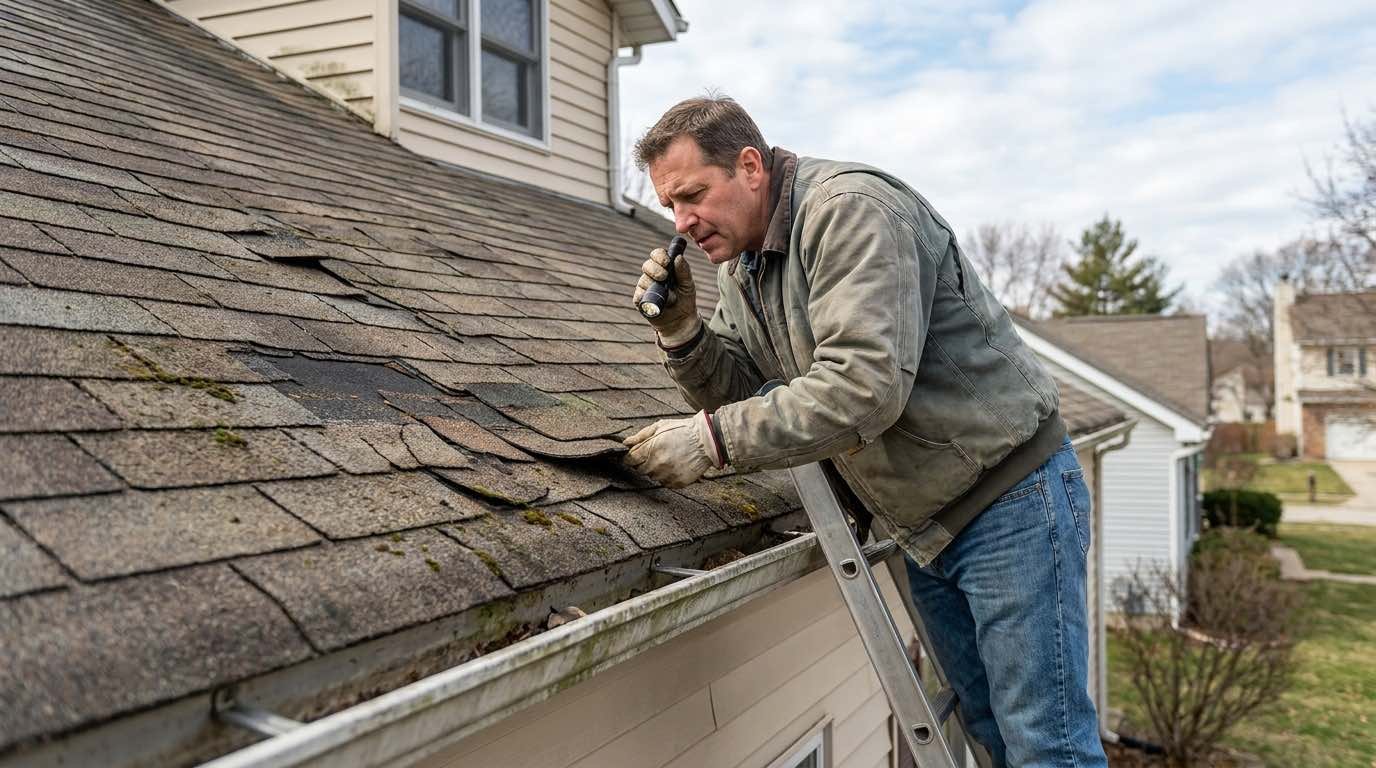
Most roof problems don't start with a dramatic leak in your living room. They start small — a curled shingle here, a few granules in the gutter there — and build up over years until the damage is too widespread to ignore. By the time water is dripping through your ceiling, the roof has usually been sending warning signs for a while.
So how do you know if you need a new roof, or if a repair will do the job? That's exactly what this guide covers. We'll walk through the clearest signs you need a new roof, explain what each one means, and help you figure out whether it's time for a repair or a full replacement.
One thing to keep in mind before we get started: a single minor issue doesn't automatically mean you need a whole new roof. Most roofs show one or two small problems at some point without needing replacement. It's when several signs show up together, or when the damage is spread across a large area, that replacement becomes the smarter choice.
Quick Answer: Signs You May Need a New Roof
You may need a new roof if you notice several of these problems together:
One isolated problem doesn't necessarily mean you need to replace the whole roof. A professional inspection is the most reliable way to know whether repair or replacement makes more sense for your situation.
Lifespan depends a lot on the type of asphalt shingle installed. Basic 3-tab shingles are generally rated for around 20 years, standard architectural (dimensional) shingles are often rated for 25 to 30 years, and premium or "designer" shingles can be rated for 30 to 50 years, depending on the manufacturer. These are manufacturer-rated lifespans under ideal conditions — actual performance can vary based on climate, ventilation, and installation quality.
Age by itself isn't always a deal-breaker. A roof that's been well maintained, with prompt repairs over the years, can sometimes hold up a little longer than its rated lifespan suggests.
One thing that can shorten a roof's life is having multiple layers of shingles stacked on top of each other. If your roof was re-shingled over an old layer instead of being torn off first, it tends to trap heat and moisture, which speeds up wear. If your roof is in this age range and has more than one layer, it's a good idea to have it checked out.
Shingles change shape as they age and lose their protective oils. Curling happens when the edges lift up or the middle starts to look bumpy. Buckling shows up as wrinkles or ripples running across the roof, usually in a line. Cracking is exactly what it sounds like — visible splits in the shingle surface.
Each of these tells you something different. Curling often means the shingles are drying out and losing flexibility. Buckling can point to poor ventilation or moisture trapped underneath. Cracking usually shows up after years of sun exposure and temperature swings, though it can also appear earlier if the shingles were a lower-quality product or installed incorrectly.
If you only see this on a few shingles in one spot, a repair can usually fix it. But when curling, buckling, or cracking is spread across most of the roof, it's a sign the whole shingle layer is reaching the end of its usable life.
After a windy storm, it's normal to check your yard for stray shingles. Finding one or two isn't usually a big deal — that can happen even on a fairly new roof. But if you're regularly finding shingle pieces, granules, or torn fragments scattered around your property, that's a bigger warning sign.
Missing shingles leave the roof deck exposed to rain and sun, which can lead to water damage fairly quickly. If the loss is limited to a small section, a roofer can often patch it with matching shingles.
Widespread shingle loss is a different story. When shingles are falling apart in multiple areas, it usually means the whole batch has aged out and is no longer holding together the way it should.

Those small, sand-like granules on the surface of your shingles aren't just decoration. They protect the shingle from UV rays and help it shed water. Over time, it's normal for a shingle to lose a small number of granules — that's just part of the aging process.
The difference is in the amount. A light dusting of granules in your gutters once in a while is nothing to worry about. Handfuls of granules, especially after a rainstorm, is a sign your shingles are breaking down faster than they should.
When granule loss is heavy, the shingle underneath is left more exposed to sun and moisture, which speeds up deterioration. Heavy, consistent granule buildup is one of the clearer signs your roof is nearing the end of its life.
A sagging roof is one of the more serious signs on this list. From the ground, look along the roofline — it should be straight and even. If you notice dips, sags, or areas that look like they're bowing downward, that's not something to wait on.
Sagging often points to a problem with the roof decking, which is the layer of wood underneath the shingles. Moisture that's been trapped for a long time can rot the decking, weakening its ability to support the roof's weight.
Unlike a lot of the cosmetic issues on this list, sagging is a structural concern. It usually means the roof needs professional attention right away, and in many cases, replacement is the safer option compared to a repair.
Head up to your attic on a bright day and turn off the lights. If you can see beams of daylight coming through the roof boards, that means there are gaps or holes somewhere in your roofing system.
It's worth knowing the difference between this and normal attic ventilation. Some attics have vents built in on purpose to let air flow through, and that's expected and healthy for the roof. What you're looking for is light coming through spots that shouldn't have any opening at all, like through the actual roof decking.
Gaps like this let in more than just light — they let in moisture, pests, and drafts too. Over time, that moisture can lead to rot and weaken the wood framing, which is why unexplained daylight in the attic is worth having checked out.
Water stains on your ceiling or walls are one of the most obvious signs something's wrong. They usually show up as yellow or brownish rings, and they tend to get bigger over time if the source isn't fixed.
Other clues include damp or discolored insulation in the attic, and a musty smell that lingers even after cleaning. These are all signs that moisture is getting in somewhere it shouldn't.
An occasional single leak, especially after a bad storm, can often be traced to one specific spot and repaired. But leaks that keep coming back, especially in different spots around the house, usually mean the roofing material itself is aging out and can no longer keep water out reliably.
Flashing is the metal strips installed around chimneys, vents, skylights, and the valleys where two roof slopes meet. Its job is to seal those tricky spots where water is most likely to sneak in.
Over time, flashing can rust, crack, or come loose from the surrounding shingles. Gaps in flashing are a common cause of leaks, even on roofs that otherwise look fine.
The good news is that flashing problems are often fixable without replacing the entire roof. If the shingles around it are still in decent shape, a roofer can usually just repair or replace the flashing itself. It only becomes part of a bigger replacement conversation if it's paired with other issues on this list.

Roofs in shady or damp climates often develop some algae or moss over time. It's worth knowing the difference between the two. Algae usually shows up as dark streaks and is mostly a cosmetic issue — it doesn't damage the shingles directly, though it can make the roof look older than it is.
Moss is more concerning. It grows in thicker patches and holds moisture against the shingle surface, which can work its way underneath and cause the material to break down faster.
If moss or rot is limited to a small, shaded patch, cleaning and some maintenance can often handle it. But when growth is spreading across large sections of the roof, that trapped moisture has likely already started damaging the layers underneath, which points toward a bigger repair or replacement need.
The roof deck is the layer of wood sheathing underneath your shingles, and it's what actually holds everything together. When shingles go missing or the underlayment fails in a spot, you may be able to see the bare, dark-colored decking or felt paper underneath — that's a sign moisture has direct access to the wood.
A roofer walking the roof may also notice areas that feel soft, spongy, or slightly bouncy underfoot. That's usually a sign the decking has absorbed water and started to break down, even if nothing looks obviously wrong from the ground. You may also notice delamination, where the layers of plywood decking start to separate and curl at the edges near the eaves.
Because decking issues aren't always visible without getting on the roof, this is one of the signs best confirmed by a professional. A few soft boards near a vent or chimney can sometimes be repaired in place. Widespread soft or exposed decking, especially combined with an aging shingle layer, usually points toward full replacement.
Severe weather can age a roof overnight. Hail impacts leave small dents or bruises on shingles that may not be obvious from the ground but weaken the material underneath. Strong winds can lift, crack, or tear shingles loose. Fallen branches can puncture or scrape away entire sections.
After a major storm, it's worth doing a visual check, or better yet, having a professional take a look, especially if your area experienced hail or high winds.
Isolated storm damage, like a few shingles torn off from a strong gust, can usually be repaired. But when the damage is spread across the whole roof, insurance adjusters and roofers often recommend full replacement instead of patching dozens of separate spots, since repeated repairs quickly become more expensive and less reliable than starting fresh.
If you want the short answer before the full checklist, it comes down to this:
Use this quick checklist to get a general sense of where your roof stands:
| Factor | Leans Toward Repair | Leans Toward Replacement |
| Age | Under 15 years | Near or past rated lifespan |
| Extent of damage | Isolated to one area | Spread across the roof |
| Number of repairs | First or second repair | Frequent, repeated repairs |
| Structural condition | Solid decking, no sagging | Sagging, soft spots, or exposed decking |
| Remaining expected lifespan | Several years left | Little to no lifespan remaining |
If most of your answers land in the replacement column, it's a strong sign that a new roof will save you more money and stress than continuing to patch the old one.
You don't need to climb onto your roof to catch most of the warning signs above. Here's a simple breakdown of what you can reasonably check yourself, and what's better left to a professional.
You Can Check From the Ground
You Can Check From the Attic
Don't Do Yourself
If anything you spot from the ground or attic matches one of the signs in this guide, that's the point to call a roofing professional rather than getting on the roof yourself.
Different roofing materials come with very different lifespans, and actual performance always depends on the specific product, installation quality, local climate, and how well the roof has been maintained. The ranges below reflect typical manufacturer-rated lifespans, not guarantees.
Asphalt shingles remain the most common roofing material in the U.S., and their lifespan depends heavily on the grade installed. Industry service-life data generally points to around 15 to 20 years for basic 3-tab shingles, roughly 20 to 30 years for architectural (dimensional) shingles, and up to around 40 to 50 years for premium or "luxury" shingle lines, according to roofing industry sources including the National Roofing Contractors Association (NRCA) and major shingle manufacturers. Real-world lifespan within each grade can still vary by 10 years or more depending on attic ventilation, climate, roof slope, and installation quality.
Metal roofs are known for their durability, with typical lifespans often cited in the range of 40 to 70 years depending on the metal type, coating, and gauge, according to industry and cost-guide sources like Angi. They also tend to hold up better against wind, fire, and heavy snow than asphalt, though performance still varies by manufacturer, installation quality, and climate.
Wood roofing typically lasts around 30 to 50 years with proper maintenance, per industry cost and lifespan data. However, they need more upkeep than other materials, since they're more vulnerable to moisture, rot, and insect damage in humid climates, which can shorten that range considerably without regular care.
These roofs are built for the long haul, with lifespan estimates commonly ranging from 50 to 100 years depending on the source and tile quality. The tile material itself is very durable, though individual tiles can crack from impact and need occasional replacement, and the underlayment beneath the tiles typically needs replacing well before the tiles do.
Slate is one of the longest-lasting roofing materials available. Cost and lifespan guides commonly place natural slate in the 75-to-100-year range, with some sources citing well over 100 years for high-grade slate installed correctly. It comes at a higher upfront cost, but the lifespan often makes up for it over time.
Putting off a needed roof replacement doesn't just delay the inevitable — it usually makes the problem worse and more expensive over time. Here's what tends to happen the longer a failing roof is left unaddressed:

Roof replacement costs vary quite a bit depending on your home's size, roof pitch, material, and location, but a few 2026 cost guides give a useful starting point for budgeting.
According to home-services site Angi, the average roof replacement in 2026 costs around $9,500, with most homeowners paying somewhere between $5,800 and $16,000, though full projects can range from about $5,800 up to $46,000 depending on size and material. NerdWallet cites a similar national average near $9,500. Other cost guides, such as Fixr and HomeGuide, put the typical range closer to $7,500–$16,000 for a standard asphalt shingle roof, while premium materials push well beyond that.
Cost per roofing square (100 sq. ft.), by material — based on multiple 2026 cost guides (Angi, HomeGuide, Fixr):
| Material | Approx. Cost Per Sq. Ft. Installed | Typical Lifespan |
| Asphalt (3-tab) | $3 – $5 | 15–20 years |
| Asphalt (architectural) | $4 – $6 | 20–30 years |
| Wood shingles/shakes | $6 – $15 | 30–50 years |
| Metal | $5 – $16 | 40–70 years |
| Concrete or clay tile | $9 – $20+ | 50–100 years |
| Slate | $10 – $30 | 75–100+ years |
For roof size specifically, cost guides commonly cite something like $4,000–$11,000 for a 1,000-square-foot roof, scaling up to roughly $12,000–$33,000 for a 3,000-square-foot roof, with the wide range reflecting material choice as much as size.
Because pricing varies significantly by region, contractor, and roof complexity, it's best to treat these as general benchmarks rather than exact figures, and to get a few local written quotes before budgeting for your specific home.
Factors that affect price include:
For a more accurate number, a local roofing contractor can provide a written estimate based on an in-person measurement and inspection.
In some cases, yes — but coverage depends heavily on the cause of the damage, your specific policy, and how your insurer classifies the event. It's important not to assume a claim will automatically be approved just because damage occurred.
Wear and tear vs. covered peril is the central distinction insurers use. Most policies are written to cover sudden, accidental damage from a specific event, often called a "covered peril," such as a storm, fire, or falling tree. According to guidance summarized by outlets like U.S. News and the Insurance Information Institute (Triple-I), damage that develops gradually from age or lack of maintenance generally isn't covered under a standard policy, even if it eventually causes a leak.
Storm and hail damage is one of the more common reasons roof claims get approved. Wind and hail are consistently reported as among the most frequent homeowners insurance claims nationally, according to Triple-I data cited by several insurance and roofing sources. Even so, approval isn't guaranteed — the insurer will usually send an adjuster to confirm the cause and extent of the damage meet their criteria before approving repair or replacement.
Normal aging and wear is usually excluded. Multiple insurance sources, including U.S. News and Policygenius, note that if a roof fails simply because it's old or was poorly maintained, standard policies typically treat that as the homeowner's responsibility rather than something the policy will pay to replace.
Deductibles apply to roofing claims just like any other insurance claim, and some policies carry a separate, higher deductible specifically for wind or hail damage. That cost comes out of your pocket before insurance pays anything.
Policy exclusions and age-related limitations are worth checking closely. Some insurers reduce coverage or switch a roof to Actual Cash Value once it passes a certain age, even if the rest of the policy is Replacement Cost Value.
ACV vs. RCV is another important distinction. Actual Cash Value (ACV) policies pay out based on your roof's current value after depreciation, while Replacement Cost Value (RCV) policies cover the cost to replace the roof with new materials, regardless of its age. RCV policies typically result in a larger payout.
Because policies vary so much, it's worth checking your individual policy or speaking with your insurance agent before assuming a claim will be approved, and before scheduling replacement work based on expected coverage.
There are a few key moments when a professional inspection makes the most sense:
What a roof inspection actually checks:
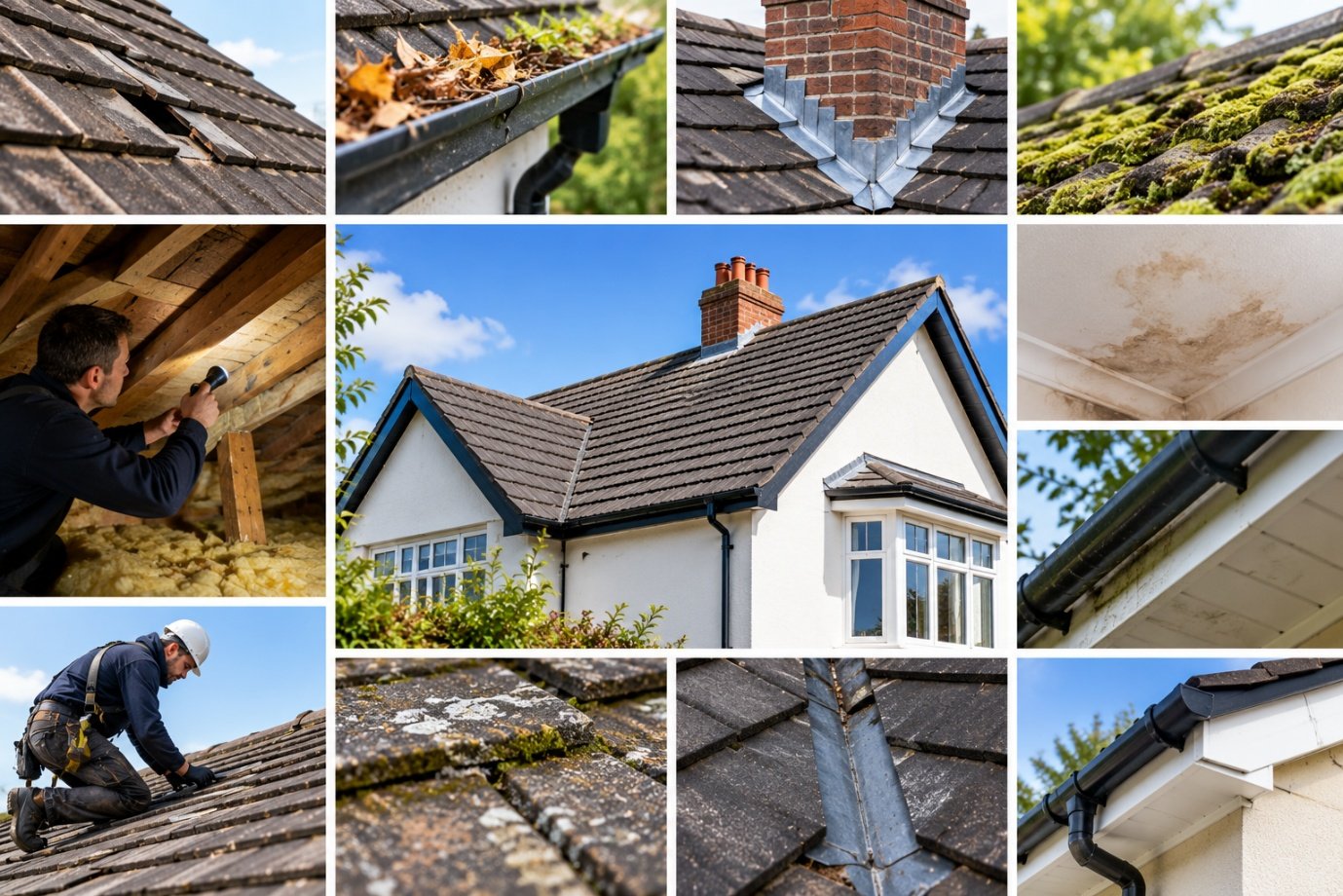
A thorough inspection typically covers more ground than a quick look from the driveway. Roofers generally check:
A detailed inspection like this can catch problems you might miss from the ground and give you a realistic idea of how much life your roof has left before you need a new roof, along with a clearer sense of whether repair or replacement is the better next step.
The strongest signs you need a new roof rarely show up alone. Age combined with widespread shingle damage, recurring leaks, or sagging areas tells a much clearer story than any single issue on its own. One curled shingle or one small leak usually just needs a repair — but when several of these signs stack up together, replacement becomes the more practical and cost-effective choice.
If you're still not sure where your roof stands, the safest next step is a professional inspection. A trained eye can catch problems you might miss from the ground and give you a realistic idea of how much life your roof has left before you need a new roof.
Look at the roof as a whole rather than focusing on just one problem. If your roof is nearing the end of its expected lifespan and shows several signs of damage at once, such as curling shingles, granule loss, and occasional leaks, that combination is a stronger signal than any single issue by itself.
In general, damage that's limited to one area of the roof, involves only a few shingles, or comes from a single traceable source usually points to a repair. Signs pointing to replacement include damage spread across most of the roof, an aging roof combined with multiple problems at once, recurring leaks in different locations, and any sign of structural issues like sagging or exposed decking.
This depends entirely on the material. Asphalt shingle roofs are generally replaced every 20 to 30 years depending on the shingle type, while metal, tile, and slate roofs can often go 40 years or longer before replacement is needed.
This varies by the type and severity of damage. Minor cosmetic issues can often wait for scheduling, but sagging, active leaks, or exposed and soft decking should be addressed quickly to avoid more expensive structural damage.
It depends on the cause of the damage and the specific terms of your policy. Sudden events like storms or hail are more commonly covered, while damage from normal aging typically isn't. Checking your specific policy details, including any age-related limitations, is the best way to know what's actually included.
Olivia Bennett has over 12 years of experience helping homeowners transform their spaces with practical, thoughtful solutions. She guides projects of all scales, blending creativity with efficiency and attention to detail to achieve lasting results. Olivia holds a degree in Interior Architecture from the University of Michigan and draws inspiration from global design trends and architecture, ensuring every space is both functional and beautifully considered.






No Comments