






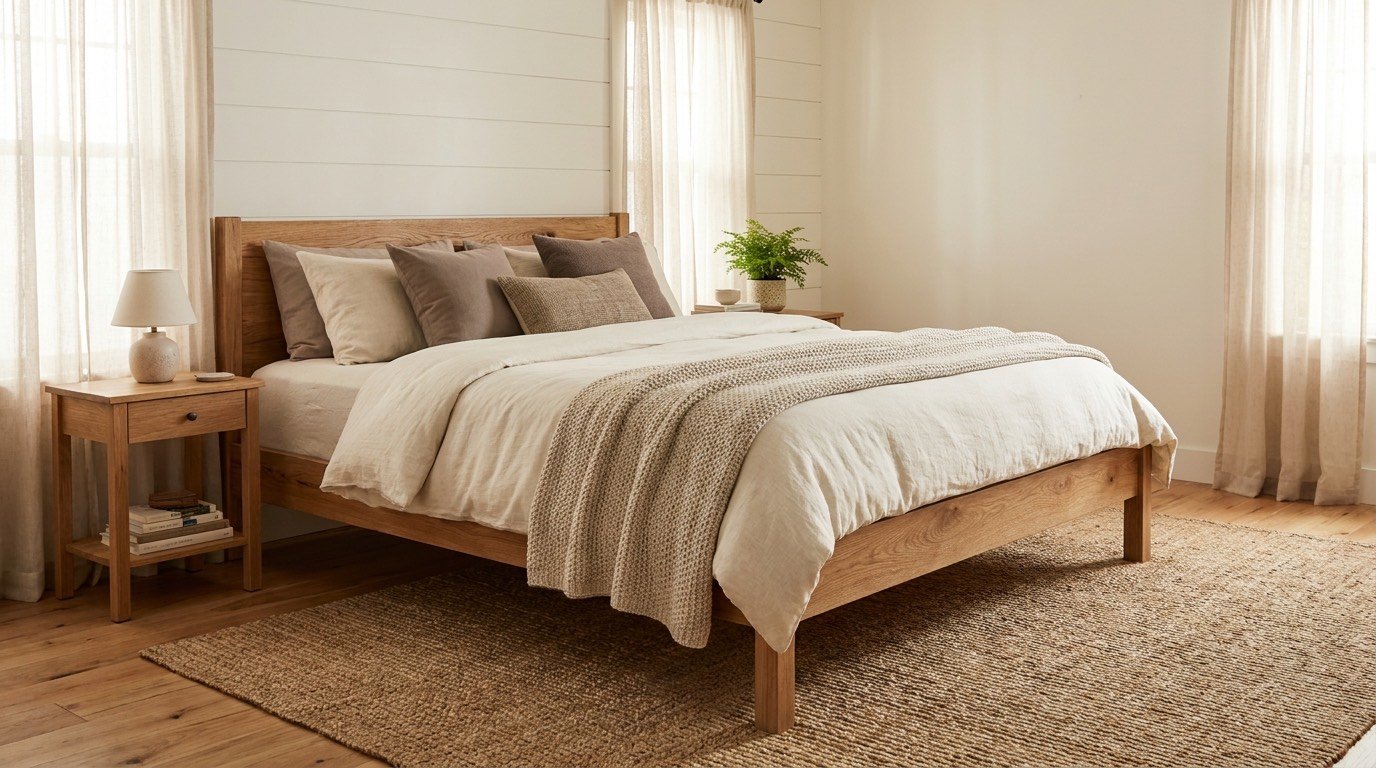
Benjamin Moore Essex Green is a very dark green that sits right on the edge of black. Its color code is HC-188, and it comes from the brand's Historical Collection.
The shade feels classic, yet it also works in modern and transitional homes. You'll see this deep forest green on walls, cabinets, built-ins, front doors, and exterior details.
This guide covers the color's specs, how lighting changes it, and which colors go well beside it. You will also find room-by-room ideas and a close comparison with other dark green paint shades, so you can decide if it suits your home.
What Color Is Benjamin Moore Essex Green HC-188?
Benjamin Moore Essex Green HC-188 is a deep, nearly black green from the Historical Collection. It is far darker than a medium forest green. It also lacks the bright, jewel-like punch of an emerald green.
The brand's own description calls it nearly black and links it to old estates covered in ivy. That fits the mood well: rich, dramatic, traditional, and refined. It makes a room feel grounded and a little moody.
In dim conditions, Essex Green can look almost black. In brighter light, more of the green shows. That range lets it suit older homes with classic woodwork and newer spaces with clean lines.
| Color detail | Information |
| Paint name | Essex Green |
| Color code | HC-188 |
| Brand | Benjamin Moore |
| Collection | Historical Collection |
| Color family | Dark green |
| LRV | 5.64 |
LRV stands for light reflectance value. It measures how much light a color reflects, and lower numbers mean darker colors.
Essex Green LRV and Color Specifications
Essex Green LRV is 5.64 on Benjamin Moore's official HC-188 page. On a scale where 0 is pure black and 100 is pure white, that is very low. Only a small share of light bounces back into the room.
On a large wall, this means the color can feel heavy, especially with limited daylight. A sunny room will show more of the green.
Online swatches, RGB values, and hex codes are only approximations. They will not match the paint exactly. The color is also listed as PM-11, but HC-188 is the main code to use.
| Specification | Detail |
| Main code | HC-188 |
| Official LRV | 5.64 |
| Also listed as | PM-11 |
What Undertones Does Essex Green Have?
Essex Green undertones are hard to pin down, because the color is so dark. At first glance you see a deep green with near-black depth. Naming a clear blue, yellow, or gray undertone would be guesswork.
What you can count on is that surroundings change the impression. Next to cool colors, it may look cooler. Next to warm tones, it can look warmer or more neutral.
Natural wood, warm metals, and creamy whites all pull it in different directions. A cool white may make the green look crisper. A creamy white can make it feel softer and more settled.
How Does Essex Green Look in Different Lighting?
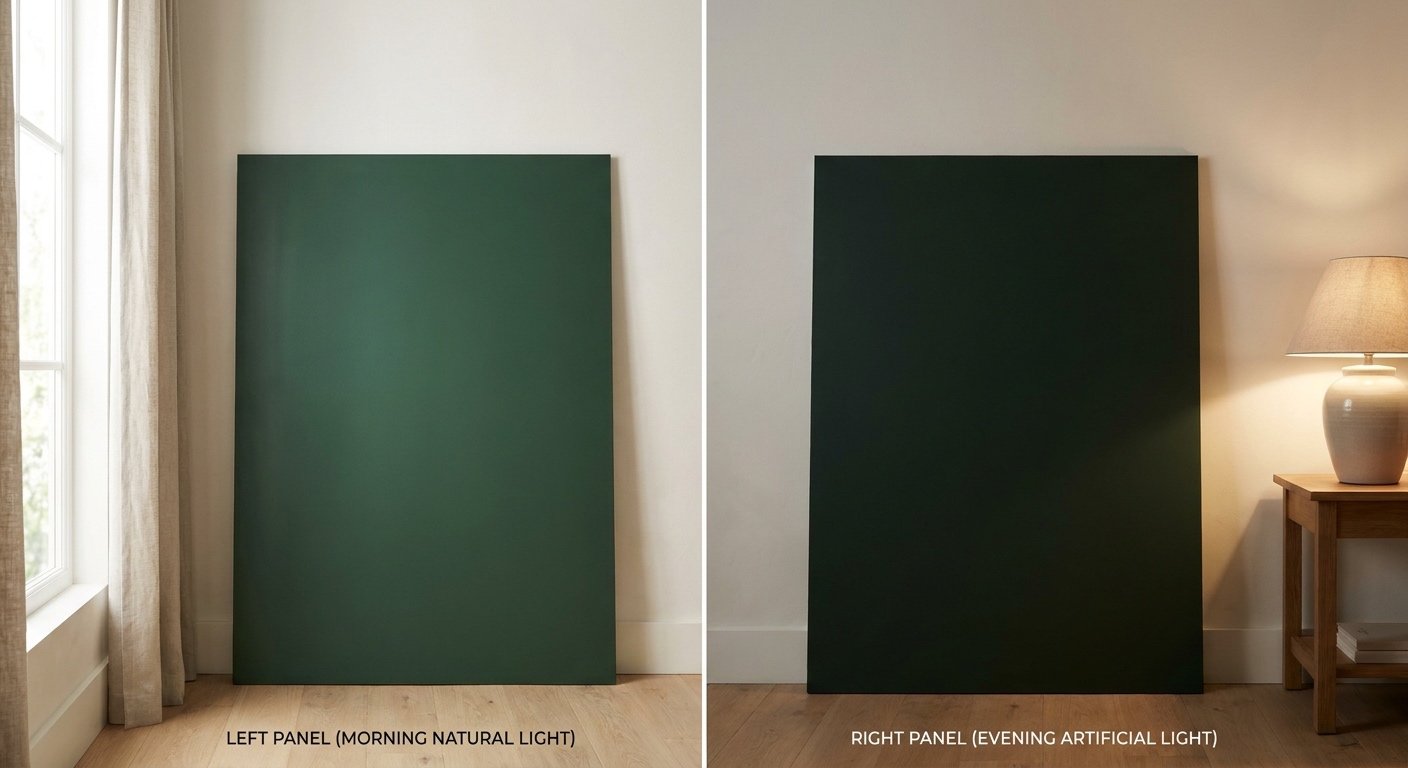
Benjamin Moore Essex Green changes a lot from one room to the next. Natural light, artificial light, and nearby surfaces all play a part. Because the color is so deep, even small shifts in light can change how it reads.
| Lighting condition | What to expect |
| Bright natural light | The green character becomes more visible, and the color looks less like black. |
| Low natural light | Little light bounces back, so the color may look nearly black. |
| Warm or cool artificial light | Warm bulbs can soften the green, while cool bulbs can make it look crisper. Nearby colors also shift the look. |
Evening is when the color often looks darkest. Once the sun goes down, a room lit only by lamps can make Essex Green look close to black.
Surfaces matter too. A white ceiling, a pale floor, or a large window can add light and bring out the green. Dark floors and heavy curtains can do the opposite.
Because of all this, always test a sample in the actual room before you paint. A swatch seen in a store will not tell you how the color behaves in your home.
Where to Use Benjamin Moore Essex Green in Your Home
Benjamin Moore Essex Green behaves differently on a large wall than on a door or a set of shelves. On big surfaces it feels bold and wraps the room. On smaller details it adds depth without taking over.
Room size, available light, and nearby finishes all affect the choice. Dark paint will not make every room look larger or smaller, so judge each space on its own. Here are the most useful ways to use it.
Essex Green on Walls and Accent Walls
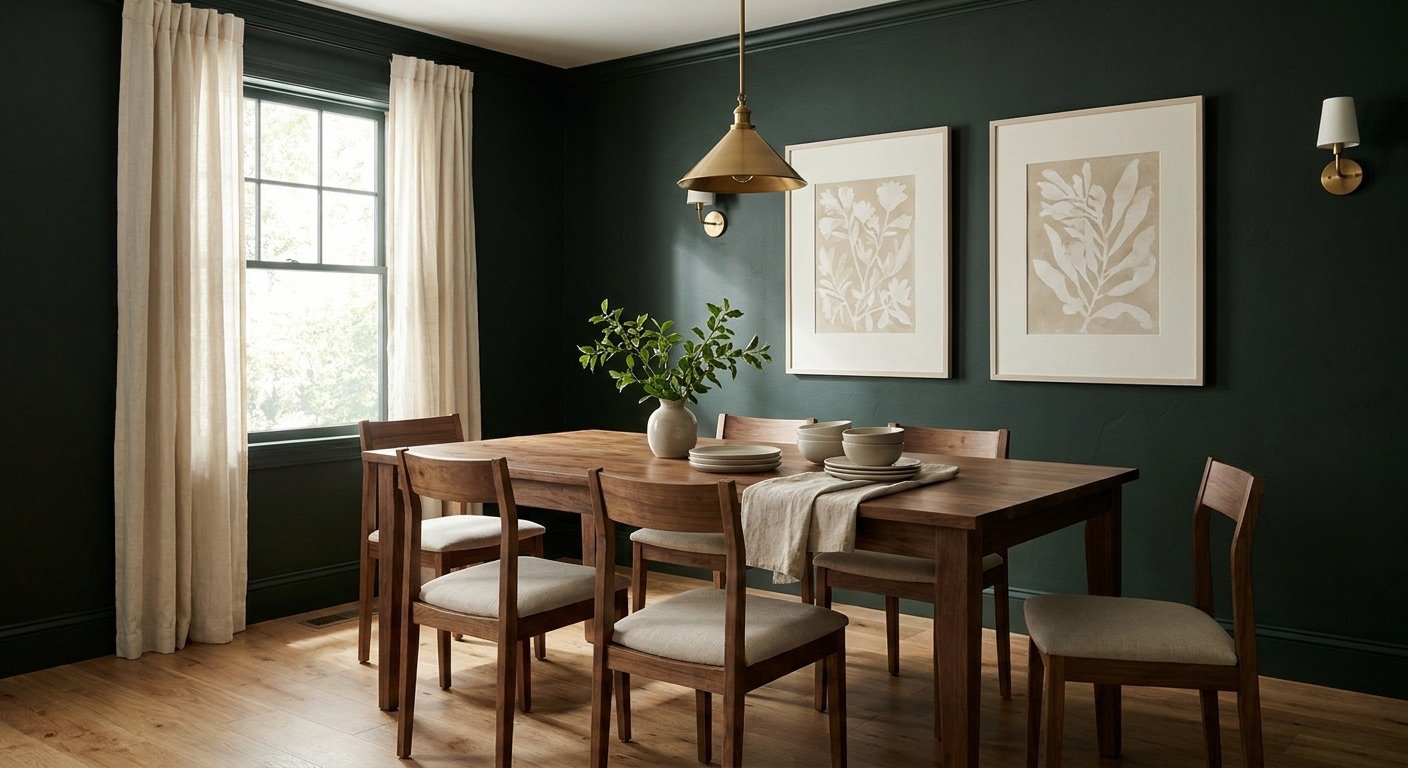
Essex Green walls create a cozy, enclosed mood. You can paint a whole room for full drama, or choose one accent wall for a softer approach. Trim color, flooring, window placement, and daylight all shape the final look.
Good rooms to try include:
- Studies and home offices
- Dining rooms
- Powder rooms
To keep the room from feeling heavy, add artwork with light backgrounds, pale textiles, and warm wood finishes. These give the eye places to rest.
Essex Green Kitchen Cabinets and Built-Ins
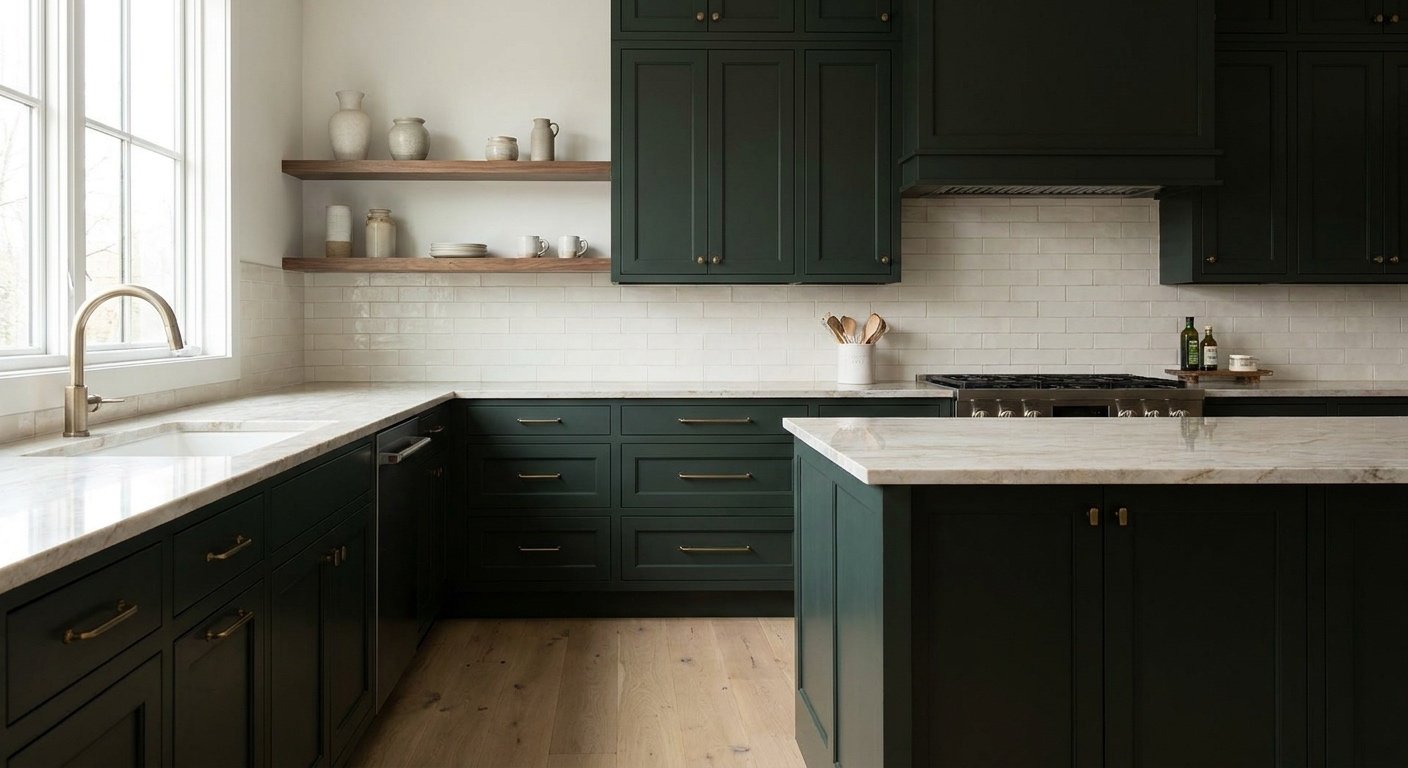
Essex Green cabinets can give a kitchen a rich, grounded look. The color also suits bathroom vanities, bookcases, and built-in shelving. Countertops, backsplash, flooring, and hardware all affect the palette, so plan them together.
View your cabinet sample next to the actual countertop and flooring before you commit. Colors can look quite different side by side than they do alone.
Good companions include:
- Warm wood tones
- Natural stone
- Lighter surfaces for contrast
- Brass or other warm-toned hardware
Essex Green on Front Doors and Exterior Details
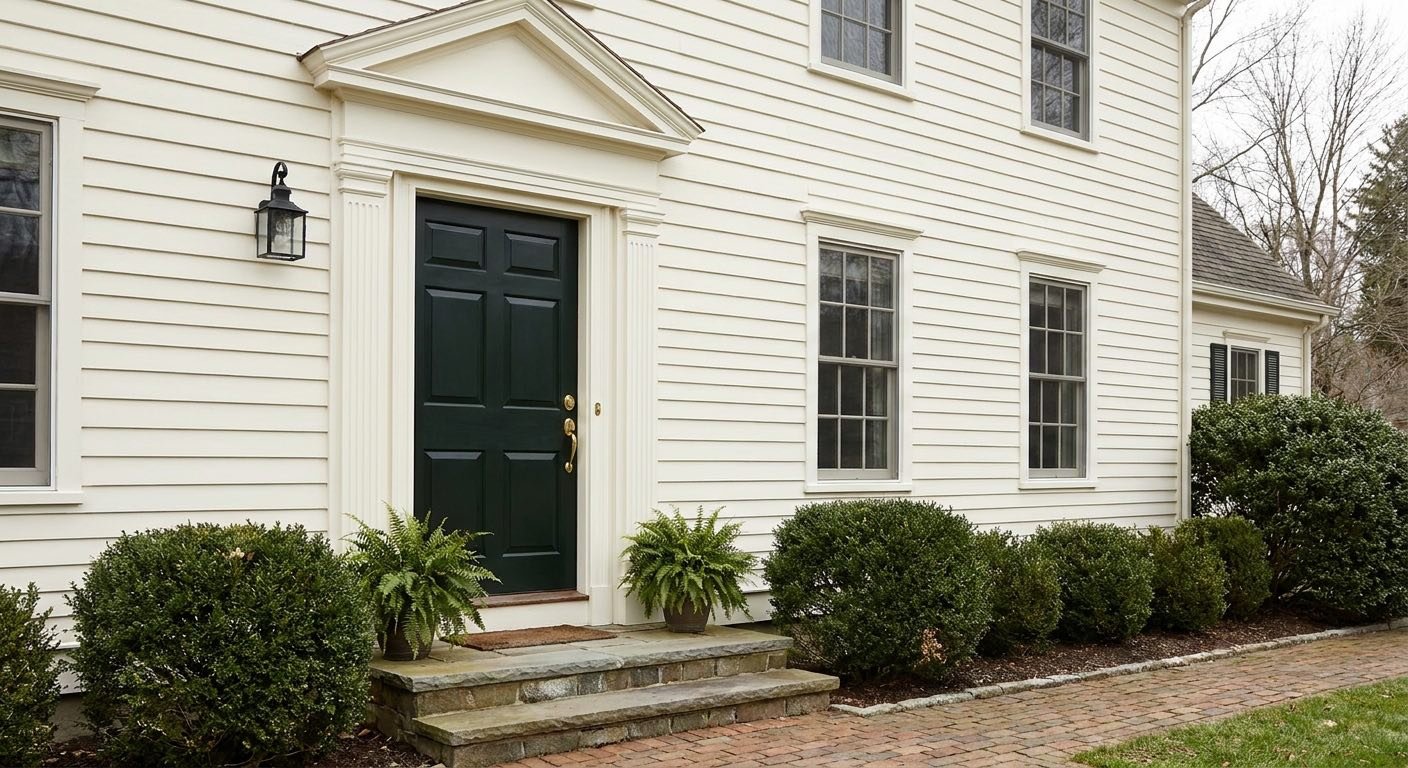
An Essex Green front door can look classic against white, cream, brick, or natural stone. The same goes for shutters, railings, and selected trim pieces. Small doses of dark green often look sharp on the outside of a home.
For exterior use, think about sun exposure, the surface material, and the right product line. Ask your paint retailer which product suits your project. Essex Green will not be the right pick for every home or every climate.
What Colors Coordinate With Benjamin Moore Essex Green?
Essex Green coordinating colors fall into three groups: light neutrals, warm neutrals, and other deep shades. Light neutrals give clear contrast. Warm neutrals feel softer and more traditional. Deep shades make a moodier, more layered palette.
Four of the colors below appear on Benjamin Moore's Essex Green page as expert-picked pairings. White Dove and Pale Oak are practical decorating suggestions, not official pairings. Use the list to find colors that go with Essex Green, then test each one beside the paint.
| Color | How to use it with Essex Green | Source |
| Benjamin Moore Simply White OC-117 | Crisp contrast for trim and cabinetry | Benjamin Moore pairing |
| Benjamin Moore White Dove OC-17 | Softer white for a less stark contrast | Decorating suggestion |
| Benjamin Moore Pale Oak OC-20 | Light neutral for walls beside dark cabinetry | Decorating suggestion |
| Benjamin Moore Monterey White HC-27 | Warm, understated companion | Benjamin Moore pairing |
| Benjamin Moore Powell Buff HC-35 | Traditional warm neutral | Benjamin Moore pairing |
| Benjamin Moore Overcast OC-43 | Muted contrast for a more subdued palette | Benjamin Moore pairing |
Always place the samples together in the room. Colors shift when they sit next to each other.
Best White and Neutral Trim Colors
Essex Green trim colors depend on the mood you want. Crisp white gives sharp contrast, while softer whites feel warmer and gentler.
| Trim approach | Example | Works best in |
| Crisp white | Simply White OC-117 | Modern kitchens, clean-lined rooms |
| Softer white | White Dove OC-17 | Traditional rooms, cozy spaces |
Essex Green vs. Other Dark Green Paint Colors
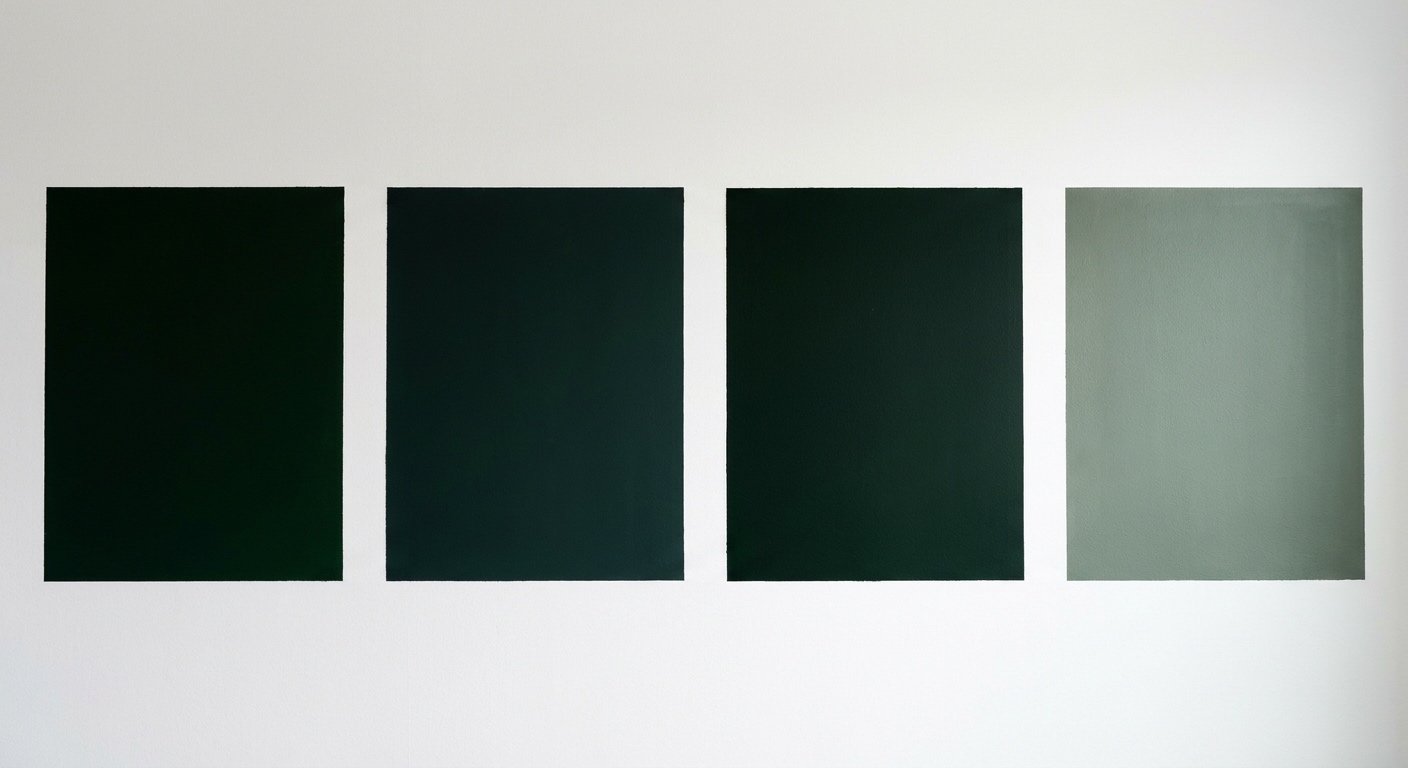
Several deep greens look alike on a screen but act differently on a wall. Essex Green vs. its closest neighbors comes down to depth, hue, and where you plan to use the color. None is better in every home, so check each paint's official specs and view real samples.
| Paint color | What to compare |
| Benjamin Moore Salamander 2050-10 | Overall depth and the way it reads in low light |
| Benjamin Moore Black Forest Green HC-187 | Near-black appearance and traditional applications |
| Sherwin-Williams Pewter Green SW 6208 | Softer, more muted appearance compared with Essex Green |
Essex Green vs. Salamander is close on depth. Their LRVs are nearly the same (5.64 and 5.72), so both read very dark in low light. The difference is hue. Benjamin Moore describes Salamander as a mix of black, blue, and green, and that blue can show as a cooler cast in some light.
Black Forest Green is the pair most likely to confuse you. Its LRV is 4.85, a touch darker than Essex Green. Both are nearly black in dim rooms, and both come from the Historical Collection, which is why they suit traditional homes.
Pewter Green is a different kind of dark. Its LRV is about 12, roughly double Essex Green's, so it reflects noticeably more light. It reads as a muted, grayish green rather than a near-black one, which makes it calmer for kitchens and living rooms.
Which Dark Green Is Best for Your Project?
Essex Green alternatives are worth a look if the color feels too dark or too close to black. Your pick depends on how much depth you want.
- Want a nearly black green? Essex Green or Black Forest Green are the closest to compare.
- Want a deep green with a cooler lean? Compare Salamander in your light.
- Want a softer, more muted green? Pewter Green is the gentler choice.
Lighting and nearby materials can shrink or widen these differences. Put physical samples side by side and view them under the same conditions.
Tips for Testing and Using Essex Green Before Painting
An Essex Green paint sample tells you far more than a small digital swatch ever can. Dark colors change a lot with light, so test carefully.
- Don't judge the color from a screen. Digital swatches are only rough approximations.
- Use a physical sample, or paint large sample boards.
- Place samples on more than one wall.
- Check them in morning, afternoon, and evening light.
- Hold them next to your real flooring, trim, countertops, or cabinetry.
- Remember that the finish changes how the color looks, since sheen affects how light bounces off the surface.
- Confirm the right product and finish with your paint retailer.
Final Thoughts
Benjamin Moore Essex Green HC-188 is a deep, nearly black green that brings drama and warmth to the right space. It works best on cabinetry, in studies and dining rooms, on front doors, and on selected exterior details.
Lighting and nearby colors will change how it looks, so never choose from a swatch alone. Check your sample in morning, afternoon, and evening light, with the lamps on and off, before you decide whether this Essex Green paint color belongs in your room.
Frequently Asked Questions
Is Essex Green the Same as Essex Green PM-11?
Benjamin Moore's PM-11 page says it is also known as HC-188, so they name the same color. Search with HC-188. The PM-11 page lists a lower LRV (3.53), so ask your store which code matches your product.
Does Essex Green Work in a Small Room?
It can. Room size alone does not decide the outcome. Lighting, contrast, and surface area matter more. Painting one wall feels lighter than painting all four, and a well-lit small room can handle dark green better than a dim one.
What Paint Finish Is Best for Essex Green?
It depends on the surface. Walls, cabinets, and trim often use different sheens. Higher sheens look shinier and show more wear, while lower sheens look softer. Ask your retailer which finish suits your product and project.
Is Essex Green a Good Choice for a Traditional Home?
Yes. Its deep green look pairs well with classic building styles, wood finishes, and traditional materials. It also works in contemporary spaces when you keep the surrounding finishes simple and clean-lined.
How Can I Make Essex Green Look Less Dark?
Use lighter colors around it, add layered lighting, and choose a finish that suits your room. You can also limit it to a smaller surface, like a door or cabinet. These steps change how the color feels, not the paint itself.