

12 Modern Christmas Decor Ideas Garland for Every Room
There's something magical about walking into a home decorated with


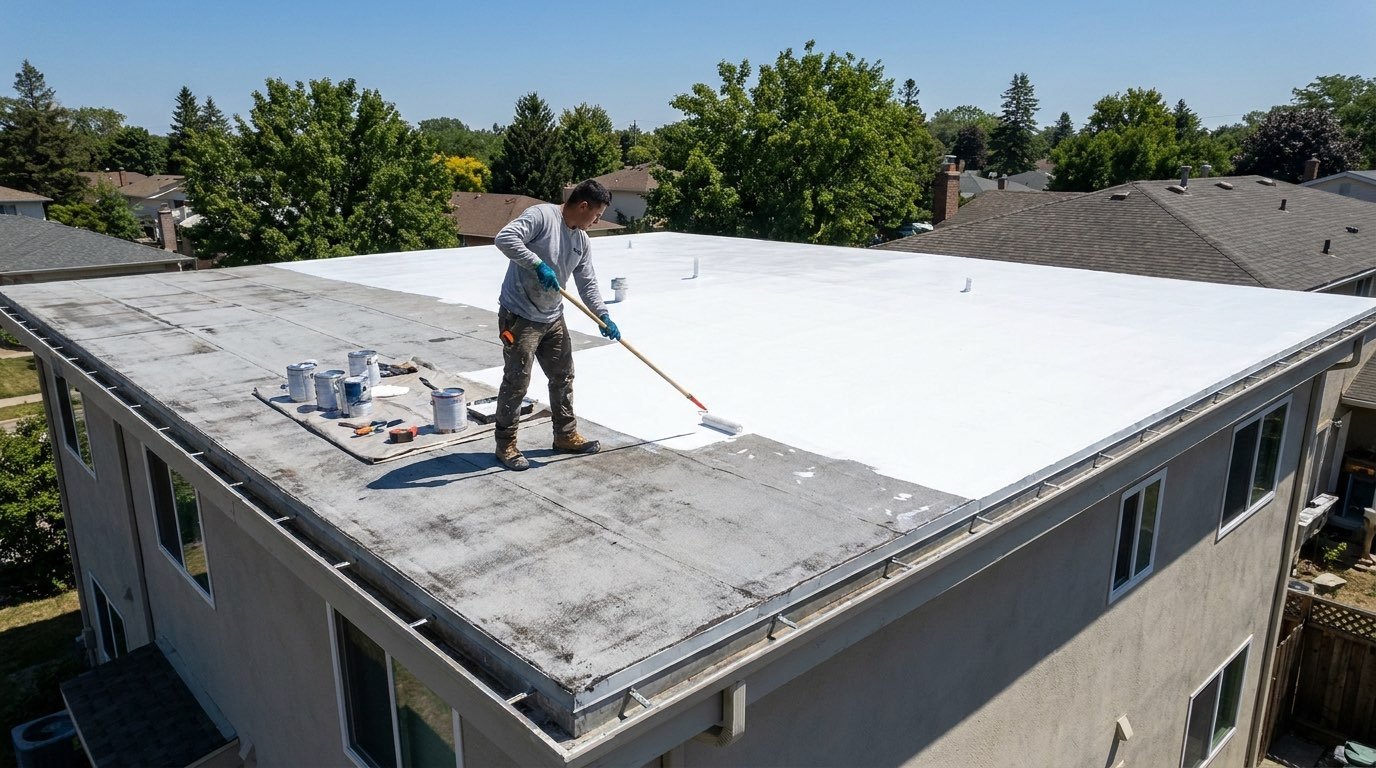
Roof coating is a protective, liquid-applied layer that goes onto a compatible roof surface and cures into a seamless film.
On the right roof, it can add weather protection and UV resistance, reflect sunlight, and extend the service life of a roof that is still in sound shape.
Not every roof is a good candidate, and not every product fits every roof. The right choice depends on roof condition, the material underneath, drainage, climate, and budget.
This guide compares the main roof coating types, breaks down costs, explains what coatings cannot fix, and helps you find the best roof coating for your situation.
It also points out where advice differs for homes and commercial buildings.

Roof coating is a liquid you spray, roll, or brush onto a roof. As it dries and cures, it forms a continuous film or membrane that sheds water and shields the surface underneath.
The finished layer can limit weather exposure, reduce UV damage, reflect sunlight, and help protect prepared metal from corrosion.
Three terms are easy to mix up. The coating material is the product in the bucket. The coating system is everything around it: cleaning, repairs, primer, the coating itself, and any reinforcing fabric at seams. Results depend on the whole system, not just the material.
A coating is not a cure-all. It does not fix structural damage, and it cannot dry out wet insulation. Here is how it compares with similar products:
Roof coating types differ in their chemistry, and each one has trade-offs. ASTM International publishes specifications for liquid-applied roofing coatings, such as D6083 for acrylic roof coatings and D6694 and D6947 for silicone and polyurethane coatings used on spray polyurethane foam roofs.
These specifications set product requirements but do not explain how to apply a product, so always read the manufacturer's data sheet too.

Acrylic coatings are usually water-based. They tend to cost less, go on easily, and come in bright white for reflectivity. The main limit is water.
Many acrylic systems are a poor fit for roofs where water sits for long periods, and rain or cool temperatures during curing can ruin an application.

Silicone coatings resist moisture and UV light, and they are often chosen for low-slope roofs where water may linger. They tend to pick up dirt, which can dull reflectivity over time.
Recoating usually needs silicone-compatible products. Performance varies by product, so compare data sheets instead of assuming all silicones match.

Polyurethane coatings are known for resisting abrasion and impact, so they show up on commercial roofs with foot traffic.
Many systems pair an aromatic base coat with an aliphatic top coat. Aliphatic formulas are generally made to hold up better in sunlight, so the system needs to be applied as specified.

Asphalt-based coatings are used on asphalt roofs, such as built-up roofing, and around details like flashing.
Aluminum coatings are reflective surface coatings, often asphalt-based with aluminum pigment. They work differently from elastomeric systems, so confirm compatibility with the manufacturer before you buy.
Elastomeric means stretchy. An elastomeric roof coating can flex and handle some movement in the roof, such as expansion in heat and shrinking in cold.
It describes behavior, not a chemical family, so acrylic and silicone products can both be elastomeric.
For example, two products labeled elastomeric may handle ponding water very differently. The word alone does not promise waterproofing, flexibility, or durability.
A roof coating comparison is a good starting point, but not a final answer. Cost and performance depend on the formulation, thickness, preparation, and complete system.
Use this table to narrow your options, then check the technical data sheet for the exact product.
| Coating type | Common strengths | Important limitations | Typical applications |
| Acrylic | Reflectivity and value | Poor fit for persistent ponding water in many systems | Compatible roofs with adequate drainage |
| Silicone | Moisture and UV resistance | Dirt pickup and recoat considerations | Suitable low-slope roofs |
| Polyurethane | Abrasion and impact resistance | System complexity and potentially higher cost | Traffic-exposed commercial roofs |
| Asphalt/aluminum | Specialized protection and reflective surface options | Compatibility and performance vary substantially | Specified asphalt-based or metal-roof applications |
Compatibility comes first. A coating that performs well on paper can still fail if it does not bond to your roof. Confirm the approved substrates before you compare prices.
To find the best roof coating for your roof, answer a short list of questions. Start with the roof's condition and material. Then look at slope, drainage, climate, and how the roof is used.
Existing coatings, primers, and dirt all affect adhesion. Ask the manufacturer for approved substrates and application instructions.
If you are unsure a new coating will stick, an adhesion test or a professional roof assessment is a smart step.
| Roof material | Key concern | What to verify |
| Metal | Rust, loose fasteners, open seams | Rust treatment, primer needs, and fastener and seam sealing for a metal roof coating |
| TPO, EPDM, PVC | Bonding to single-ply membranes | Manufacturer approval for that membrane and any required cleaner or primer |
| Modified bitumen and built-up roofing | Surface condition and movement | Compatibility with asphalt surfaces and a moisture check |
| Spray polyurethane foam (SPF) | The foam needs a protective topcoat | Topcoat specification and recoat compatibility |
| Concrete, shingles, and other surfaces | Porosity, cracks, or poor fit | Use only if the product system allows it |
Full coatings are generally not recommended on most asphalt shingle roofs. Ask the shingle maker and a roofing professional before you choose one.
The same coating can succeed on one roof and fail on another. Match your choice to the conditions on your roof.
Do not pick one chemistry for an entire state or climate. Judge the actual roof.
Start by separating material cost from installed cost. Material cost is what the coating itself costs. Installed cost adds labor, preparation, repairs, primer, equipment, and the contractor's overhead.
Several factors move the price: roof size, coating type, required thickness, surface preparation, repairs, access, and local labor rates.
Small residential jobs may also include minimum service fees, while large commercial jobs are often quoted with a detailed scope of work. Treat any number you find as a starting point, not a quote.
Roof coating cost per square foot depends on whether a number covers the coating alone or the finished job.
The figures below come from one source, HomeAdvisor's roof coating cost guide, which draws on 1,567 member-reported projects and was updated in November 2024.
They are mostly residential, so commercial pricing may differ. Other published guides report noticeably different ranges, so treat these as one data point and confirm with local quotes.
| Coating type | Material only (per sq ft) | Installed (per sq ft) | Source and date |
| Acrylic | 0.80 | 3.00 | , Nov. 2024 |
| Silicone | 1.40 | 4.50 | , Nov. 2024 |
| Polyurethane (listed as polyurea) | 1.30 | 4.00 | , Nov. 2024 |
| Asphalt-based (bitumen) | 1.50 | 2.50 | , Nov. 2024 |
| Aluminum | Not available | Not available | No reliable source found |
The same guide says bitumen is mostly used around flashing, not as a full roof coating, and that labor alone averages about $0.50 to $3.00 per square foot. Local labor and roof condition can change the total a lot.
Use this simple formula for a rough budget:
Estimated total = roof area × installed cost per square foot
Illustrative example only: a 2,000-square-foot roof at a hypothetical installed rate of $2 per square foot comes to about $4,000. That is an example, not a current market quote.
The total does not include extra repairs, primer, permits, or disposal. The same cost guide lists roof leak repairs at $150 to $1,000 and power washing at $170 to $270 as common add-ons. Get written local quotes for real numbers.

Roof coating benefits are real, but they depend on a suitable roof and a good installation. Here is a balanced look.
Potential benefits
Limitations
In short, coating works best as restoration for a sound roof, not as a fix for a failing one. Be wary of any claim of guaranteed savings or a fixed number of added years.

Filename: crew-spraying-roof-coating-low-slope-roof.jpg
Alt Text- Roofing crew spraying coating onto a cleaned and repaired low-slope roof
Roof coating application follows a set order, and skipping steps is a common cause of failure. Knowing the process helps you judge whether an estimate is complete. The exact steps vary by chemistry and roof material.
Do not rely on universal temperature, drying-time, or thickness numbers. Use the specific product's technical data sheet. Roof work also carries fall risks, so use proper fall protection and hire a qualified professional for steep, complex, or unsafe roofs.
Roof coating lifespan depends on the chemistry, film thickness, surface preparation, climate, drainage, and maintenance.
No range fits every product, so use manufacturer data and local contractor experience. One cost guide says some budget acrylics may need attention around every 10 years, and it notes that some silicone products carry 25- to 50-year warranties.
A warranty period is not the same as service life. A warranty is a legal promise with conditions, while service life is how long the coating actually performs.
Routine care catches small problems early. Use this checklist:
Roof coating vs. roof replacement is mainly a question of roof condition. Coating suits a structurally sound roof with compatible materials and repairable, localized defects. Widespread damage points toward replacement.
| Factor | Roof coating | Roof replacement |
| Upfront cost | Often lower | Often higher |
| Disruption | Usually less | Usually more |
| Roof condition needed | Sound deck and dry insulation | Can address major damage |
| Repairs | Defects must be repaired first | Underlying problems can be corrected |
| Ongoing care | Inspections and eventual recoating | New roof still needs maintenance |
Coating may make sense if:
Replacement may be needed if:
If you are not sure what is under the surface, get an inspection before you spend money on coating.
Multiply roof area by the coverage rate on the product's data sheet, then adjust for the number of coats, surface texture, and waste. Real roofs often need more than the theoretical coverage because rough or porous surfaces absorb more. Check the manufacturer's coverage guidance for your product.
Sometimes, but not always. It depends on the existing coating's chemistry, adhesion, condition, and cleanliness, and on whether the new product is compatible. Ask the manufacturer for guidance, and request an adhesion test when required. Adding another coat is not automatically safe.
Terms vary, but common exclusions include poor preparation, unapproved repairs, incompatible products, skipped maintenance, or application outside the specified conditions. Read the actual warranty before you hire a roof coating contractor, and ask who handles claims.
Surface drying, full curing, and readiness for foot traffic are three different stages. The wait depends on the product, temperature, humidity, and thickness. Check the technical data sheet, and ask your contractor before anyone steps on the roof.
Warning signs include peeling, blistering, cracking, exposed substrate, recurring leaks, and separation around details. These symptoms call for an inspection to find the cause. They do not automatically mean the whole roof needs recoating.
Roof coating can protect a sound roof, but the best choice depends on the substrate, roof condition, drainage, climate, and budget.
Before you buy, confirm product compatibility and compare the full installed system, not just the price per gallon.
If the roof leaks, may have wet insulation, or poses safety concerns, start with a professional assessment.
A good next step is to collect two or three written quotes that list preparation, primer, coating type, thickness, and warranty terms, so you can compare them side by side.
Olivia Bennett has over 12 years of experience helping homeowners transform their spaces with practical, thoughtful solutions. She guides projects of all scales, blending creativity with efficiency and attention to detail to achieve lasting results. Olivia holds a degree in Interior Architecture from the University of Michigan and draws inspiration from global design trends and architecture, ensuring every space is both functional and beautifully considered.




No Comments