


12 Modern Christmas Decor Ideas Garland for Every Room
There's something magical about walking into a home decorated with


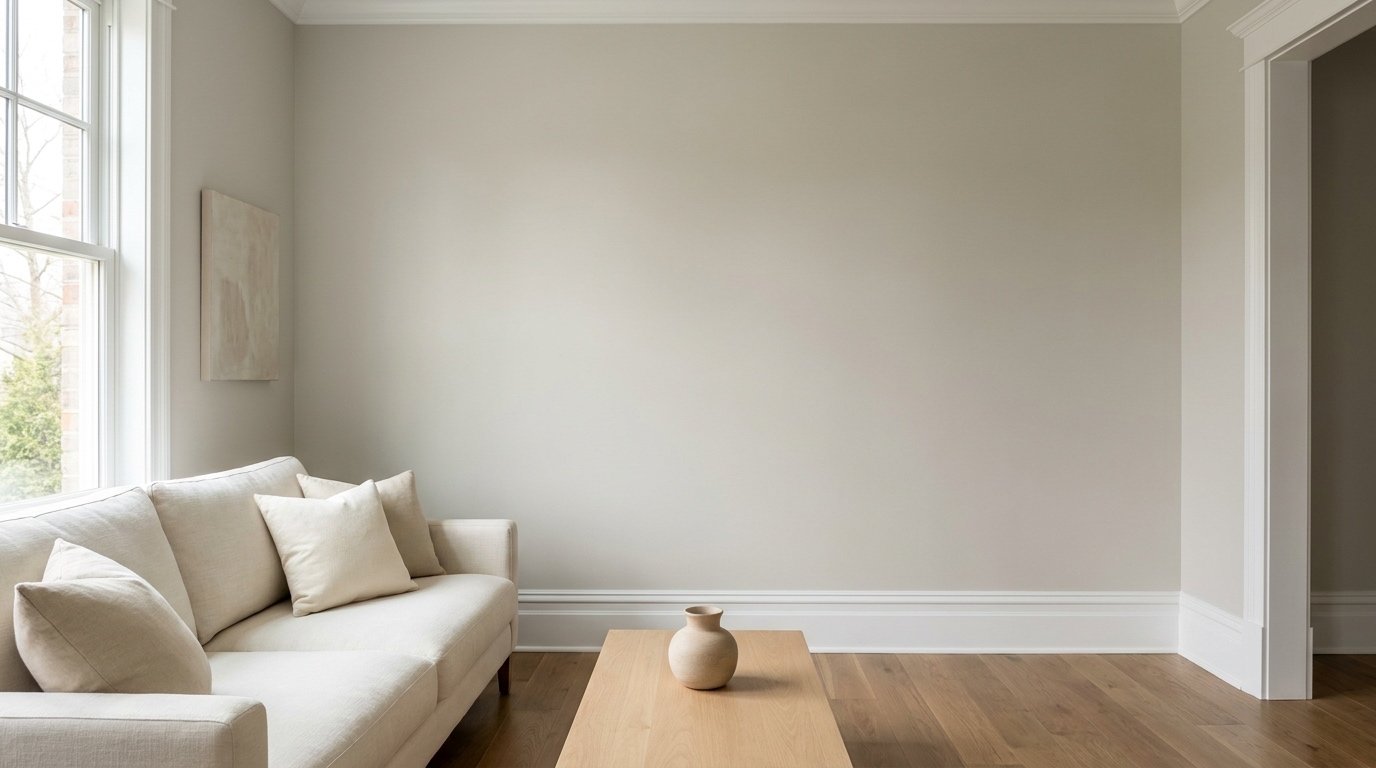
Benjamin Moore Edgecomb Gray HC-173 is one of the most popular neutral paint colors around. It is a greige, which means it balances gray and beige, with a warm and welcoming feel.
This guide covers its undertones, LRV, and how it changes with lighting. You will also see how it looks in different rooms, which colors and trim shades pair well with it, and how it compares with Revere Pewter, Pale Oak, Balboa Mist, and Classic Gray.
Along the way, you will get practical testing tips so you can judge the color in your own home, not just on a screen. By the end, you will know if this Edgecomb Gray paint color deserves a spot on your shortlist.

Edgecomb Gray is a warm greige. It sits between gray and beige, so it can look a little gray in one room and a little beige in another. Benjamin Moore describes it as a go-to neutral with a warm, welcoming feel.
It works well in calm, layered interiors with wood tones, creamy whites, and soft textiles. Many people use it as a backdrop that lets furniture and art stand out. It is a good fit when you want warmth without a strong color.
Keep in mind that the Edgecomb Gray color will not look the same everywhere. Light and nearby finishes, like flooring and cabinets, change how it reads. You can check the official Benjamin Moore Edgecomb Gray HC-173 page for current details.
| Specification | Details |
| Brand | Benjamin Moore |
| Color name | Edgecomb Gray |
| Color code | HC-173 |
| LRV | 63.09 |
| HEX / RGB | Varies by source; Benjamin Moore lists LRV, not HEX |
Undertones are the faint hints of color underneath the main shade. They explain why one paint color can look different in two homes.
It is a balance of both, with a warm lean. That is why the word greige fits. Nearby colors shift the balance. Beside cool blue or gray finishes, it can look warmer and more beige. Beside cream or yellow-toned finishes, it can look grayer and cooler. Hold a sample against your own flooring and furniture to see which way it leans.
Sometimes, although not in every room. Some people notice a faint green, pink, or purple cast in certain settings. Flooring is a common trigger, because reddish wood can nudge the color toward pink, while greenery outside a window can add a green feel. Lighting and nearby paint colors play a part too. If you see a tint you dislike, check the sample at several times of day before ruling the color out.
The Edgecomb Gray LRV is 63.09, according to Benjamin Moore. LRV stands for light reflectance value. It measures how much visible light a surface reflects, on a scale from 0 (black) to 100 (pure white), under standard test conditions.
A score above 60 puts this color in the lighter half of the scale, but it is not as light as a white. LRV is handy for comparing shades: a higher number looks lighter, and a lower number looks deeper. It cannot tell you exactly how bright a room will feel, though. Window size, bulbs, and furniture matter too. Third-party sites also list different HEX codes for this color, so rely on LRV and physical samples instead of screens.
Not necessarily. Its LRV is moderate, so it is not an extra-dark shade. What matters more is the amount of daylight, the direction the room faces, the bulbs, and the finishes around it. A small room with one small window may feel cozy rather than airy, so test before you commit.

Edgecomb Gray in different lighting can look warmer, cooler, lighter, or deeper. Check it in the room itself, not just in the store.
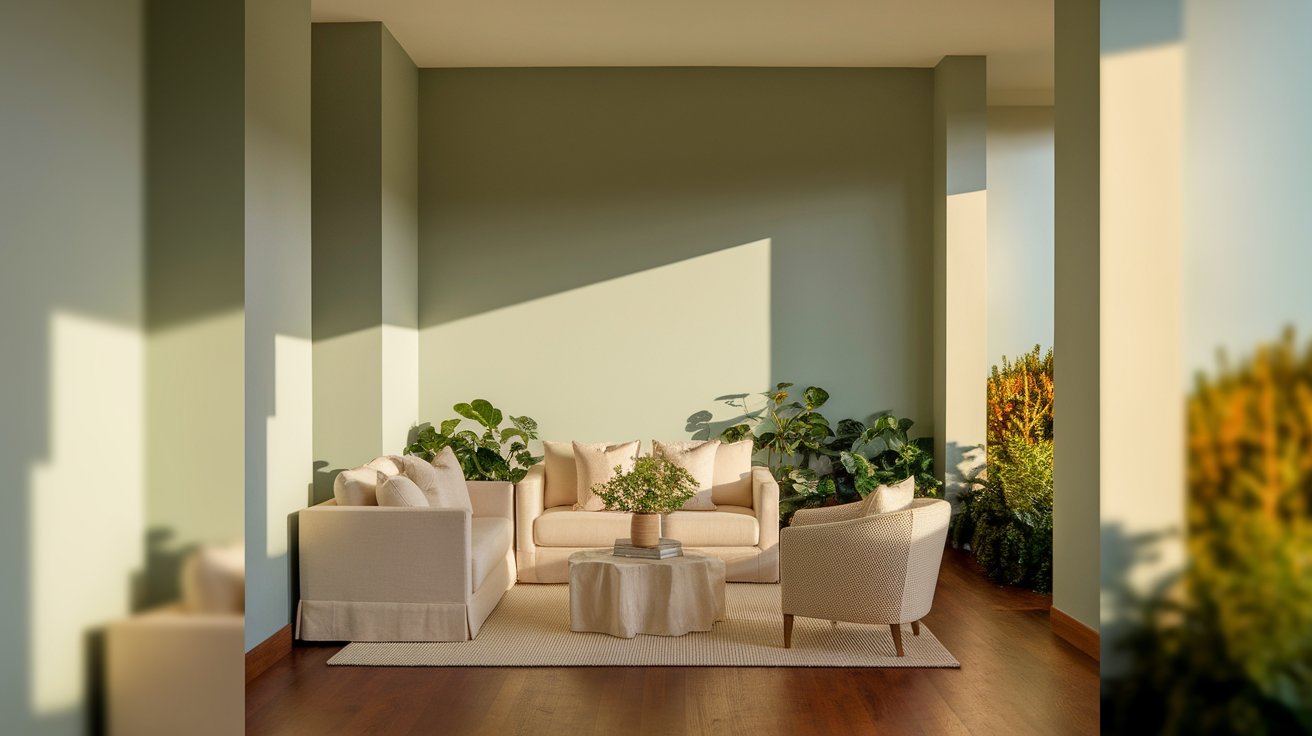
Daylight changes through the day. Bright, direct light usually makes Edgecomb Gray look lighter and more open, while soft or shaded light can make it look deeper and more muted. Edgecomb Gray natural light results also vary because trees, nearby buildings, and window size differ from home to home.
North-facing rooms often get cooler, steadier light, so the color may look a bit grayer. South-facing rooms often get warmer, stronger light, so it may look creamier. These are common tendencies, not promises. Outdoor surroundings and room finishes can change the result.
Warm bulbs, which have a lower color temperature, tend to bring out the beige in this color. Cooler bulbs can push it toward gray, and they can change nearby wood and fabrics too. Test with the bulbs you use in the evening, since that is when many rooms get the most use.
Edgecomb Gray is flexible, but each room has its own light and finishes. Here is what to consider in each space.

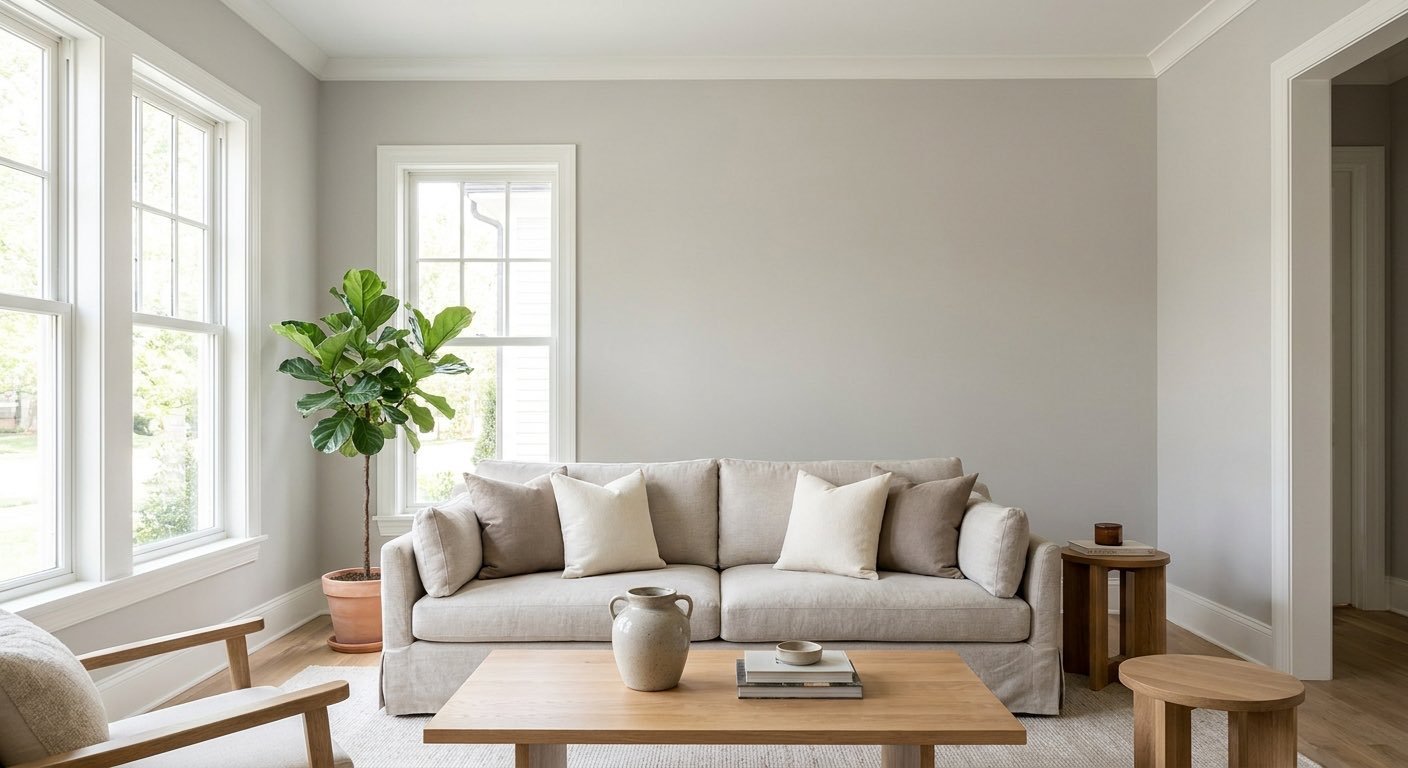
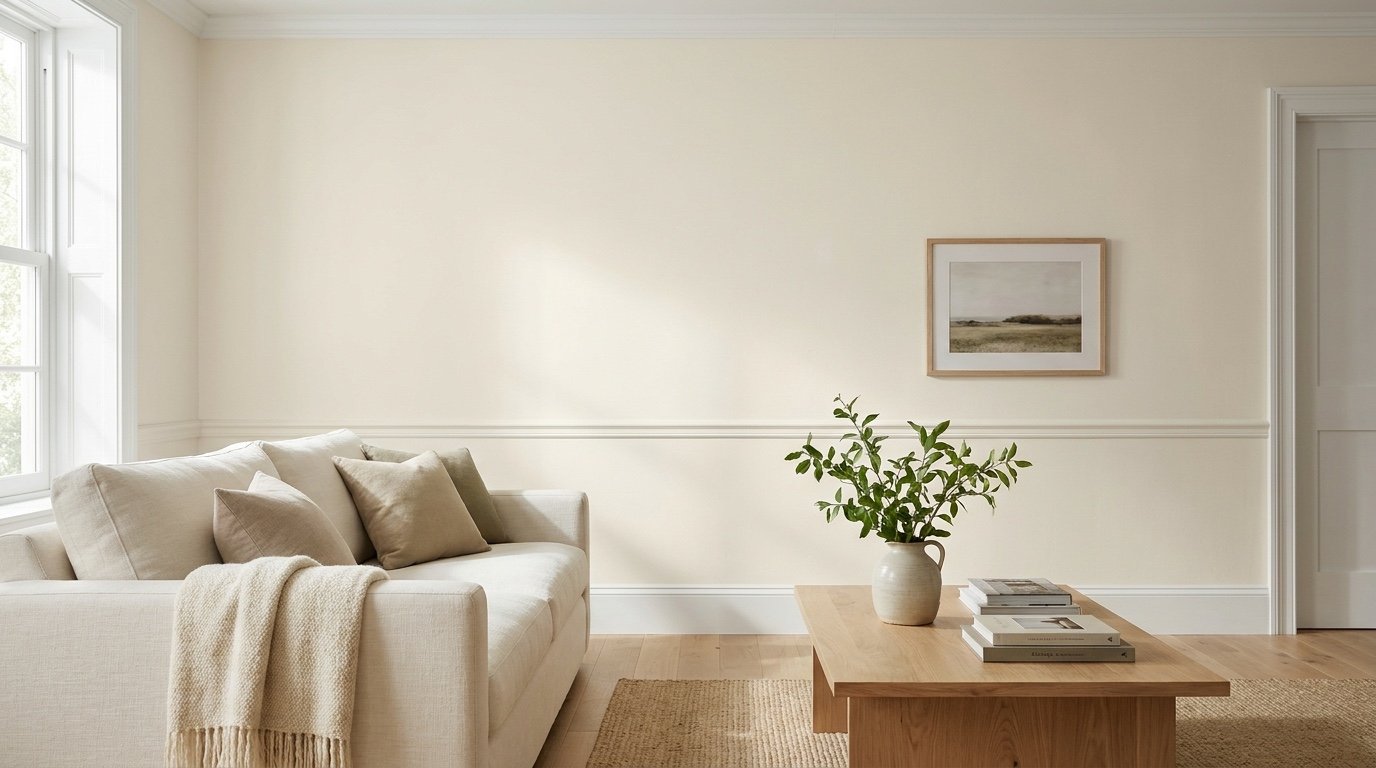
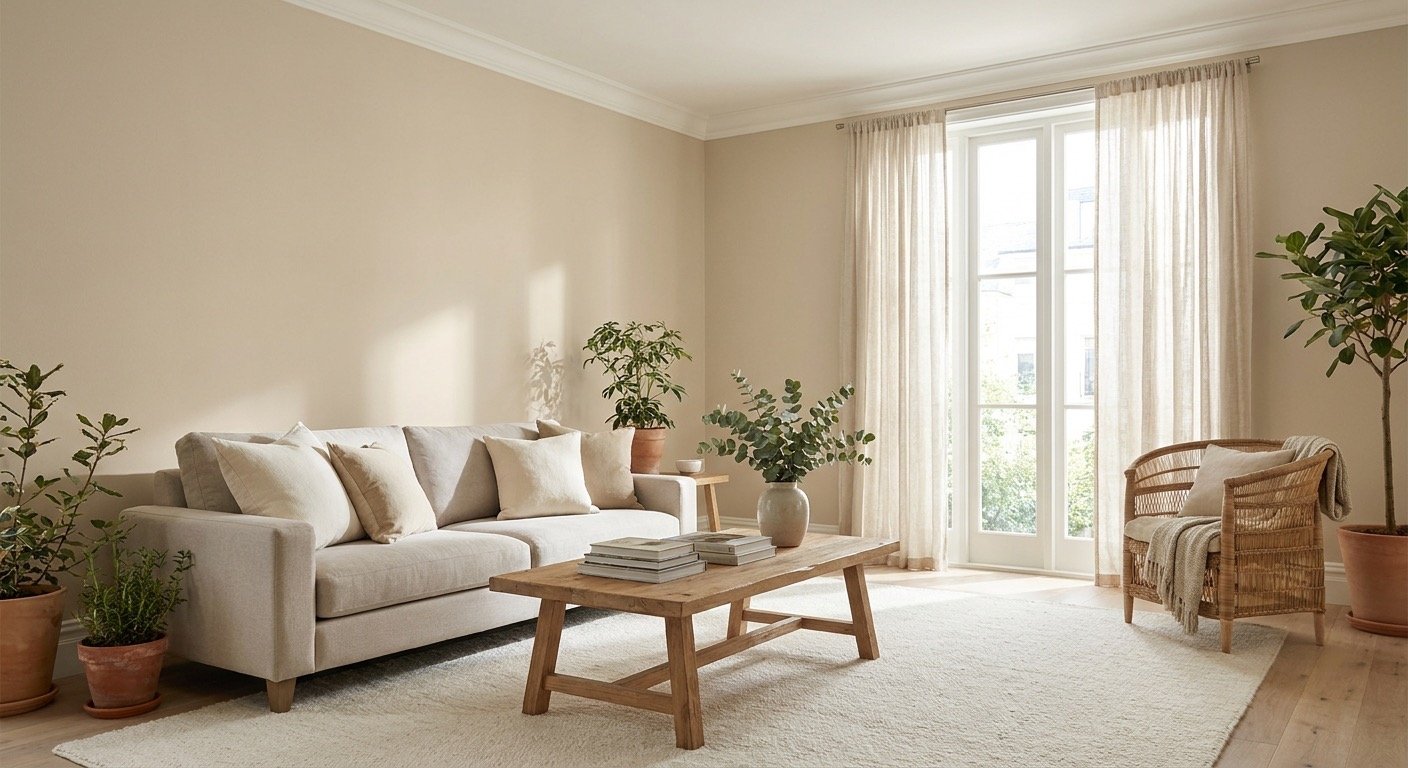
Edgecomb Gray living room walls pair well with wood floors, neutral upholstery, and a crisp trim color for contrast. Warm wood can make the greige feel richer, while cooler flooring may bring out more gray. Rugs, sofas, and curtains also shape the mood, so hold fabric samples against the paint.

In an Edgecomb Gray bedroom, a soft neutral palette is easy to build on. Try creamy or white bedding, natural wood nightstands, and one or two muted accents, such as sage or navy. Check the paint beside your bedding and under your bedside lamps, since evening light is what you will see most.

Kitchens have many fixed finishes, so sample beside your countertops, backsplash, and flooring. Painting walls and painting cabinets are different decisions. On walls, the color is a quiet backdrop. On cabinets, it becomes a large, visible surface, so check how it looks against countertop veining and hardware, and test the sheen you plan to use.
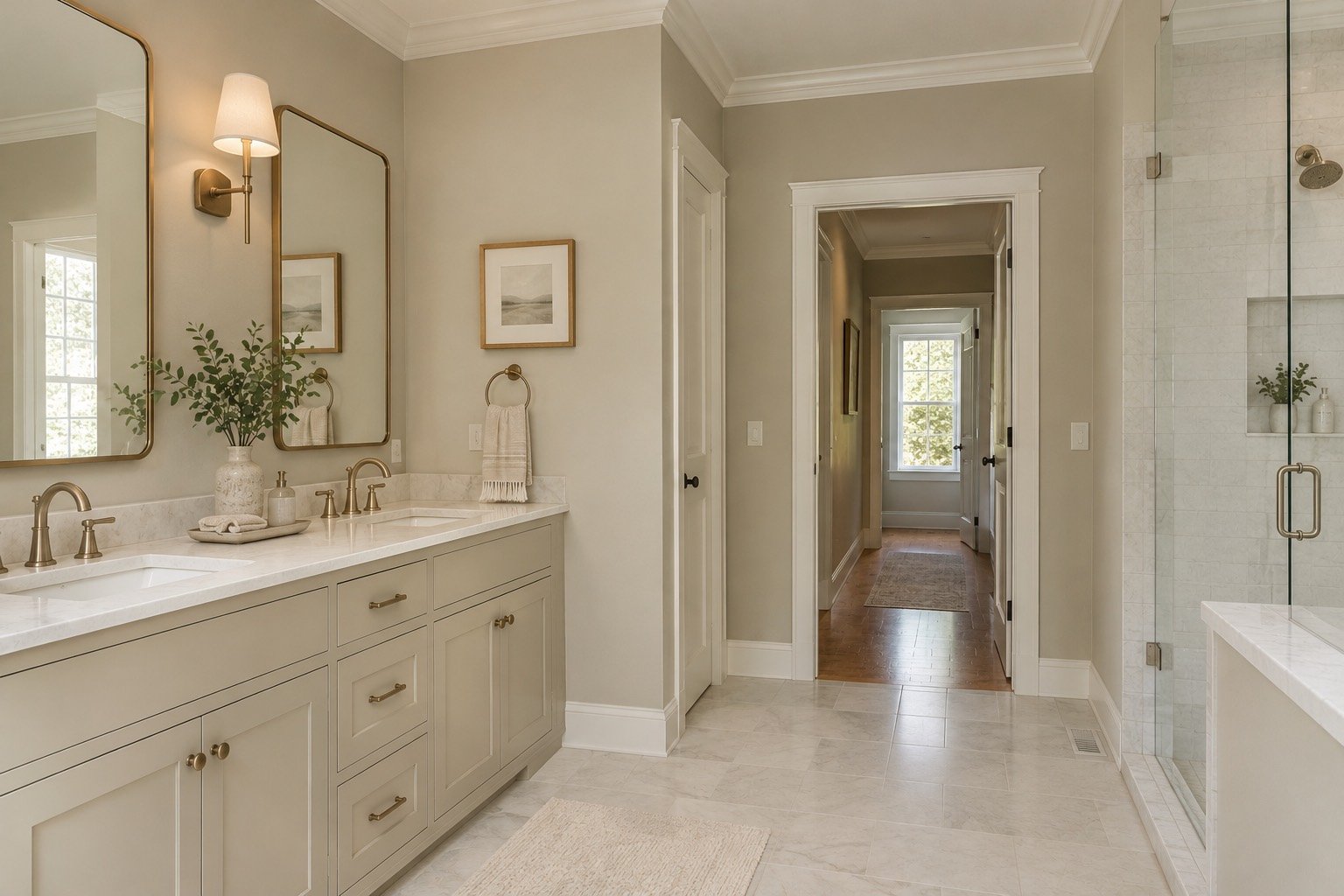
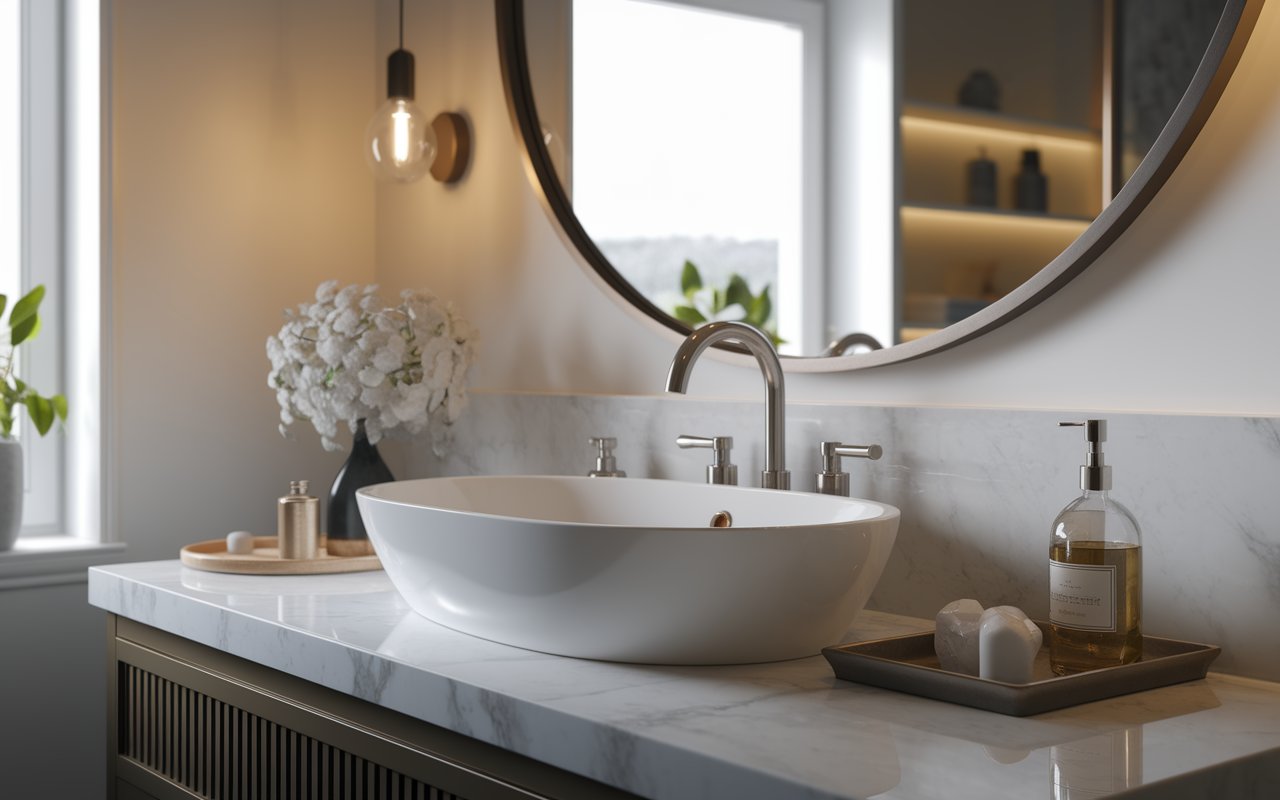
Tile, mirrors, and nearby rooms all affect this color. In a bathroom, check it beside tile and white fixtures, under the vanity lights. Hallways often connect several rooms, so look at the color at both ends and next to adjoining wall colors.

In small spaces with limited daylight, always test samples first. Edgecomb Gray may look deeper and cooler there than in a sunny room. Do not count on it to make a small room look bigger. Check it on more than one wall and again at night.
Warm whites, deeper neutrals, and muted blue-grays each create a different effect with Edgecomb Gray. Warm whites keep things soft. Deeper neutrals add weight and definition. A muted blue-gray adds contrast without going too bold.
Benjamin Moore shares expert-picked combinations on its Edgecomb Gray page, so check there first. Then use the list below as candidates to sample. These are not guaranteed matches, so always test pairings together, especially where colors meet on adjoining walls.
| Color | Suggested role | Why it may work |
| White Heron OC-57 | Soft, contrasting white | Stands apart from the greige without a harsh look |
| Dove Wing OC-18 | Subtle neutral pairing | A lighter neutral for a gentle step up in brightness |
| Boothbay Gray HC-165 | Muted blue-gray contrast | A cooler tone that adds contrast to the warm greige |
| Pashmina AF-100 | Deeper neutral contrast | Adds weight on cabinets, doors, or an accent wall |
| White Dove OC-17 | Additional trim option to test | A soft, warm white worth sampling for trim |
White trim can create a soft or strong contrast with Edgecomb Gray, depending on the white. White Dove is a soft, warm white that blends in more gently. White Heron is cleaner and crisper, so the wall may look a bit deeper and more beige beside it. Both are options to sample, not guaranteed winners.
Your fixed finishes matter too. Flooring, cabinets, and countertops can make a white look creamier or cooler than it does on a card. Paint wall and trim samples side by side, and look at them in daylight and in the evening. The best white trim for Edgecomb Gray is the one that looks right against your own finishes.
The comparisons below use the LRVs published by Benjamin Moore. Sample all colors in the same room, under the same light, and do not trust screens to show the real difference.
|
Paint |
Code |
LRV |
General look |
Who might prefer it |
|
Edgecomb Gray |
HC-173 |
63.09 |
Warm greige |
Those wanting a flexible mid-light neutral |
|
HC-172 |
55.05 |
Deeper, between warm and cool |
Those wanting a cozier, more defined wall |
|
|
OC-20 |
68.64 |
Lighter, warm gray undertones |
Those wanting an airier look |
|
|
OC-27 |
65.53 |
Pale gray, slightly warm |
Those wanting a grayer look |
|
|
OC-23 |
73.67 |
Ultra-light gray |
Those wanting a lighter-looking neutral |
Revere Pewter has an LRV of 55.05, so it looks deeper and richer than Edgecomb Gray. Benjamin Moore calls it a bridge between warm and cool tones. Choose Revere Pewter for a cozier, more defined look. Choose Edgecomb Gray for a lighter, softer backdrop that still feels warm.
Pale Oak (LRV 68.64) is lighter than Edgecomb Gray, and Benjamin Moore describes it as having warm gray undertones. Both are warm neutrals, so they can look close on a sample card. Pale Oak feels airier, while Edgecomb Gray has a bit more depth. Compare them on the same wall.
Balboa Mist (LRV 65.53) is a touch lighter than Edgecomb Gray. Benjamin Moore describes it as a pale gray with a slightly warm cast, so it tends to read grayer, while Edgecomb Gray tends to read more beige. If you want less warmth, test Balboa Mist beside it.
Classic Gray (LRV 73.67) is much lighter. Benjamin Moore calls it an ultra-light gray that can also work as an off-white. If you like the calm feel of Edgecomb Gray but want a lighter-looking neutral, compare the two. Expect Classic Gray to look cleaner and more gray.

Screens and digital swatches are not reliable stand-ins for physical samples. Get a real Edgecomb Gray paint sample, then follow these five steps.
Edgecomb Gray is a flexible warm greige. It suits homes that want a calm, soft wall color that works with wood tones and creamy whites.
Consider a lighter shade, such as Pale Oak or Classic Gray, if you want a brighter room. Try a darker one, such as Revere Pewter, for more depth.
If you see too much beige or too much gray, sample a warmer or cooler neighbor. Lighting and surrounding finishes will always affect the result, so test samples before you buy paint for the full project.
Benjamin Moore Edgecomb Gray HC-173 is a warm greige with an LRV of 63.09, which makes it a flexible, moderately light neutral.
Its undertones, the lighting in your room, and the finishes around it all shape how it looks. Because of that, no photo or screen can give you the final answer.
Put a physical sample in your own space, live with it for a few days, and compare it with one or two close alternatives before you buy paint.
It is a warm-leaning greige. Benjamin Moore describes it as welcoming, and many people see it as warm. Still, low light or cool bulbs can make it look cooler, so judge it in your own room.
Yes. Benjamin Moore's Baby Fawn OC-15 page lists HC-173 as another name for it, with the same 63.09 LRV. It is also listed under 972. Confirm the current listing at your paint store.
It can, but expect it to look deeper and more muted. Test a sample in the darkest corner and under your evening bulbs. If it feels too heavy, compare a lighter option before painting.
Yes, if it suits your finishes. Match it against countertops, flooring, and nearby wall colors. Test a painted door with the sheen you plan to use, and check it next to your hardware.
There is no single best choice. White Dove gives a softer look, and White Heron gives a crisper edge. Sample both beside your wall color and flooring, then pick the one you prefer in daylight and at night.
Daniel Hartman is a color specialist with years of experience helping people make confident and thoughtful design decisions. He provides practical and approachable guidance while balancing creativity and functionality in every project. Daniel enjoys visiting art and design exhibits to study how different environments influence aesthetics, mood, and perception, bringing a rich perspective and insight into his work. His approach makes design decisions both simple and enjoyable.

No Comments