


12 Modern Christmas Decor Ideas Garland for Every Room
There's something magical about walking into a home decorated with


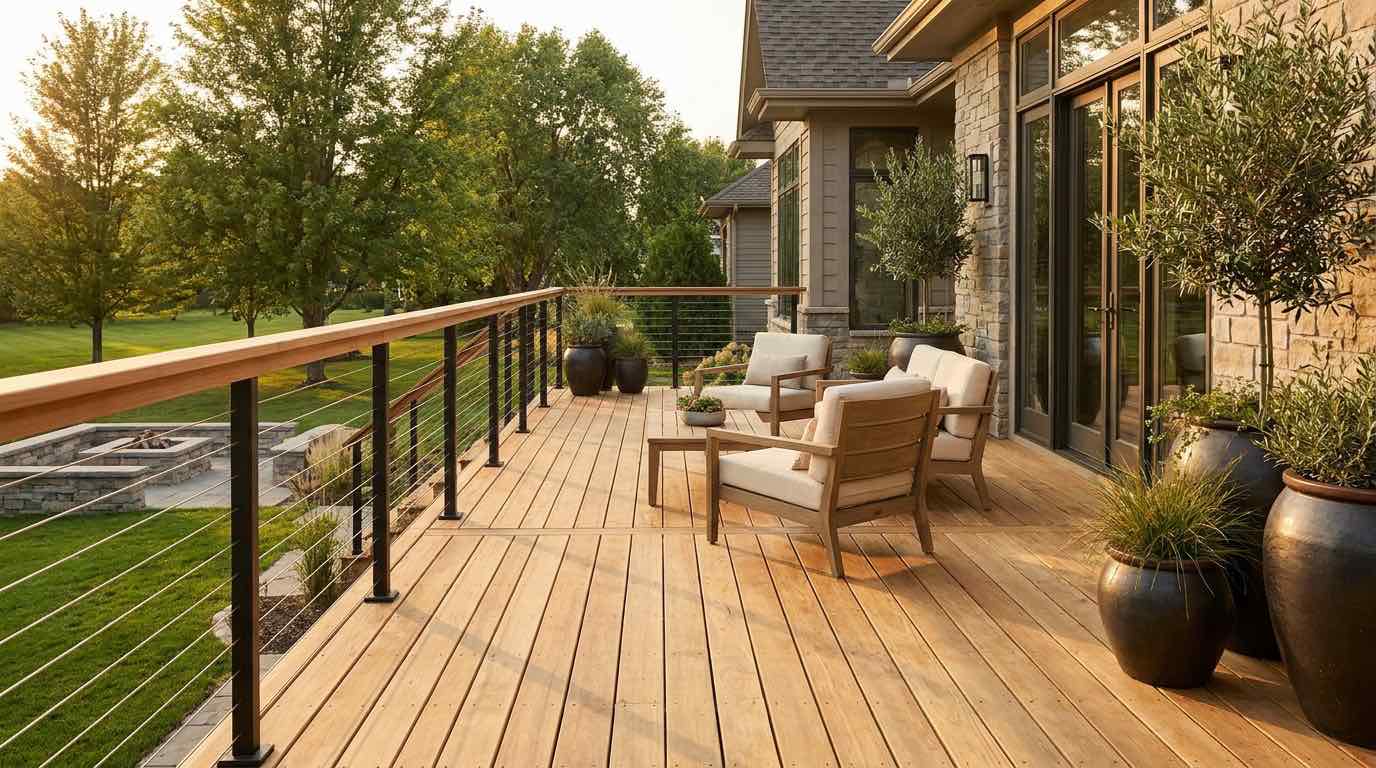
A deck railing does more than keep people safe. Its material, color, spacing, and shape can change how open or private your deck feels, how much upkeep it needs, and how well it connects to the rest of your house. If you're browsing deck railing ideas for a new build or a tired old railing that needs a refresh, the options today go far beyond plain white balusters.
This list covers wood, aluminum, cable, composite, glass, and mixed-material railings. You'll find designs suited to modern, farmhouse, coastal, rustic, traditional, and midcentury homes, plus options built around privacy, open views, entertaining, or simply less maintenance. Whatever your deck looks like now, there's likely a direction here that fits it.
A modern railing doesn't have to be stark or minimalist. Traditional and rustic styles can feel just as current when they use cleaner lines, updated colors, or a mix of materials.

This railing uses narrow black vertical balusters, simple posts, and a clean top rail. Because the lines are so thin, it visually recedes into the background and lets your view take center stage. It's made mostly of aluminum, which keeps its low-maintenance appearance for years. This style works with modern, contemporary, transitional, and updated traditional homes. One thing to note: dark metal can get warm to the touch in strong direct sunlight.
Best for: Homeowners who want a simple railing that doesn't compete with the view.

Thin stainless-steel cables stretch horizontally between wood or metal posts, creating one of the most open railing styles available. The look has a minimal, almost industrial character without feeling cold. Cable railing shows up often on mountain, lake, and wooded properties where the surrounding scenery is the star. Cables may need periodic tension checks over time, and spacing and installation must meet local requirements.
Best for: Scenic decks where preserving the view is the main priority.

Large, clear glass panels with barely-there framing create one of the least obstructed views you can get from a railing. It gives decks a high-end, contemporary feel that pairs beautifully with a landscape or water view. Glass deck railing is common on oceanfront, lakefront, and rooftop decks. Keep in mind it needs regular cleaning to stay streak-free, and installation typically calls for professional planning.
Best for: Modern homes with a valuable landscape or water view.

Adding black aluminum framing around glass panels gives the railing more definition and a stronger architectural presence than frameless glass. It complements black windows and doors nicely, and the visible outline still lets you keep most of the view. The black frame hides the panel edges and mounting hardware, but the glass will still show fingerprints and water spots and needs regular cleaning.
Best for: Contemporary homes with dark exterior accents.

This design pairs warm wood posts and top rails with thin horizontal cables in between. It balances rustic warmth with a more open, modern feel. You'll see this combination on cabins, modern farmhouses, and transitional homes. The wood portion requires more upkeep than the cable itself, but matching the stain color to your deck boards helps tie the whole look together.
Best for: Homeowners who want modern lines without losing the warmth of wood.

White posts and top rails paired with thin black vertical balusters create a fresh, updated take on the classic white railing. It works especially well against white trim and black windows. Composite deck railing like this offers much lower maintenance than painted wood. Just be careful not to overdo the contrast with a busy deck color, since simplicity keeps it looking sharp.
Best for: Farmhouse, coastal, Craftsman, and transitional homes.

Evenly spaced horizontal wood boards give this railing a warm, spa-like feel. Because the slats sit closer together, it offers more privacy than cable or glass options. This wood deck railing idea suits midcentury, contemporary, and modern rustic homes. Board spacing and climbability concerns need to be checked with your local building department, and the wood should be sealed or stained to hold up outdoors.
Best for: Private decks surrounded by close neighbors.

Instead of bulky traditional balusters, this design uses narrow, evenly spaced vertical wood slats. The repeating rhythm and natural texture can make a short deck feel taller. It's a favorite for Scandinavian, Japandi, contemporary, and cabin-inspired homes. Because the slats are narrow, the overall railing feels lighter than one built with wide boards.
Best for: Homes that need warmth with a simple, orderly design.

Wood posts and top rails paired with slim black metal balusters are one of the easiest ways to modernize an existing wood deck. The contrast adds interest without pushing the design into fully industrial territory. It coordinates naturally with black exterior lighting and hardware. Since you're mixing materials, keep in mind that wood and metal may need different maintenance schedules.
Best for: Traditional decks receiving a modern update.

This style swaps flexible cable for slim horizontal or vertical metal rods, giving a straighter and more structured appearance. It has a strong contemporary profile that suits modern and industrial homes. Powder-coated finishes generally need very little routine care. If you like the look of cable railing but want something that feels more solid, this is worth considering.
Best for: Homeowners who like cable railing but want a more solid appearance.

Square or rectangular steel grid panels give this railing an industrial look that still stays visually open. It reads as more graphic than cable railing, with a bolder personality overall. This metal deck railing option can suit urban, modern farmhouse, and rustic-modern homes. Choose a corrosion-resistant, exterior-grade finish, and confirm that the grid size meets local safety requirements.
Best for: Casual decks that need durability and personality.

Sturdy wire panels set between substantial wood posts give this railing a distinctly rustic farmhouse feel. It keeps a strong connection to the surrounding landscape, which is why it often appears on woodland and country properties. Panels need properly finished edges and openings that meet code requirements, since standard livestock fencing isn't automatically suitable for a guardrail.
Best for: Farmhouse, ranch, cabin, and country-style homes.

Decorative powder-coated panels with geometric or botanical cutouts combine privacy deck railing with an artistic touch. You can use them on just one or two sides instead of wrapping the whole deck, which keeps things from feeling closed in. This style fits modern, Mediterranean, desert, and eclectic homes well. Too many patterned panels on a small deck can start to feel busy or enclosed.
Best for: Decks facing nearby homes or busy streets.

Repeating rectangles, diagonal lines, or asymmetrical metal shapes give this railing a custom look without going fully solid. It adds a bit of architecture to an otherwise plain deck. The pattern works best when it echoes the shapes of your home's windows or rooflines. Because the railing itself is already a focal point, keep furniture and accessories simple.
Best for: Contemporary and art-focused homes.

A railing that follows a rounded deck edge softens what is usually a very rectangular structure. It can help define separate zones, like a dining area or a conversation nook. Curved deck railing designs fit contemporary, resort-style homes and larger landscaped decks especially well. Custom curved components generally take more planning and cost more than straight sections.
Best for: Rounded decks or large entertaining spaces.

This design uses a top rail that runs smoothly across the posts with as few interruptions as possible, creating one long, streamlined horizontal line. It gives even a standard railing a more custom, finished look. You can pair a continuous top rail with cable, rod, glass, or metal balusters. It's especially effective on long decks with strong horizontal architecture.
Best for: Modern homes with strong horizontal architecture.

A wider, flat top rail gives guests a spot to set down a drink or a small plate without needing extra furniture. It's a practical addition for decks used often for entertaining, and a contrasting deck board on top can add visual interest. Just make sure the surface doesn't turn into permanent storage space or interfere with the railing's main safety function.
Best for: Decks regularly used for dining and entertaining.

A narrow counter installed beside or inside a code-compliant railing creates instant seating on a small deck. It also tends to direct guests toward the best view. Stools that tuck underneath keep the footprint minimal when not in use. It's worth being clear that the counter should complement the required guard, not replace it.
Best for: Small decks where every foot of space matters.

Subtle lights fitted into the tops of railing posts improve the nighttime atmosphere and help define where the deck ends. This works with wood, composite, PVC, and metal railing systems alike. Warm, low-level lighting generally feels more comfortable than something harsh or overly bright. If you're planning this option, it helps to run the wiring before the final installation.
Best for: Decks used after sunset.

Concealed lighting tucked beneath the top rail creates an even glow along the whole railing line. It feels more contemporary than visible post-cap fixtures because the light source stays hidden. This works well on modern and luxury decks that want a sleek nighttime look. Exterior-rated components and careful placement are essential for this to look clean and last outdoors.
Best for: Sleek decks that need discreet nighttime lighting.

Taller vertical or horizontal slats on one exposed side of the deck block sightlines from neighboring homes. Depending on the orientation, this style can also cut down on wind. It's usually best used selectively, on just the exposed side, so the whole deck doesn't feel boxed in. Adding plants or lighter finishes nearby softens what could otherwise feel like a solid wall.
Best for: Urban and suburban decks with close neighbors.

Translucent glass lets daylight through while obscuring a direct line of sight, making it feel more open than a solid wall. It has a contemporary look that's easy to coordinate with most modern homes. This style is common along side boundaries, near hot tubs, or on decks that are overlooked from nearby windows. It still needs occasional cleaning, though fingerprints tend to show less than on clear glass.
Best for: Modern homes needing privacy without losing daylight.

Planters attached to or set inside a code-compliant railing soften the look of metal or composite materials and add seasonal color. They're especially useful on small decks that don't have floor space for separate pots. Choose secure mounting hardware and keep planter weight manageable. Avoid placing large boxes where kids could use them to climb over the railing.
For more ways to blend plants, pathways, and outdoor features around the deck, explore our DIY backyard landscaping ideas.
Best for: Small decks with limited floor space for plants.

A bench built inside a separate, code-compliant perimeter railing saves space while creating permanent seating. It can visually connect with the deck boards for a cohesive, custom-built look, and cushions add comfort. It's worth being clear that a bench back is not automatically an approved safety guard on its own — the actual guard still needs to meet requirements.
Best for: Compact entertaining decks and conversation areas.

Repeating the same material, color, or baluster shape on the stair railing as on the deck railing produces a finished, cohesive appearance. It turns the stairs into an intentional design feature rather than an afterthought. Keep in mind that stair dimensions and handrail rules differ from level-guard requirements, so don't assume the same specs apply. Try to avoid introducing extra materials just for the stairs.
Best for: Elevated and multi-level decks.

Slim metal or glass systems are common on rooftop decks because they preserve skyline views. Wind exposure and structural planning become major considerations at this height. Dark metal can visually disappear against distant scenery, while glass may offer some wind protection, though it needs proper engineering to do so safely. Professional installation is usually the safer route for rooftop applications.
Best for: Urban homes and rooftop entertaining areas.

Corrosion-resistant aluminum, glass, or composite railing works well around an elevated pool deck thanks to its clean look and moisture resistance. Pool barriers can be governed by additional local rules beyond standard guard requirements, and gates and latches deserve particular attention. A decorative railing should never be assumed to automatically meet pool-barrier compliance without checking.
Best for: Homes with elevated decks connected to pool areas.

Slim white balusters and simple square posts keep a deck feeling bright and breezy. This look pairs naturally with gray, blue, natural wood, or light composite decking. To continue the same relaxed coastal look inside your home, explore these beach house interior ideas. Choosing PVC, aluminum, or composite instead of painted wood cuts down on repainting over time. Adding black or stainless-steel accents gives this classic style a more current edge.
Best for: Coastal, beach house, Cape Cod, and cottage homes.

Restrained X-shaped details framed by clean square posts reference barn-door geometry without tipping into overly rustic territory. This detail tends to work best as an accent on select panels rather than repeated across the whole railing. White, black, or natural wood finishes each create a noticeably different mood.
Best for: Modern farmhouse and country-inspired homes.

Substantial natural wood posts paired with simple vertical metal balusters or cable keep the warmth of a cabin while avoiding a dated look. Cleaner detailing on the balusters is what keeps this style from feeling old-fashioned. Deep brown, charcoal, or natural wood finishes all work well here. Wood maintenance should be part of the plan, since these posts see plenty of weather exposure.
Best for: Cabins, mountain homes, and woodland properties.

Narrow vertical wood slats with evenly controlled spacing echo the screens and architectural details common in midcentury design. This style pairs especially well with low rooflines and warm wood tones already present on the home. A clear or medium stain helps preserve the wood's natural character rather than masking it. Keep decorative extras to a minimum to stay true to the style.
Best for: Midcentury, retro-modern, and ranch-style homes.

A simplified, more geometric take on the classic Chippendale pattern gives traditional architecture a sharper, more current finish. It's available in white composite, PVC, wood, or metal, depending on the look you want. This design suits Georgian, Southern, colonial, and coastal homes particularly well. On a smaller deck, an overly complex pattern can start to feel heavy, so keep the scale in check. Prefabricated exterior panels can also simplify long-term maintenance.
Best for: Traditional homes that need a more distinctive railing.

Using one color for the posts and top rail and a different color for the balusters or infill helps tie together multiple exterior colors on your home. Common combinations include white and black, natural wood and bronze, or charcoal and warm brown. This approach makes a railing feel customized without adding construction complexity. For the cleanest result, stick to two main finishes rather than layering in a third.
Best for: Transitional homes and decks connecting old and new exterior finishes.
Here's a quick side-by-side look at how the most common deck railing materials compare.
| Material | Overall Look | Maintenance Level | View | Privacy | Common Home Styles |
| Wood | Warm and natural | Higher | Moderate | Good with close slats | Rustic, farmhouse, traditional |
| Aluminum | Slim and clean | Low | Good | Low | Modern, transitional |
| Cable | Minimal and open | Low to moderate | Excellent | Very low | Contemporary, cabin, coastal |
| Glass | Sleek and nearly invisible | Moderate cleaning | Excellent | Low unless frosted | Modern, luxury, coastal |
| Composite | Polished and versatile | Low | Depends on balusters | Low to high, depending on infill | Traditional, farmhouse, transitional |
| PVC/Vinyl | Clean and classic | Low | Moderate | Moderate | Coastal, cottage, traditional |
| Steel/Grid | Industrial and graphic | Low to moderate | Good | Low to moderate | Industrial, farmhouse, rustic-modern |
Prices vary too much by product, region, finish, and labor to list here, so it's best to get local quotes once you've narrowed down a material.
With so many deck railing ideas to consider, it helps to narrow things down by architecture, view, maintenance, and how you actually use your deck.
Generally speaking, glass provides the clearest, most uninterrupted view of anything on this list. Cable and thin metal rod railings come next, offering open sightlines with a bit more visible structure. Traditional balusters create a more noticeable pattern in front of the view. Close wood slats and opaque panels sit at the other end, offering the most privacy but the least visibility.
No material is completely maintenance-free — even low-upkeep options benefit from occasional inspection and cleaning.
Railing height, opening size, stair handrail rules, guard requirements, structural attachment, pool barriers, and permits can all vary depending on where you live. ICC residential provisions address matters such as guard height and opening limitations, but local adoption and amendments differ from one jurisdiction to the next. Always confirm current requirements with your local building department or a qualified deck professional before purchasing materials or starting installation.
Even a great-looking railing can fall short if a few practical details get overlooked. Here are the mistakes that tend to come up most often:
Taking a little extra time upfront on these points can save a lot of frustration once installation begins.
The best deck railing ideas balance more than just looks. Home architecture, view, privacy, maintenance, safety, budget, and how you actually use your deck all play a role in choosing the right fit. A railing that checks every box on paper still needs to feel right for your day-to-day life outside.
Whether you're drawn to sleek glass, warm wood slats, or a mixed-material design that ties your whole exterior together, there's likely an option here that matches both your home's style and your practical needs. Take your time comparing materials, confirm the details with your local building department, and choose the railing that will actually make your deck a place you want to spend time.
Often, yes — if the deck framing, rim joists, posts, and attachment points are still structurally sound. It's a good idea to have these inspected first, especially if you're switching to a heavier railing system or one with different mounting requirements than the original.
Yes, dark metal can become noticeably warm after extended direct sun exposure. How hot it gets depends on your climate, the railing's orientation, how much shade it gets during the day, and the specific finish used on the metal.
In many cases, yes. Most railing systems can accept a matching gate, but the opening size, post strength, hardware, swing direction, and local requirements all need to be checked before installation to make sure everything functions safely.
It depends on the product. Paint compatibility varies by manufacturer, and some composite or vinyl finishes aren't designed to be painted at all. Check the product warranty and preparation instructions before applying any coating.
Timing depends on deck size, chosen material, whether any parts are custom fabricated, how much old railing needs to be removed, any structural repairs needed, permitting, and installer availability. Because of all these variables, it's best to get a project-specific estimate rather than expect one standard timeline.
Logan Tate is an outdoor and landscape specialist with more than 10 years of experience creating functional, elegant, and inviting environments. He focuses on combining style with practicality to help people make the most of their outdoor spaces. Logan enjoys traveling, exploring global landscape trends, and discovering new ideas to enhance outdoor living. His approach emphasizes thoughtful design, functionality, and aesthetic appeal for welcoming and usable outdoor spaces.

No Comments