


12 Modern Christmas Decor Ideas Garland for Every Room
There's something magical about walking into a home decorated with



The way you position your bed can completely change how a bedroom feels. A feng shui bedroom layout focuses on creating a balanced arrangement of the bed, furniture, doors, and windows while keeping the room comfortable and easy to navigate.
Feng shui looks at how the position of the bed, doors, windows, and furniture affect the flow of a space and the way it feels to live in.
There isn't one single "correct" layout, because every bedroom is a different size and shape, and some rooms come with quirks like sloped ceilings or extra doors.
This guide walks through 27 practical feng shui bedroom layout ideas, covering everything from small bedrooms and tricky windows to mirrors, workspaces, and other common real-life situations.
These 27 ideas cover the most common feng shui bedroom layout situations, from the basics of bed placement to trickier rooms with unusual shapes or extra doors and windows. Work through the ones that apply to your space, and don't worry about hitting every single rule perfectly.

The commanding position means placing your bed so you can see the bedroom door from where you sleep, without being directly in line with it. In feng shui practice, this position is considered the most important layout decision in the whole room. It's usually best to have a solid wall behind the headboard rather than a window.
If your room's layout doesn't allow a perfect view of the door, get as close as you reasonably can. A wall-mounted mirror angled to reflect the doorway is a common practical workaround. This idea shows up again in a few sections below, so it's worth getting comfortable with it early.

Centering the bed on the longest solid wall in the room tends to create a sense of visual and physical balance. It also gives you equal space on both sides for nightstands, lamps, or simply room to walk around. This arrangement tends to work best in square or rectangular rooms without too many interruptions like windows or closet doors.
A centered bed doesn't have to be mathematically perfect. If the room's architecture pushes the bed a little off-center, that's fine as long as the overall feel is still balanced.

Traditional feng shui raises a concern about placing the bed directly in line with the door, sometimes called the "coffin position" because it resembles how a casket is carried out of a room. Where possible, angle the bed slightly or shift it to one side so it isn't a straight line from the door to the foot of the bed.
If the room's layout genuinely doesn't allow any other arrangement, a footboard, a rug, or a piece of furniture placed between the bed and the door can help soften the visual line. This is a belief within feng shui tradition, not a proven safety concern.

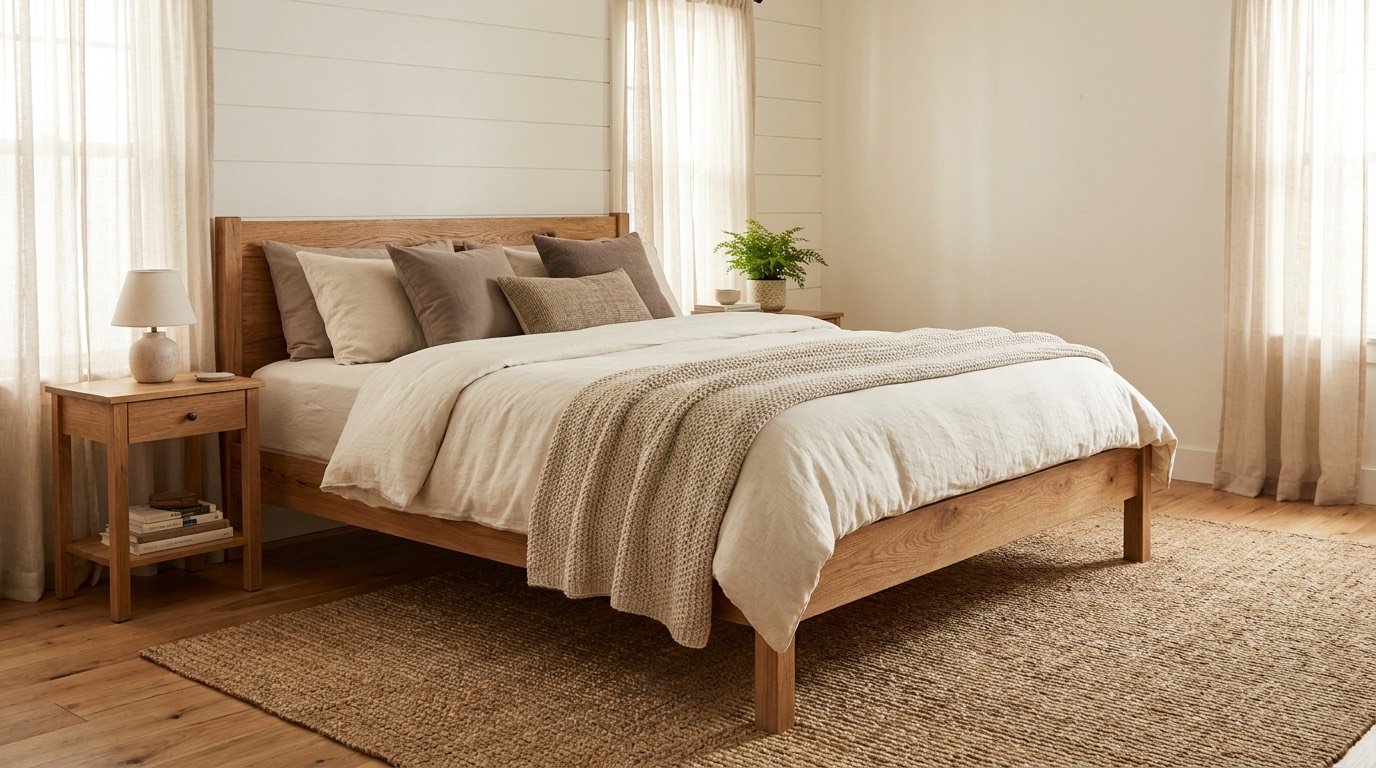
A solid headboard is one of the most common feng shui bedroom recommendations. It's associated with a feeling of stability and support behind you as you sleep, rather than an open or unsupported feeling. Wood, upholstered, and panel headboards are all popular choices.
There's no single material that's considered universally required. The main idea is having something solid and stable behind the bed rather than an open frame or empty wall space with nothing to anchor it visually.

Leaving room on both sides of the bed makes the space easier to move through and gives it a more balanced feel. It also allows for matching or complementary nightstands on each side. Pushing a large bed tightly into a corner can make the room feel cramped and lopsided, even in a smaller space.
If your room is tight, even a narrow gap on the smaller side can help keep the layout from feeling squeezed.

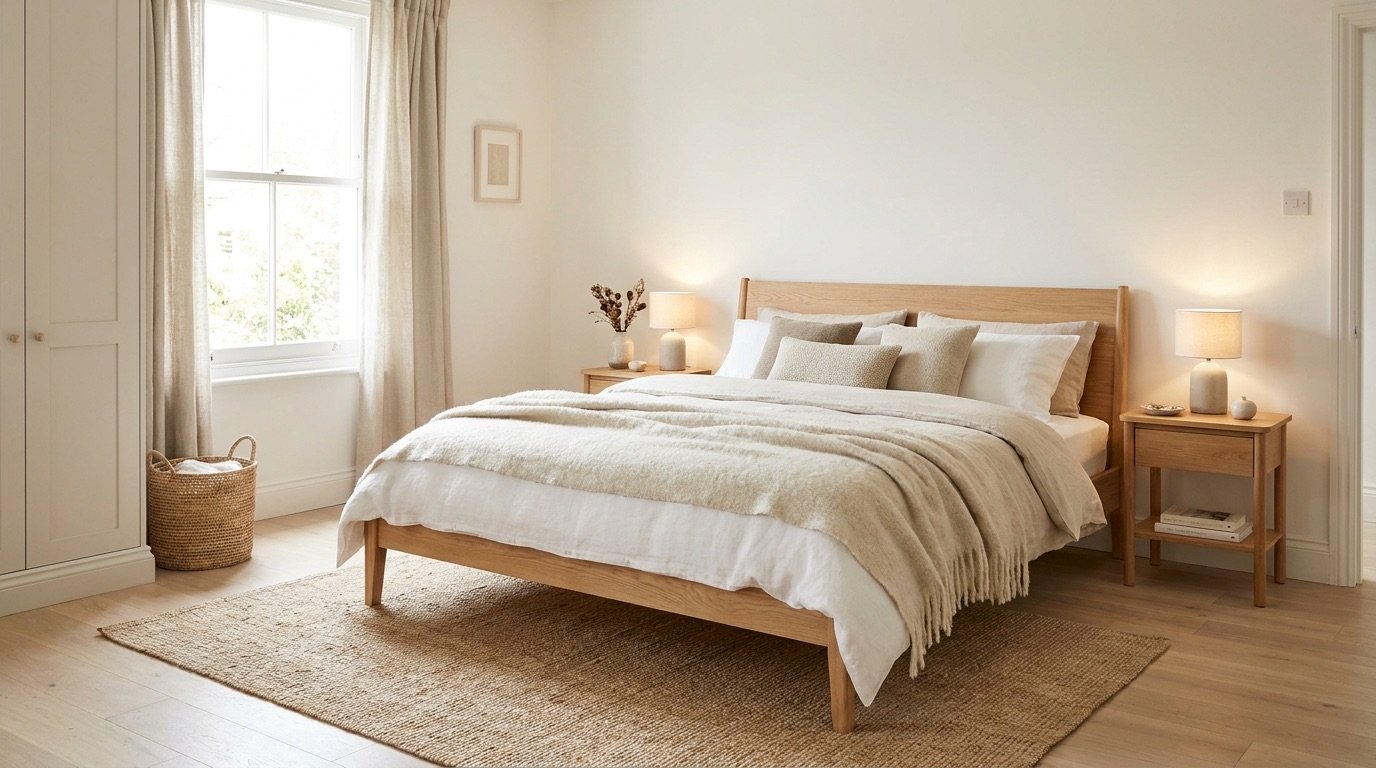
A symmetrical layout usually means nightstands, lamps, and other furniture that are similar in scale on each side of the bed, even if they aren't identical. This kind of visual balance is a common feng shui bedroom design goal because it creates a sense of order and calm.
Symmetry doesn't mean everything has to match exactly. A pair of nightstands in different finishes but similar height and size can still read as balanced. Feng shui doesn't require a bedroom to look like a hotel showroom to work well.

The bedroom door should be able to open fully without bumping into furniture, boxes, or a bed frame. A blocked or partially blocked door interrupts the natural flow into the room and can make the entrance feel cramped before you even get inside.
Walk through your bedroom door and check that the swing path is completely clear. If storage tends to pile up behind the door, that's usually the easiest fix to make first.

In a small bedroom, start by getting the bed placement right, since it's the largest and most important piece of furniture in the room. After that, cut down on extra furniture you don't actually need and choose nightstands sized appropriately for the space, rather than oversized pieces that eat up the walkway.
Vertical storage, like wall shelves or a tall narrow dresser, helps you avoid crowding the floor. Keeping pathways open matters even more in a small feng shui bedroom layout, since there's less room to work with overall.

In a larger bedroom, avoid the common trap of pushing every piece of furniture against the walls and leaving the middle of the room empty. Instead, create defined zones, such as a sleeping area, a seating nook, or a small reading corner, using rugs, benches, or chairs to anchor each space.
The bed should still be the clear focal point of the room, even with other furniture around. A large empty bedroom without any zoning can end up feeling less cozy than a smaller, well-arranged one.

When a bedroom has several windows, it can be hard to find a solid wall for the headboard. In this case, choose whichever wall has the least window coverage, even if it isn't completely solid, and treat that as the best available option for the bed.
Curtains or blinds are a practical solution here, since they can visually "solidify" a wall behind the bed and add privacy at the same time. This keeps the room feeling more enclosed and restful, even with lots of natural light during the day.

Traditional feng shui usually prefers a solid wall behind the bed rather than a window, since a window is seen as a less stable and less protected position. If moving the bed away from the window isn't possible in your layout, a sturdy, tall headboard can help create more of that supported feeling.
Layered window treatments, like blackout curtains with a lighter sheer underneath, also help soften the window and add a greater sense of enclosure. There's no established health risk tied to sleeping under a window; this is a matter of feng shui preference.

Bedrooms with more than one door, such as an attached bathroom or walk-in closet, take a little more planning. Start by identifying the main entrance to the room and treat that as the priority when applying the commanding position described above.
Avoid placing the bed directly between two doors, since this can make the sleeping area feel like a walkway rather than a retreat. Keep pathways to the closet and bathroom clear, and use furniture placement to visually separate the sleeping zone from the busier parts of the room.

Long, narrow bedrooms often end up with the bed looking stranded at one end of the space. Using a rug that extends beyond the sides of the bed, along with nightstands, helps visually anchor the sleeping area instead of letting it float in an empty stretch of room.
Keep a clear path down the length of the room so it doesn't feel like a hallway. Avoid lining every piece of furniture along one wall, since that can make the narrow shape feel even tighter than it already is.

In rooms with a sloped or angled ceiling, such as an attic bedroom, it's usually more comfortable to position the bed under the highest part of the ceiling rather than tucked into the low, cramped section. This avoids the closed-in feeling that comes from sleeping directly under a steep slope.
Lower furniture pieces, like a low dresser or bench, tend to work better in the areas where the ceiling height drops. This keeps the room functional without making the low sections feel wasted or awkward.

When space allows, a nightstand on each side of the bed supports both balance and everyday convenience. Nightstands roughly the same height as the top of the mattress are easiest to use and tend to look more proportional in the room.
Oversized nightstands can crowd a smaller bedroom, so scale them to the room size rather than choosing the biggest option available. Keeping the surfaces relatively clear also helps the whole layout feel calmer, which ties into clutter control covered later in this guide.

A common feng shui bedroom concern is a mirror positioned so it directly faces the bed, since some practitioners believe this creates a more restless energy. If you have a mirror in this spot, consider moving it to a side wall, inside a closet door, or angling it so it doesn't reflect the bed directly.
Full-length mirrors work well on a wall perpendicular to the bed or inside a closet. From a purely practical standpoint, a mirror facing the bed can also create distracting reflections at night, especially with hallway light or moonlight coming through a window.

Televisions, phones, and computer equipment are generally kept out of the immediate sleeping zone in feng shui bedroom design. The idea is to reduce visual clutter and mental stimulation close to where you rest. A charging station on a nightstand or a wall-mounted TV facing the bed both go against this general guideline.
This overlaps with more established sleep advice, which also recommends limiting screens in the bedroom, though the reasoning is different. Feng shui frames it as reducing distraction and clutter around the commanding position, while sleep research focuses more on light exposure and mental stimulation before bed.

Working from a desk that's just steps from your bed can blur the line between rest and work, both visually and mentally, which feng shui philosophy generally advises against. Where possible, place the desk on the opposite side of the room from the bed, or in an alcove that feels somewhat separate.
In smaller rooms where a full separation isn't possible, a folding screen, a bookshelf, or even a curtain can create a visual break between the two zones. The goal is for the sleeping area to still feel distinct from the work area, even in a shared room.

A couples' bedroom layout typically works best with equal, balanced access to both sides of the bed, rather than one side pushed against a wall. Two nightstands, even simple ones, help each person have their own dedicated space rather than sharing a single surface.
Avoid an arrangement where one side of the bed feels like an afterthought, such as a narrow gap next to a closet versus a wide, open side. Leaving comparable space on both sides supports the sense of balance that couples' layouts are generally going for.

Traditional feng shui often recommends keeping the space underneath the bed relatively open, rather than packed with boxes and bins. The idea is that a cluttered space under the bed can interfere with a restful, "unblocked" feeling in the sleeping area.
If under-bed storage is genuinely necessary in your space, using labeled, organized bins is a reasonable middle ground rather than loose, disorganized items. Alternatives like a slim dresser or closet organizers can also take pressure off the under-bed area.

A rug that's properly sized for the bed helps visually connect the bed and nightstands into one cohesive area, rather than having furniture that looks scattered. As a general guide, a rug should extend well beyond the sides and foot of the bed so it reads as an intentional part of the layout, rather than a small accent piece.
A too-small rug that only peeks out from under the bed frame tends to look disconnected rather than grounding. If you're unsure on sizing, it's usually better to size up than to end up with a rug that looks like an afterthought.

Color can reinforce the zones you've already created with furniture placement. In the sleeping area, feng shui bedroom colors tend to lean toward soft neutrals, earth-inspired shades, and muted greens or blues rather than bright, high-energy tones, since this is the zone meant to feel the most restful. A workspace or seating nook elsewhere in the room can carry a slightly more energizing accent without disrupting the calm around the bed.
Color recommendations can vary depending on the specific feng shui school or approach you're following, so there isn't one single "correct" palette. Choosing calming tones for the sleeping zone and letting other areas of the layout carry a bit more contrast is generally more useful than applying one flat color scheme across the whole room.

Where you place your light sources matters as much as the light itself. A lamp on each nightstand reinforces the balanced layout around the bed, while a floor or table lamp in a separate seating or work zone helps that area read as its own distinct space rather than blending into the sleeping area.
Try to avoid relying only on harsh, bright overhead lighting in the evening hours, since it tends to work against the relaxed feeling most feng shui bedroom layouts are going for. Dimmable fixtures are a simple upgrade if your current lighting only has one bright setting.

Plants can be a nice addition to a feng shui bedroom, but it's best to use them selectively rather than filling every corner. Keep walkways and the area around the bed clear, and choose plants that will actually do well with the light your room gets, so you're not stuck with something wilting in a dark corner.
Recommendations about plants can vary quite a bit across different feng shui practices and practitioners. It's worth being cautious about strong claims that plants "purify the air" or guarantee better sleep, since those benefits aren't well established for typical houseplants in normal room conditions.

Clear floors, tidy nightstand surfaces, closed storage, and regularly removing things you no longer use all contribute to a calmer-feeling bedroom. This connects directly to the practical goal behind many feng shui bedroom layout ideas: a room that's easier to move through and rest in.
Keeping the entry and main pathways open, as mentioned earlier for the bedroom door, is part of this same clutter-reduction mindset. A tidy room isn't just about aesthetics here; it genuinely makes the space more functional day to day.

When a bedroom has its own bathroom, the shared wall and door placement can affect the layout more than people expect. Where possible, avoid positioning the headboard directly against the bathroom wall, since a solid, quieter wall elsewhere in the room usually gives more of a supported feeling behind the bed. Keeping the bathroom door closed when it's not in use also helps the sleeping area feel more separate and contained.
If the bathroom door is visible from the bed, try to angle or position the bed so it isn't the very first thing in your line of sight. A privacy screen, a half-open closet, or simply the angle of the bed can help create a clearer visual break between the two spaces without any major renovation.

If you're starting completely from scratch, here's a straightforward sequence to follow:
The best feng shui bedroom layout starts with the bed against a solid wall in the commanding position described above. From there, a few things generally round out the layout: balanced space on both sides of the bed, similarly scaled nightstands, and a headboard that gives a sense of stability.
Clear pathways matter just as much as furniture placement. A bedroom door that opens freely, floors that aren't cluttered, and a room free of unnecessary furniture all support the same goal of an easy, unobstructed flow through the space.
Beyond the layout itself, comfort details round things out. Soft, warm lighting rather than harsh overhead light, calming colors, and minimal distractions from electronics or work materials all contribute to a bedroom that feels more restful. None of these elements works in isolation; it's really the combination of bed placement, clear circulation, and a calm atmosphere that defines a strong feng shui bedroom layout overall.
Even with good intentions, a few common missteps can undercut an otherwise solid feng shui bedroom layout:
Since every bedroom is different, it helps to match your approach to your room's specific challenges:
| Your bedroom situation | What to prioritize |
| Small bedroom | Clear pathways and appropriately scaled furniture |
| Multiple windows | A stable headboard and the most enclosed wall available |
| Bed faces the door | Reposition if possible; otherwise use practical design solutions like a footboard or rug |
| Bedroom workspace | Visually separate the work and sleep zones |
| Large bedroom | Create balanced zones instead of spreading furniture randomly |
Use this as a starting point, then adjust based on the specific quirks of your own room, whether that's a sloped ceiling, an extra door, or an attached bathroom.
There's no single perfect feng shui bedroom layout that works for every room or every person. The best starting point is almost always bed placement, since it's the anchor for everything else in the space. From there, aim for the commanding position where possible, balance out your furniture, and leave your pathways clear.
Every bedroom has its own architecture to work with, whether that's a sloped ceiling, extra windows, or an awkward door placement, so it's worth adapting these feng shui principles to fit your actual room rather than forcing an ideal that doesn't apply. At the end of the day, comfort and everyday functionality should stay just as much of a priority as any specific feng shui guideline.
In many feng shui traditions, yes — this is often called the "coffin position," referring to how a coffin is traditionally carried feet-first out of a room. It's a symbolic concern within feng shui belief systems rather than an established or proven safety issue, so it's worth treating as a design preference rather than a medical warning.
There isn't one universal direction that works for every person or every bedroom. Different feng shui systems use different methods to determine a favorable direction, including compass-based approaches and calculations based on an individual's birth information, so recommendations can vary depending on which system you're following.
Traditional feng shui generally advises against positioning a ceiling fan directly above the bed, since an overhead object in that spot is seen as creating pressure over the sleeping area. Some feng shui practitioners suggest using a canopy or changing the bed position when a ceiling fan is directly above the bed, although approaches vary and this isn't a universally agreed-upon fix.
Many feng shui practitioners favor keeping the bedroom door closed at night to help contain the room's energy rather than letting it flow out into hallways, though this varies by approach. In practice, plenty of people also need the door open for ventilation, pets, temperature control, or general safety, and those everyday needs are reasonable to prioritize over the traditional guideline.
Recommendations vary a lot depending on which feng shui school you're referencing, since some use compass directions tied to the home's orientation while others calculate a personal direction based on the individual. Because there's no single universally accepted answer, it's generally more practical to prioritize a comfortable, well-supported bed placement over chasing one specific compass direction.
Clara Jameson is an interior design specialist with more than 10 years of experience helping people create stylish and functional spaces. She blends aesthetics with practicality to make sophisticated design approachable and achievable. Clara earned her B.A. in Interior Design from Savannah College of Art and Design. She enjoys traveling, visiting art galleries, and studying architecture to gather fresh inspiration that she brings to every project.

No Comments