


Metal roof vs shingles is one of the biggest choices you will make when your roof needs replacing.
Both materials are common across the US, but they differ in upfront price, lifespan, upkeep, and how they handle weather.
Shingles usually cost less to install. Metal usually lasts longer and needs less routine care. Neither one wins for every home.
The right pick depends on four things: your budget, your climate, how long you plan to own the home, and the look you want.
This guide covers each one with clear numbers, so you can compare quotes with confidence.
Metal Roof vs. Shingles: Key Differences at a Glance
Metal roofing is a category, not one product. It includes steel, aluminum, copper, and zinc, and it comes in different systems, such as standing seam panels and exposed-fastener panels. Asphalt shingles are layered pieces made from a fiberglass mat coated with asphalt and mineral granules.
Here is how metal roofing vs asphalt shingles compare overall:
| Factor | Metal Roof | Asphalt Shingles |
| Upfront cost | Higher | Lower |
| Typical lifespan | About 40–70 years | About 15–30 years |
| Maintenance | Low, but not zero | Low to moderate |
| Installation | Often needs specialized crews | Most roofers can do it |
| Durability | Strong against fire, rot, and wind | Fair; can lose granules and crack |
| Appearance | Modern or classic panel looks | Familiar look, many colors |
These figures are general estimates. Real results change with the product, roof design, climate, and installation quality. Treat the table as a starting point, then ask local contractors what applies to your home.
Metal Roof vs. Shingles Cost: Which Is More Affordable?
Shingles are the cheaper option upfront. Metal often costs about two to three times more, mainly because the material is pricier and the install takes more skill.
The table below uses one example: a roof with 2,000 square feet of surface area, including tear-off of the old roof. These are rough national ranges, not quotes.
| Roofing Type | Typical Installed Cost per Sq. Ft. | Example Total (2,000 sq. ft.) |
| Asphalt shingles | About 8 | About 16,000 |
| Metal roofing | About 16 or more | About 32,000 or more |
The metal roof cost per square foot swings widely. Standing seam steel costs more than exposed-fastener panels, and copper costs far more than both.
Always compare quotes for the same roof area and the same scope of work. A low bid that skips tear-off or flashing is not a true bargain. If you want a deeper breakdown by material and region, our roof replacement cost guide has more detail.
Metal Roofing and Shingle Installation Costs
Metal roof installation cost covers more than panels. Both roofs include materials, labor, underlayment, flashing, tear-off, and disposal. Metal labor often costs more because crews need special tools and training for cutting, seaming, and sealing.
Some metal systems can go over an existing roof if local codes and roof condition allow it. That can save on tear-off, but it is not always an option.
Ask every contractor to separate materials, labor, and extra work. Compare these items across estimates:
- Tear-off and disposal
- Underlayment type
- Flashing and trim
- Ventilation work
- Decking repair allowance
- Warranty terms
What Affects the Final Roofing Price?
Two similar homes can get very different quotes. The main roof replacement cost factors are:
- Roof area and pitch (steeper roofs take more labor)
- Valleys, dormers, chimneys, and skylights
- Material grade and roofing system
- Local labor rates and climate-related install rules
- Removing old roofing and fixing damaged decking
Decking repair is the one that surprises people most. Rotted wood is often found only after the old roof comes off.
Which Roof Lasts Longer: Metal or Asphalt Shingles?
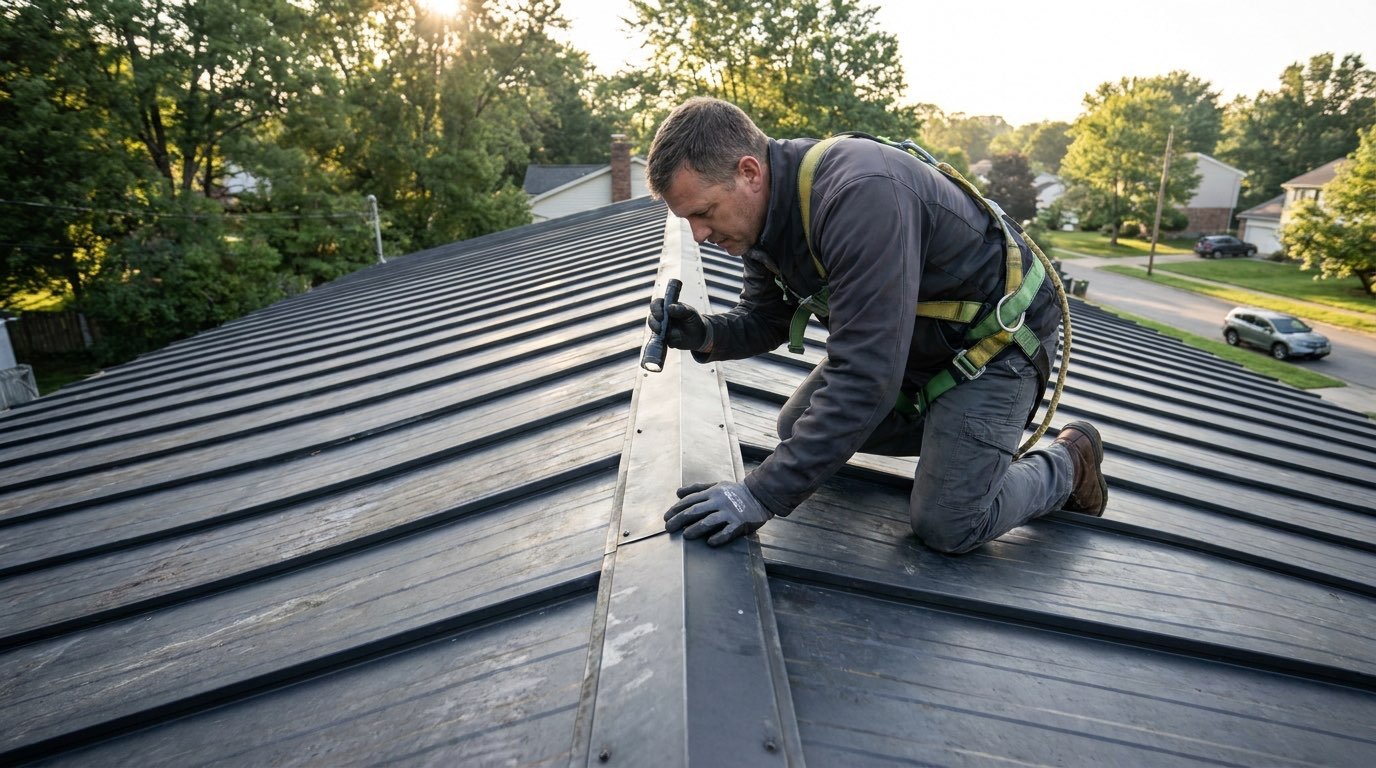
If you are asking how long does a metal roof last, the usual answer is 40 to 70 years, depending on the system. Asphalt shingles often last 15 to 30 years. If you are comparing other materials too, our guide on how long a roof lasts covers more of them.
| Roofing Type | Typical Lifespan |
| Architectural asphalt shingles | About 20–30 years |
| Basic 3-tab asphalt shingles | About 15–20 years |
| Exposed-fastener metal panels | About 20–40 years |
| Standing seam metal | About 40–70 years |
Exposed-fastener panels use screws with rubber washers. Those washers can wear out and may need replacing. Standing seam panels hide their fasteners, which is one reason they often last longer.
Shingle life depends on product quality, attic ventilation, and weather. Warranties help, but a 50-year warranty does not promise a 50-year roof. Most warranties have conditions, prorated coverage, and exclusions, so read the fine print.
What Can Shorten a Roof's Lifespan?
Several roof lifespan factors apply to both materials:
- Poor installation or wrong fastening
- Weak attic ventilation
- Moisture buildup and slow leaks
- Severe storms and falling branches
- Skipped maintenance
A yearly roof inspection, plus one after major storms, catches small problems early. The National Roofing Contractors Association (NRCA) is a good place to find roofing guidance and qualified contractors.
Metal Roof vs. Shingles: Pros and Cons
This metal roof pros and cons table gives you the quick view:
| Metal Roof | Asphalt Shingles | |
| Pros | Long lifespan, fire resistant, low upkeep | Lower cost, easy repairs, many colors |
| Cons | Higher cost, can dent, specialized repairs | Shorter lifespan, granule loss, more replacements |
Beyond price, think about how you live. Metal tends to suit owners who plan to stay put and want less upkeep. Shingles suit owners who want a lower bill now and simple repairs later.
Metal Roofing: Advantages and Disadvantages
Metal roof advantages are real, though they depend on the system you choose.
Pros
- Long expected lifespan for many systems
- Resists fire, rot, and many types of weather damage
- Low routine maintenance
Cons
- Higher upfront cost
- Can dent from hail or heavy debris
- Rain noise may be noticeable without proper decking and insulation
- Repairs may need a specialist
Asphalt Shingles: Advantages and Disadvantages
Asphalt shingle advantages explain why they cover most US homes.
Pros
- Lower upfront cost
- Widely available materials and contractors
- Familiar look in many colors
- Simple installation and repair
Cons
- Shorter lifespan than many metal systems
- Storm damage and granule loss over time
- More frequent replacement
Metal Roof vs. Shingles: Which Performs Better in Different Climates?
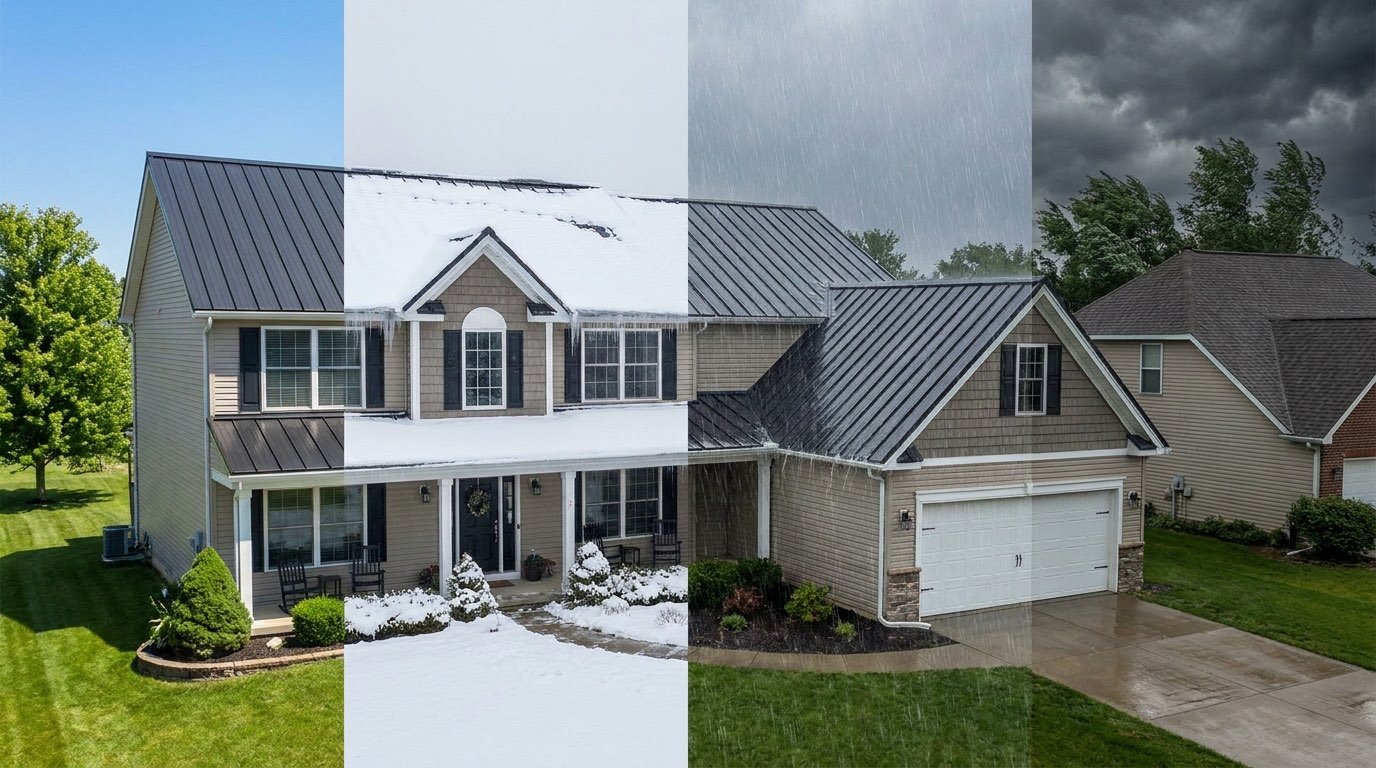
No material wins everywhere. Local weather, building codes, and installation quality matter as much as the material. Always pick a product rated for your area.
| Weather | Metal Roofing | Asphalt Shingles |
| Hot sun | Reflective finishes can help | Reflective options exist, but heat can age shingles |
| Cold and snow | Sheds snow quickly; may need snow guards | Performs well when installed correctly |
| Heavy rain | Strong when flashing is done right | Strong when underlayment is done right |
| High wind | Good with proper fastening | Needs wind-rated shingles and proper nailing |
| Hail | Can dent, though impact-rated options exist | Can bruise or lose granules; impact-rated options exist |
For hail, see the Insurance Institute for Business & Home Safety (IBHS) for research on storm-resistant roofing.
Hot, Cold, and Rainy Climates
In metal roof vs shingles in hot climates, metal's reflective coatings can reduce heat absorbed by the roof. Metal roof energy efficiency still depends on insulation and attic ventilation, so do not expect a promised savings number. ENERGY STAR lists reflective roof products if you want to compare options.
In cold climates, both materials do well when installed correctly. In rainy areas, flashing, drainage, and underlayment do most of the work. For example, a roof with perfect panels but poor flashing around a chimney will still leak.
Check local codes and product ratings before you buy.
Metal Roof vs. Shingles: Maintenance, Repairs, and Installation
Metal roof maintenance is light, but not zero. Shingles need a bit more watching. Installation quality affects both performance and warranty coverage.
| Task | Metal Roof | Asphalt Shingles |
| Routine care | Check fasteners, sealants, and debris | Check for missing, curled, or cracked shingles |
| Cleaning | Clear leaves and debris from valleys | Clear debris; watch for moss in damp areas |
| Typical install time | Often longer | Often shorter |
| Contractor pool | Smaller, more specialized | Very large |
Keep this checklist handy:
- Inspect once a year and after big storms
- Clear gutters and valleys
- Trim overhanging branches
- Look for lifted flashing or loose fasteners
- Call a pro for any active leak
Repairing Metal Roofing vs. Asphalt Shingles
Metal roof repair cost can run higher per visit because repairs may involve panels, fasteners, or flashing. Shingle repairs are usually simpler, like swapping damaged or missing pieces.
| Metal Roof | Asphalt Shingles | |
| Common repairs | Panel fixes, fastener replacement, flashing | Replacing shingles, resealing, flashing |
| Key concern | Matching panels and finishes | Matching color and age of shingles |
Follow manufacturer requirements for repairs, since the wrong method can void a warranty. Have a contractor inspect the roof before estimating any repair, especially for a leak.
Metal Roof vs. Shingles: Long-Term Cost and Value
Metal roof vs shingles long-term cost is not decided by the sticker price. Lifespan, repairs, maintenance, and replacement all count toward the total cost of ownership.
A longer-lasting roof is not automatically cheaper. If your shingles last the full 30 years, they may beat metal on total cost. If they need replacing at year 20 or 25, metal can catch up.
Also, do not count on metal raising your resale value. That depends on your market and buyers.
| 30-Year Scenario (2,000 sq. ft.) | Shingles | Metal |
| Install now | $12,000 | $25,000 |
| Replacement needed? | Yes, around year 25: $12,000 | No |
| Maintenance and repairs | $3,000 | $1,000 |
| Total | $27,000 | $26,000 |
| If shingles last all 30 years | $15,000 | $26,000 |
How to Compare the Cost Over 30 Years
Your 30-year roof cost is simple math: installation + maintenance + repairs + replacement.
The table above uses today's dollars for a 2,000 sq. ft. roof, with no inflation. It is an illustration, not a quote.
Real numbers will shift with your roof's lifespan, local labor rates, and future material prices. Plug in actual quotes from your area to get a useful answer.
Metal Roof vs. Shingles: Which Is Better for Your Home?
So, which is better metal roof or shingles? It depends on what you value most.
| Your Priority | Better Fit |
| Lowest upfront cost | Asphalt shingles |
| Traditional look | Asphalt shingles |
| Easy, widely available repairs | Asphalt shingles |
| Longest expected lifespan | Metal roofing |
| Durability and lower upkeep | Metal roofing |
| Staying 20+ years | Metal roofing |
Budget, climate, how long you will stay, and when you want to replace the roof next all shift the answer. There is no wrong choice, only a better match.
When Asphalt Shingles Make More Sense
Affordable roofing materials matter when cash is tight. Shingles often make sense if you:
- Have a limited upfront budget
- Prefer a traditional look
- Expect to sell within several years
- Want many contractors to choose from and simple repairs
When Metal Roofing Makes More Sense
Long-lasting roofing materials are where metal stands out. It may make sense if you:
- Plan to stay in your home for many years
- Value durability and a long expected lifespan
- Prefer low routine maintenance
- Live where the chosen metal system suits local weather and building codes
Conclusion
Metal roof vs shingles comes down to a simple trade-off. Shingles generally cost less upfront, while metal roofing often offers a longer expected lifespan.
The best choice depends on your budget, climate, how long you will own the home, and local roofing requirements. When you are ready, get installed estimates from qualified roofing contractors, and make sure each one covers the same roof area and scope of work.
Frequently Asked Questions
Can you install a metal roof over existing asphalt shingles?
A metal roof over shingles is sometimes possible. Local building codes, the roof's condition, and the manufacturer's rules decide whether it is allowed. Soft spots, multiple old layers, or moisture problems can rule it out. A contractor should inspect the roof before recommending an overlay.
Does a metal roof make a house hotter or colder?
Metal alone does not set your indoor temperature. Metal roof energy efficiency depends on the whole roof assembly: insulation, attic ventilation, roof color, and reflective coatings. Climate matters too. A well-insulated, well-ventilated attic usually does more for comfort than the roofing material by itself.
Are metal roofs more likely to attract lightning?
Metal roof lightning risk is a common worry, but metal does not make a home more likely to be struck. Metal conducts electricity but does not attract lightning. If lightning is a concern, follow local building and electrical safety requirements and ask an electrician about lightning protection.
Can you walk on a metal roof or an asphalt shingle roof?
Walking on metal roofs and shingles can both cause damage and create a fall hazard. Safety depends on slope, material, installation, and manufacturer instructions. Wet, frosty, or steep surfaces are especially risky. Whenever possible, let a professional with proper safety gear handle roof access.
Do metal roofs require special insurance coverage?
Metal roof insurance rules and premiums vary by insurer, location, roofing material, and policy. A metal roof does not automatically earn a discount. Before installing, ask your insurer:
- Does my policy cover this roof type?
- Do you offer any roof-related discount?
- Are there hail or wind exclusions?