

12 Modern Christmas Decor Ideas Garland for Every Room
There's something magical about walking into a home decorated with


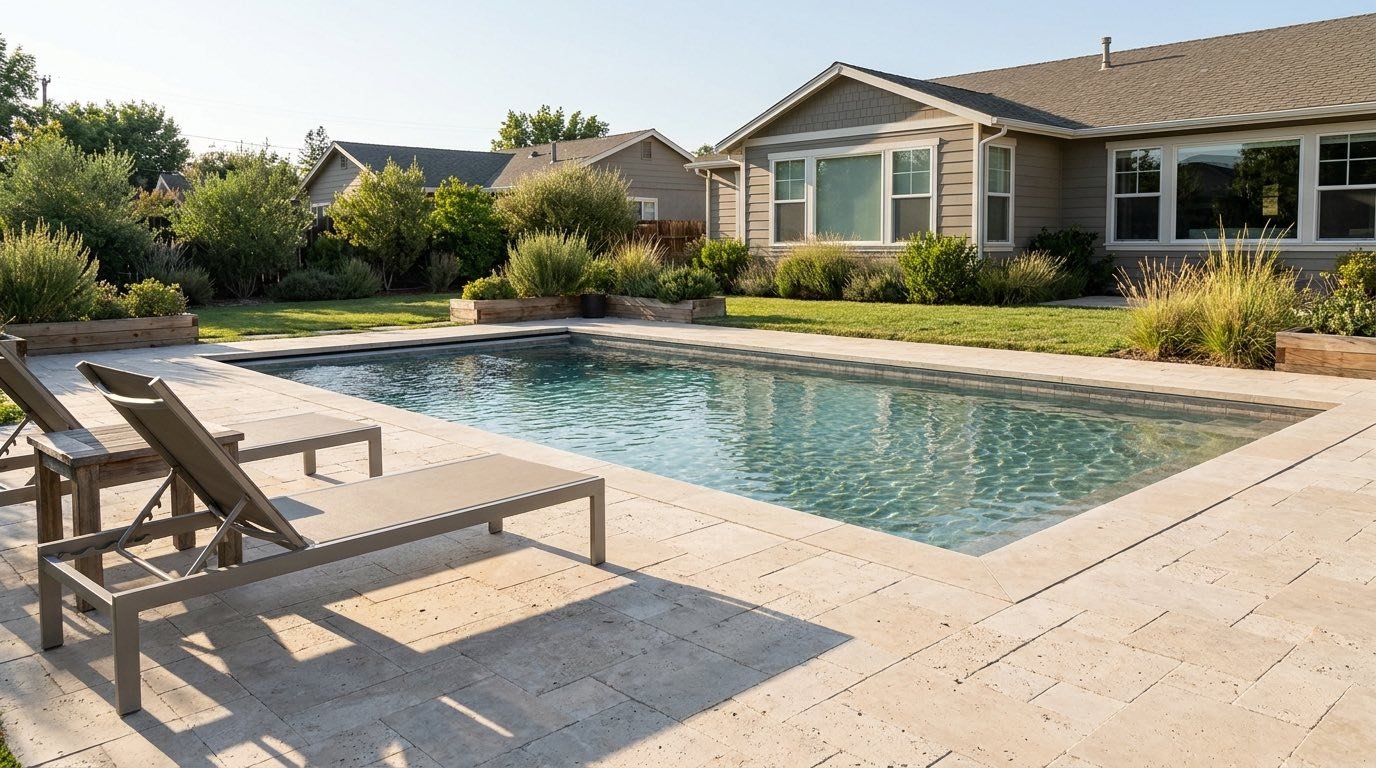
The right pool deck can transform your backyard into a more inviting place to swim, relax, and entertain.
From modern concrete finishes and patterned pavers to natural stone patios and cozy wooden platforms, the best pool deck ideas balance style, comfort, safety, and maintenance.
Whether you have a small backyard, an above-ground pool, or a spacious inground pool, these 21 pool deck ideas will help you find a design that fits your space and budget.
You'll also learn how different decking materials compare, what to consider before building, and how to create a poolside area that works for everyday use.
Before choosing a design, consider your climate, available space, surface traction, drainage, and maintenance needs. These factors can make as much difference as the appearance of your deck.
Your deck surface sets the look, the upkeep, and a big part of the cost.

Filename: concrete-pool-deck-brushed-finish.jpg
Concrete pool decking is popular because it can be finished in many ways. A brushed finish gives a simple, textured surface. Stamped concrete can copy the look of stone or brick. Exposed aggregate shows small stones in the surface, and stain or color adds a custom look.
Concrete is durable, but cracks can appear over time, and dark shades can get hot in full sun. Lighter colors and textured finishes are worth testing for bare feet. If you already have a sound slab, an overlay or coating can refresh it and may cost less than starting over, so ask a contractor to check the slab first.
Best for: flexible shapes, custom finishes, and refreshing a sound slab. Watch for: cracking, surface heat, and the finish you pick.

Filename: paver-pool-deck-herringbone-border.jpg
Pool deck pavers come in many shapes, colors, and sizes, so you can create a pattern that suits your backyard. Try herringbone for a more detailed look or a running bond for a simpler finish. For added visual interest, use larger pavers in the main seating area and a contrasting border around the pool. Keep the colors complementary so the pattern doesn't compete with the rest of the backyard.
Because pavers are modular, a damaged piece can often be replaced on its own. The joints need occasional upkeep, and pavers can shift if the base underneath was not prepared well.
Best for: patterns, borders, and piece-by-piece repairs. Watch for: joint upkeep and settling if the base was poorly prepared.

Filename: flagstone-pool-deck-groundcover-joints.jpg
A stone pool deck brings natural variation in color and texture. Flagstone has irregular shapes that blend well with plants, especially when small gaps are filled with groundcover or gravel. It suits relaxed, garden-style yards.
Performance and upkeep vary by stone type and finish. Some stones are porous and need sealing, and some smooth finishes feel slick when wet. Ask for samples and test them with a splash of water.
Best for: natural, garden-style yards. Watch for: porosity, sealing needs, and finishes that feel slick when wet.

Filename: wood-pool-deck-horizontal-boards-platform.jpg
Wood adds warmth. Boards laid across the width of a space can make a yard feel wider, a border can define the edge, and a raised platform can create a separate lounge area.
Wooden pool decking needs regular care, such as cleaning and sealing or staining, to slow weathering. Untreated wood often fades to gray. Sand rough spots to prevent splinters, and check that screws and nails stay flush with the surface.
Best for: warm looks and raised platforms. Watch for: sealing or staining, splinters, and weathering.

Filename: composite-pool-decking-two-tone-border.jpg
Composite decking offers consistent color and a clean board pattern. Many composite pool deck ideas use two tones, such as a main color with a darker border.
It usually needs less routine finishing than many natural wood options, but it still needs cleaning. Heat retention, traction, and suitability near water vary by product, so check the manufacturer's information and test a sample in direct sun.
Best for: consistent color with less routine finishing. Watch for: heat and traction that vary by product.

Filename: porcelain-tile-pool-deck-grass-strip.jpg
Outdoor-rated porcelain gives a clean, modern surface in stone-like, wood-like, or concrete-like finishes. Make sure the product is rated for exterior use. Mixed-material decks combine surfaces, such as stone strips with grass, or a paver patio that steps down to a wood lounge area.
Plan transitions carefully so edges are level and drainage works. A professional installer can confirm the surface suits your site.
Best for: clean modern looks and mixed layouts. Watch for: the outdoor rating, drainage, and installation quality.
Space shapes every decision. These layouts solve different problems, so match the idea to your yard rather than your wish list.

Filename: small-backyard-pool-deck-storage-bench.jpg
In a small backyard, every foot counts, so the goal is a clear walking path. A bench with storage inside works hard because it gives seating and hides pool toys.
Two lightweight loungers you can move are better than one big sectional. This layout suits yards where the pool takes up most of the space. The trade-off is less room for dining, so plan to eat inside or use a fold-down table.

Filename: narrow-pool-deck-built-in-bench.jpg
Narrow yards often end up with a pool in the middle and no room to pass. Placing the pool toward one side and building a deck strip along the other gives you one clear walkway.
A bench built along the fence replaces bulky chairs, and loungers can sit end to end. This works best in side yards and long lots. The trade-off is less privacy, so budget for a slim row of planters or a screen along the fence.

Filename: large-pool-deck-lounge-dining-zones.jpg
A large deck is easy to build but hard to make comfortable. Without breaks, it can feel like a parking lot. Splitting it into lounge, dining, and conversation zones gives each area a purpose.
Using the same main material keeps the zones looking connected, while borders, planters, or a small change in level mark the edges. This suits big yards and families who entertain. The trade-off is more surface to clean, more heat in full sun, and a higher cost.

Filename: raised-pool-deck-railing-steps.jpg
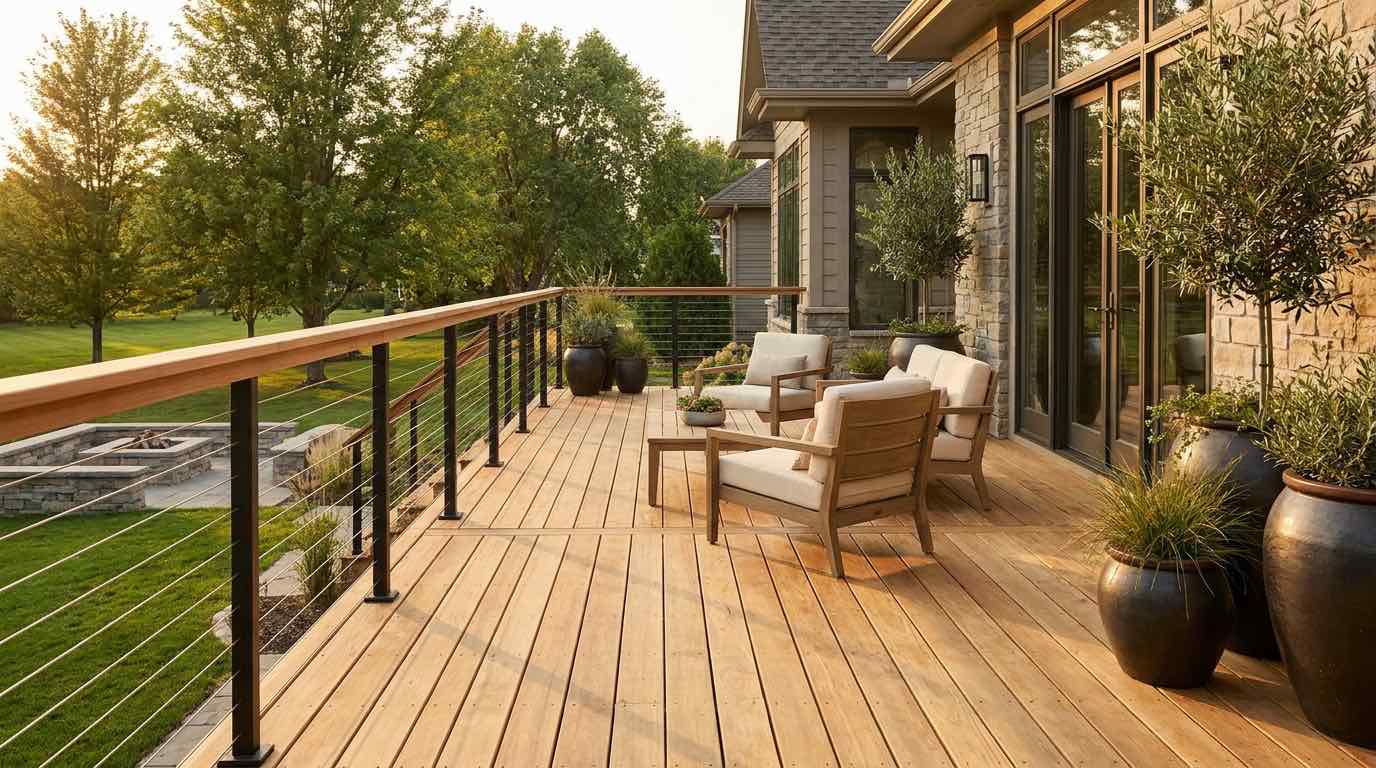
A raised pool deck makes sense when the yard sits lower than the house or when you want a deck level with an above-ground pool. It can improve views and hide equipment underneath.
For raised wood decks, the American Wood Council publishes a prescriptive guide for single-level residential wood decks that builders often use as a reference, so ask your builder to check the current edition.
The trade-off is more cost and more rules.Railings, stairs, and barriers all need planning with a qualified professional and your local building office.

Filename: sloped-yard-terraced-pool-deck.jpg
A slope can become an asset. Steps and terraces create natural zones, such as a lower pool deck and an upper dining deck with a view. Retaining walls and planted edges hold soil in place and add texture. This suits yards with a noticeable grade.
The trade-offs are higher excavation and wall costs and trickier drainage, because water runs downhill toward the pool and house. Ask a qualified designer or engineer to plan the retaining features and drainage.
Pool type changes how a deck connects, supports, and protects.

Filename: inground-pool-deck-wide-patio.jpg
An inground pool deck sits at ground level, so it can flow out of the back door like an outdoor room. Put the widest section on the side with the best afternoon sun or view, and keep the other sides narrower to save cost.
A wide patio near the house leaves space for furniture, while a slim edge on the far side is enough for access. The trade-off is that a wide deck means more surface to heat up and clean.

Filename: above-ground-pool-wraparound-deck.jpg
Above ground pool deck ideas often include a wraparound deck, a partial platform with a side entry, or a deck attached to the house. A full wraparound gives easy access and plenty of seating but costs more and needs more structure.
A small platform with steps costs less but limits space. Plan safe steps and a way to control entry.Because the deck is raised, it needs proper structural design and safety features, such as railings and a secure access point.
In-ground decks sit at ground level and have different needs. The Consumer Product Safety Commission's barrier guidelines cover above-ground pools too, and an attached deck can complicate barrier requirements, so check local rules before building.

Filename: plunge-pool-deck-built-in-bench.jpg
Plunge pools are small, so a busy deck makes them feel crowded. One surface and a few pieces of furniture make the space look larger. A built-in bench along one edge works as seating and as a spot to sit with your feet in the water.
Add a few tall plants or a screen for privacy, since small yards are often close to neighbors. This suits tight lots and courtyards. The trade-off is less room for entertaining, so keep dining separate.

Filename: natural-swimming-pond-timber-platform.jpg
Alt Text- Timber and stone platform at a natural swimming pond
A natural swimming pond looks best when the deck feels part of the landscape. Timber boards, flat stones, and planted edges can all work. Often a small platform or stone landing for entry is enough, because not every pond needs a conventional deck.
Hard surfaces next to the water can affect plants and the water setup, so keep the footprint small and ask your pond designer what suits your system.
Style is about the look you want, and function is about how you will use the space. These ideas cover both.

Filename: modern-minimalist-pool-deck-large-format-tile.jpg
Modern pool deck ideas rely on large, simple surfaces. Large-format porcelain or smooth concrete in one light color makes the space look clean and calm. Keep furniture low and plain, and add just one or two sculptural plants.
Hidden storage keeps clutter away. This style suits new homes with straight lines. The trade-off is that a minimal layout shows dirt, stains, and furniture marks quickly, and a large pale surface can feel bright in full sun.

Filename: tropical-pool-deck-lush-planting-shade.jpg
Tropical decks depend on layered plants, warm-toned surfaces, and plenty of shade. Wood or warm stone suits this look. Pick plants that survive your winters, since many tropical plants do not.
In cooler climates, hardy plants with bold leaves or pots that move indoors give a similar feel. The trade-off is upkeep, because lush planting drops leaves into the water. Choose low-litter plants near the pool and keep heavy planting at the edges.

Filename: mediterranean-pool-deck-stone-terracotta.jpg
This style leans on natural stone, warm neutrals, and rough textures. Terracotta pots, stone walls, and drought-tolerant plants such as lavender and rosemary suit sunny, dry climates. Choose earthy fabrics and simple furniture.
It works well on older homes or in yards that already have stone. The trade-off is that rough stone can be hard on bare feet and harder to clean, so test textures before you commit.

Filename: pool-deck-pergola-dining-area.jpg
Place shade where people sit, not over the whole pool. A pergola over a dining table or a shade sail over loungers leaves the rest of the deck sunny. Match the structure's color or material to the deck so it looks planned.
The trade-off is that fixed structures cost more than sails or umbrellas, and wind, local rules, and your site all affect what is suitable. Confirm the details with a local professional before you build.

Filename: pool-deck-outdoor-kitchen-dining.jpg
For entertaining, keep cooking, dining, and wet areas apart. Put the grill and prep counter on one side, the table in the middle, and the pool edge farthest from the heat. This keeps wet feet away from the grill and guests out of the cook's way. It suits medium to large decks. The trade-off is cost and complexity, since gas, electric, and water lines, plus fire safety and local rules, need professional planning.

Filename: pool-deck-evening-lighting-path-lights.jpg
Soft, warm lighting makes a deck usable after dark and helps guests see steps. Use lights on walls or planters for glow, low path lights along walkways, and markers on steps. Face seating toward the water so the lights are not in anyone's eyes.
The trade-off is installation. Electrical work around pools is covered by Article 680 of the National Electrical Code, including ground-fault protection and bonding, so hire a licensed professional and use equipment rated for the location.
The best pool deck material depends on your budget, climate, traction needs, upkeep, and style. Use the first table to compare look, upkeep, and cost, and the second to compare heat, traction, and key limits.
Look, upkeep, and relative cost
| Material | Appearance | Maintenance | Relative cost |
| Concrete | Customizable finishes | Low to moderate, depending on finish | Often lower to mid-range |
| Pavers | Modular patterns and colors | Joint and surface upkeep | Varies by material and pattern |
| Natural stone | Natural variation | Depends on stone and finish | Often mid-range to premium |
| Wood | Warm and natural | Often regular sealing or staining | Varies by species |
| Composite | Consistent boards | Generally less routine finishing | Often mid-range to premium |
| Outdoor porcelain | Clean, varied finishes | Depends on installation and product | Often mid-range to premium |
Heat, traction, and key limits
| Material | Heat | Traction | Key limit |
| Concrete | Depends on color; test lighter shades | Depends on finish; textured finishes add grip | Cracking and finish choice |
| Pavers | Depends on material and color | Varies by texture and sealer | Joint upkeep and settling |
| Natural stone | Varies by stone and color | Varies by stone and finish; polished surfaces can feel slick | Porosity and sealing |
| Wood | Dark boards get hot in full sun | Can get slick when wet or mossy | Weathering and splinters |
| Composite | Product-specific; dark colors can run hot | Product-specific; check slip-resistance information | Heat and traction vary by brand |
| Outdoor porcelain | Depends on color and finish | Look for outdoor, slip-resistant ratings | Needs the right rating and installation |
These tables give broad comparisons, not prices. Installed cost depends on the material, labor, your location, site preparation, and project complexity, and these can change the order. No material is always the cheapest, coolest, or safest.
For real numbers, collect written quotes from local professionals, and if you use an online cost guide, check its date, units, and what the price includes.
Questions to ask when comparing quotes
Quick ways to narrow your list
Start with how you will use the deck, then check the site.
Maintenance depends on the material. Concrete and stone may need cleaning and periodic sealing. Wood often needs cleaning plus sealing or staining.
Pavers need joint upkeep. Composite and porcelain usually need regular cleaning. Frequency changes with the product, sun and rain exposure, and your climate, so follow the maker's guidance. Inspect the deck each season for cracks, loose boards, and stains.
Safety starts with a surface that is not slick when wet and drains well. Watch for very hot surfaces in direct sun, and keep walkways clear. Add secure access and good lighting. Barriers matter most.
The U.S. Consumer Product Safety Commission publishes barrier guidelines for residential pools. They are guidelines, not a federal standard, but some states and localities have adopted them or based their rules on similar model codes, such as the International Swimming Pool and Spa Code.
Fence, gate, and latch rules differ by location, so check with your local building or health department. Electrical work near pools falls under Article 680 of the National Electrical Code, which covers items such as ground-fault protection and bonding, so use a licensed electrician.
The best pool deck ideas combine a style you love with materials that suit your climate, budget, and maintenance preferences.
Whether you choose concrete, pavers, natural stone, wood, or porcelain, consider how the surface will feel underfoot, how it handles water, and how much care it needs over time.
Start by shortlisting two or three designs that fit your backyard and pool type. Compare material samples in natural sunlight, plan clear walking paths, and account for drainage, shade, and seating before committing to a layout.
For raised decks or major construction, consult a qualified professional and check your local building requirements.
With thoughtful planning, your pool deck can become a comfortable, practical extension of your outdoor living space.
There is no single best choice. The right material depends on your budget, climate, traction needs, upkeep preferences, and style. Compare samples in your own yard, then ask installers how each option performs in your area.
Cost depends on more than the surface. Site preparation, labor, access, and structural needs can change the total a lot. The simplest path is a smaller deck, one material, and little grading. If you already have a deck or slab in good shape, refreshing or resurfacing it may cost less than a rebuild. Get several local quotes first.
Surface temperature depends on color, material, sun exposure, and finish, so no material is always the coolest. Lighter colors and shade often help. Test samples in direct afternoon sun, and ask suppliers for product-specific heat information.
It depends on how people will move, what activities you plan, and your pool design. Think about walkways, lounge areas, and access for cleaning. Local codes may set setbacks and barrier distances, so ask your building department which rules apply to your property instead of relying on a general measurement.
Start with a deep clean. Then repair cracks or loose boards, and consider resurfacing if the surface is worn. Add fresh furniture, planters, shade, and lighting. Small updates can change the look without a full rebuild.
Logan Tate is an outdoor and landscape specialist with more than 10 years of experience creating functional, elegant, and inviting environments. He focuses on combining style with practicality to help people make the most of their outdoor spaces. Logan enjoys traveling, exploring global landscape trends, and discovering new ideas to enhance outdoor living. His approach emphasizes thoughtful design, functionality, and aesthetic appeal for welcoming and usable outdoor spaces.

No Comments