

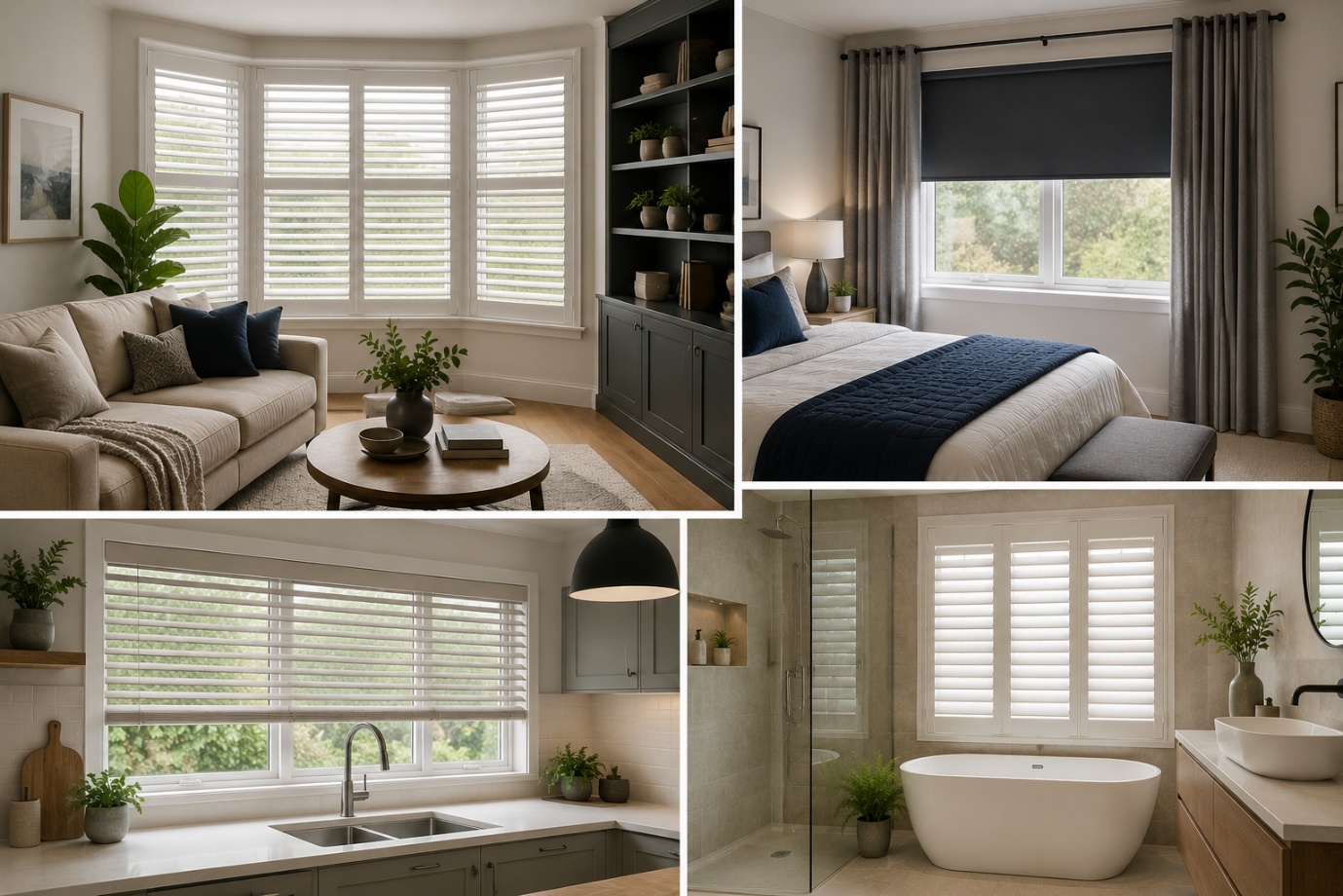
How to Choose the Perfect Window Coverings for Your Home
Window coverings are more than just decorative features. They influence


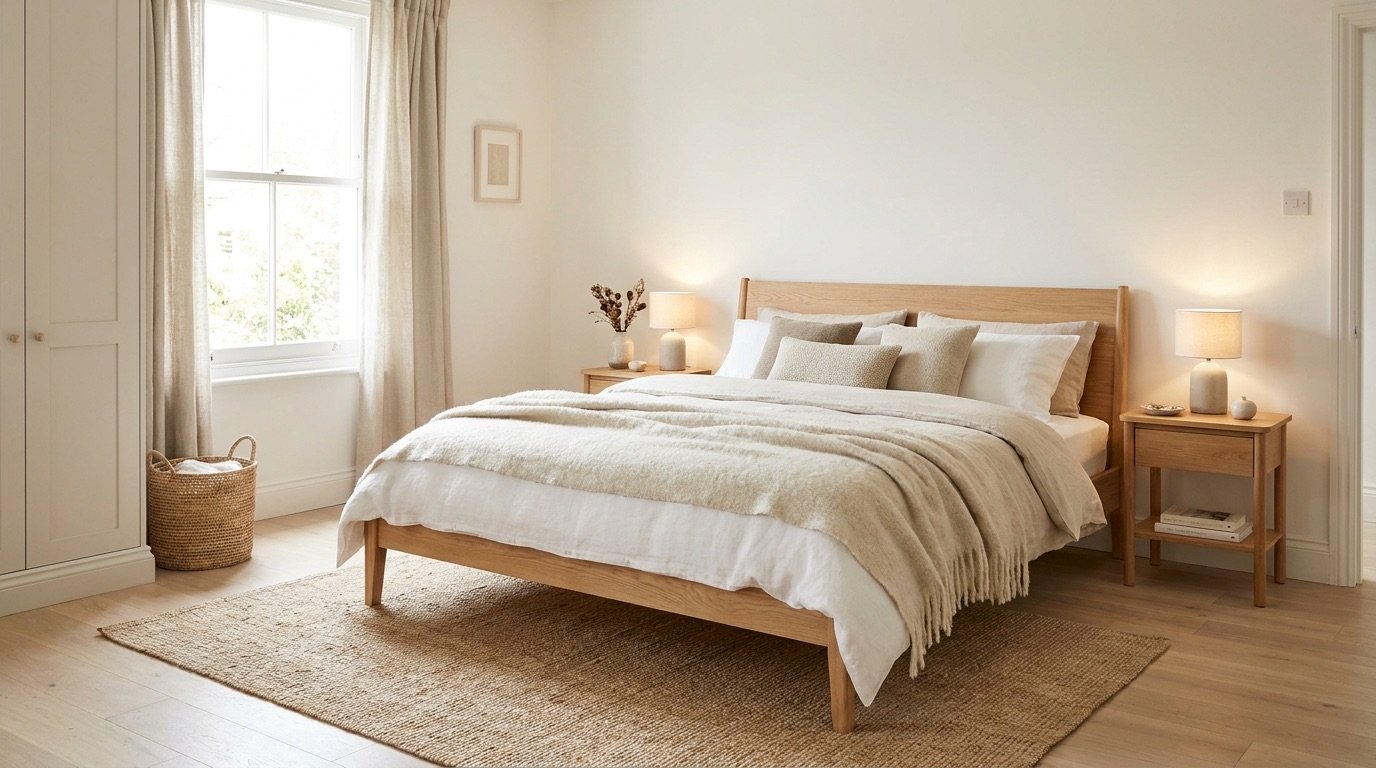
A Scandinavian bedroom combines simple design, natural materials, and cozy details to create a space that feels calm without looking empty. Whether you prefer bright white rooms, warm earthy colors, or a slightly darker Nordic look, these ideas will help you build a bedroom that is practical, comfortable, and easy to maintain.
This style leans on a few core habits: neutral and muted colors, natural wood, simple furniture, soft textiles, warm lighting, and storage that actually works. Scandinavian design isn't about having nothing in the room — it's about keeping only what feels useful or meaningful. Below are 31 real, doable ideas to help you create your own version of this look.
Scandinavian bedroom design is built around simplicity, function, natural light, and comfort. Furniture tends to have clean lines and a clear purpose, while decorative pieces are kept thoughtful and limited. Color palettes lean toward white, cream, beige, and soft gray, though darker tones show up too.
Natural materials do a lot of the work in a Scandi bedroom style. Think wood, linen, cotton, wool, leather, and cane. These materials add texture and warmth so the room doesn't feel sterile. A Nordic bedroom usually has a few meaningful décor pieces rather than lots of small accessories, and it borrows from hygge — the idea of coziness — through soft bedding, warm light, and layered textures.
It's worth clearing up a common myth: Scandinavian minimalism is not the same as an empty room. A cozy minimalist bedroom still feels lived-in and comfortable. It just avoids clutter and unnecessary stuff.

Warm white creates a bright, simple backdrop without feeling clinical or cold. Look for whites with a hint of yellow, beige, or cream instead of a stark blue-white, which can feel harsh under artificial light. Painting the walls, trim, and even the ceiling in a similar warm tone helps light bounce softly around the room. Test a few swatches in both morning and evening light before committing, since white shades shift a lot depending on the time of day.

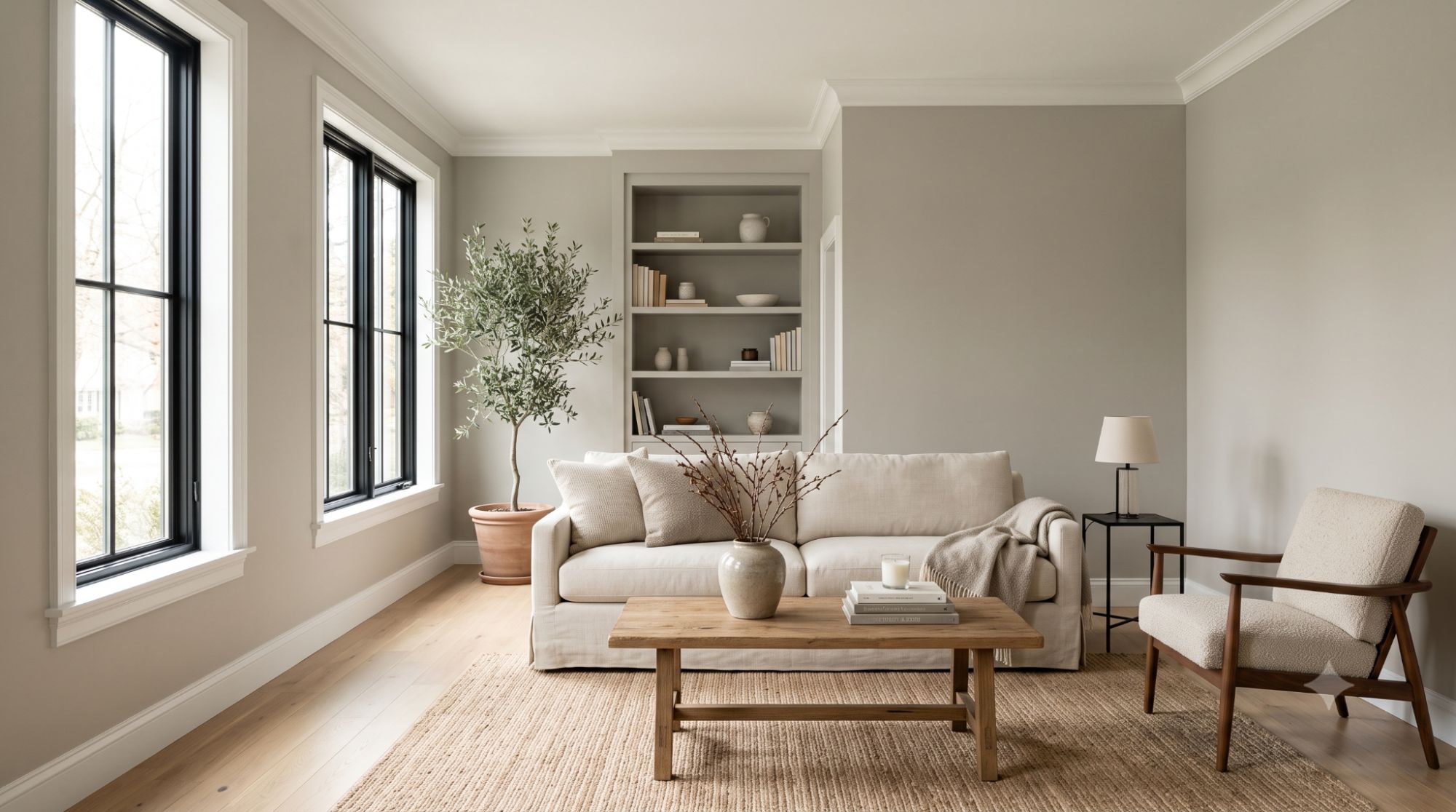
Instead of one flat neutral shade, mix three or four related tones like beige, oatmeal, taupe, and warm gray. Spread these shades across walls, bedding, rugs, curtains, and furniture so the room feels layered instead of flat. When the color palette is this limited, texture becomes the main source of visual interest.

Dusty blue, blue-gray, and soft slate bring a cooler, Nordic feel to the room. Keep these colors muted rather than bright, and pair them with white bedding and light wood furniture. You can add the color through a duvet cover, an accent rug, curtains, or one painted wall. Skip vivid coastal blues unless the rest of the room stays fairly restrained.

A single soft accent color gives the room personality without breaking the minimalist look. Sage green, dusty rose, muted mustard, rust, clay, and soft terracotta all work well. Repeat that one color two or three times through small items like a throw blanket, a cushion, a vase, or a piece of artwork, rather than reaching for several bold colors at once.

Small black touches can sharpen up a pale Scandinavian bedroom. Picture frames, metal wall sconces, a curtain rod, furniture legs, door hardware, or a thin-framed mirror all work well as quiet contrast points. The key is keeping black in small doses so it defines the space instead of taking it over.

Scandinavian style doesn't have to stay pale. Deep green, charcoal, navy, or rich brown can work beautifully too, especially in a north-facing or naturally dim bedroom. Keep the furniture simple and the palette tonal so the room doesn't feel heavy, and lean on warm wood tones and soft bedding to balance the darker walls. Warm lighting matters even more here than in a lighter room.

Pale oak, ash, birch, maple, or whitewashed wood supports the light, airy feel that Scandinavian rooms are known for. Wide, simple floorboards with a matte finish (rather than high gloss) fit the style best. If real wood isn't in the budget, a light wood-look laminate or vinyl plank can get you close. A rug beside or beneath the bed softens the look and adds warmth underfoot.

Not every piece of wood furniture needs to be pale. A walnut nightstand, a dark antique bed frame, a teak dresser, or a deeper wood bench adds contrast and depth. Keep it to one or two darker pieces so the room still feels light and open. Mixing light and dark wood tends to make a bedroom look collected over time rather than like a matching furniture set.

Look for a bed with a low or medium profile, slim legs, and little to no carving or ornament. Oak, ash, beech, pine, and walnut all fit the Scandinavian look, and platform or spindle frames are common choices. Leave some visible floor space around the frame instead of pushing it against every wall, and pick a size that fits the actual scale of the room.

A bed without a headboard can work well, especially in a smaller room. Use layered pillows or a slim wall-mounted ledge to give the bed some visual structure instead. Place the bed against a clean, painted wall and add wall sconces or a simple piece of artwork above it to fill the space. This approach works especially well when floor area is tight.

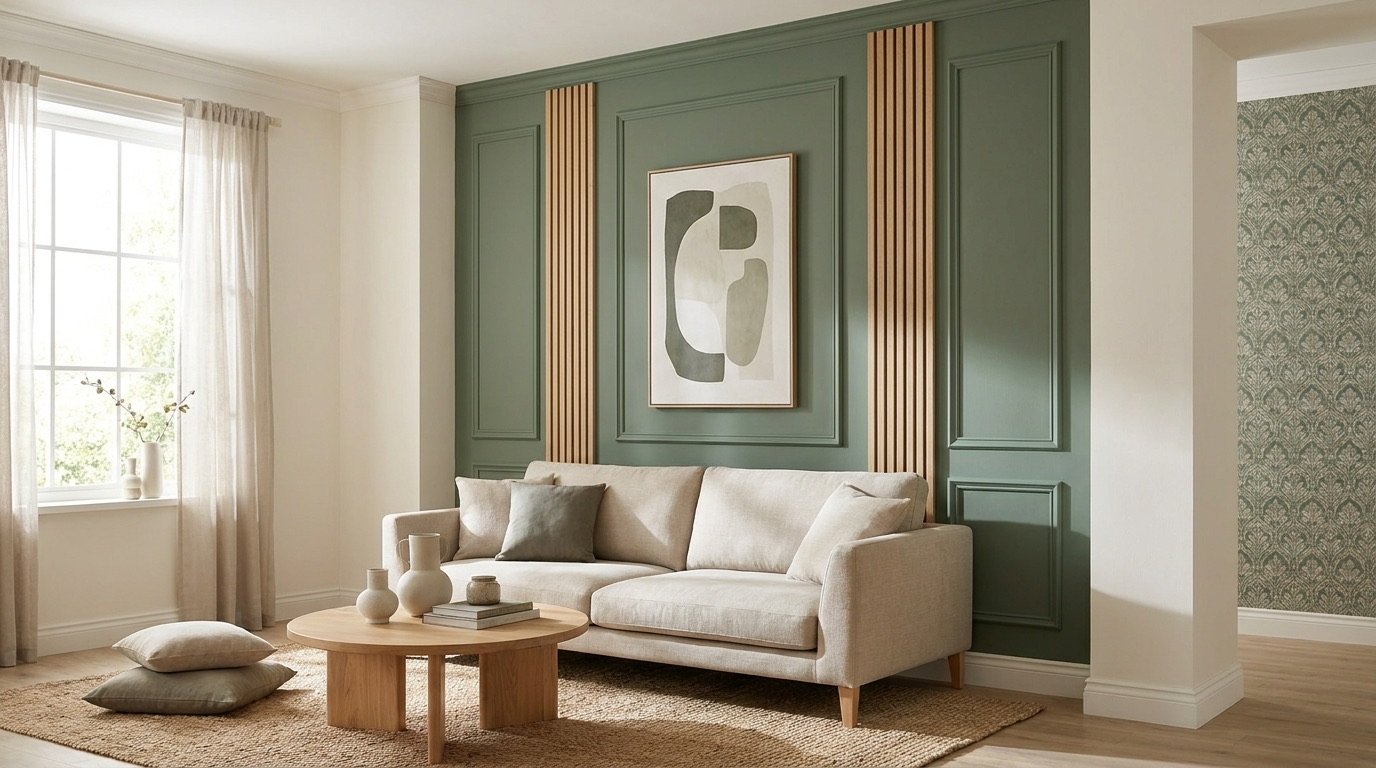
Vertical wood slats behind the bed add warmth and a bit of architectural interest while staying true to the clean Scandinavian look. Keep the slats limited to the wall behind the bed rather than covering the whole room, and choose a natural or lightly stained finish. Narrow shelves or built-in bedside lighting can be worked into the slats if you want extra function.

Streamlined mid-century pieces pair naturally with this style. Look for tapered legs, slim wooden dressers, rounded corners, and simple lounge chairs that skip unnecessary decoration. You don't need designer labels — the goal is furniture that looks functional first and stylish second.

One older item — a vintage wood dresser, an antique chair, an old mirror, a painted bedside table, or a woven trunk — keeps a minimalist room from feeling generic. Balance it with modern bedding and simple, uncluttered surroundings so the vintage piece stands out instead of getting lost. Avoid filling the room with several mismatched antiques, which can pull the look away from Scandinavian simplicity.

Compact nightstands help keep floor space open, which matters a lot in Scandinavian layouts. Small wood tables, floating nightstands, simple stools, wall-mounted shelves, or even a narrow chair can all work as a bedside surface. Keep the top of the nightstand limited to the essentials — a lamp, a book, a glass of water, or one small object.

Cane, rattan, wicker, and seagrass soften the straight lines of Scandinavian furniture. A cane headboard, a woven basket, a rattan chair, or a wicker nightstand all add texture without much visual weight. Stick to two or three woven pieces so the room doesn't drift into a tropical or bohemian look instead.

Linen bedding fits the informal, cozy feel of a Scandinavian bedroom. White, cream, oatmeal, gray, muted blue, or sage green linen all work well, and a few natural wrinkles actually support the relaxed look instead of hurting it. Combine a fitted sheet, a duvet, and one simple throw for an easy, breathable setup.

This is about arrangement, not material. Stick to one duvet or comforter, two sleeping pillows, one or two decorative cushions, and a single folded throw. A Scandinavian bed should feel inviting without being buried under a dozen decorative pillows.

A neutral room can start to feel flat without some texture. A chunky knit throw, a wool blanket, a cotton quilt, a bouclé cushion, or a soft upholstered headboard all add depth. Keep the textures in a similar color family so the room still feels calm and cohesive.

A rug brings comfort to wood flooring and softens the whole room. A large rug placed beneath the lower two-thirds of the bed works well, or you can use two smaller runners on either side. Flat-woven wool rugs in cream, beige, gray, or a subtle geometric pattern fit the Scandinavian look nicely. Add a rug pad underneath to keep it from sliding around.

A little pattern adds character without creating clutter. Thin stripes, simple grids, small checks, geometric shapes, and traditional Nordic-inspired motifs all work in small doses. Use pattern on just one blanket, rug, or cushion rather than spreading it across every surface in the room.

Arrange the room so windows stay open and unobstructed. Avoid placing tall furniture in front of a window, and use mirrors thoughtfully to help reflect daylight around the room. Keep window sills lightly styled and choose pale surfaces near the window so light has something to bounce off of.

Linen curtains, sheer white panels, plain roller shades, and woven shades all fit the Scandinavian look. The goal is a window treatment that softens the room while still letting daylight in during the day. Don't forget that privacy and light control still matter, especially for street-facing bedrooms.

A paper or fabric lantern pendant adds a soft, sculptural shape to the ceiling without feeling heavy. Use it as the main overhead light, and match its size to the scale of the bed and ceiling height. White, cream, or natural woven finishes work best, and it's worth keeping the cord and surrounding ceiling area tidy. Not every round pendant counts as Scandinavian — look for a soft, textural material.

One overhead fixture usually isn't enough to make a bedroom feel cozy. Combine a ceiling light with a bedside lamp or sconce, a floor lamp, and maybe a small accent light. Choose warm, soft bulbs over cool white ones, and add dimmers if you can — they make it easy to shift the mood from bright and functional to soft and relaxed.

Wall sconces free up nightstand space and give the room a clean, symmetrical look. Adjustable reading sconces in black, brass, white, or wood finishes all fit the Scandinavian style, and they come in both hardwired and plug-in versions. Position them near shoulder height for someone sitting up in bed. For hardwired fixtures, it's best to bring in a licensed electrician for installation.

Practical storage supports the functional side of Scandinavian design. Under-bed drawers, plain-front wardrobes, bedside drawers, storage benches, matching baskets on open shelves, and a few hooks for everyday items all help keep surfaces clear. Minimalism doesn't mean owning nothing — it means giving your everyday items an actual place to go.

Layout has a big effect on how Scandinavian a room feels. Skip furniture that doesn't serve a real purpose, and leave comfortable paths to walk through the room. Keep the bed as the main visual focus, and choose furniture sized to fit the room rather than filling every open corner.

Small rooms benefit from a few specific tricks. Try low-profile or slim furniture, floating nightstands, wall-mounted lighting, and under-bed storage. Stick to one light color palette overall, and choose furniture with visible legs so the floor still reads as open. One useful decorative focal point — like a single piece of art — is plenty; a small Scandinavian bedroom doesn't have to be all white to feel bigger.

A small chair adds function and supports the hygge feeling this style is known for. A compact wood chair or small upholstered armchair, a floor lamp, a wool throw, and a tiny side table can turn an unused corner into a reading nook. A cushion on a built-in window seat works too. Just make sure the corner doesn't block the main path through the room.

One large artwork, or two coordinated prints, adds personality without cluttering the walls. Botanical or abstract designs in thin wood or black frames both fit the style well. Add one healthy plant or a simple branch in a vase, and leave plenty of blank wall space around it. Skip the crowded gallery wall — a little restraint goes a long way here.

Scandinavian design values furniture and décor that stay useful for years rather than items bought only for a passing trend. You don't need expensive designer furniture, but it helps to choose sturdy materials, simple shapes, and finishes that are easy to live with day to day. Add new pieces gradually instead of filling the room all at once. This slower approach results in a bedroom that feels personal, functional, and naturally collected over time.
A few habits can quietly work against the calm, functional look you're going for. Here's what to watch out for:
Creating a Scandinavian bedroom doesn't require a full renovation or an entirely new furniture set. It comes down to a handful of consistent choices: simplicity, natural materials, practical furniture, soft texture, warm lighting, and comfort that actually feels personal to you.
Start small. Swap out harsh lighting for something warmer, add a linen duvet, or clear off your nightstand. One or two changes at a time can shift the whole feel of the room — you don't have to redesign everything at once to get there.
Yes. Use neutral bedding, rugs, plug-in lights, removable hooks, and freestanding wood furniture to create the look without permanent changes.
Yes. Choose plain blackout curtains in white, beige, or gray, and layer them with sheer panels for a softer Scandinavian look.
Scandinavian bedrooms feel lighter and more casual, while Japandi uses lower furniture, stronger contrast, and Japanese influence. Explore our Japandi bedroom ideas for more inspiration.
Use washable bedding, closed storage, easy-care rugs, and fewer accessories. Clear surfaces also make cleaning much quicker.
No. Mix different wood tones or furniture styles, but keep the shapes simple and the colors connected. Repeating one finish helps the room feel cohesive.
Clara Jameson is an interior design specialist with more than 10 years of experience helping people create stylish and functional spaces. She blends aesthetics with practicality to make sophisticated design approachable and achievable. Clara earned her B.A. in Interior Design from Savannah College of Art and Design. She enjoys traveling, visiting art galleries, and studying architecture to gather fresh inspiration that she brings to every project.


No Comments