

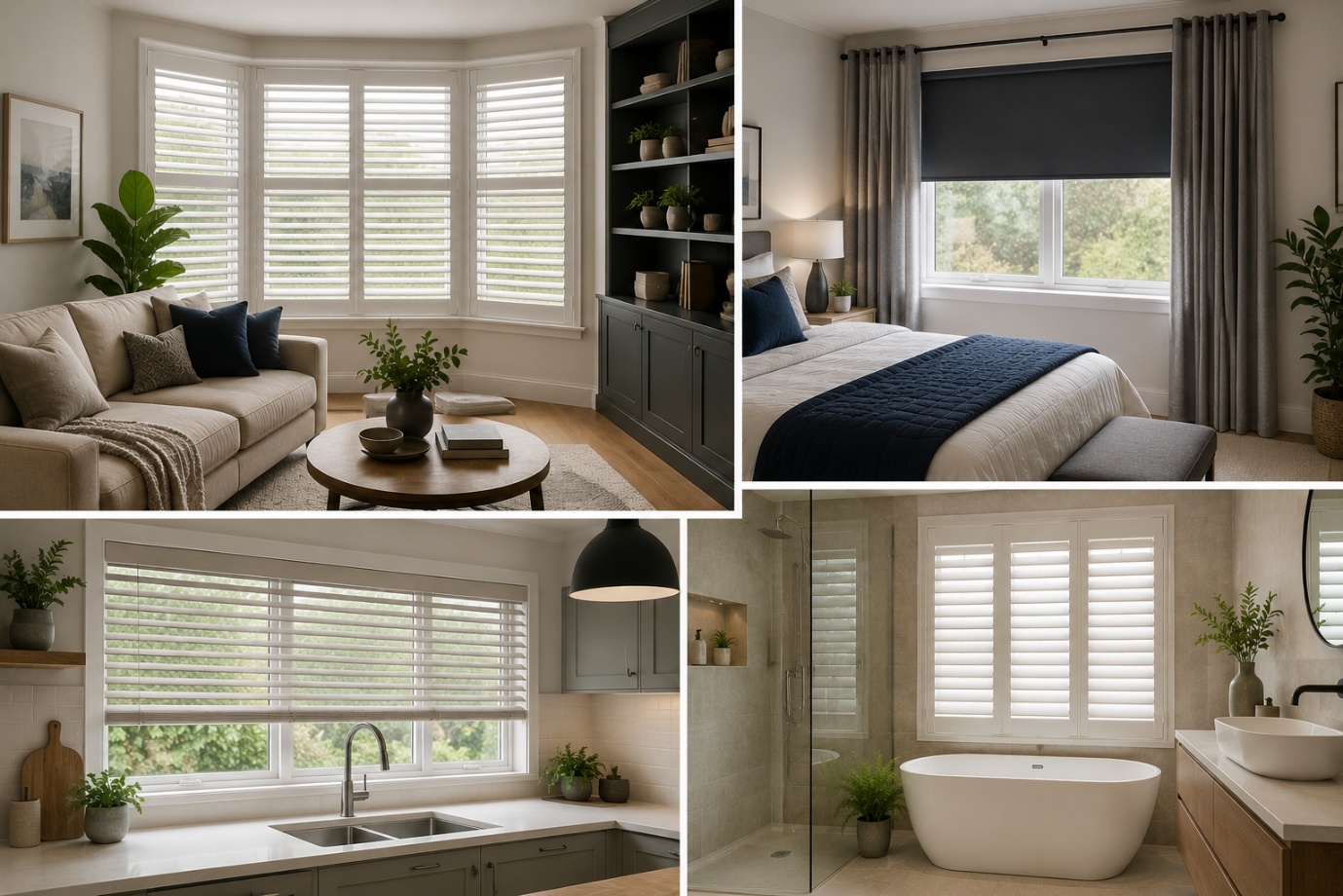
How to Choose the Perfect Window Coverings for Your Home
Window coverings are more than just decorative features. They influence


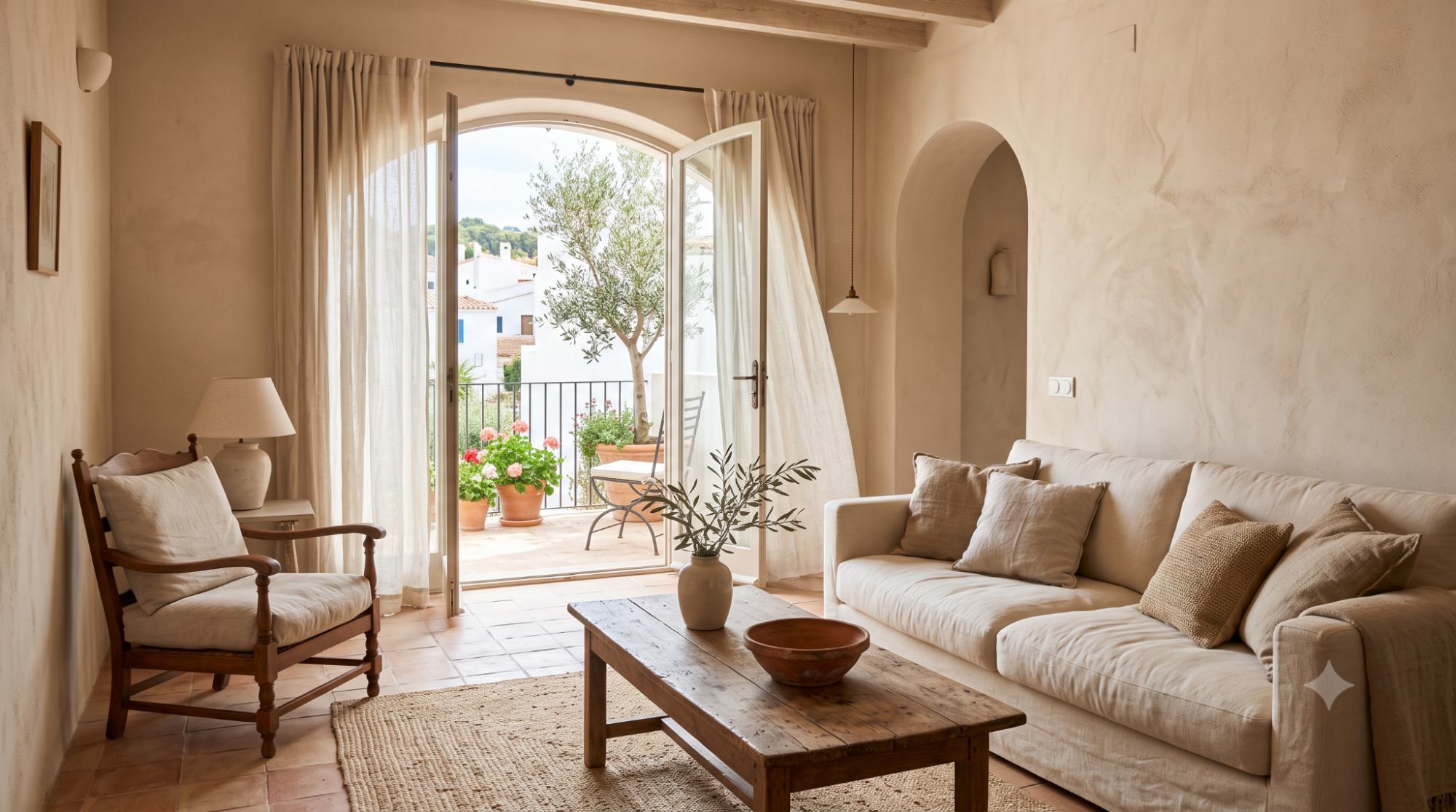
Picture a sun-washed room with warm plaster walls, a wood table worn smooth by years of use, and a breeze drifting through open doors. That's the feeling behind Mediterranean interior design: natural materials, warm colors, soft arches, and an easy connection between indoor and outdoor living.
This guide covers everything you need to bring this look home: colors, materials, furniture, room-by-room ideas, a simpler modern version, and the mistakes that trip people up most. It works in both traditional and modern homes when the pieces are balanced correctly.
Here's the style summed up in one table.
| Category | Details |
| Main feel | Warm, relaxed, sun-washed, lived-in |
| Best colors | Warm white, terracotta, olive, clay, muted blue |
| Key materials | Wood, stone, plaster, linen, terracotta, wrought iron |
| Common shapes | Arches, curves, wall niches, rounded mirrors |
| Best rooms | Living room, kitchen, bedroom, bathroom, patio |
| What to avoid | Cool gray, glossy finishes, too much pattern at once |
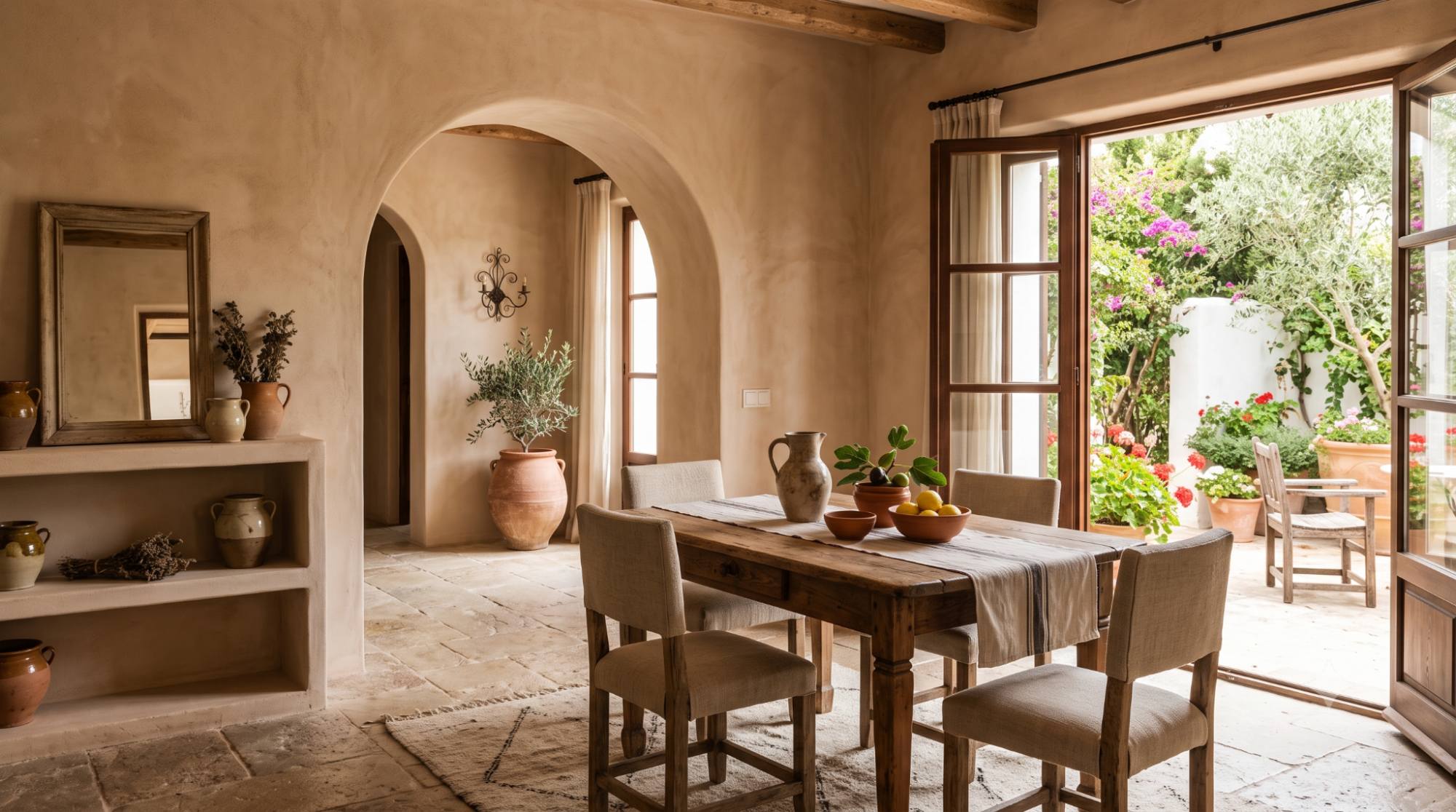
This style is inspired by homes around the Mediterranean region, including Italy, Spain, Greece, southern France, and Morocco, blending ideas from several coastal cultures into one warm, relaxed look.
At its core, it's about nature: the sea, sun, stone, wood, and clay found across these regions. Homes in this tradition stayed cool in the heat and open to the outdoors, a connection that carries through in the decor too.
Mediterranean interiors mix rustic charm with elegant simplicity. A rough plaster wall next to a beautifully carved wood table is a common pairing, and that contrast is what makes the look feel authentic instead of overly polished.
It's easy to confuse this style with basic coastal design, but coastal leans light, breezy, and blue-and-white, while this style is warmer, earthier, and more architectural, with details like arches and stonework.
This tradition grew out of homes across Southern Europe and North Africa, built for hot, dry climates. Thick stone or plaster walls kept interiors cool, while small windows and shaded courtyards offered relief from the sun.
Tile floors stayed cool underfoot and held up over generations. Courtyards became the heart of many homes, blurring indoors and outdoors long before "indoor-outdoor living" was a design term.
This style became especially popular in California and Florida in the early 1900s, where the climate matched the original regions closely, which is part of why it still feels at home in sunny U.S. states today.
These are the building blocks that make a space read as Mediterranean style interiors instead of just "beachy" or "rustic." The more you combine, the stronger the look becomes.
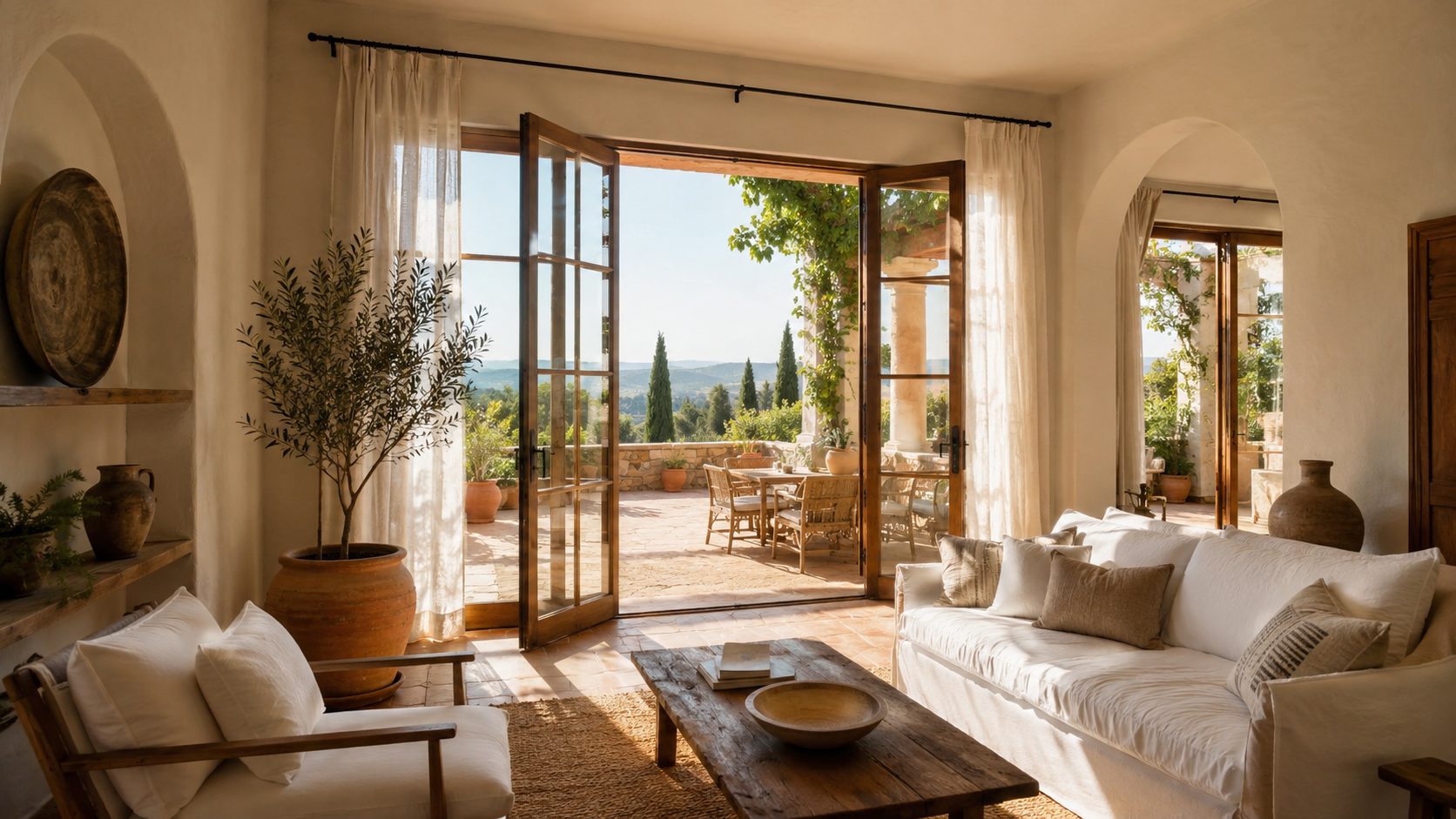
Homes in this style often feel open and connected to patios, balconies, or courtyards, with large doors and windows that let in light. Breezy curtains and plants near windows extend that feeling indoors, even without direct outdoor access.
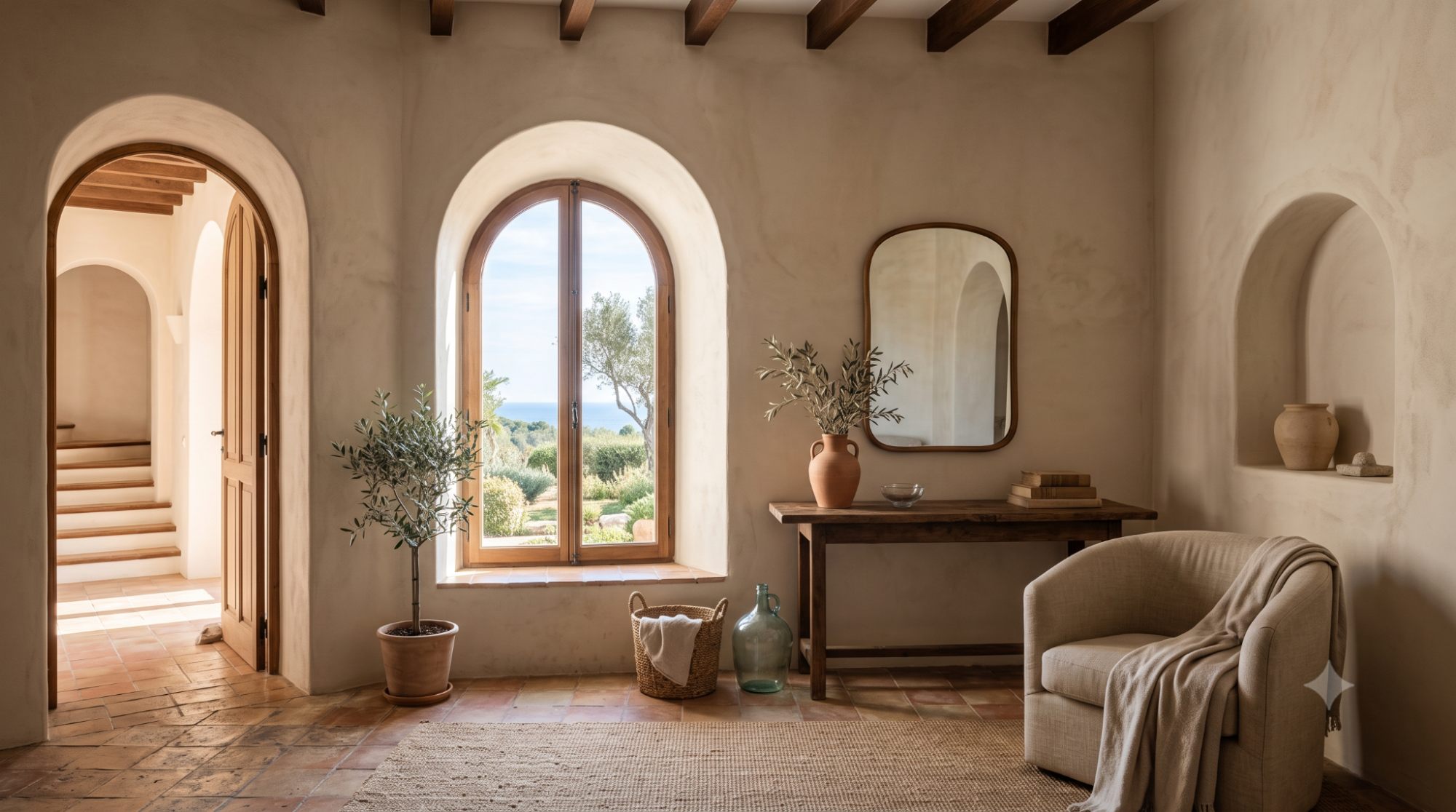
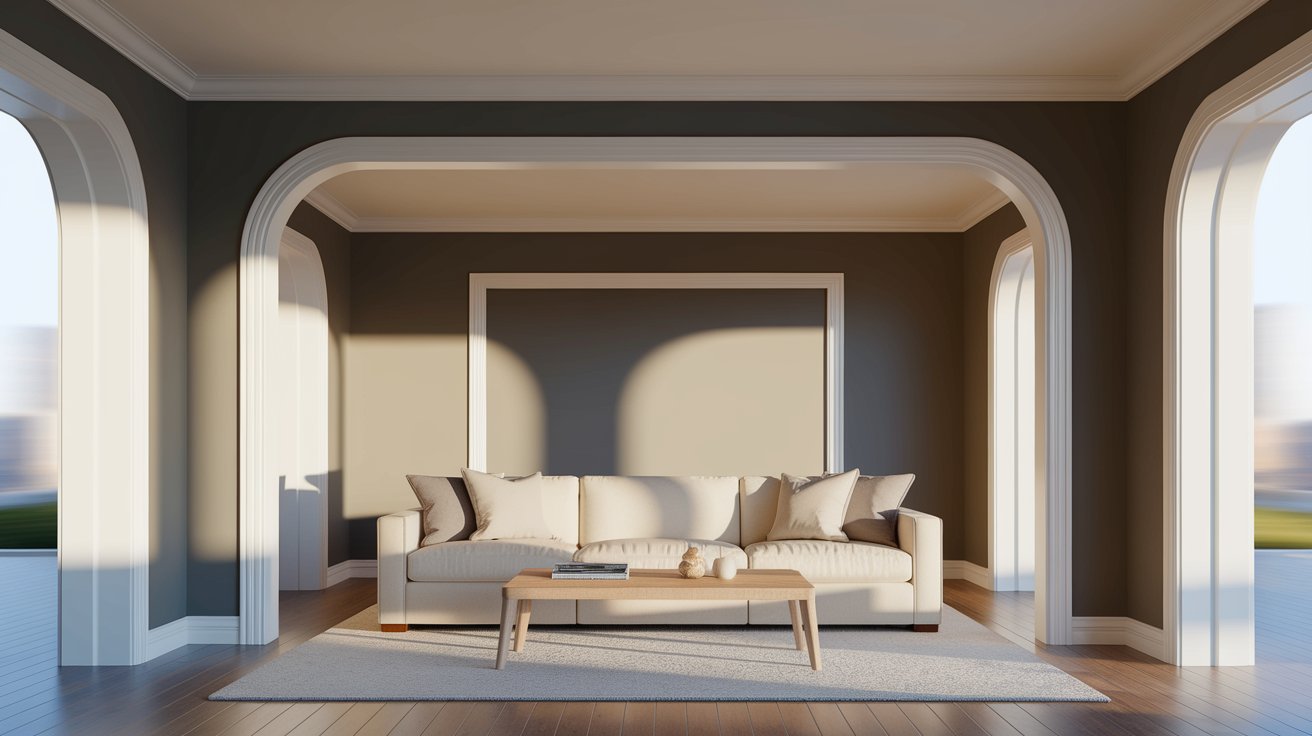
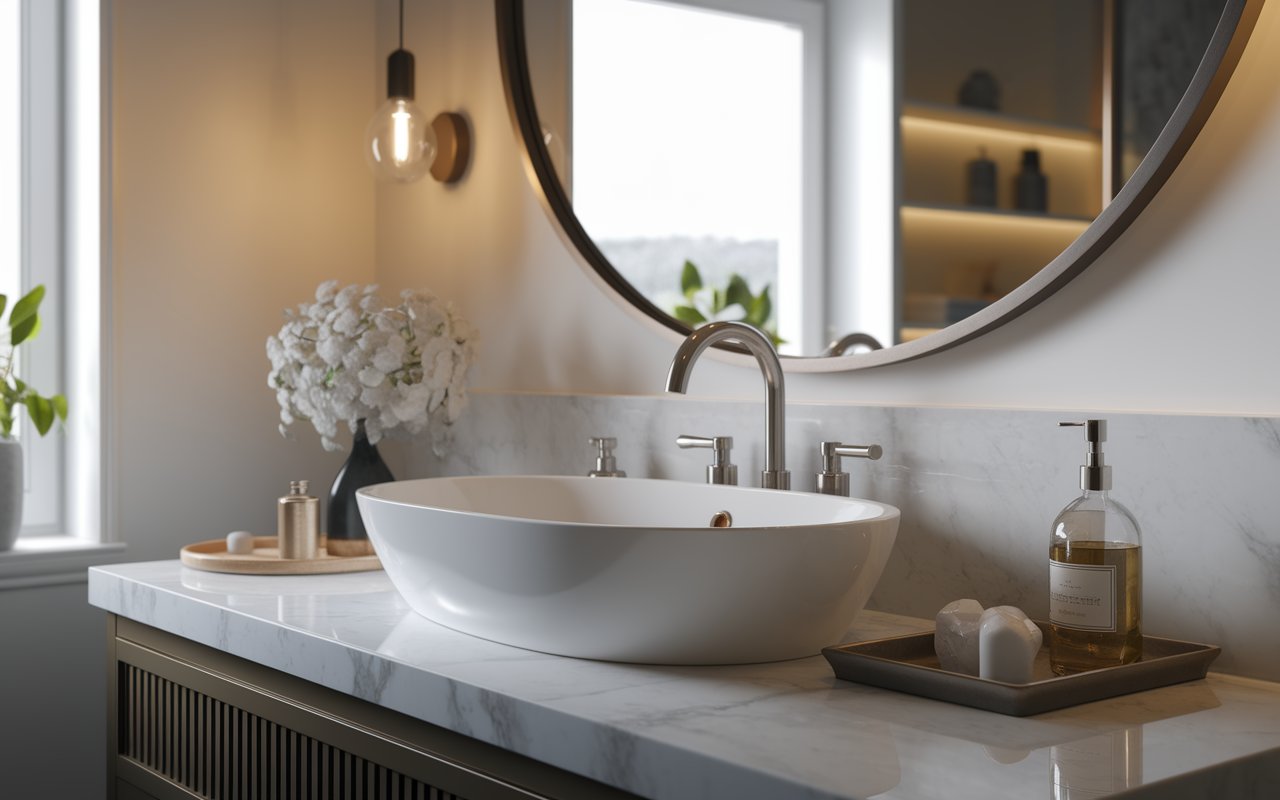
Arched doorways and windows are one of the clearest signs of this look, along with wall niches, curved furniture, and rounded mirrors. An arched mirror or curved headboard brings in that shape without any renovation.
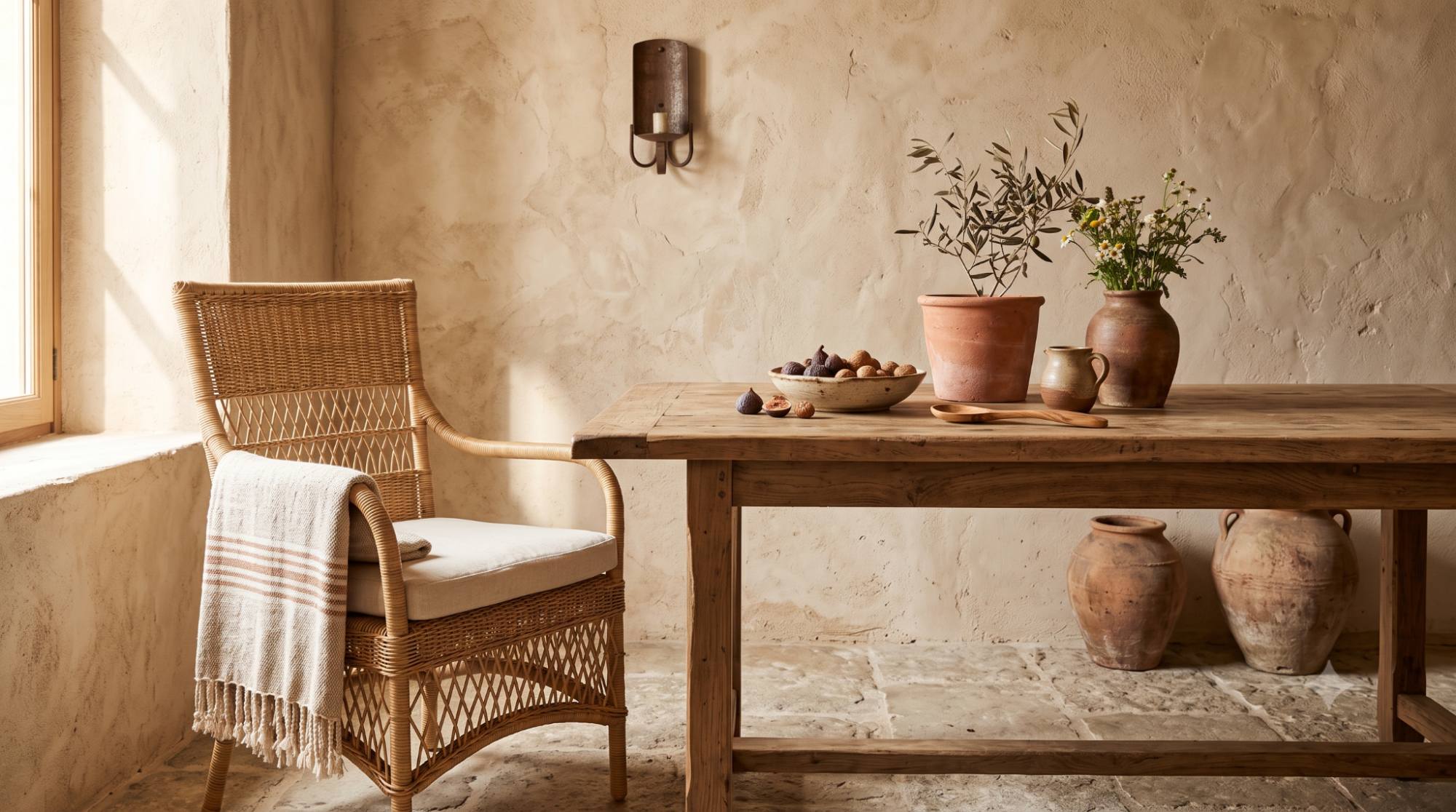
Wood, stone, clay, terracotta, rattan, linen, cotton, plaster, ceramic, and wrought iron form the backbone of this style, feeling warm and a little imperfect on purpose. Avoid anything overly synthetic, like glossy plastic or shiny chrome.
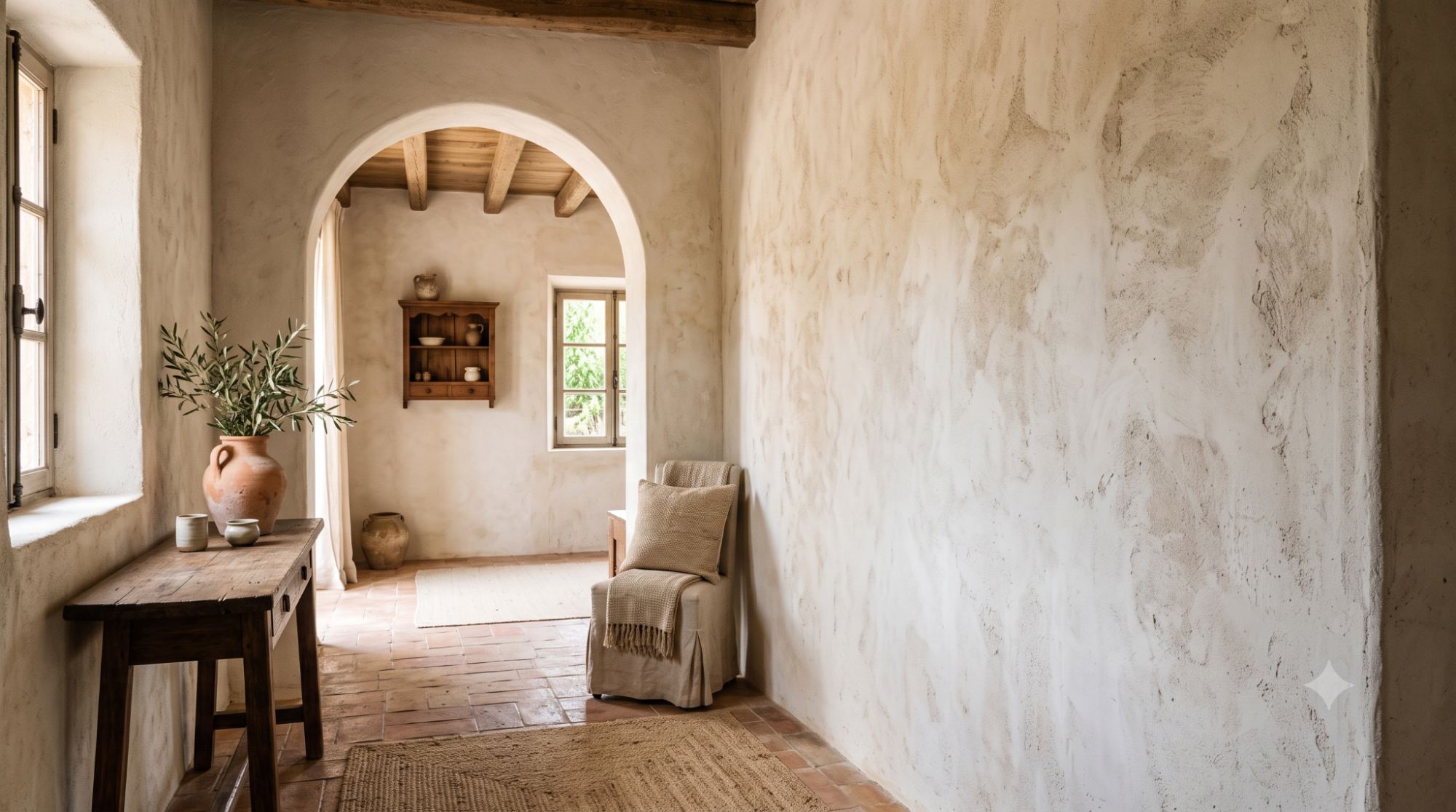
Plaster walls, limewash paint, stucco-style texture, and whitewashed finishes give rooms depth that flat paint can't match, catching light differently through the day. That uneven, handmade look is intentional; perfectly smooth walls can feel too modern and cold for this style.
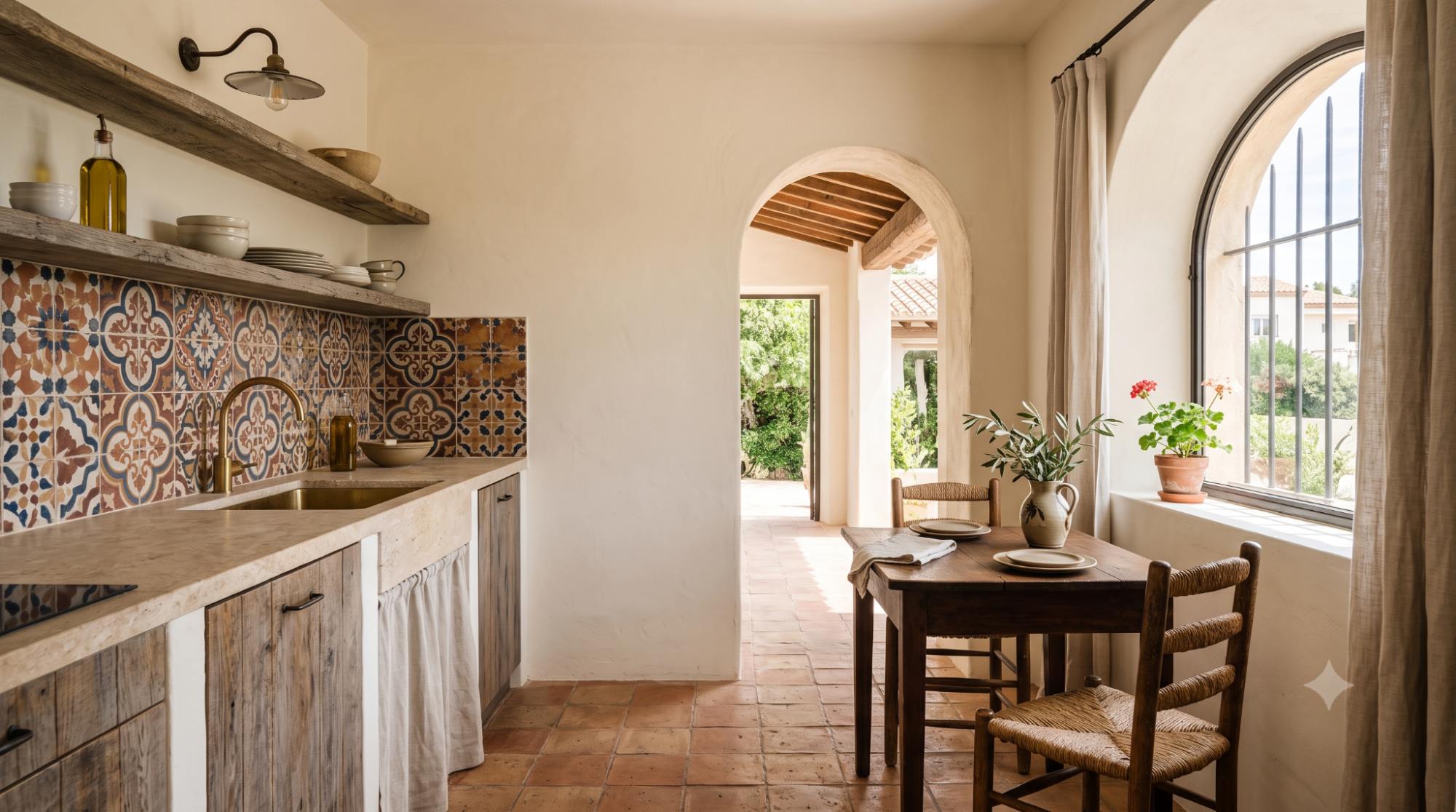
Mosaic tiles, Spanish tiles, and Moroccan-inspired tilework show up often in this style, especially on backsplashes, bathroom floors, stair risers, and fireplace surrounds. A little goes a long way; even a small accent area adds real character.
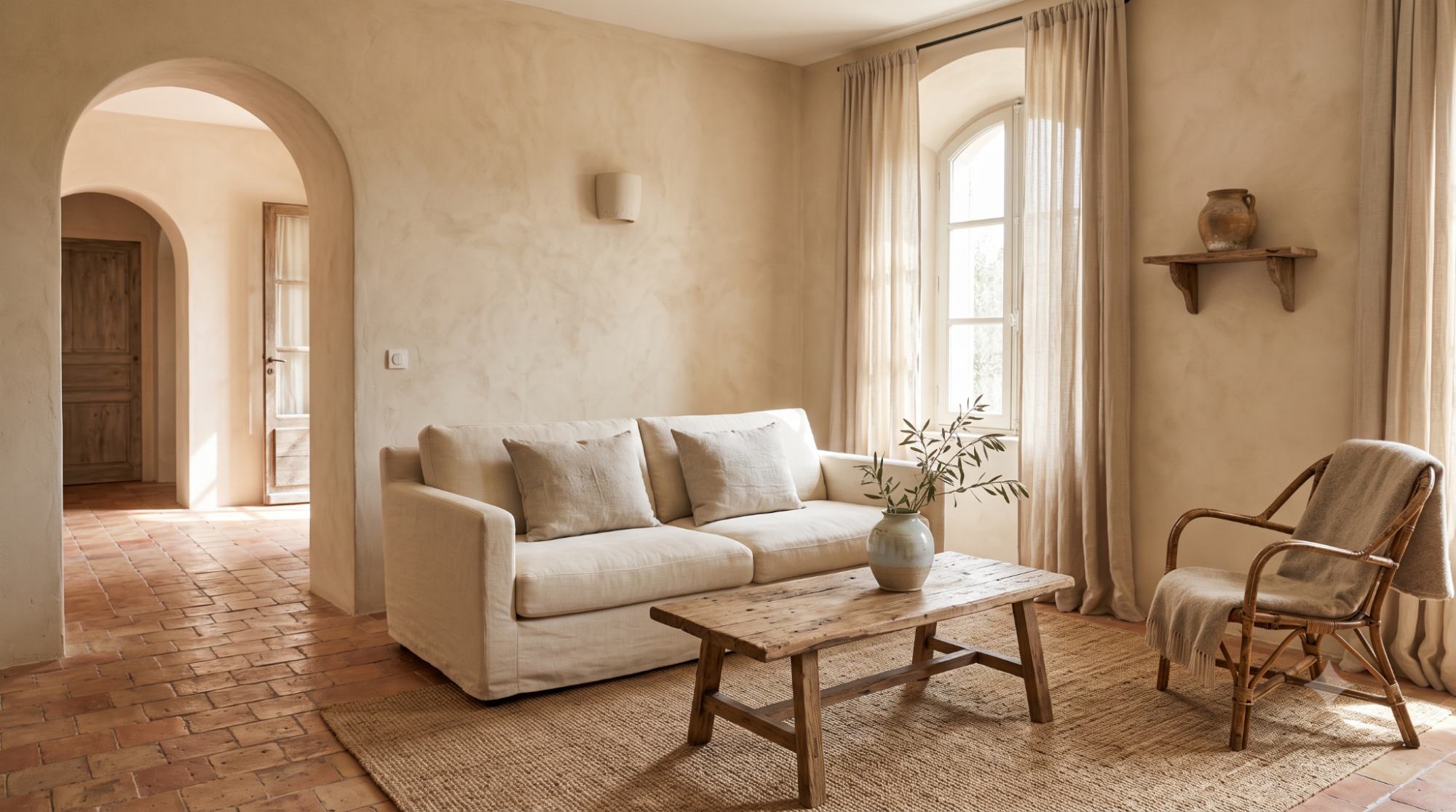
Rooms in this style should feel collected and natural, not cluttered. The goal is fewer pieces overall, but each one should carry texture or character, which differs from strict minimalism by avoiding anything that feels mass-produced.
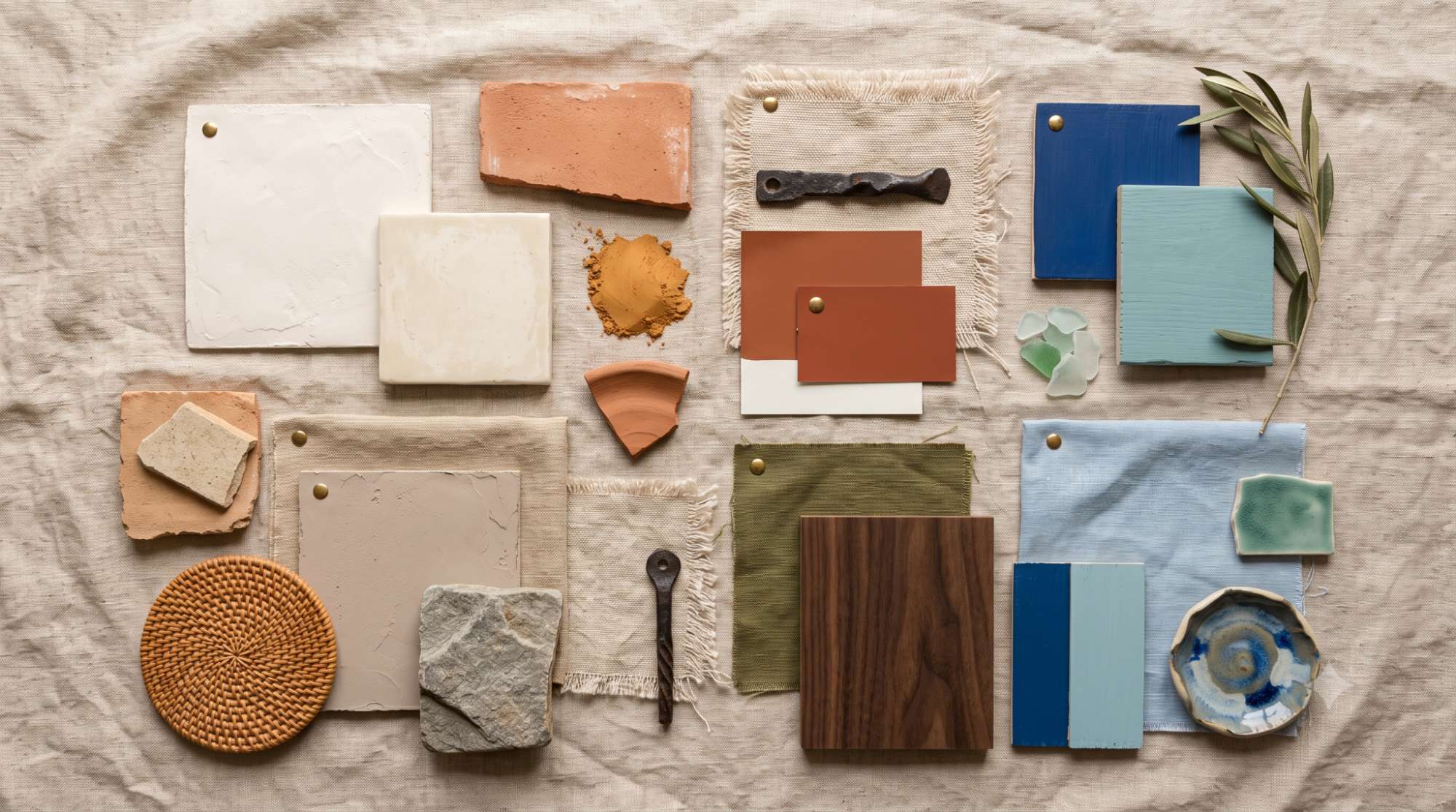
Color is one of the most important parts of getting this look right, with a warm, earthy palette and a few bold accents borrowed from the sea and sky.
Warm white works far better here than stark white, which can feel clinical. Cool gray causes a similar problem: it flattens the warmth this style depends on. Use warm-toned neutrals as your base, then treat terracotta, olive, clay, and blue as accents rather than main colors used everywhere.
These colors keep the space bright and calm, giving textured materials room to stand out.
| Combination | Where It Works Well |
| White walls + terracotta floor + dark wood | Living rooms, kitchens |
| Cream walls + olive accents + rattan | Bedrooms, reading nooks |
| Warm beige + blue tile + wrought iron | Bathrooms, kitchens |
| Soft white + natural stone + linen | Dining rooms, entryways |
Every color choice should connect back to a material or piece of furniture, or it can feel random instead of intentional. A terracotta wall works best when wood, stone, or ceramic nearby matches its warmth.
Texture is one of the biggest differences between this look and basic coastal interiors, which lean on color alone while this style leans on how things feel up close.
Common materials include terracotta floors, stone walls or accents, wood beams, wrought iron lighting, linen curtains, cotton upholstery, jute or flatweave rugs, ceramic vases and bowls, clay pots, and rattan or wicker pieces.
A few small swaps make a real difference: linen curtains instead of heavy drapes, a jute rug instead of a synthetic one, and a ceramic vase or clay pot for easy, low-cost character. Wood and stone pieces help ground a room so it doesn't feel bare.
Mixing textures matters more than matching them. A smooth ceramic bowl next to a rough jute rug and a carved wood table is the layered look this style is built on.
Furniture and decor are where Mediterranean interior decor really comes together, favoring pieces that feel handmade and sturdy over sleek and factory-perfect.
Mediterranean furniture tends to have more weight and presence than modern minimalist pieces, like a solid wood table with visible grain over a sleek glass one.
That last point matters most: too many props at once, like several patterned rugs and a full wall of ceramic plates, tips into theme-park territory fast.
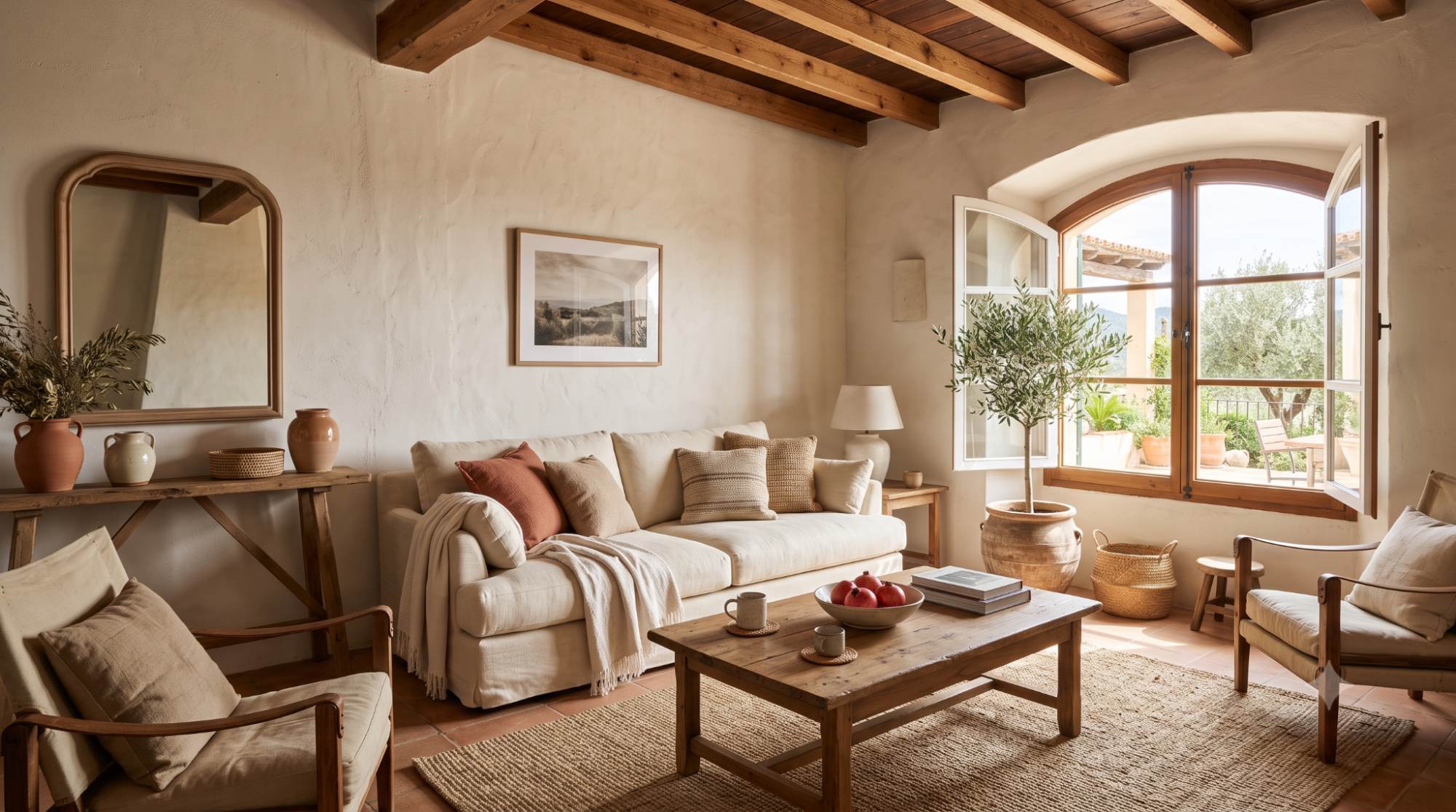
Keep it feeling like a place to relax, not a showroom. Swap a synthetic throw pillow for linen, and let a woven rug and a few ceramic pieces carry the texture.
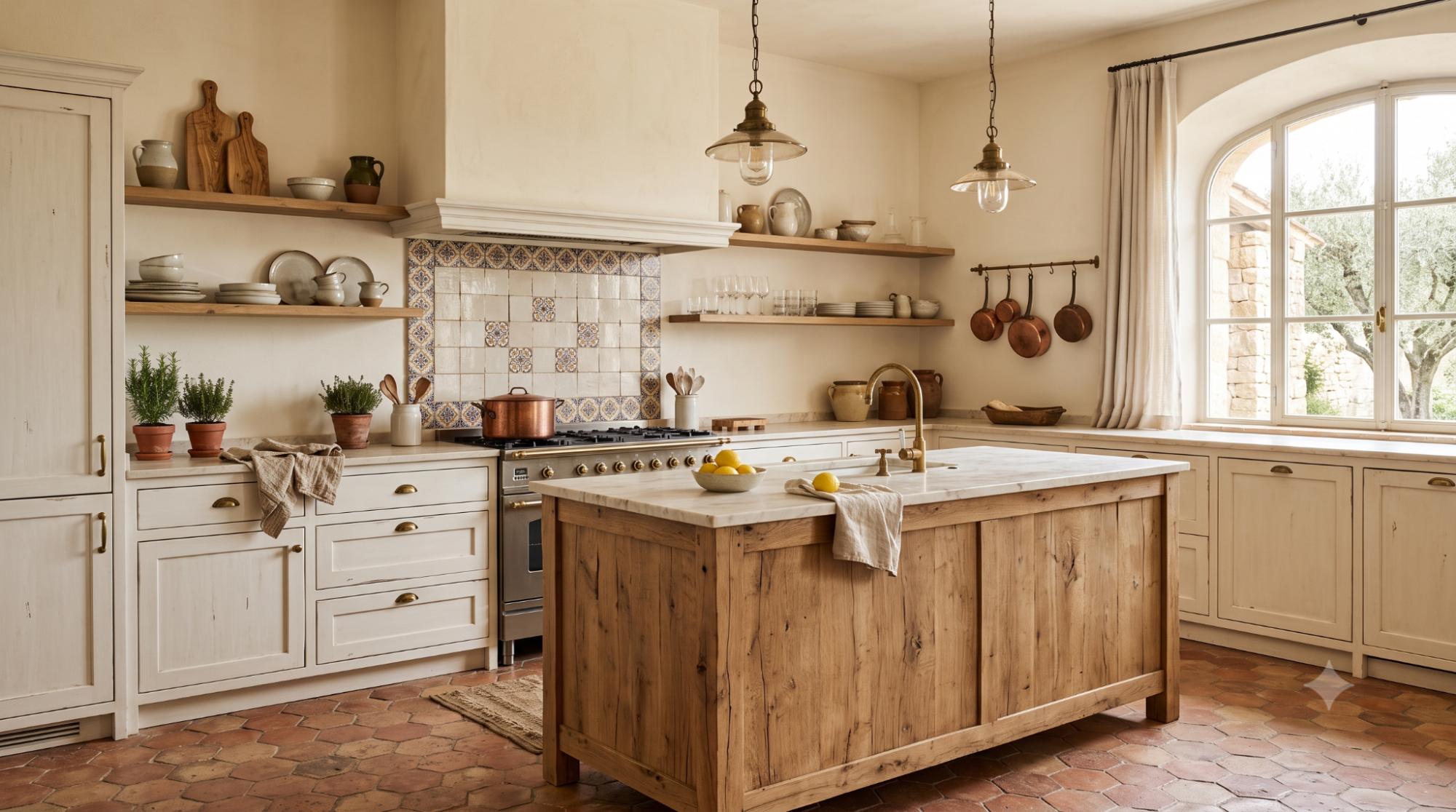
Open shelving shows off ceramic dishware instead of hiding it behind cabinets. Keep it lightly styled so the room still feels calm.
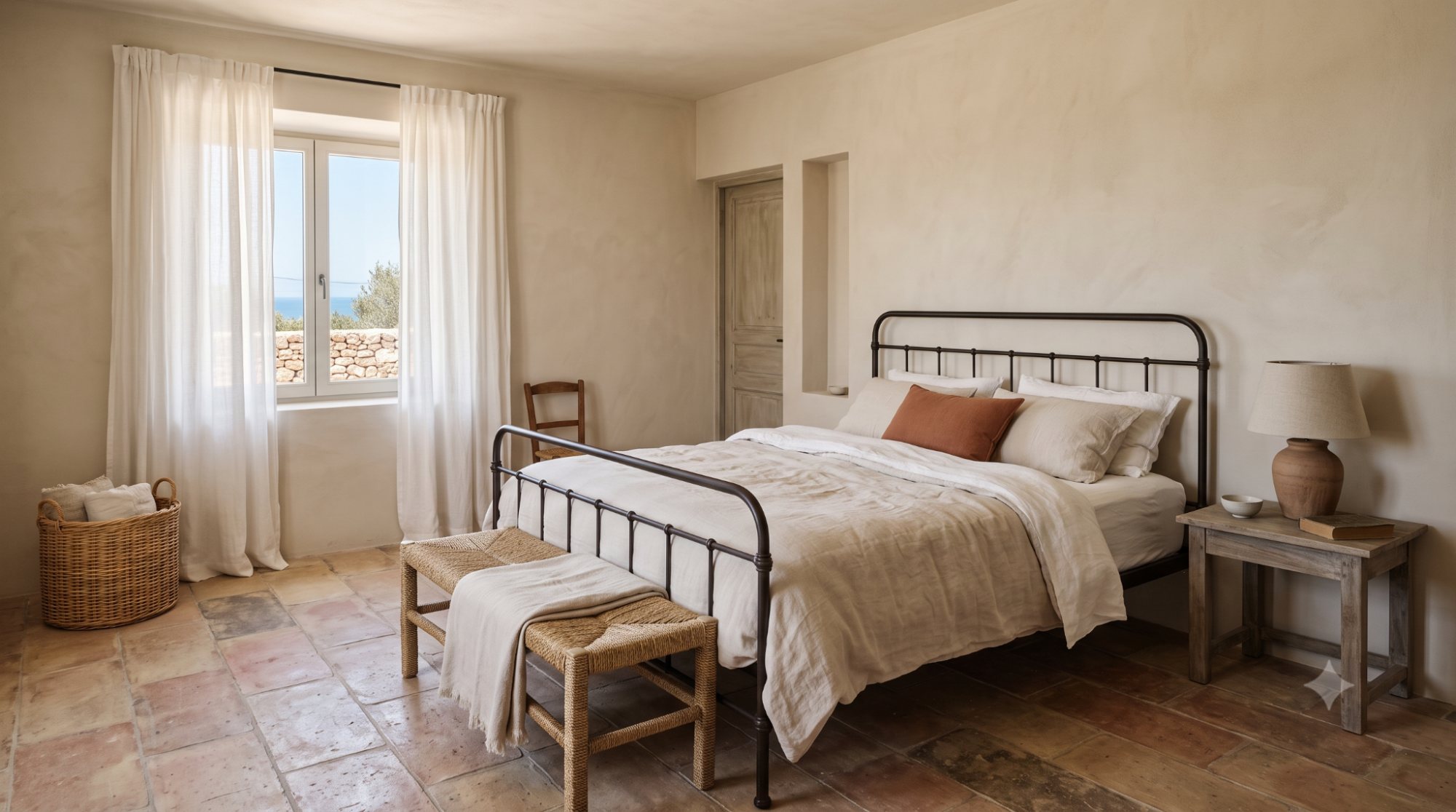
Restraint matters most here, since too much pattern makes it harder to unwind. Stick to one accent color, like terracotta or olive, in a single pillow or throw.
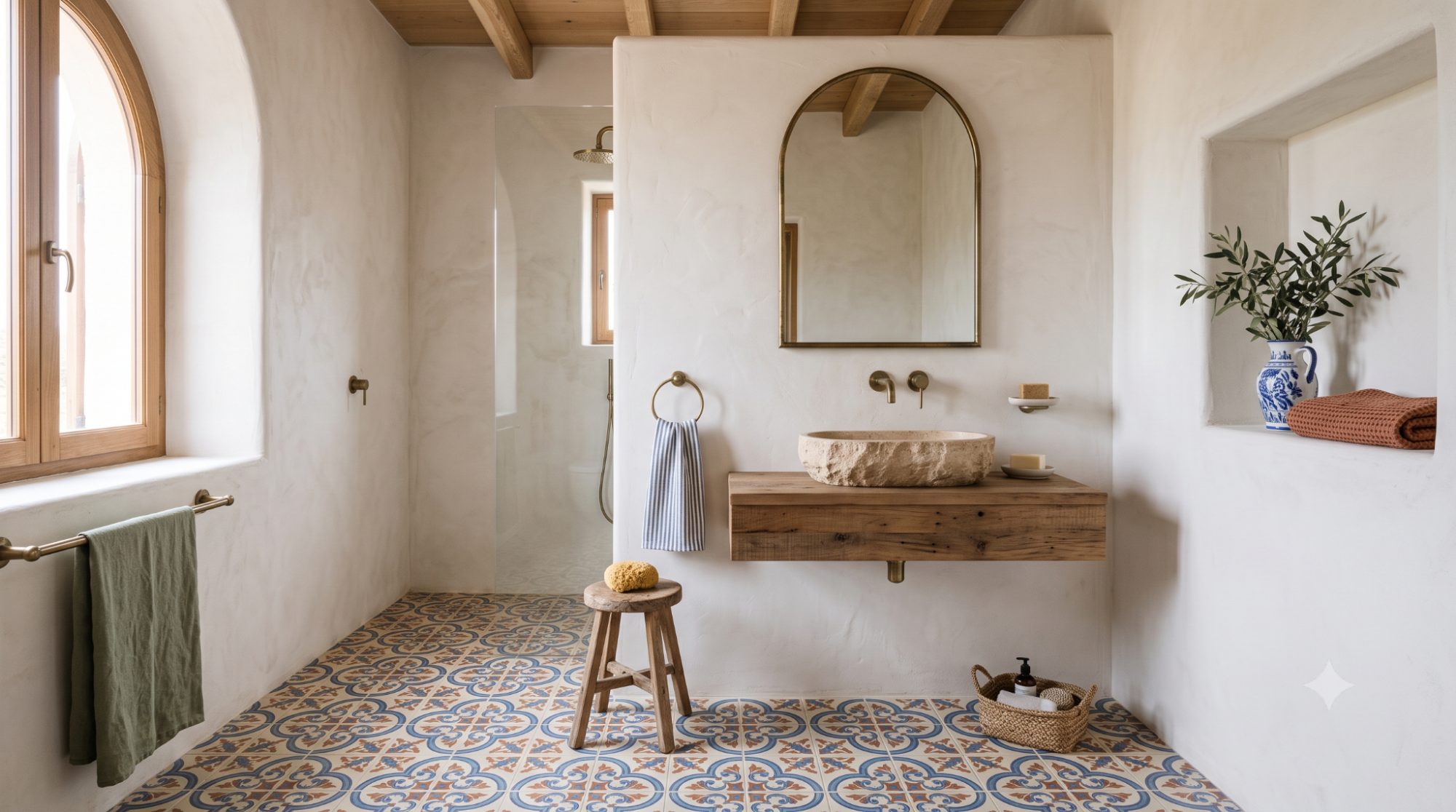
A patterned tile floor is the easiest way to bring character here without a full renovation. Pair it with simple white walls so the tile stays the focal point.
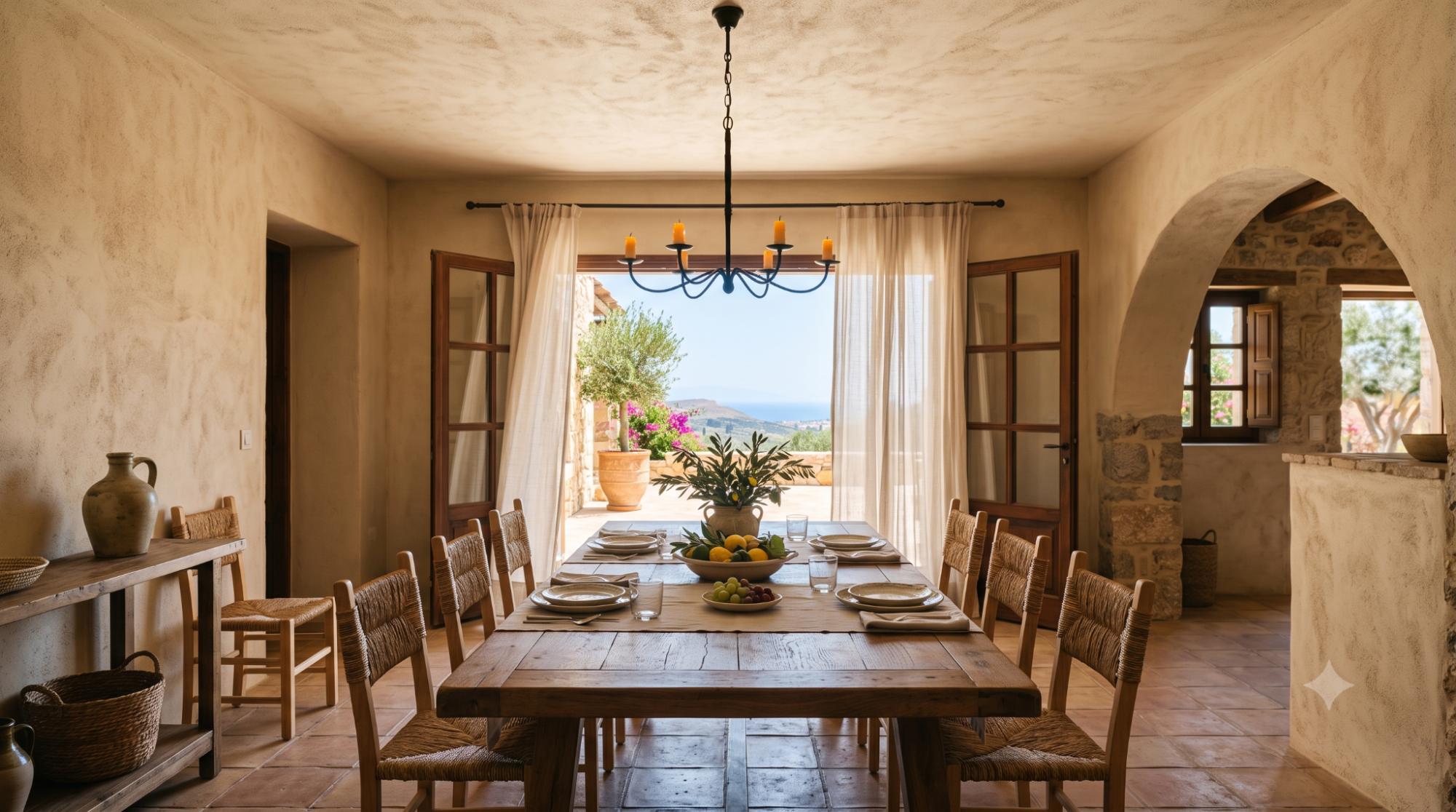
Near a patio, lean into that connection with doors left open or sheer curtains during meals. A simple bowl of fruit or olive branches makes an easy centerpiece.
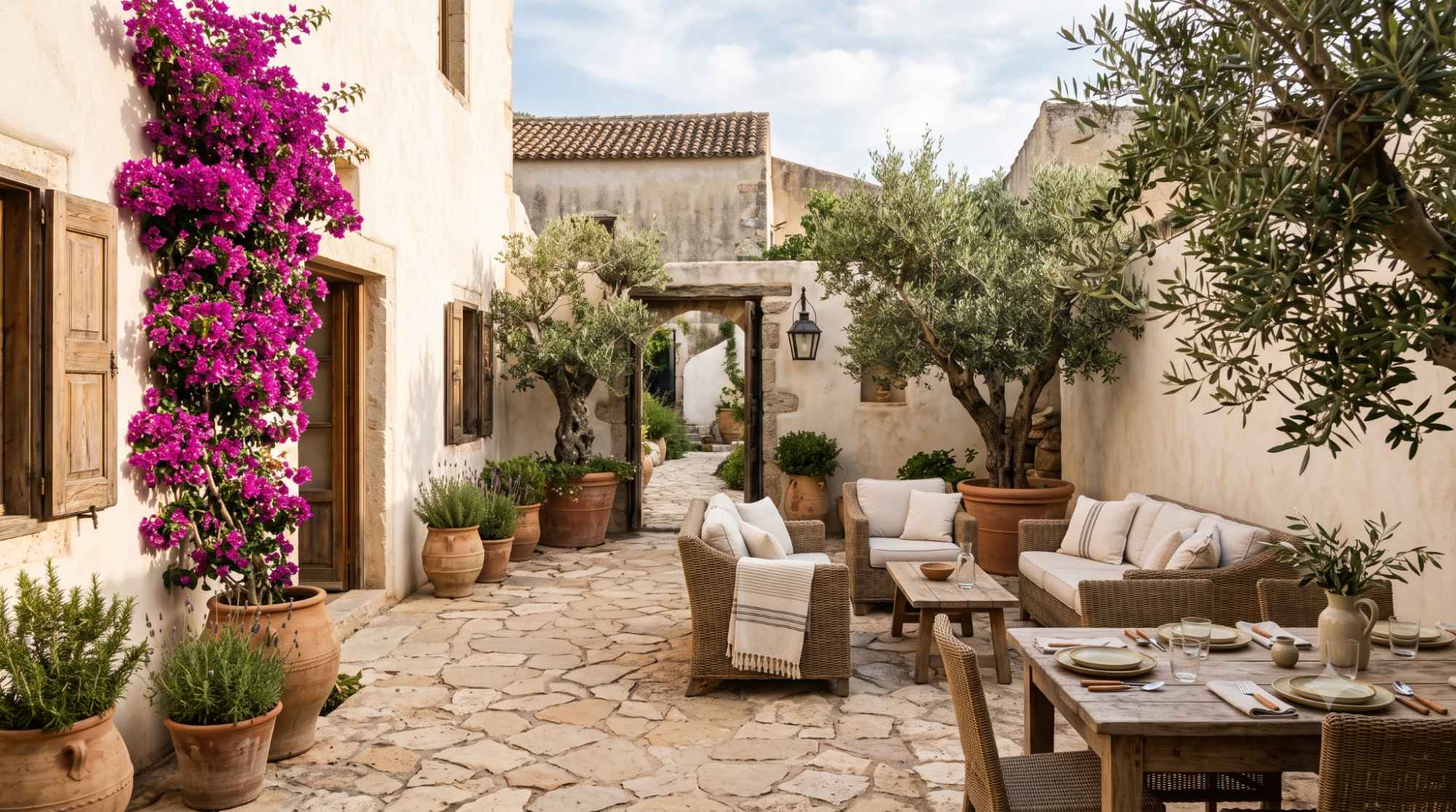
This is where the style started, so it's a natural place to go bolder with greenery. Group clay pots of different sizes together for an effortless, collected look.
Modern Mediterranean style is a cleaner take on the traditional look, focusing on a relaxed mood built from soft forms, natural materials, textured walls, curved furniture, and a restrained palette.
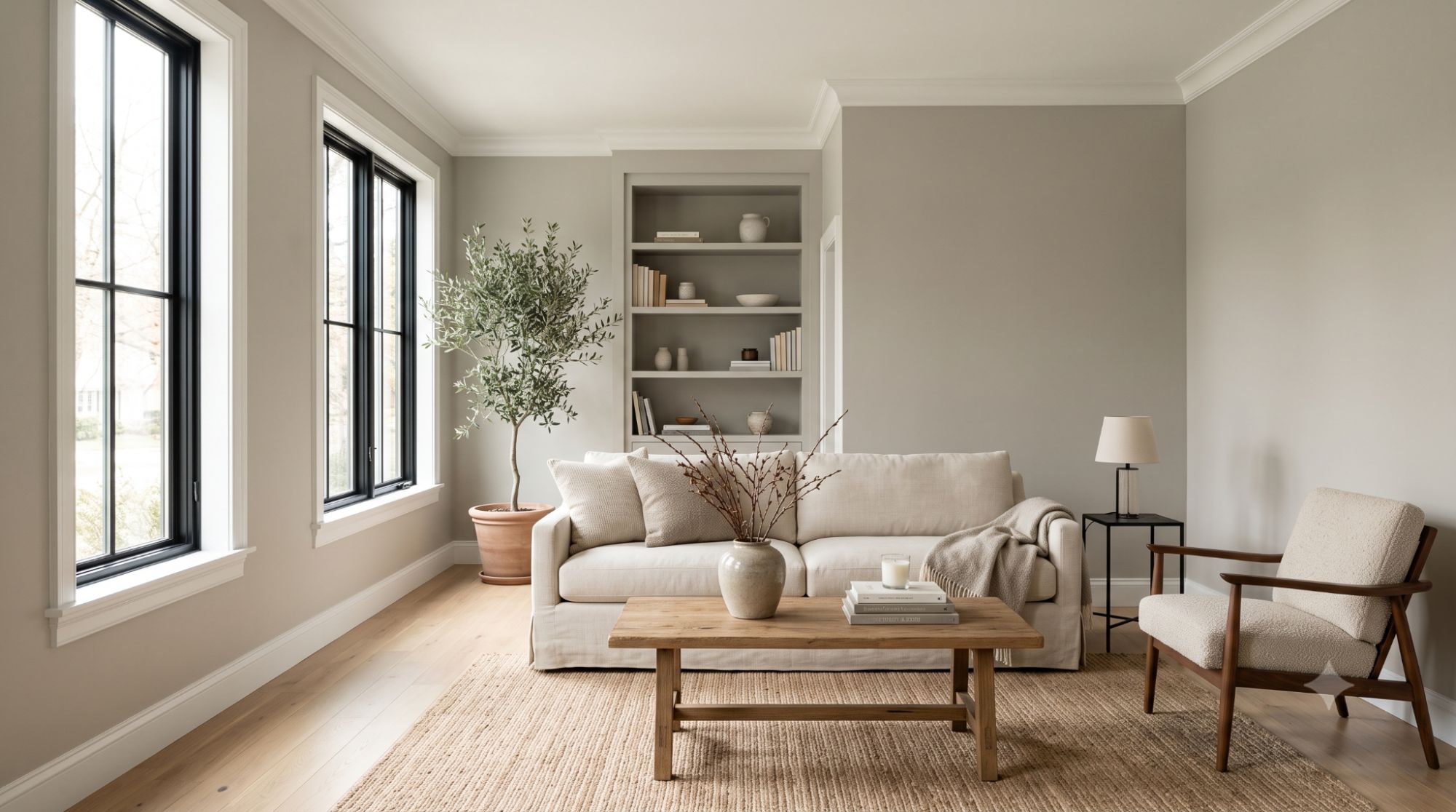
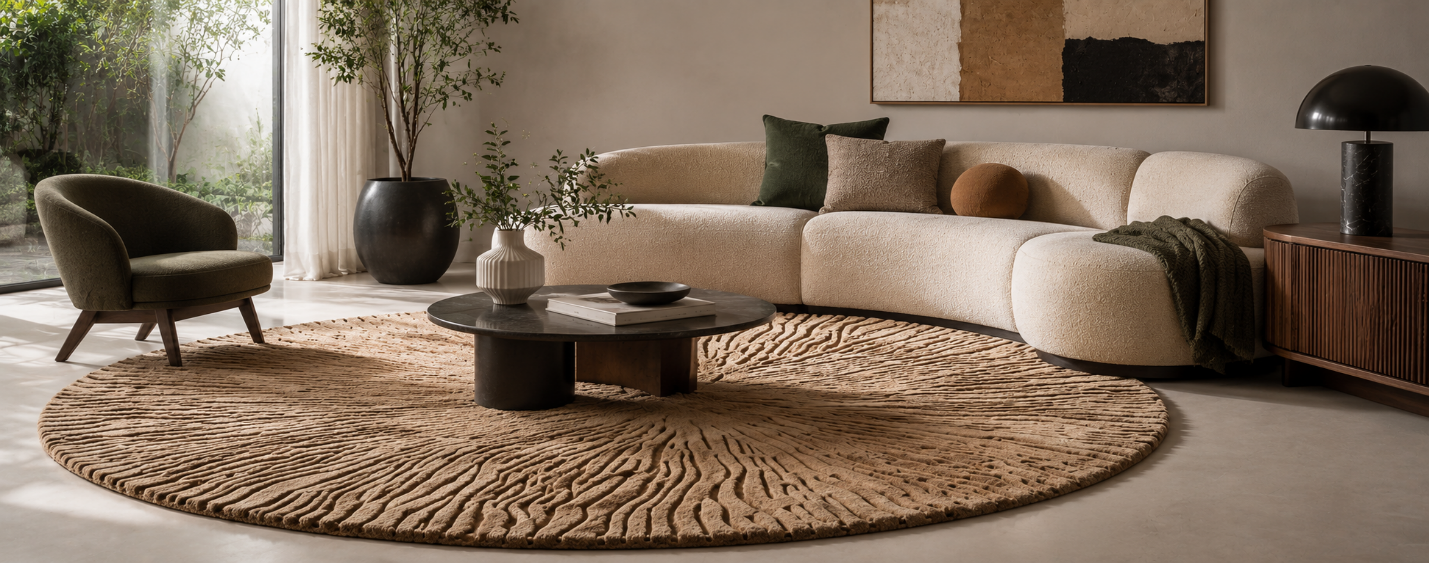
This works especially well in normal U.S. homes and apartments, since it doesn't need a full renovation. A few updates carry the whole look: limewash-style paint on one wall, an arched mirror, one curved chair, a jute rug, some ceramic decor, and warm neutral walls throughout.
Other traits to look for:
The idea is to pick a few strong, natural elements rather than layering in every traditional detail at once.
Both versions share the same roots, but they express warmth in different ways. Here's a quick side-by-side comparison.
| Feature | Traditional Mediterranean | Modern Mediterranean |
| Colors | Rich terracotta, blue, yellow, olive | Warm white, beige, clay, muted accents |
| Furniture | Heavier carved wood, iron details | Softer curves, simpler wood pieces |
| Walls | Stucco, plaster, textured finishes | Limewash, smooth plaster-look paint |
| Decor | More patterned, layered, rustic | Minimal, handmade, organic |
| Overall feel | Old-world, warm, detailed | Airy, clean, relaxed |
New to this style? The modern column is the easier starting point: lighter, cleaner, and far less likely to tip into an overdecorated look. You can layer in traditional details later.
This tradition isn't one single look. Each region brings its own flavor, and it's usually best to pick one main direction rather than mixing all four at once.
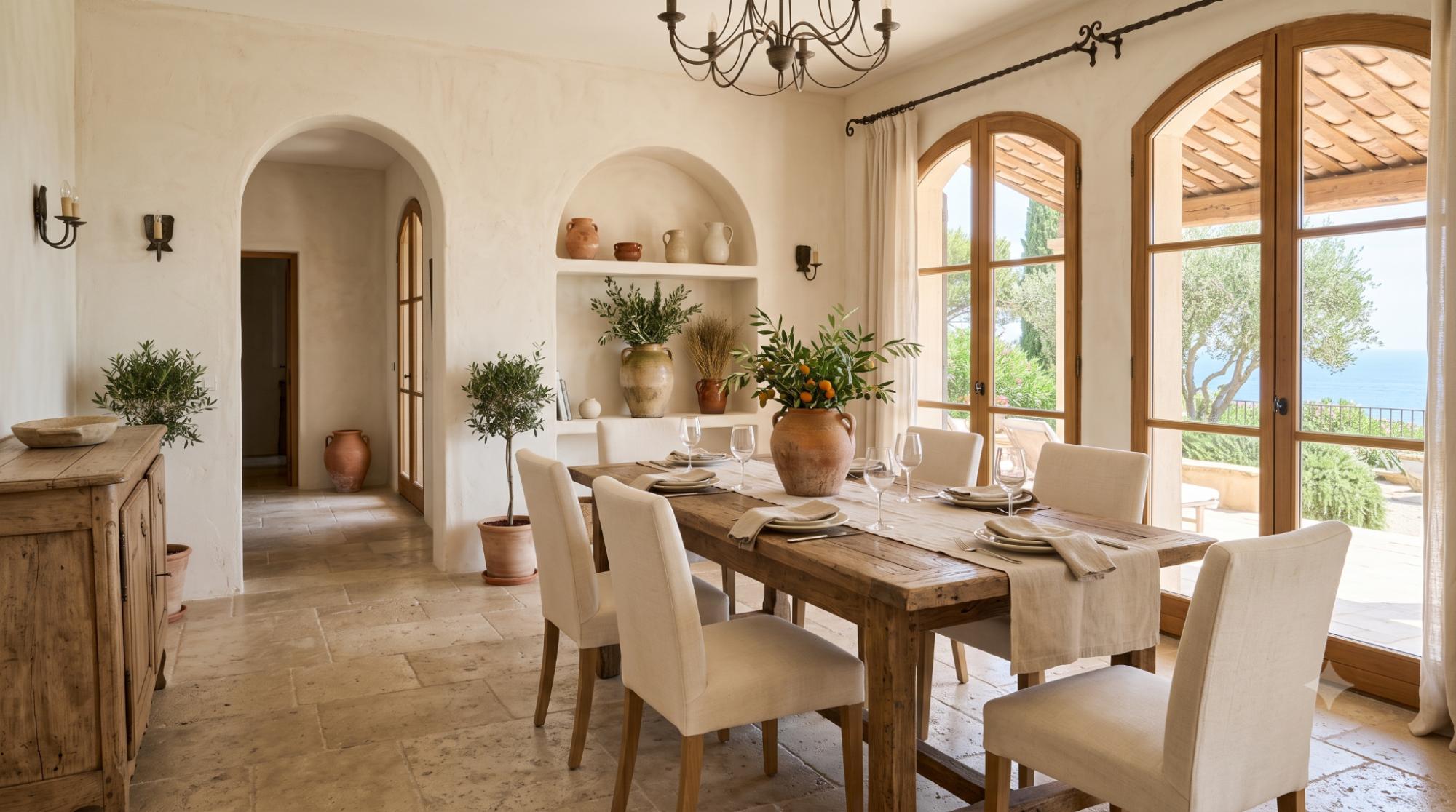
Warm neutrals, stone, and rustic wood pair with elegant furniture, arches, and old-world charm.
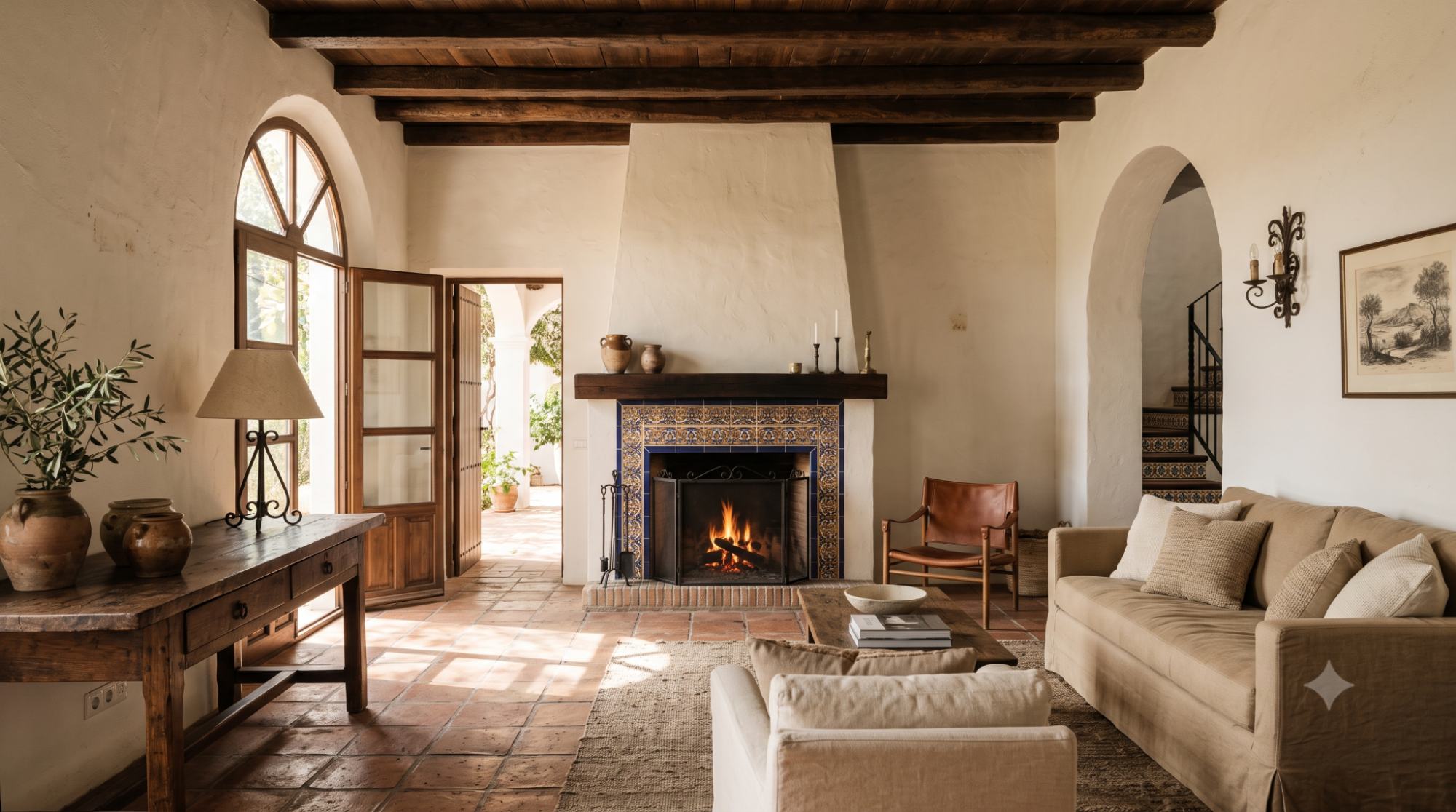
Terracotta tile, dark wood beams, and wrought iron stand out, along with patterned tile and arched doorways.
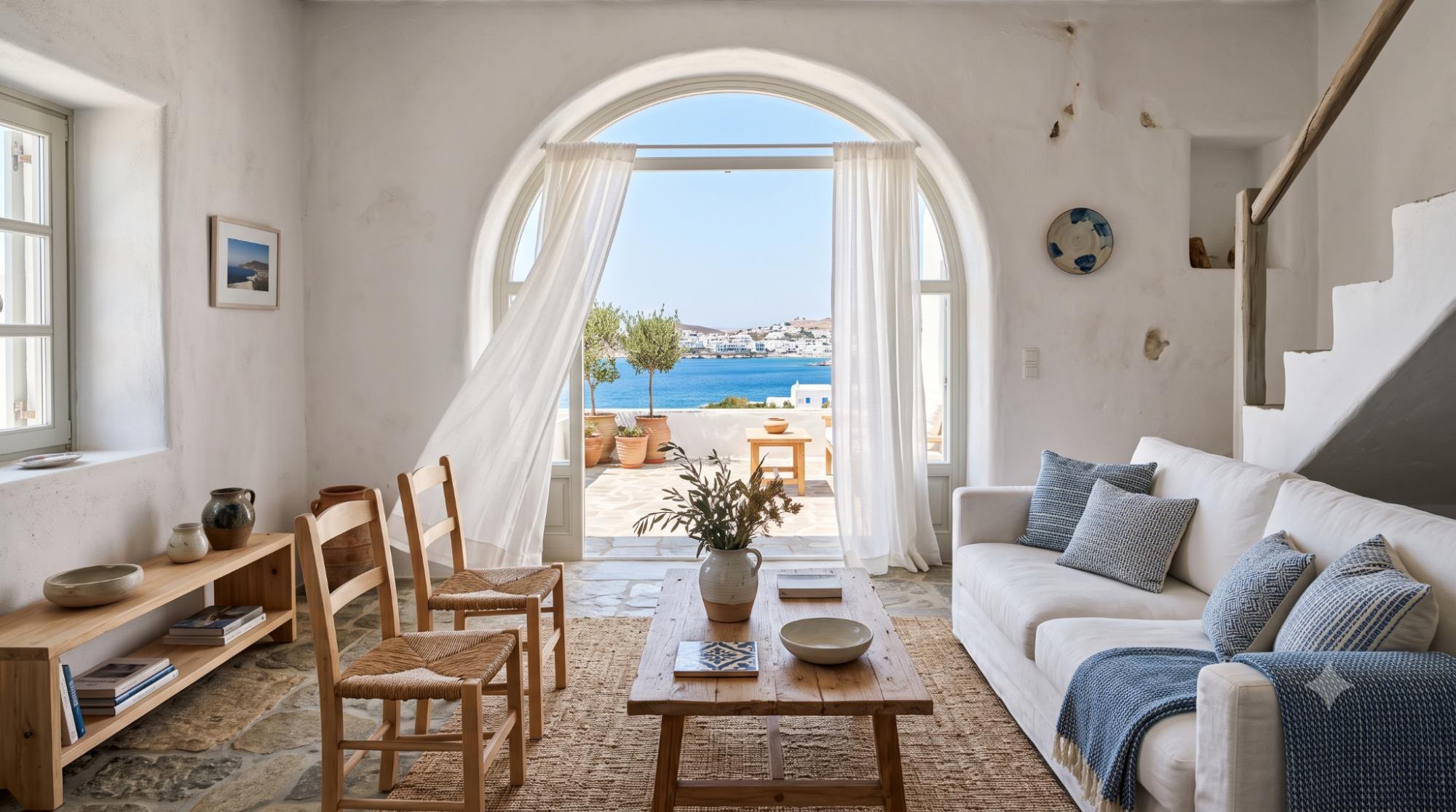
White walls paired with blue accents define this version. Furniture stays simple, and rooms maximize natural light with stone details and breezy fabrics.
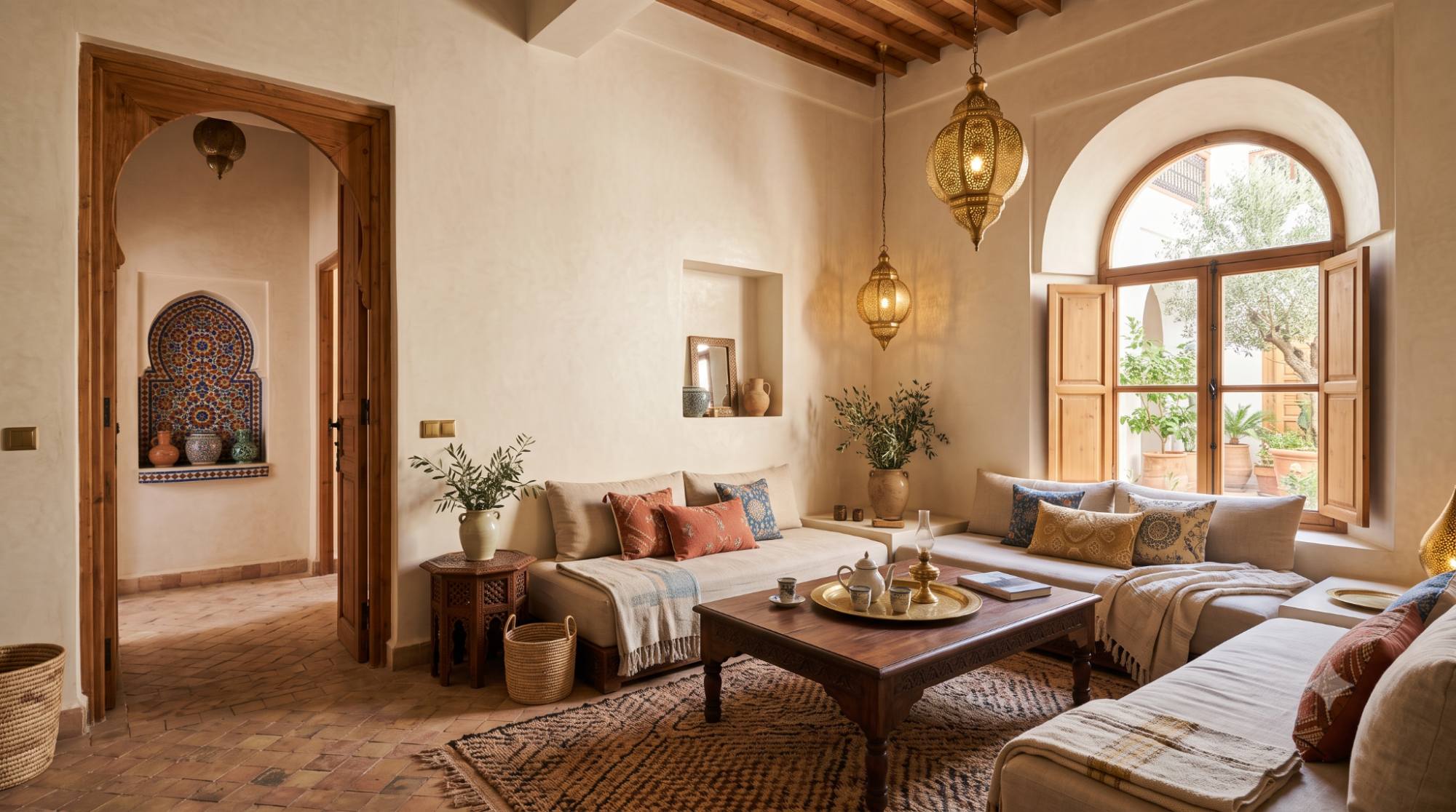
Mosaic tiles, lanterns, and carved wood furniture lead the way, with low seating, warm metals like brass, and patterned textiles as finishing touches.
Pick one region as your main direction, then borrow lightly from another to keep a room feeling intentional instead of scattered.
Choose a wall color that creates a bright, warm base, and avoid cool grays or stark whites.
Bring in linen, wood, stone, ceramic, rattan, and jute wherever you can. Even one swap, like a jute rug for a synthetic one, makes a difference.
One or two accent colors are usually enough; more can make the room feel busy instead of relaxed.
Arched mirrors, curved furniture, or a small wall niche soften a room's lines without any major renovation.
Look for ceramics, baskets, pottery, and clay planters, which carry more character than anything mass-produced.
The goal is a room that feels warm and lived-in. If it starts to feel like a themed display, remove a few pieces.
A few common mistakes can make a room feel off, even with the right pieces.
Yes. This style is based on timeless materials, warm colors, and comfortable living rather than fast-moving trends, which is part of why it hasn't gone out of style like trendier looks often do.
Modern Mediterranean interiors feel especially current now, since people want calm, natural homes instead of cold, ultra-modern spaces. Heavier traditional versions can feel dated if overdone with too much dark wood and ornate detail; the simplified, modern take feels freshest today.
This style comes down to a few core ideas: warm colors, natural materials, texture, arches, indoor-outdoor living, and handmade decor, creating a relaxed, timeless feeling in both traditional and modern homes.
Start small with warm walls, natural textures, and one or two accents in this style before changing the whole space.
Yes, it works well in a small home with light walls, fewer furniture pieces, and mirrors to open up the space. Arched mirrors bounce light and make a room feel larger. Choose slimmer furniture and limit accent colors to one or two.
Coastal design is lighter, breezier, and built around blue-and-white schemes with minimal texture. This style is warmer and more architectural, relying on arches, stone, and plaster rather than color alone. Coastal rooms use crisp surfaces; Mediterranean rooms lean on rougher, handmade textures.
Terracotta tile, natural stone, and limestone-look tile are classic choices, along with warm wood flooring paired with a woven rug. Patterned tile works well in smaller areas like entryways or bathrooms. Renters can use textured area rugs for a similar effect.
Yes. Limewash-style paint and secondhand wood furniture cover large areas cheaply. Woven baskets, linen-look curtains, and terracotta pots add texture affordably, and peel-and-stick tile brings in patterned tilework without a full renovation.
Olive trees, rosemary, lavender, fig trees, and citrus plants all fit naturally, along with hardy indoor options like snake plants for lower-light rooms. Herbs in terracotta pots work well on a kitchen windowsill, and grouping different plant sizes mirrors the layered look of real courtyard gardens.
Clara Jameson is an interior design specialist with more than 10 years of experience helping people create stylish and functional spaces. She blends aesthetics with practicality to make sophisticated design approachable and achievable. Clara earned her B.A. in Interior Design from Savannah College of Art and Design. She enjoys traveling, visiting art galleries, and studying architecture to gather fresh inspiration that she brings to every project.


No Comments