

12 Modern Christmas Decor Ideas Garland for Every Room
There's something magical about walking into a home decorated with


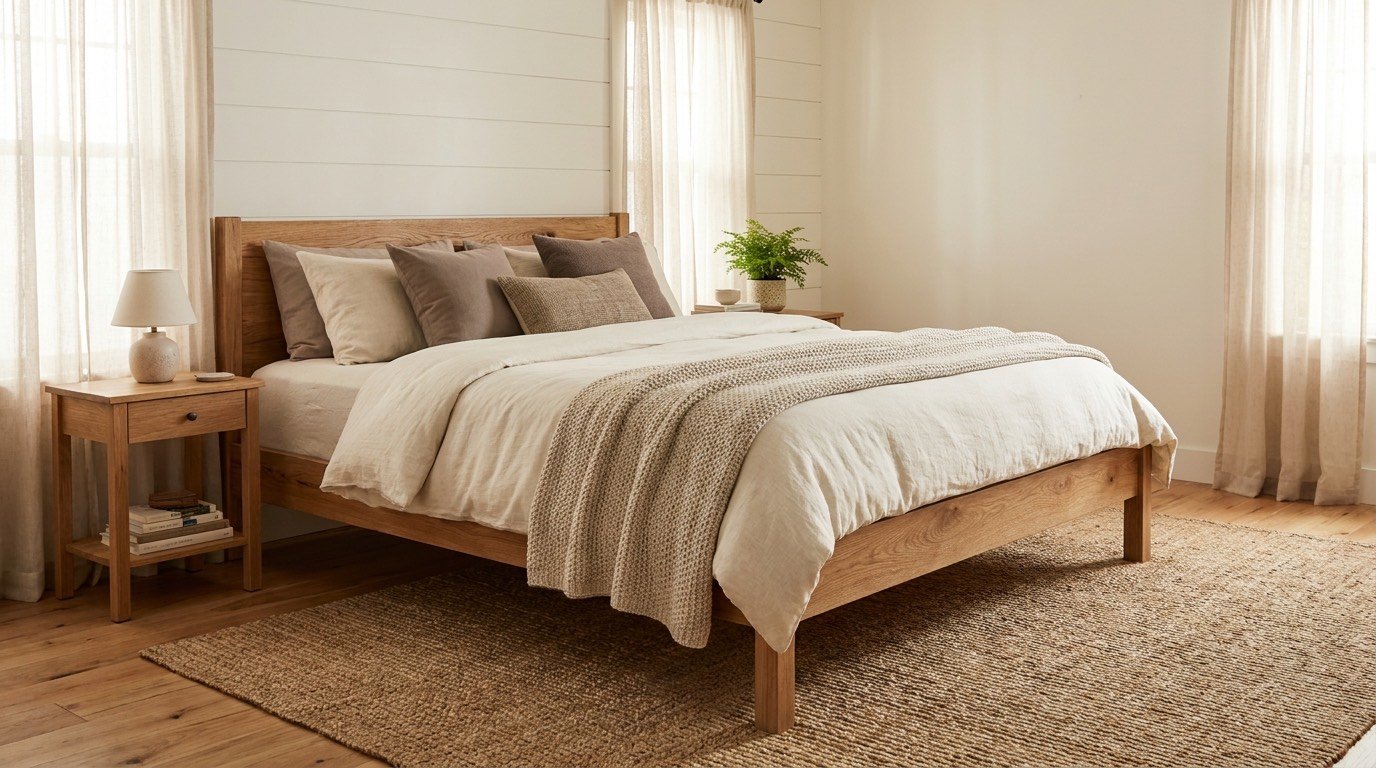
Want a bedroom that feels warm, calm, and lived-in without looking like a theme? These rustic bedroom ideas show you how.
The style works because it leans on natural materials, earthy colors, and tactile fabrics that make a room feel comfortable the moment you walk in.
Below you will find 15 design ideas with practical steps, color palettes, budget swaps, and tips for adapting the look to small rooms, rentals, and modern homes.
You do not need beams, a cabin, or a big budget. Pick one focal point and build from there.
A rustic bedroom feels natural, warm, and a little imperfect. Four things create the look:
Rustic overlaps with several nearby styles. This table shows how to tell them apart.
| Style | The look | Example |
| Rustic | Natural, rough, and aged | Reclaimed wood bed, wool throw |
| Farmhouse | Lighter, painted, and simple | White walls, painted dresser, check bedding |
| Cabin | Darker, woodsy, and snug | Knotty pine walls, plaid blanket |
| Modern rustic | Natural materials with clean lines | Smooth oak platform bed, chunky knit throw |
Most rooms only need two or three of these ideas. Start with the ones that match your budget and your room size.

A headboard made from reclaimed boards puts real wood grain right behind the bed. It works as a focal point without any wall work.
Balance it: Keep bedding smooth and light so the wood stands out.
Budget swap: Use new pine boards and a warm stain.

One wood-clad wall adds warmth and depth. The wall behind the bed is usually the best choice, because it frames the room.
Balance it: Stick to one wood wall, or the room can feel heavy.
Budget swap: Try peel-and-stick wood-look panels or a painted board-and-batten wall. Renters should check their lease first.

Ceiling beams add rustic character fast. If your home does not have them, lightweight faux beams can copy the look. Never cut, notch, or remove real beams without advice from a structural professional.
Balance it: On a low ceiling, choose thin, lighter beams.
Budget swap: Add a single faux beam above the bed instead of a full set.

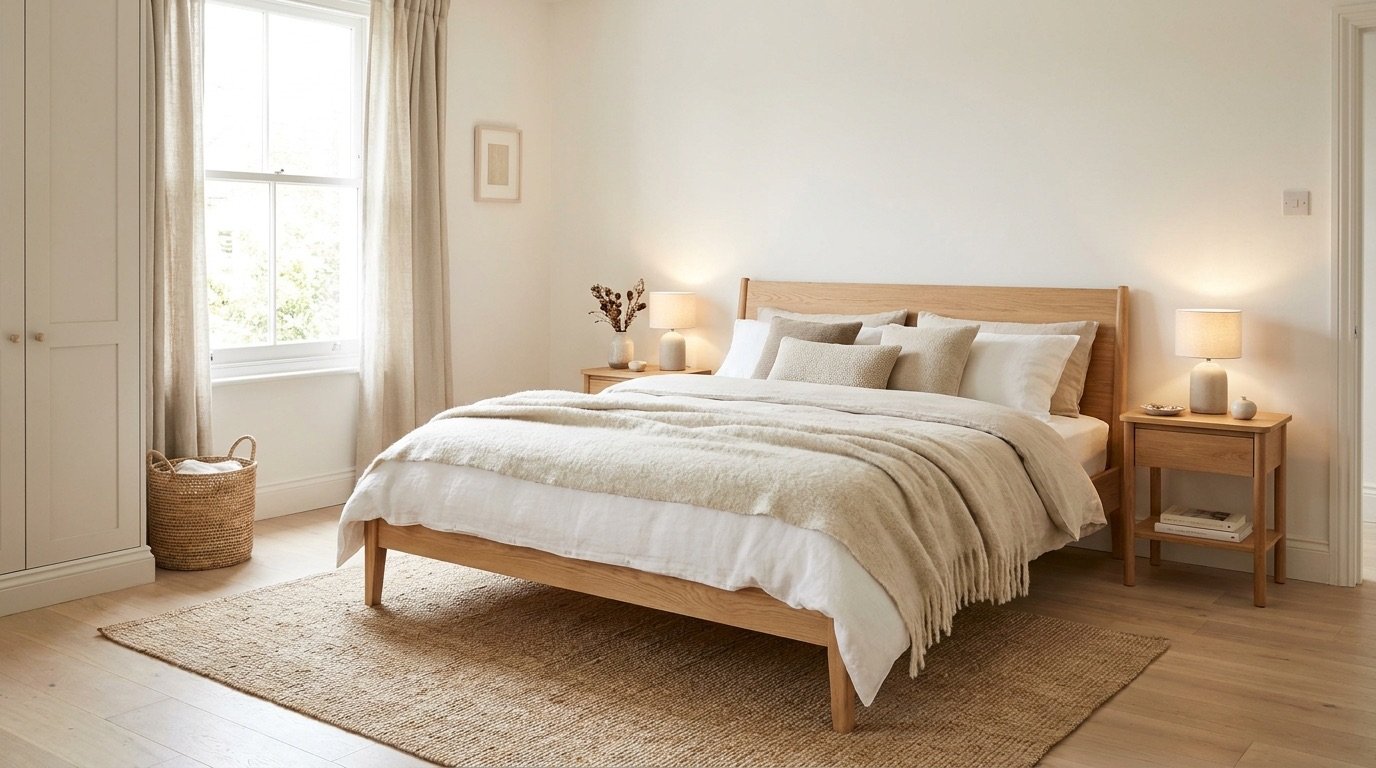
Linen's slightly rumpled look suits rustic rooms. Build the bed in layers instead of buying a matching set.
Balance it: Stick to a base plus two textures, or the bed looks messy.
Budget swap: Replace only the duvet cover and throw first.

Older wood pieces bring a lived-in feel that new furniture often copies poorly. Look for solid wood with visible grain.
Balance it: Choose a nightstand close to the height of the mattress top.
Budget swap: Shop thrift stores and yard sales, and refinish one piece instead of buying a set. If an old painted piece may contain lead paint, test it before sanding.

A jute, sisal, or wool rug adds texture and softens hard floors. Baskets and woven trays repeat the material without clutter.
Balance it: Coarse jute can feel rough, so add a softer rug where your feet land.
Budget swap: Try flat-weave cotton rugs and secondhand baskets.

Dark iron and warm brass add contrast to soft wood and linen. Use them in small doses on hardware, lamp bases, bed frames, or curtain rods.
Balance it: Shiny chrome clashes with a worn, natural look, so choose matte or aged finishes.
Budget swap: Replace drawer pulls or spray-paint old lamp bases.

Warm light is what makes a rustic room feel cozy. Mix an overhead fixture with lamps at the bed, so no single light does all the work.
Balance it: Skip a large, heavy pendant under a low ceiling.
Budget swap: Use plug-in swag pendants or wall sconces with cords. Hardwired fixtures usually need a licensed electrician.

A stone or brick surface adds weight and a handmade look. Real masonry needs professional installation, and old brick should be checked and sealed before you decorate around it.
Balance it: Soft bedding and curtains keep stone from feeling cold.
Budget swap: Try removable brick-look wallpaper, which suits renters.

A rustic farmhouse bedroom is lighter and more relaxed than a cabin look. Think white walls, painted furniture, and simple lines.
Balance it: Skip word-art signs, which can make the room feel staged.
Budget swap: Repaint an existing dresser and swap the hardware.

A rustic cabin bedroom leans darker and woodsier. Think knotty pine or log tones, wool, plaid, and low, warm light.
Balance it: Big wood furniture needs breathing room, so skip extra pieces.
Budget swap: Choose wool-blend blankets and plaid flannel pillowcases.

This style pairs raw wood with relaxed, collected textiles. Rattan, patterned rugs, and plants add personality without a lot of rules.
Balance it: Mix patterns in different scales so none compete.
Budget swap: Shop secondhand rugs and baskets, and root plant cuttings in jars.

Deep green, charcoal, or chocolate brown paired with dark wood creates a snug, enclosed mood. The color guidance below explains how to keep it from feeling heavy.
Balance it: Test a paint sample at night before you commit.
Budget swap: Paint is usually the lowest-cost way to get this look.

Small rustic bedroom ideas work best when furniture is light in scale and the wood tones stay consistent. Choose fewer, better pieces.
Balance it: Leave some bare floor and wall so the room can breathe.
Budget swap: Use wall hooks and under-bed baskets.

Decor should feel collected, not themed. Look for landscape prints, botanical sketches, wood-framed mirrors, and found objects like driftwood or branches.
Balance it: Skip too many animal-themed pieces, which can feel like a theme.
Budget swap: Use public domain art prints and thrifted frames.
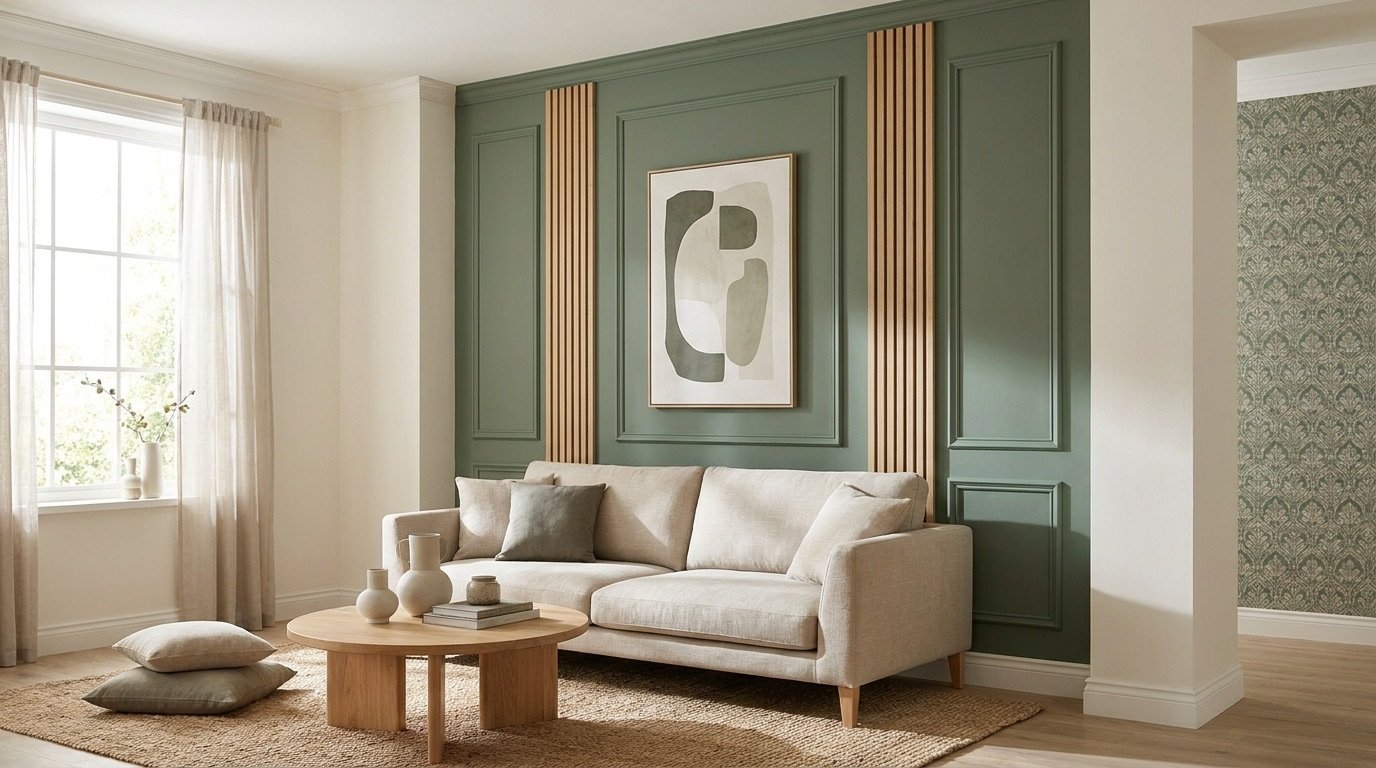
Start with the wood in your room, then choose wall colors that make it look good. Warm white and cream make oak and pine look golden and keep a room airy. Deeper colors, like olive and charcoal, make walnut and dark-stained wood feel richer.
Neutrals such as beige and taupe sit in between. They suit most woods, which makes them a safe starting point if you are unsure. Muted terracotta works best in small doses, such as pillows, a throw, or one accent wall.
| Palette | Suggested colors | Atmosphere |
| Warm white + oak | Warm white walls, light oak furniture, oatmeal bedding | Airy and calm |
| Olive green + walnut | Muted olive walls, walnut bed, cream linen | Earthy and grounded |
| Beige + dark wood | Beige or taupe walls, espresso-stained wood, charcoal accents | Cozy and classic |
| Terracotta + linen | Clay-toned pillows or accent wall, natural linen, light wood | Warm and sunbaked |
Dark colors can work in a small room if you commit to them. Paint the walls and trim the same shade, use warm lighting, and add light bedding. Avoid painting just one dark wall in a room with little daylight, because it can make the space feel lopsided.
You can get the look without replacing everything. Follow this order to get the most from each dollar.
Know which projects you can do yourself and which need a pro.
A modern rustic bedroom keeps the warmth of natural materials but removes the clutter. Combine rough wood with clean-lined furniture, such as a reclaimed headboard with simple, smooth nightstands.
Limit the palette to about three colors, and balance distressed finishes with smooth surfaces so no single texture takes over.
Avoid heavy themes and artificial distressing. Keep storage, lighting, and furniture functional, so every piece has a job.
Here is a quick example of a dated arrangement and how to update it.
| Dated | Updated |
| Matching dark pine bed, dresser, and nightstands | Keep the bed; swap one piece for a simple oak or painted piece |
| Heavy plaid bedding and many decorative pillows | Solid linen bedding with one textured throw |
| Antler-style lamps and word-art signs | Plain ceramic or iron lamps and one framed print |
A rustic bedroom does not need a full makeover. A few carefully chosen materials, warm colors, and layered textures go a long way.
Start with one focal point, such as a headboard, bedding, or lighting, and add pieces slowly as you see how the room feels.
If you save a few favorite rustic bedroom ideas from this list, test paint samples and fabric swatches in your own light before you buy.
That small step can save money and help you build a room you will want to sleep in.
Yes. Let the wall finish carry the look instead of wood. A limewash-style or textured matte paint adds soft, uneven depth that reads as rustic. Then bring in wood through small, eye-level pieces, such as a floating shelf, a wood curtain rod, or a thick mirror frame.
Choose two main tones, then check them side by side at the same time of day, since lamplight can shift wood color. Keep finishes consistent, matte with matte. If two pieces clash, bridge them with a rug or throw that contains both tones, and repeat each tone in at least two places.
Get permission in writing before you paint or use adhesives, since policies vary. Then rely on items that leave no trace: leaning mirrors and art, floor lamps, and tension rods for curtains. Put felt pads under heavy furniture, and keep the original knobs if you swap hardware so you can switch back at move-out.
Pick a floor tone that contrasts with your bed frame, because matching tones can make the room look flat. Matte, wide-plank, or wire-brushed wood and wood-look floors suit the style best. If you are replacing floors on a budget, textured luxury vinyl or laminate can imitate wood. Avoid very glossy finishes.
Let in more daylight first. Hang curtain rods wider and higher than the window frame, use sheer panels, and place a mirror opposite the window. For clutter, give small items a home: a tray on the nightstand and closed storage for daily items. Leave one surface mostly empty.
Clara Jameson is an interior design specialist with more than 10 years of experience helping people create stylish and functional spaces. She blends aesthetics with practicality to make sophisticated design approachable and achievable. Clara earned her B.A. in Interior Design from Savannah College of Art and Design. She enjoys traveling, visiting art galleries, and studying architecture to gather fresh inspiration that she brings to every project.

No Comments