

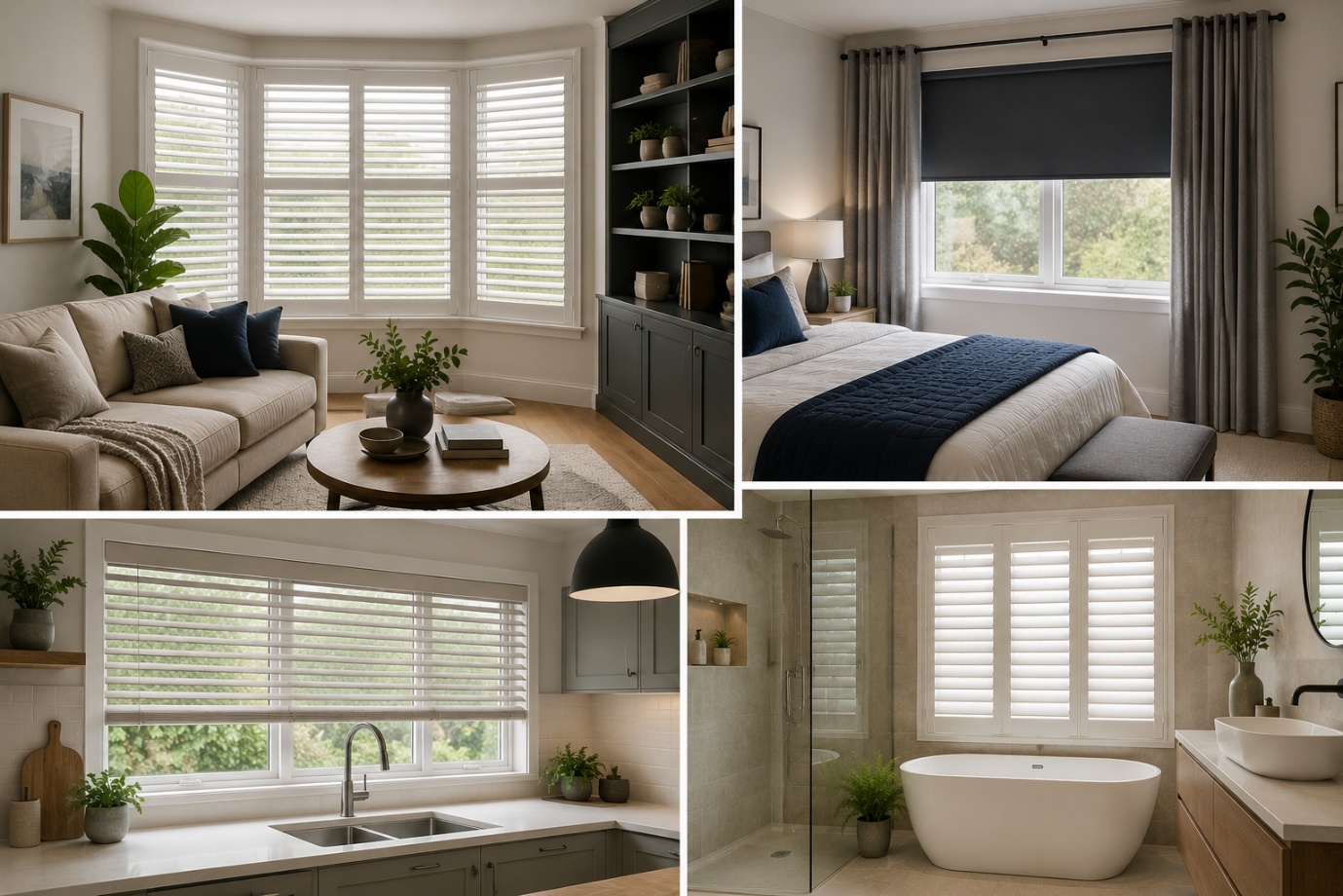
How to Choose the Perfect Window Coverings for Your Home
Window coverings are more than just decorative features. They influence


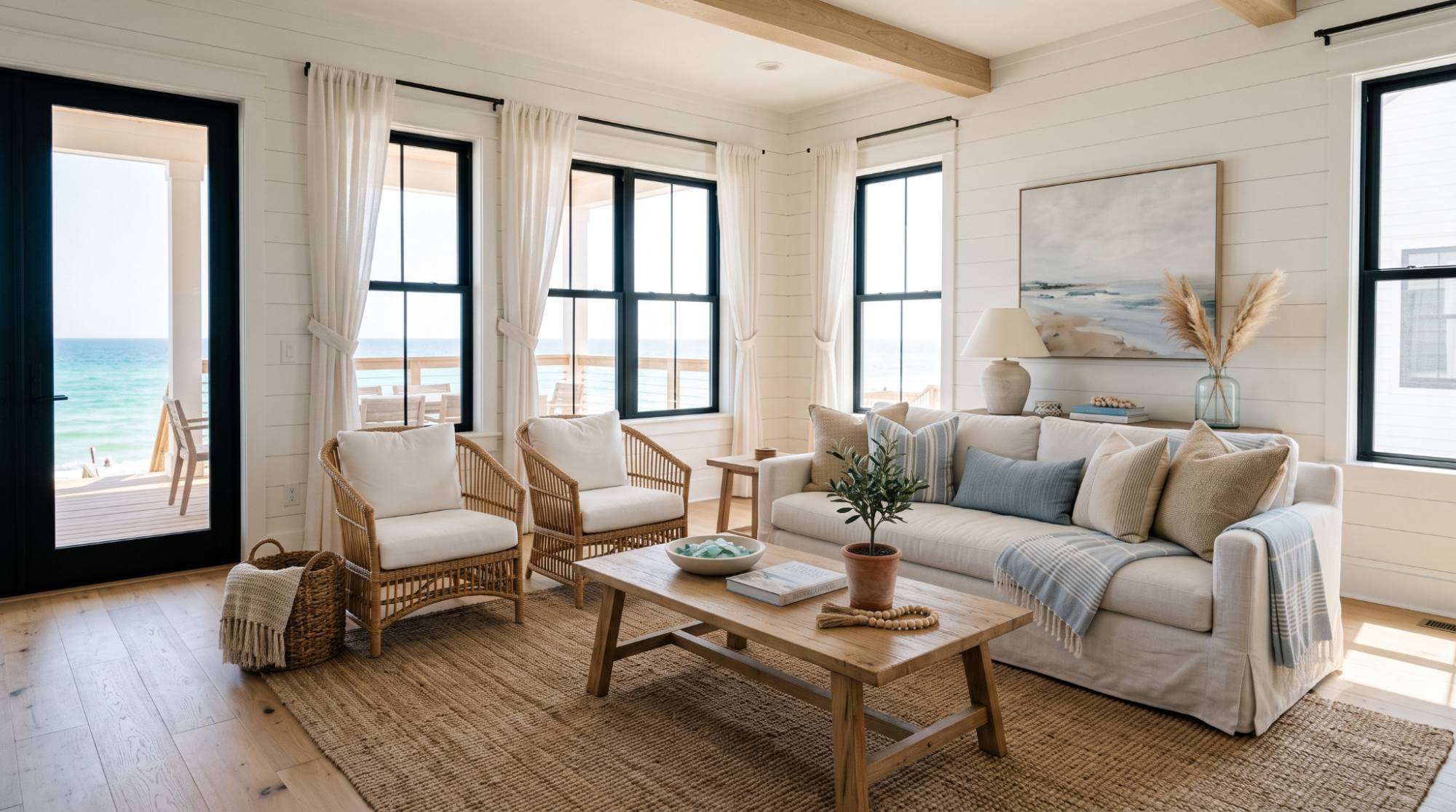
A beach house interior should feel bright, breezy, and easy to live in. Think white walls, natural light pouring through big windows, and furniture that invites you to kick off your shoes and relax. Add in rattan, linen, jute, soft blues, and sandy neutrals, and you've got a space that feels like a permanent vacation.
The best part is that you don't need to live near the ocean to enjoy this look. Whether you're in a beach cottage, a lake house, or a suburban home miles from the nearest shoreline, the same ideas work. This guide walks you through practical ways to bring coastal calm to your colors, furniture, textures, and every room in your home.
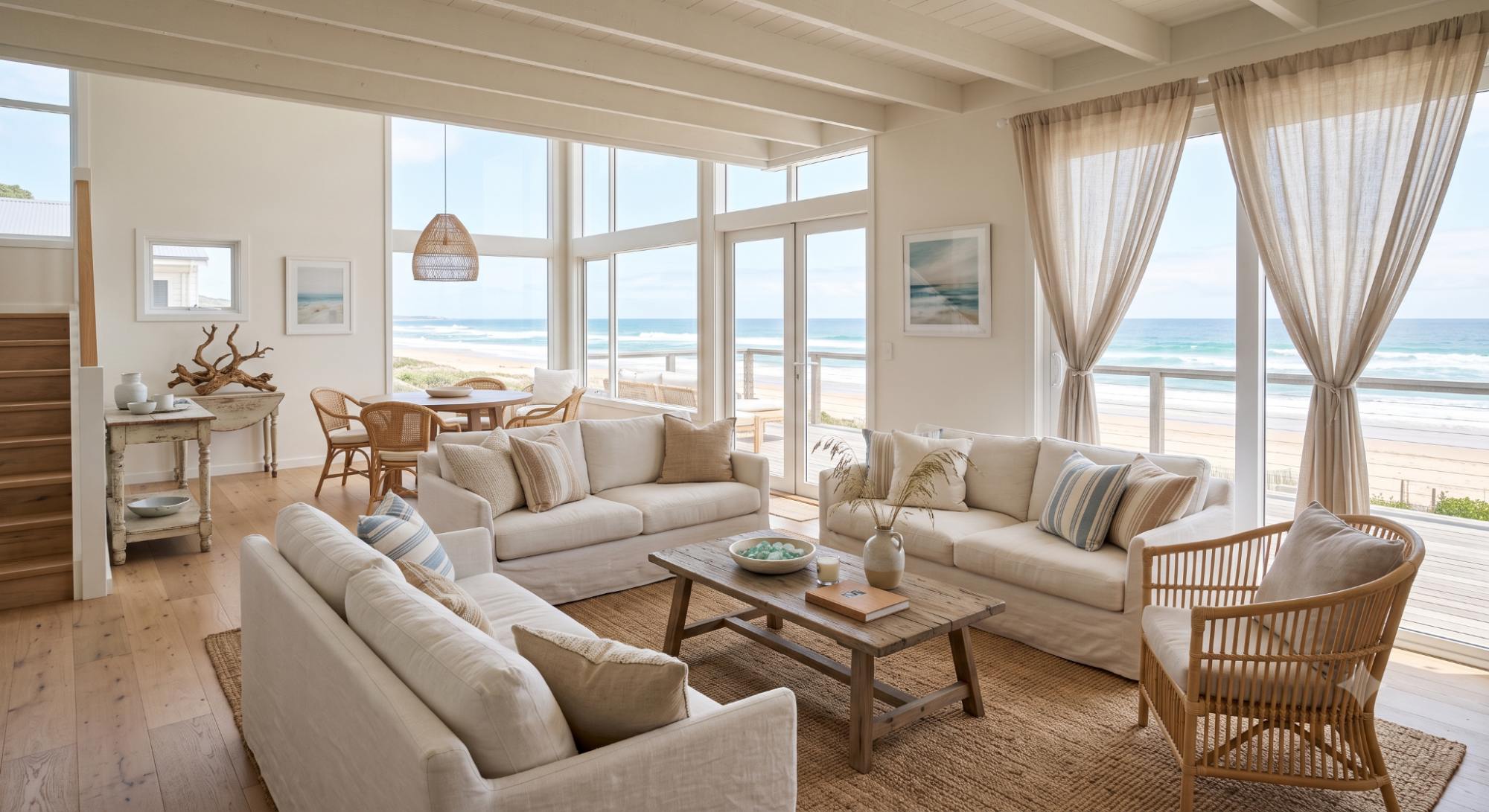
Beach house interior design takes its cues from the coast — the sea, the sand, the sky, and the relaxed feeling of vacation living. It leans on light colors, open spaces, casual furniture, and natural materials to create a mood that feels fresh and calm rather than stiff or formal.
The goal isn't to turn your home into a themed attraction. It's to capture a feeling. Light colors keep rooms airy. Natural textures like wood and woven fibers add warmth. Simple, comfortable furniture makes the space livable, not just pretty.
This style isn't limited to homes that sit right on the sand. It works just as well in a lake house, a city apartment, or a home in the suburbs. At its core, this look is built around open, airy rooms, relaxed textures, seaside-inspired colors, plenty of natural light, and white walls — and none of that requires an ocean view to pull off.
Before diving into specific ideas, it helps to understand the building blocks that make a beach house interior work. These four elements show up again and again throughout this guide.
A coastal color palette stays soft and light. The most common choices include:
Blue and white is the classic combination people picture first, but it's not the only option. A beach house interior can lean on beige, cream, gray, or green just as easily, and mixing a few of these shades often looks more interesting than sticking to just one.
Texture is what keeps a light, neutral room from feeling flat or cold. The most common natural materials in coastal design include:
A room full of white and neutral tones needs texture, or it risks feeling cold and clinical instead of warm and inviting. Mixing two or three of these materials in one room — say, a jute rug, a rattan chair, and a linen throw — usually gives the best result.
Beach house furniture should feel relaxed, not fussy. Good choices include:
This kind of furniture holds up well to sandy feet, wet swimsuits, and everyday family life, which matters whether you're decorating a full-time home or a vacation rental. If you're furnishing a rental property or a home with kids and pets, look for performance fabric on sofas and dining chairs. It resists stains and spills far better than standard upholstery, so the furniture keeps looking good with less effort.
A true beach house interior blurs the line between inside and outside. This usually comes through:
Coastal interiors often lean on soft tones, natural materials like wood, linen, and rattan, along with large windows that create an indoor-outdoor feeling throughout the home.
Now let's get into the ideas themselves. Each one is a simple, practical way to bring more coastal calm into your home.
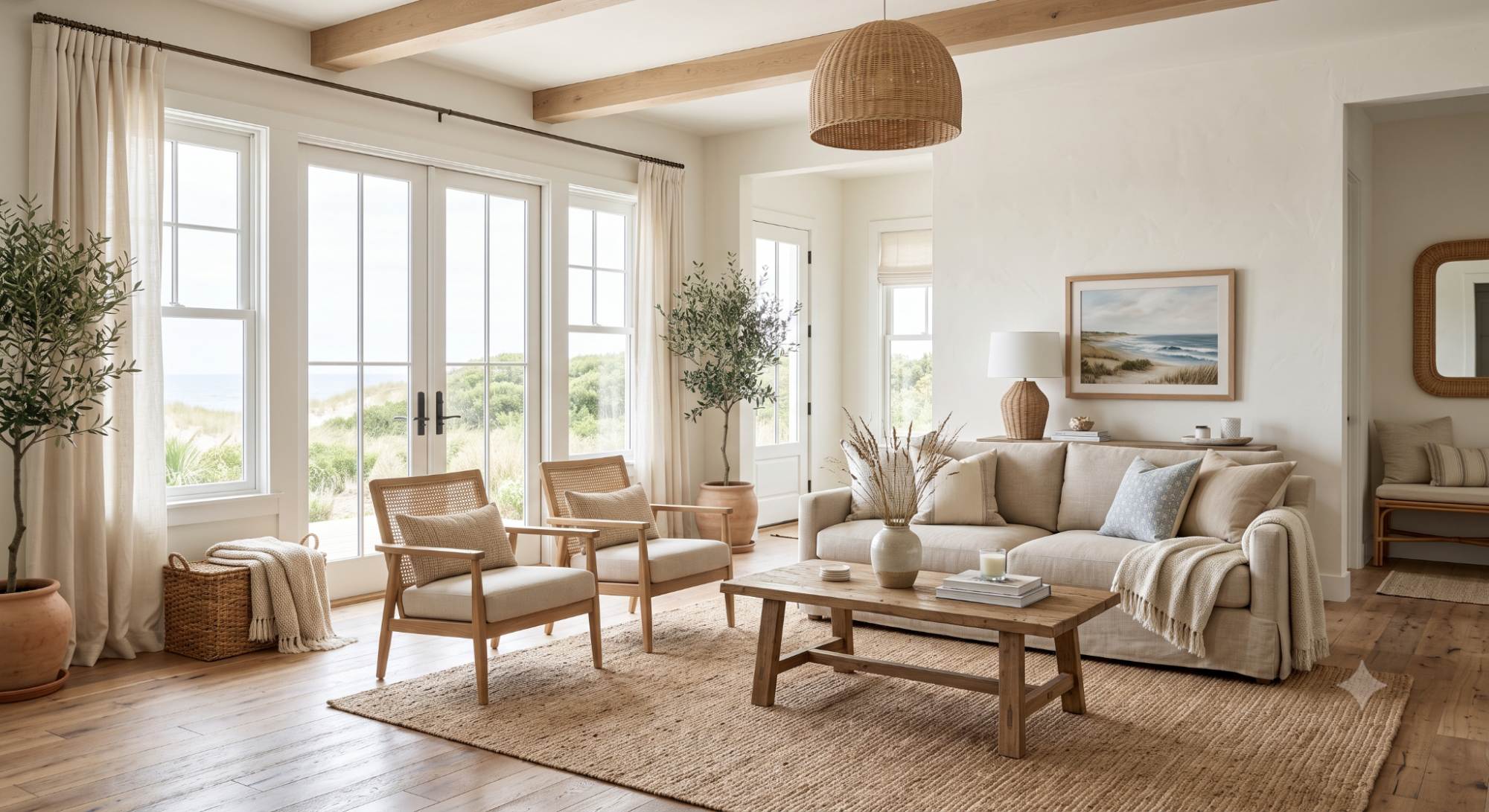
White walls make any room feel bright, open, and fresh. Choose a warm white instead of a stark, cold white for a softer, more welcoming beach house interior feel. Pair your walls with wood furniture, rattan accents, linen textiles, and a few blue details.
This works well in living rooms, bedrooms, hallways, and kitchens alike. It's one of the simplest, most affordable changes you can make. If you live in a humid coastal climate, ask for mildew-resistant paint in bathrooms, kitchens, and any room near an entryway, since moisture builds up faster in these spaces.
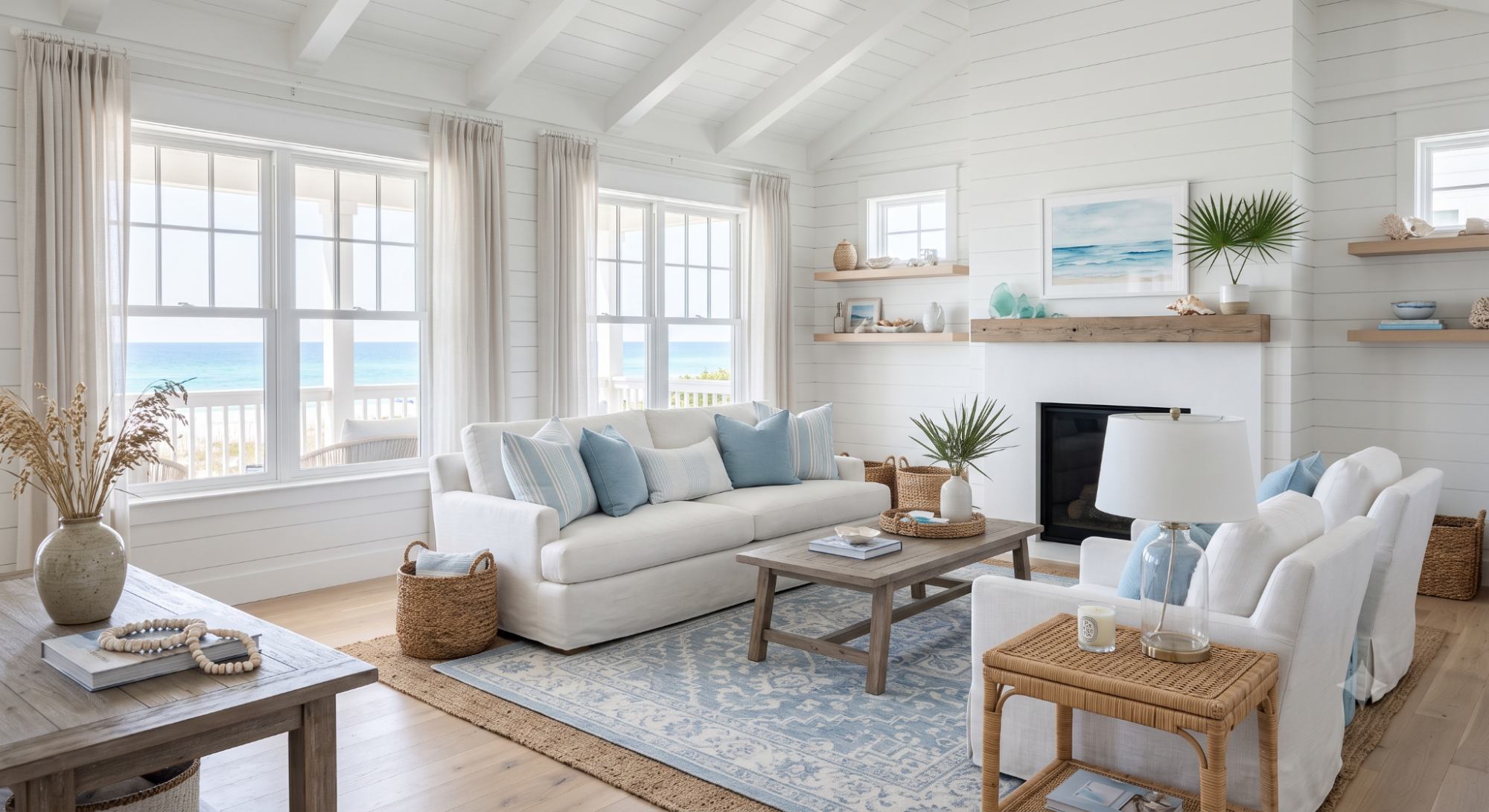
Blue and white together create the classic coastal look most people recognize instantly. Use pale blue for a calm, restful room, or reach for navy when you want more contrast and depth. Bring blue in through pillows, rugs, artwork, bedding, or painted cabinets.
Keep the rest of the room simple so it doesn't start to feel too busy or overdone.
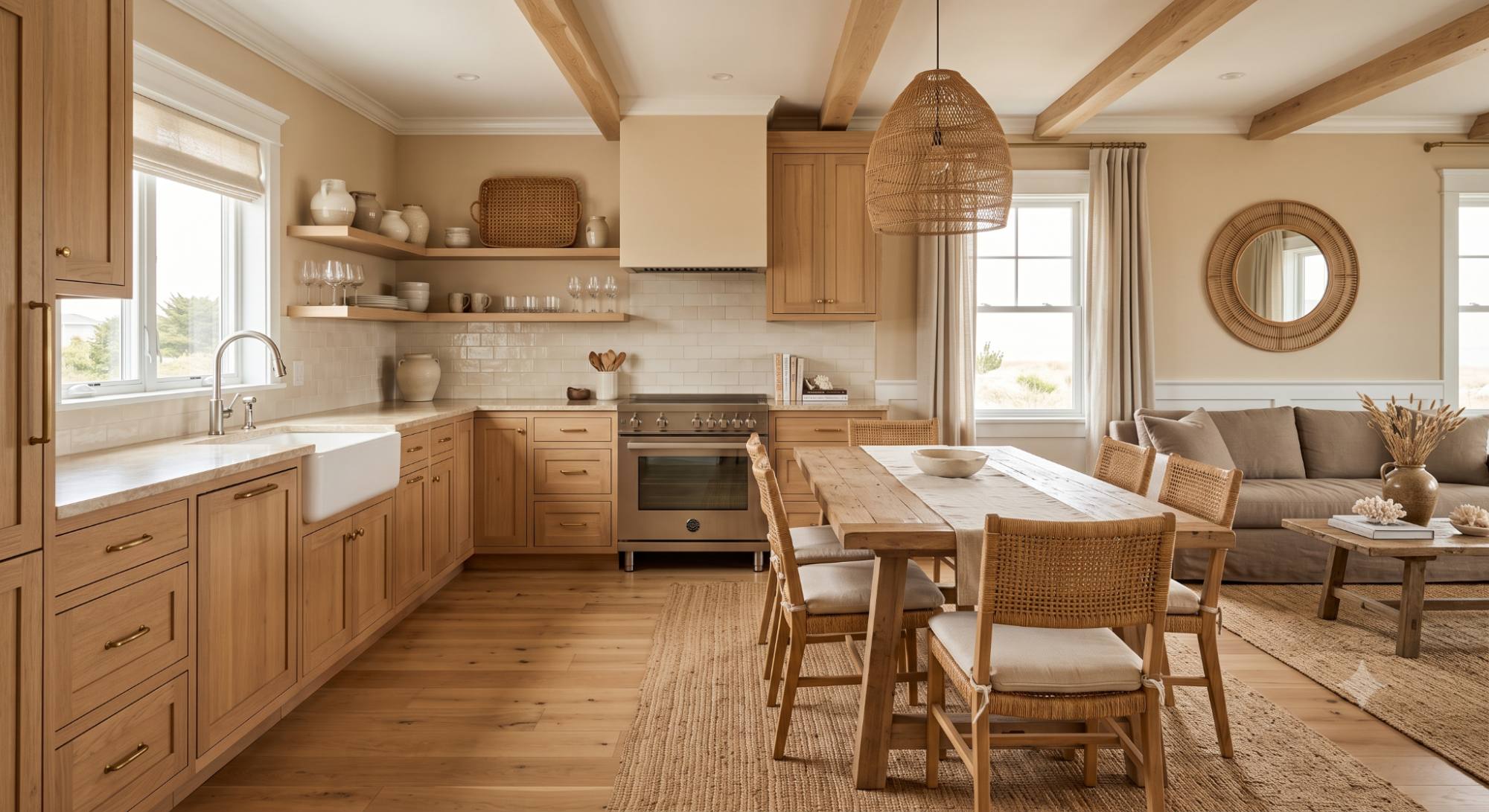
Beige, cream, and taupe bring warmth and coziness that pure white sometimes lacks. These shades work especially well in rooms that don't get much natural light. Pair them with white trim and natural wood tones for a softer beach house look overall.
Cream and warm neutrals can make coastal kitchens feel more welcoming than cooler white tones, especially in older homes where natural light is limited.
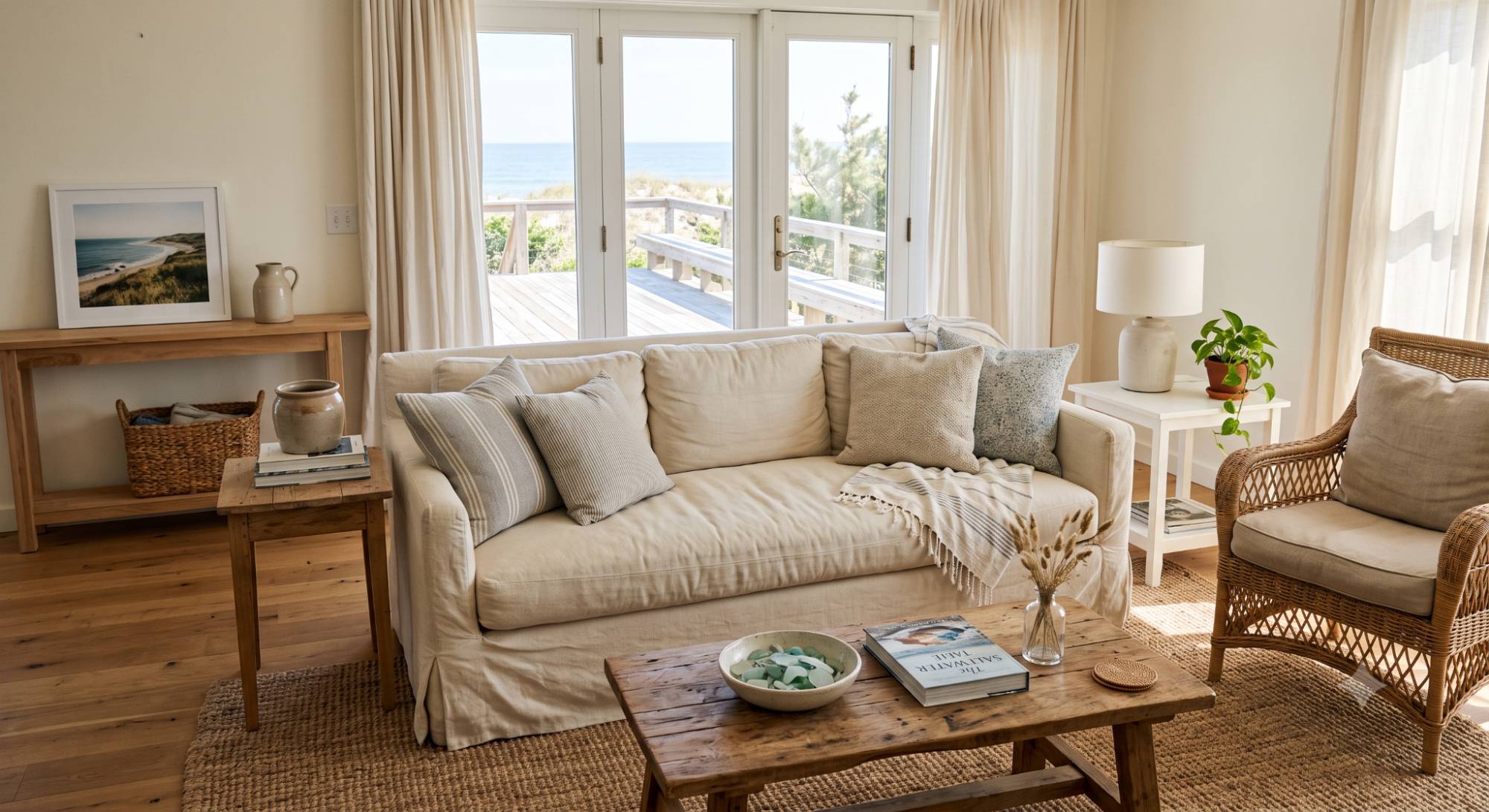
Slipcovered sofas offer a relaxed, comfortable look that fits right into coastal design. Stick with white, cream, beige, or soft gray covers for the most versatile option. Removable slipcovers are a practical choice for homes dealing with sand, pets, kids, or frequent guests.
If you're furnishing a vacation rental, washable slipcovers are especially worth the investment. Guests come and go often, and being able to toss a cover in the wash between stays keeps the furniture looking fresh without a full reupholstering job.
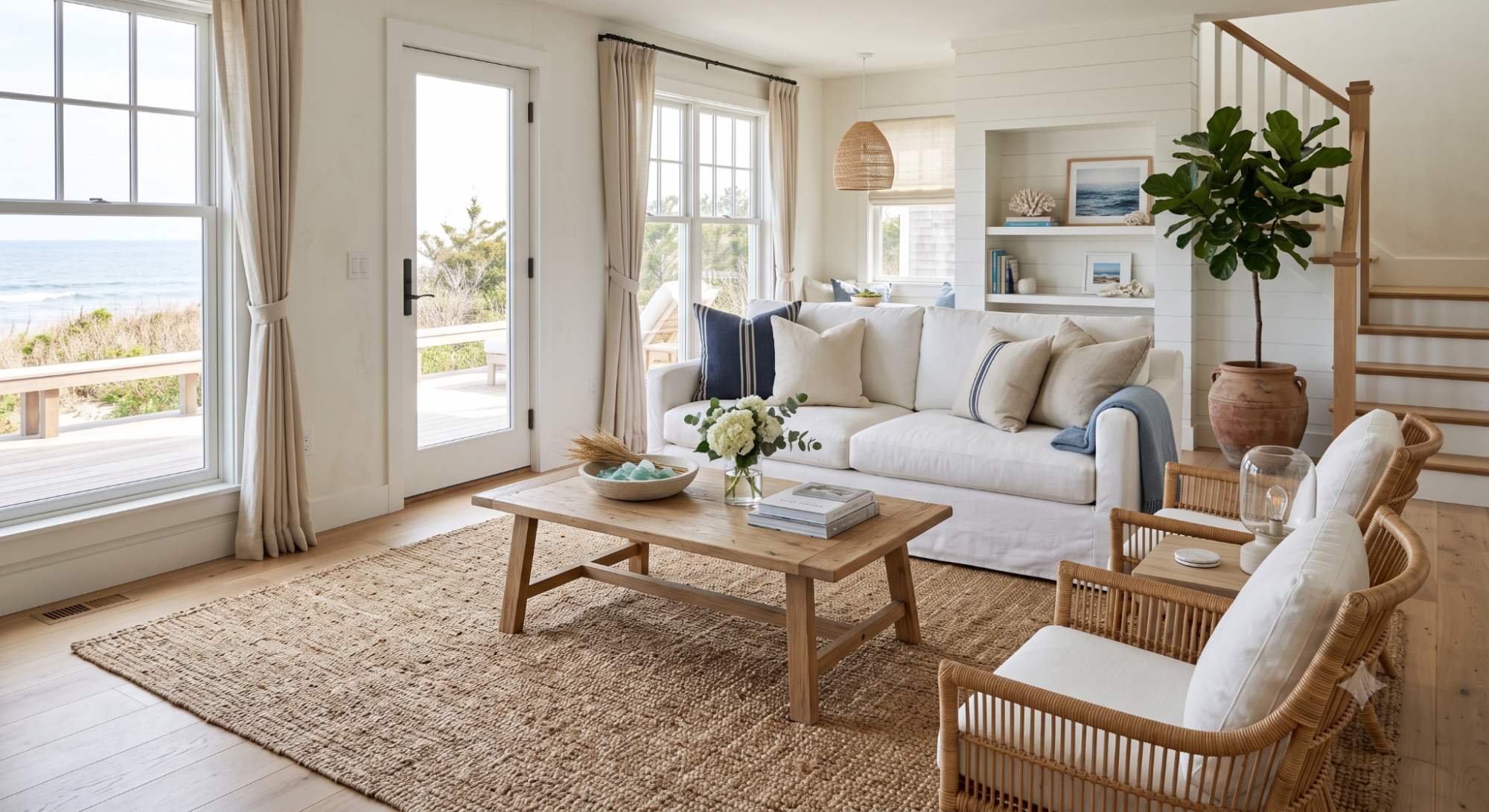
Jute and sisal rugs add natural texture that warms up an otherwise all-white room. Place them under coffee tables, dining tables, or even beds for a grounded, earthy feel. Flatweave versions are easier to clean than thick, plush rugs, which matters in a sandy household.
For entryways or mudrooms near a beach door, consider an indoor-outdoor rug instead. These handle sand, water, and foot traffic much better than natural jute in high-moisture spots.
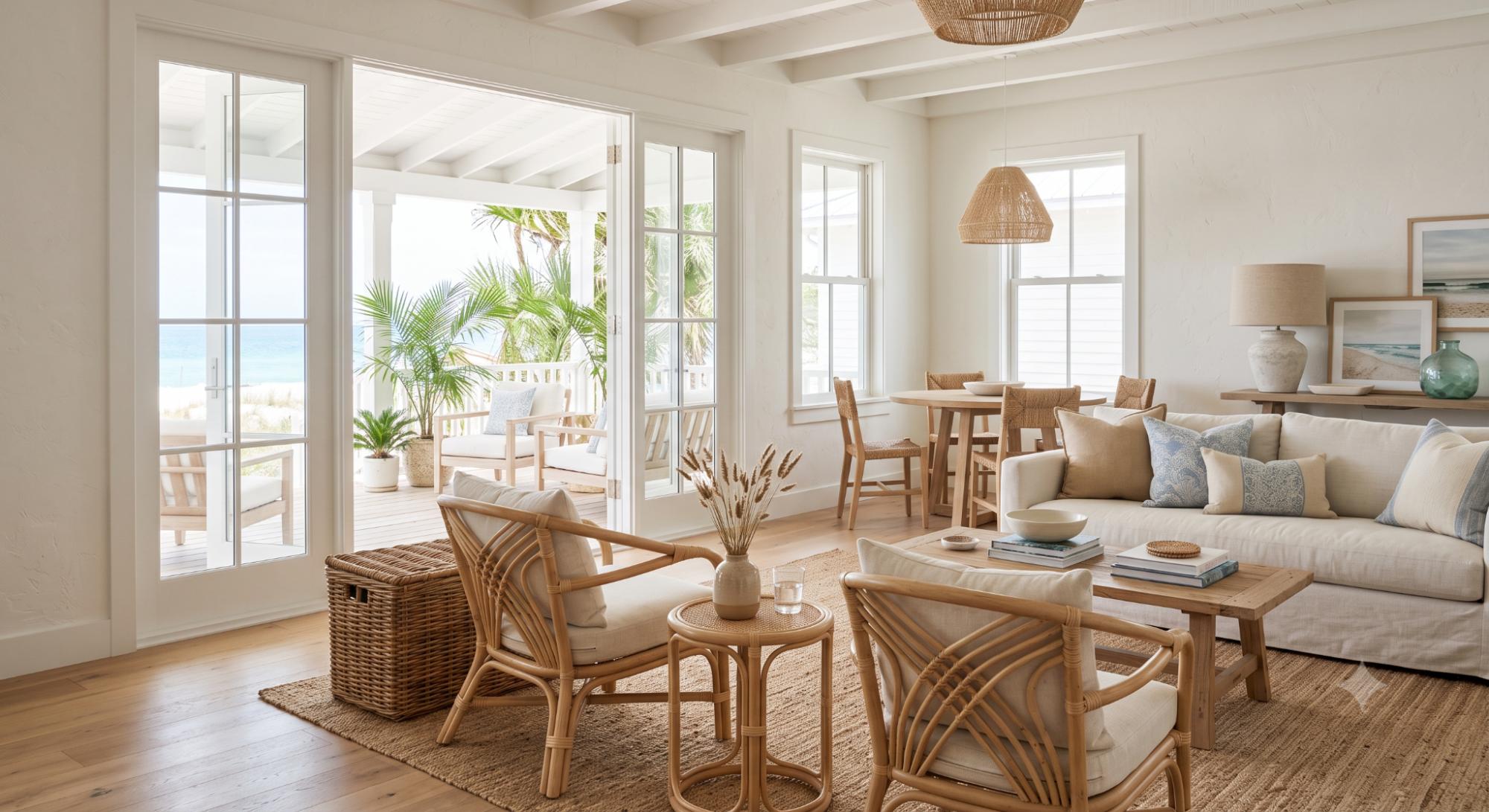
Rattan chairs, wicker baskets, and woven stools add a relaxed coastal texture without introducing heavy color. Use these pieces in living rooms, bedrooms, dining nooks, or porches.
Just be careful not to overload one single room with too much rattan, or the texture starts competing with itself.
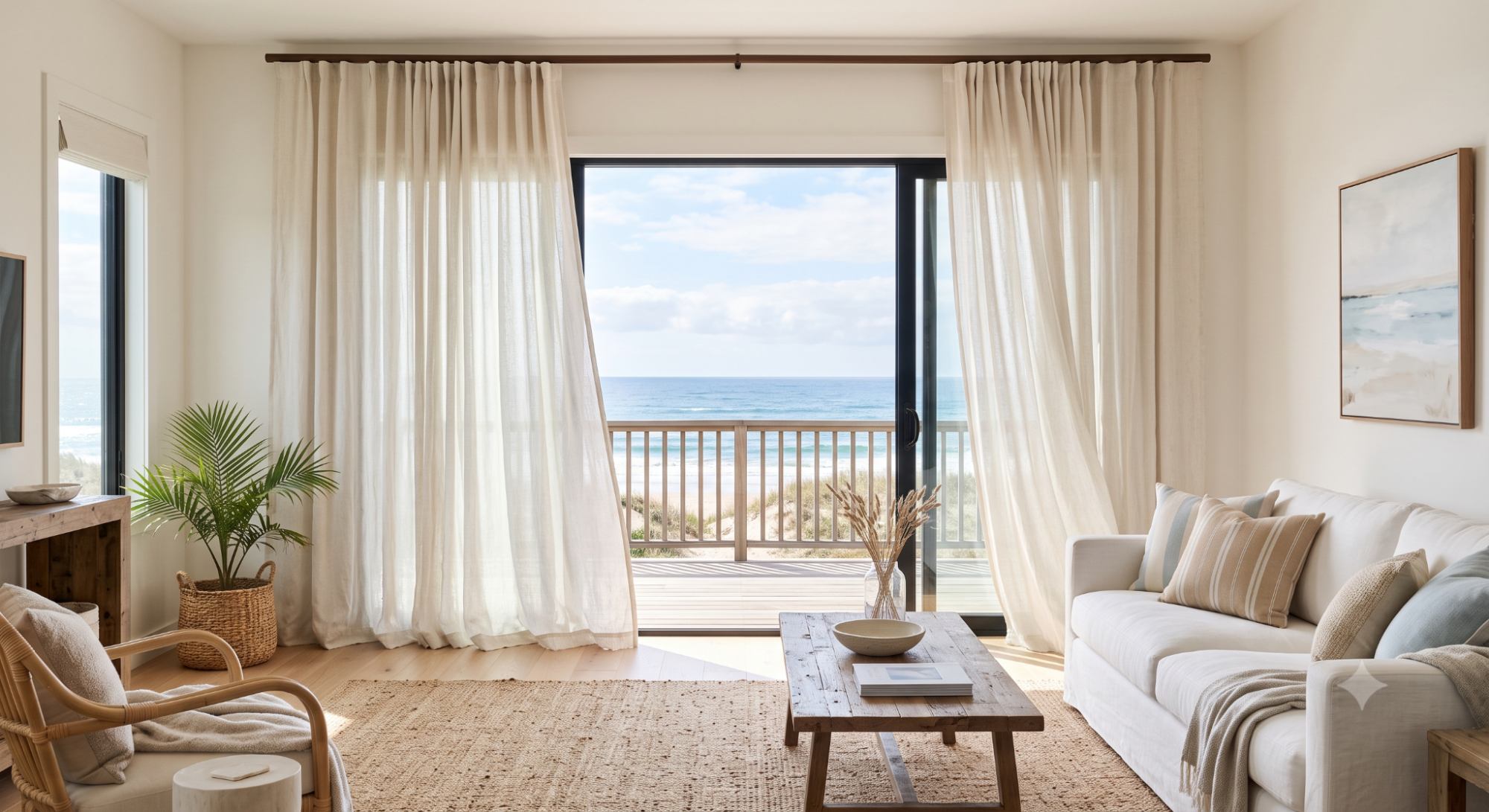
Linen curtains soften incoming sunlight and add gentle movement to a room. White, oatmeal, or soft blue linen all work beautifully.
Hang curtains high and wide so your windows appear larger than they are.This small detail supports the light, airy feel that defines beach house interior style.
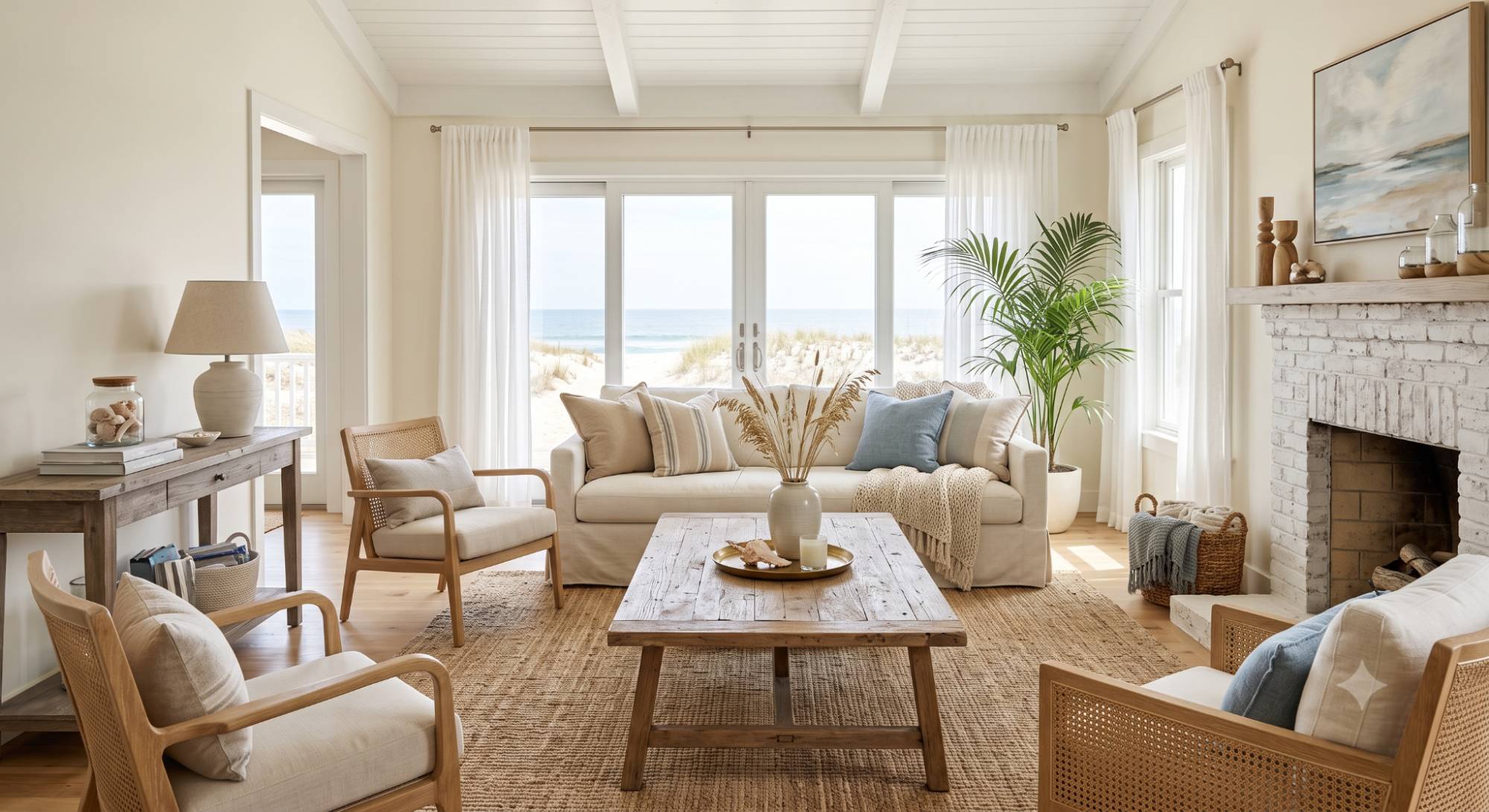
Weathered wood brings an organic, sun-washed character into a room. Good pieces to look for include coffee tables, dining tables, consoles, and nightstands.
Light oak, whitewashed wood, reclaimed wood, and driftwood tones all fit the coastal mood.Balance rustic wood pieces with soft fabrics so the room doesn't feel too rough around the edges.
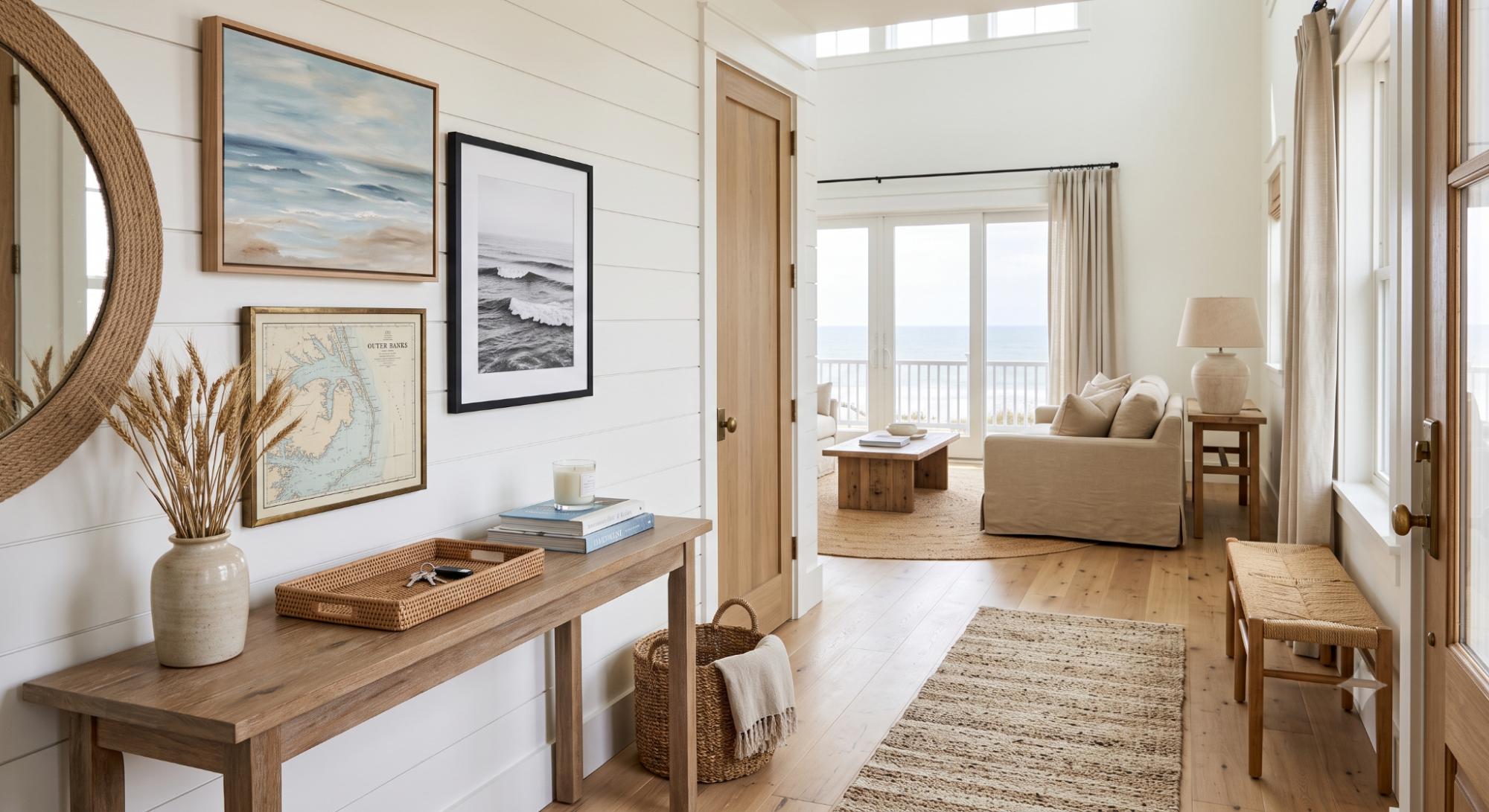
Seascapes, beach photography, abstract ocean prints, and vintage coastal maps all add personality to a room. Keep frames simple — white, oak, black, or brass work best.
Good coastal art adds character without pushing the space into "theme restaurant" territory.This works well in entryways, bedrooms, dining rooms, and living rooms.
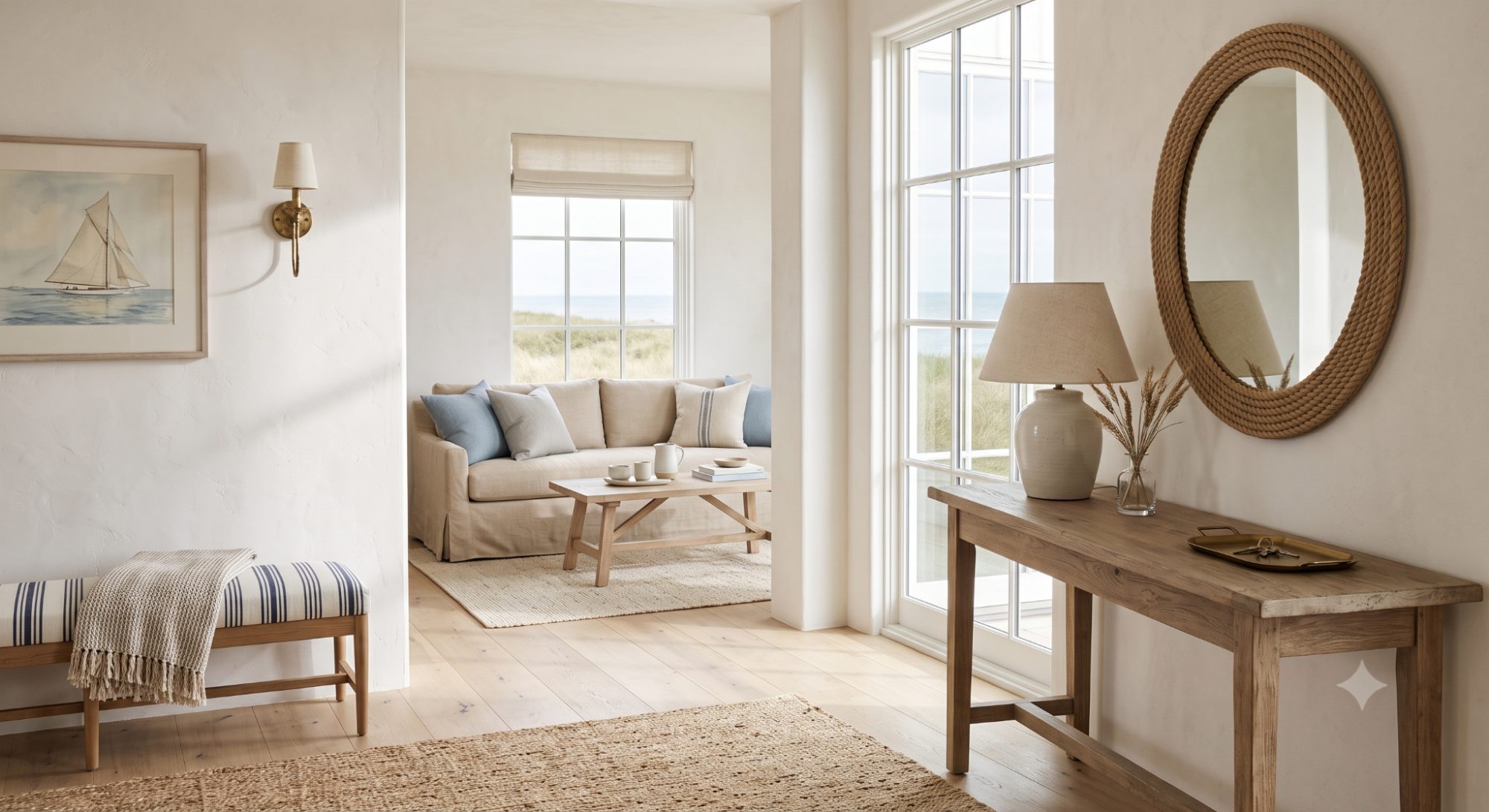
Nautical decor can absolutely work, but only in small doses. Rope mirrors, striped pillows, brass lighting, or a piece of vintage boat art add just enough charm. Avoid piling on anchors, shells, signs, and ship wheels, which can quickly tip a room from elegant to kitschy.
A good rule of thumb: pick one or two nautical pieces per room, not one per shelf, so the space still feels sparingly and intentionally accented.
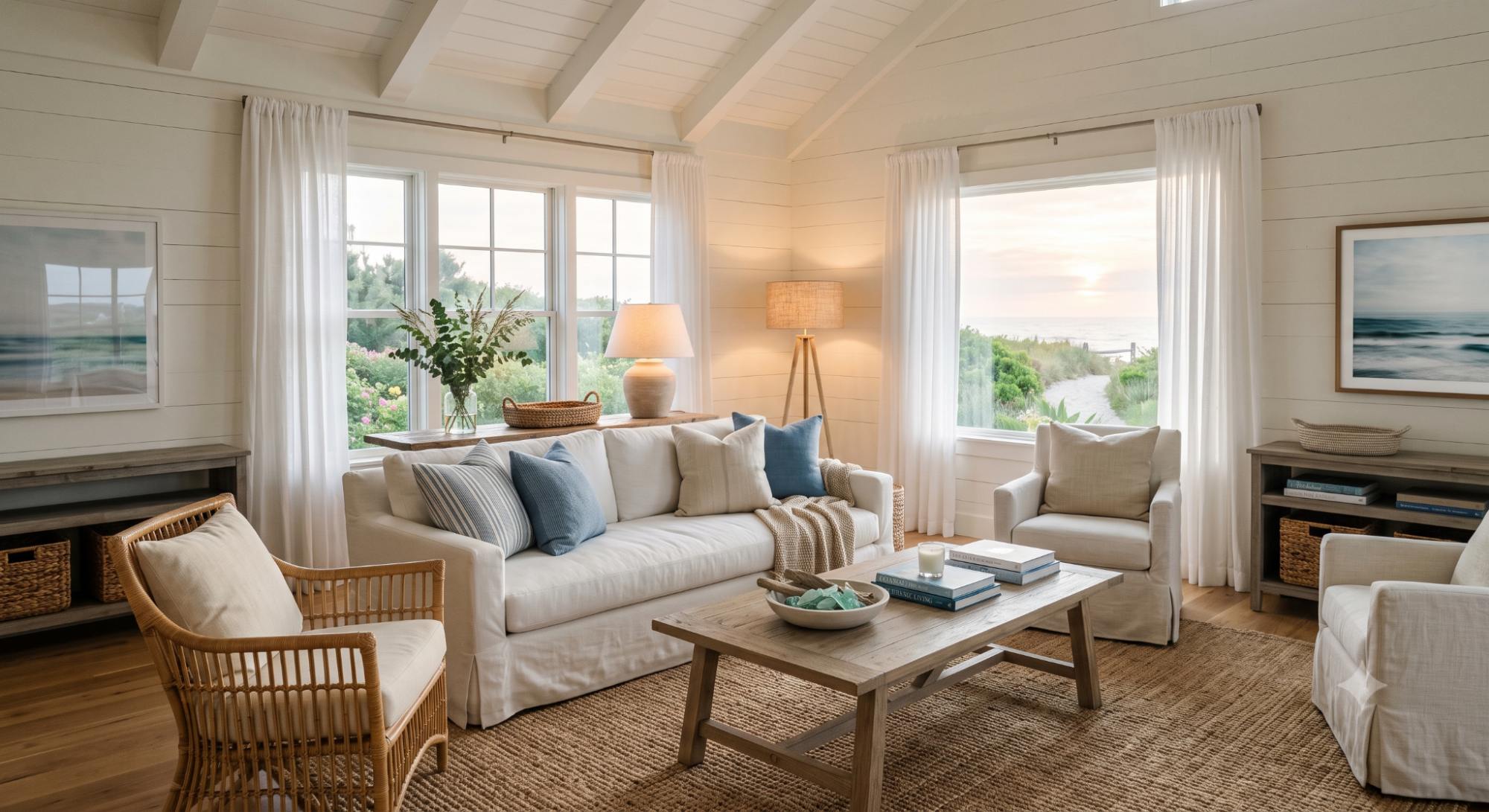
Bring together a slipcovered sofa, a jute rug, woven baskets, a wood coffee table, and a few soft blue pillows for an easy, relaxed living room. Keep the furniture comfortable and functional rather than precious.
Add lamps for warm evening light, and leave enough open space so the room feels breathable rather than crowded.
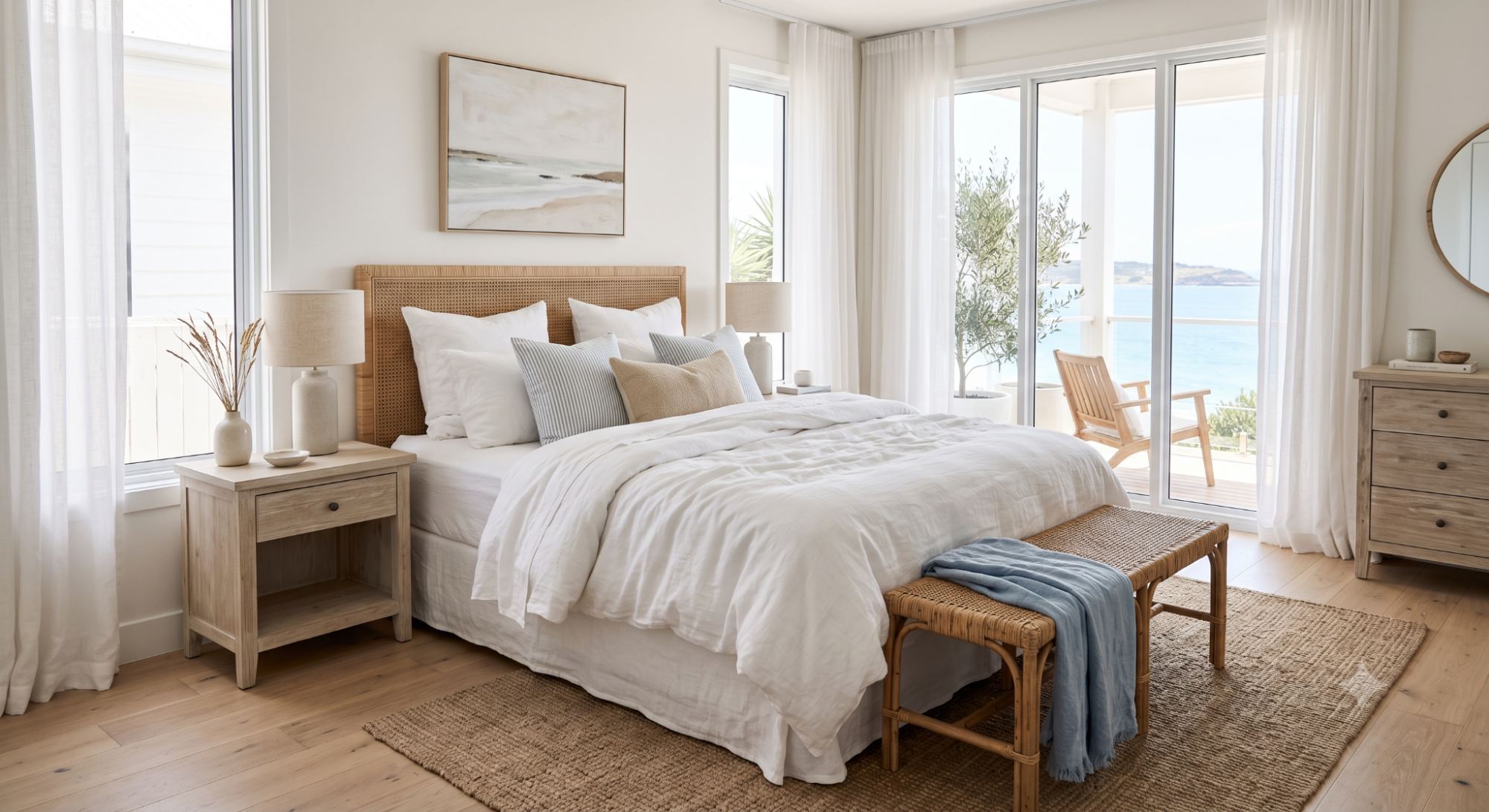
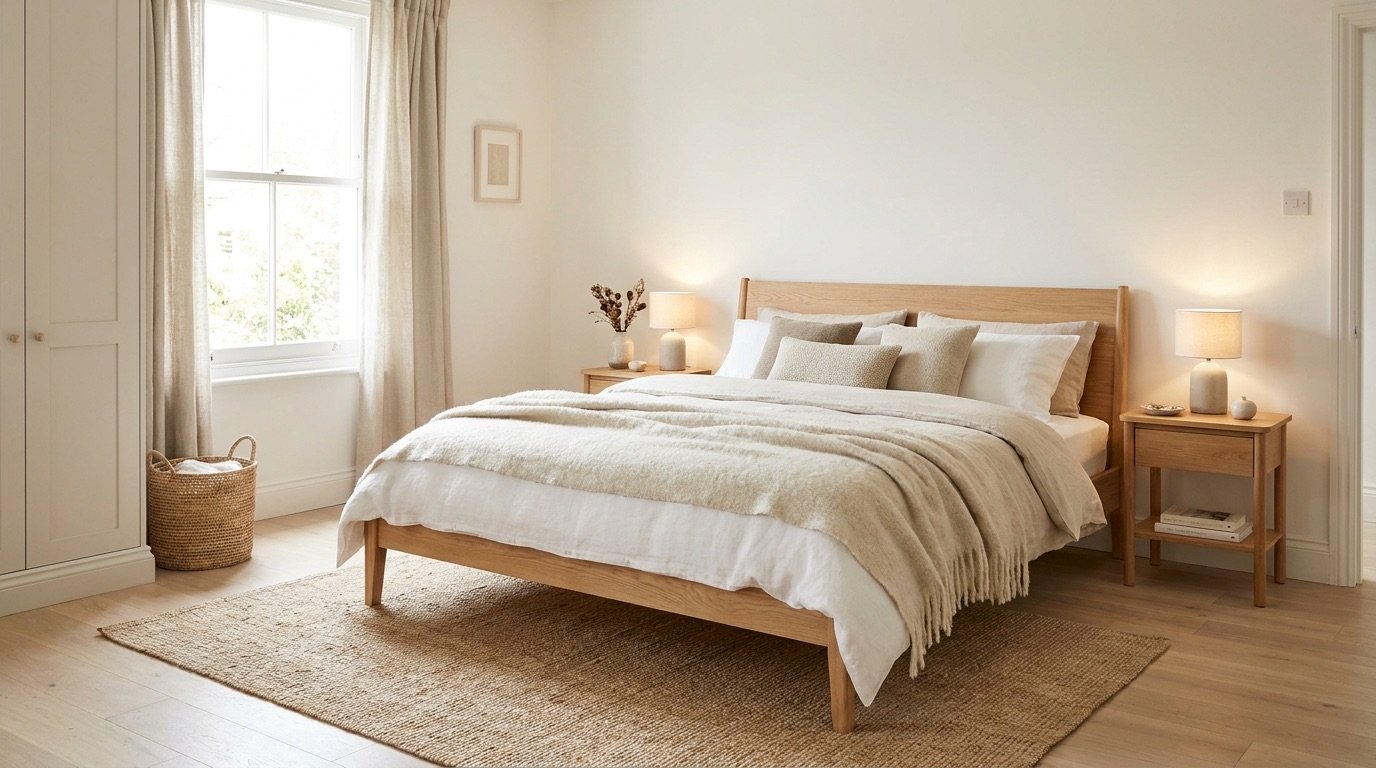
White bedding, linen sheets, wood furniture, and soft blue or beige accents create a peaceful bedroom retreat. A rattan headboard or woven bench adds texture without overwhelming the space.
Keep decor minimal here, since a calm, uncluttered bedroom supports better sleep. Lightweight bedding also keeps the room feeling like a year-round vacation spot.
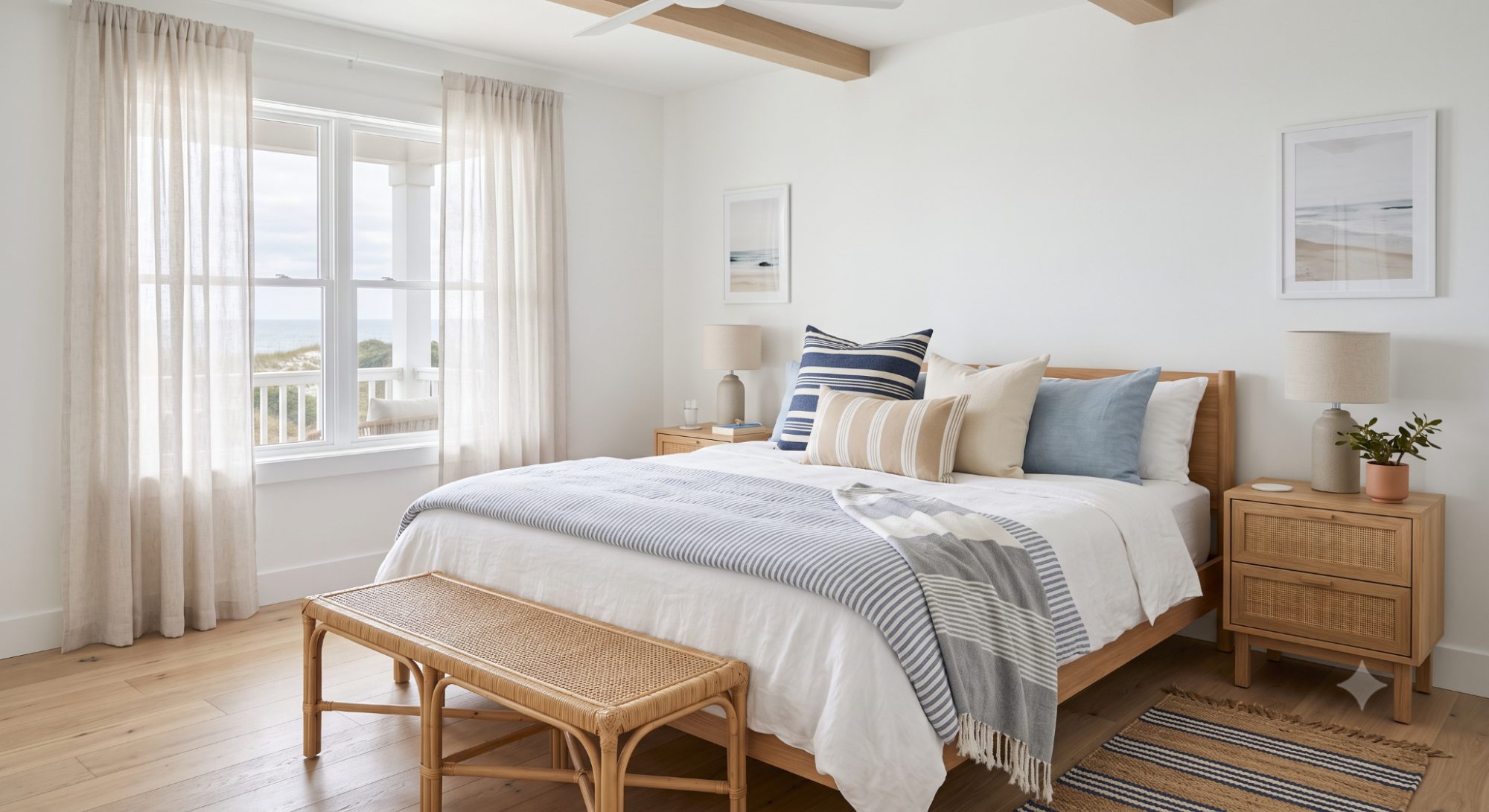
Stripes are one of the most recognizable coastal patterns around. Blue-and-white, beige-and-white, or gray-and-white stripes all work well.
Keep stripes contained to bedding, pillows, throws, or rugs, and mix them with solid colors so the room doesn't feel too busy.
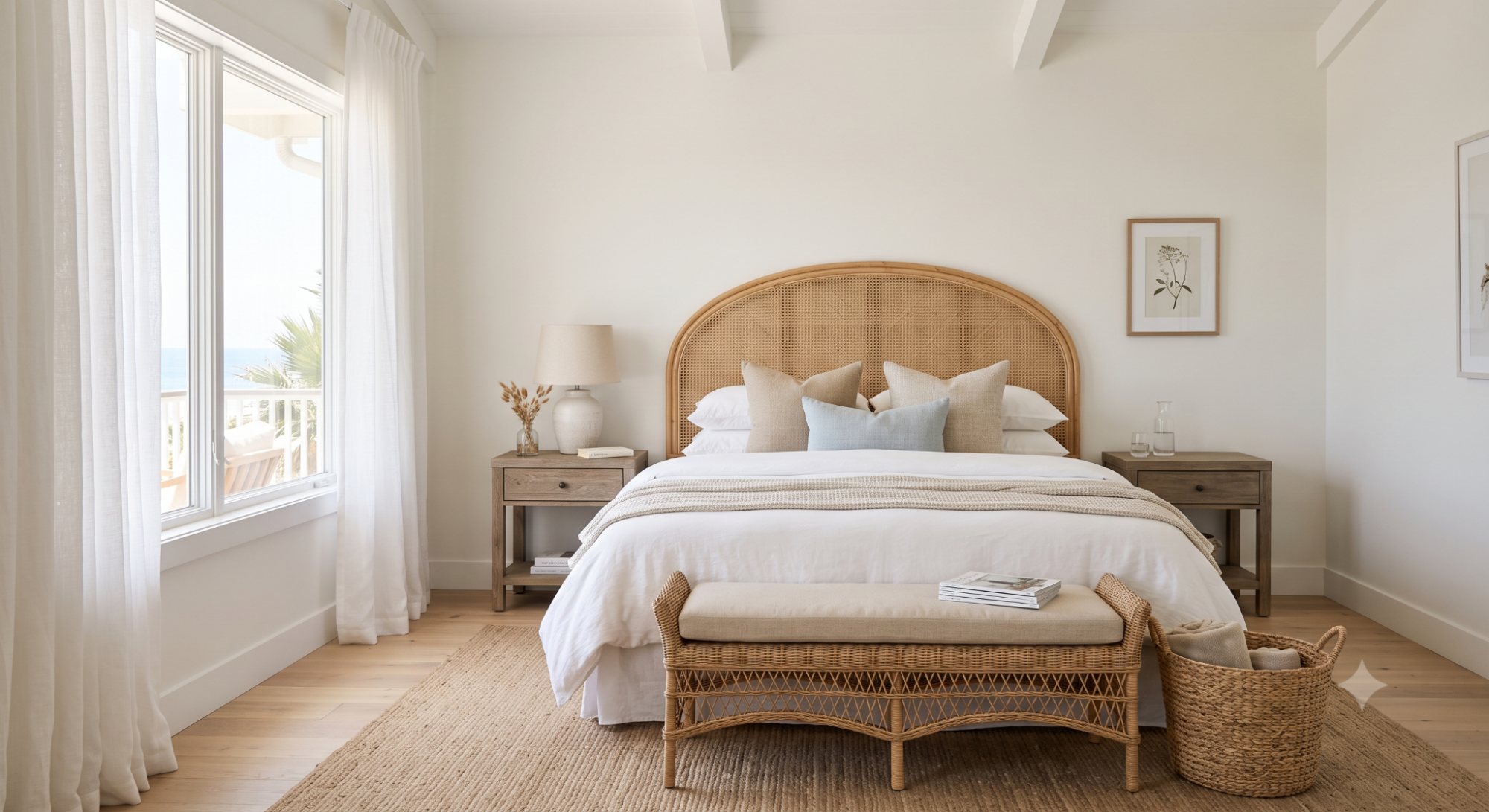
A woven headboard brings beachy texture right into the bedroom's focal point. It pairs naturally with white bedding and wood nightstands. This detail works especially well in guest rooms and vacation rentals, where it adds character without requiring much upkeep.
Keep the surrounding wall color soft and simple to let the headboard stand out.
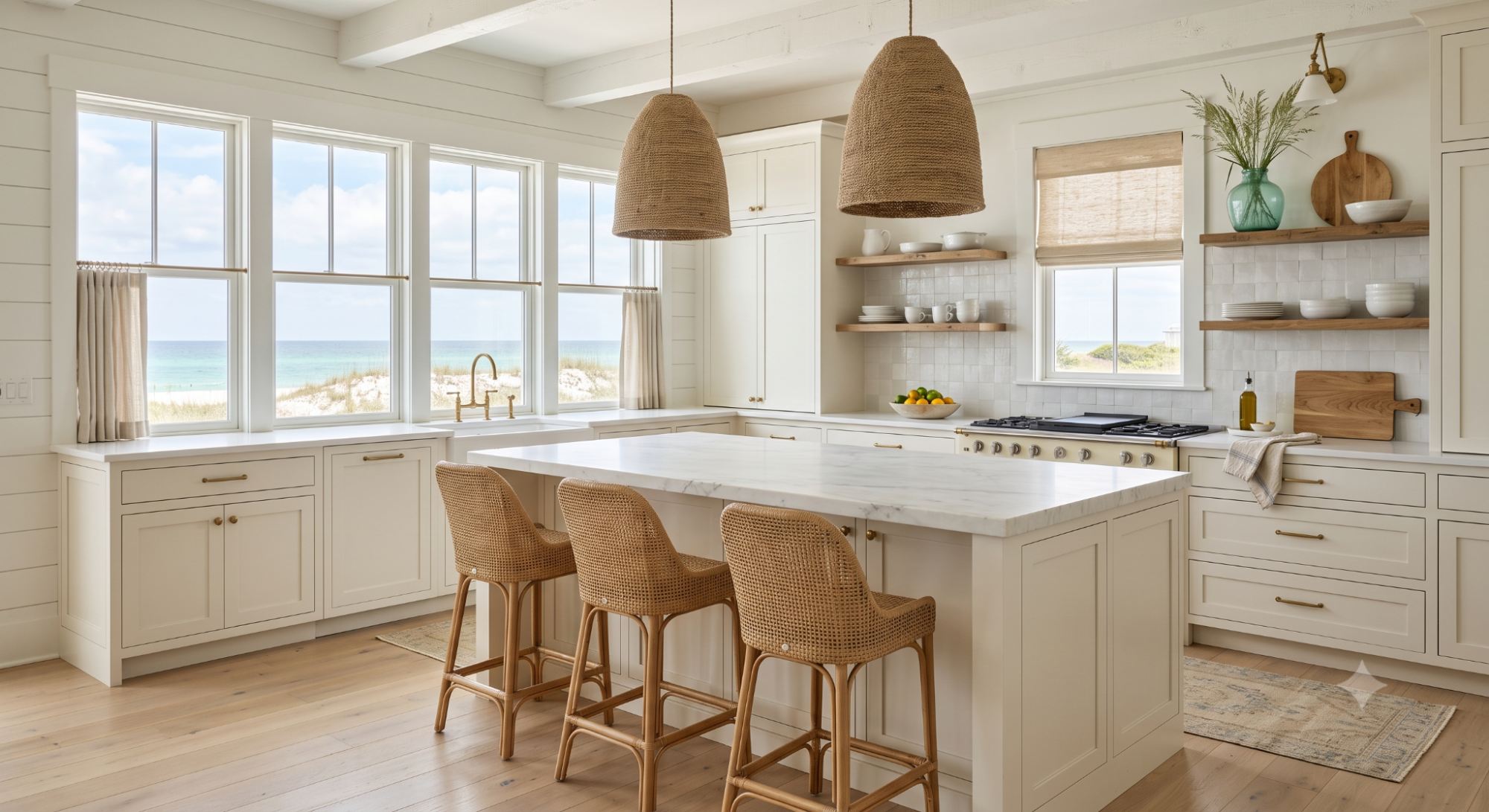
White or light wood cabinets set the foundation for a coastal kitchen. Brass or matte black hardware adds a bit of contrast and polish. Open shelving can work well here too, as long as it's styled carefully rather than crammed full.
Round things out with natural texture through bar stools, pendant lights, or woven shades, and add soft blue or sea-glass green accents if you want a touch more color.
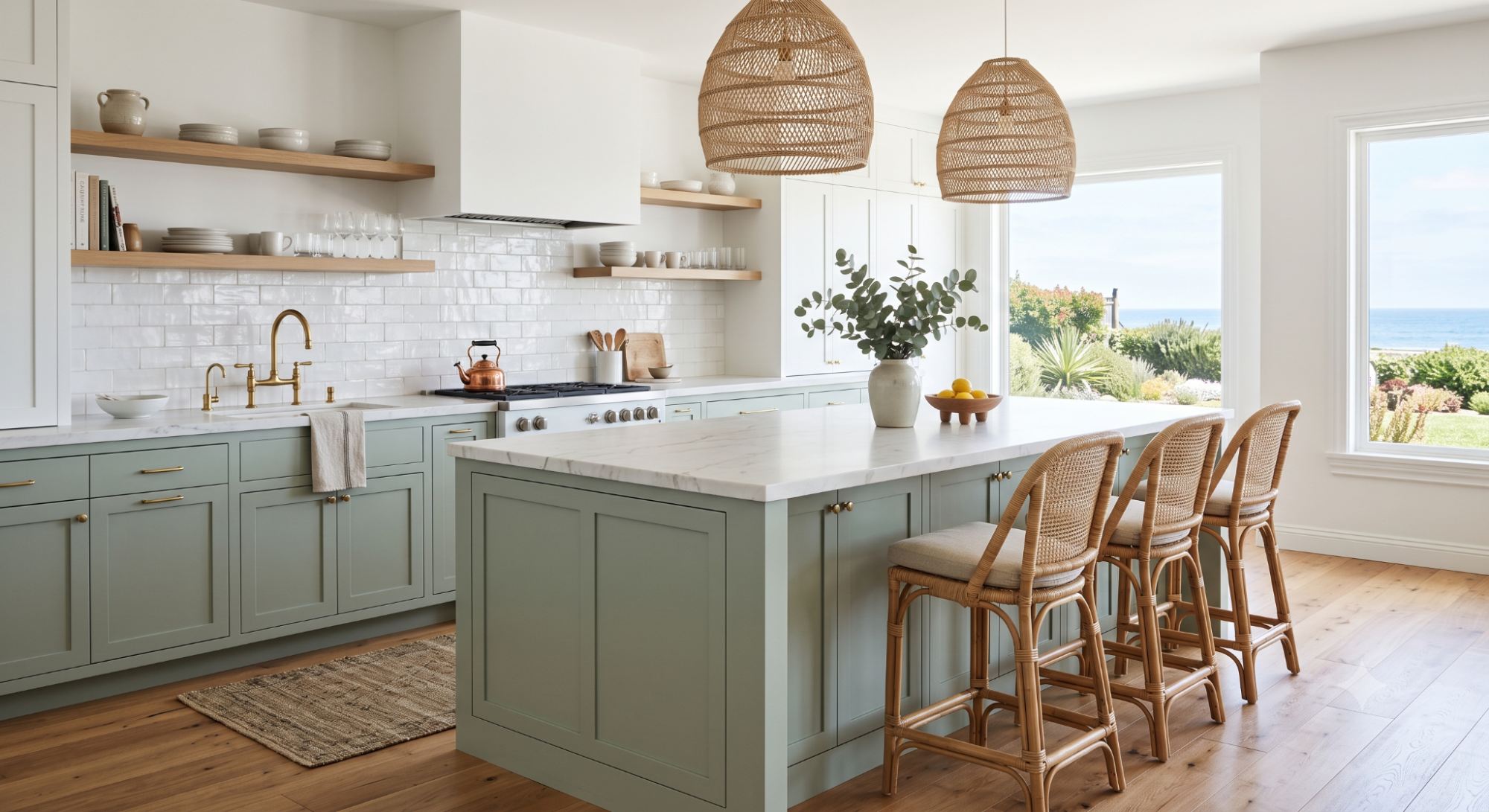
Pale blue, navy, or muted green can instantly make a kitchen feel more coastal. Use these colors on the island, lower cabinets, backsplash, or smaller decor pieces.
Pair them with white walls, wood floors, and simple countertops. Choosing a soft, muted shade rather than a bold, saturated one helps the color feel timeless instead of trendy.
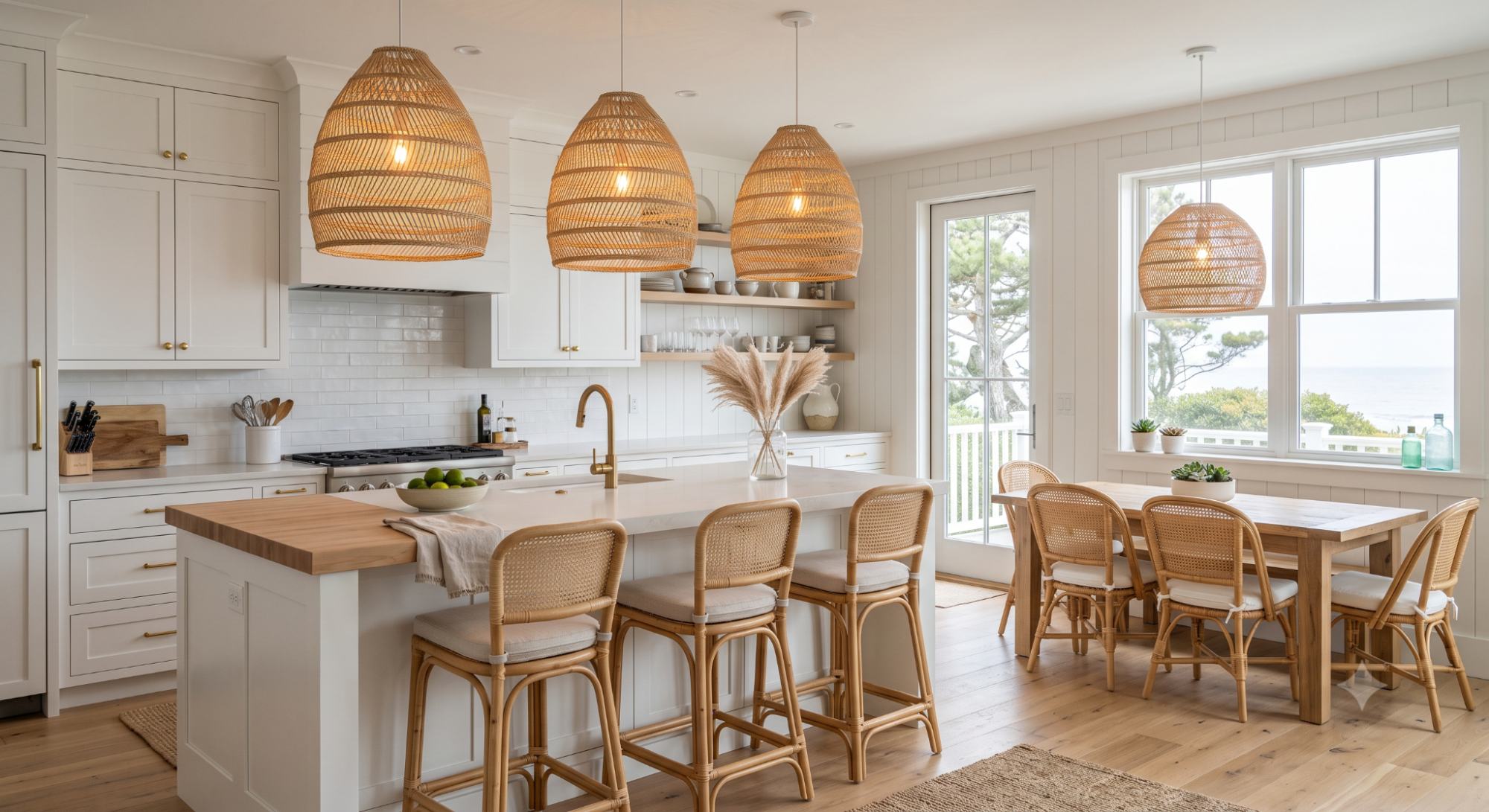
Woven pendant lights add warmth above a kitchen island, dining table, or breakfast nook. Rattan, bamboo, or seagrass fixtures all bring in natural texture and a relaxed beach mood.
Choose warm bulbs instead of cool white bulbs, since warm light makes woven fixtures and neutral rooms feel cozier in the evening rather than clinical.
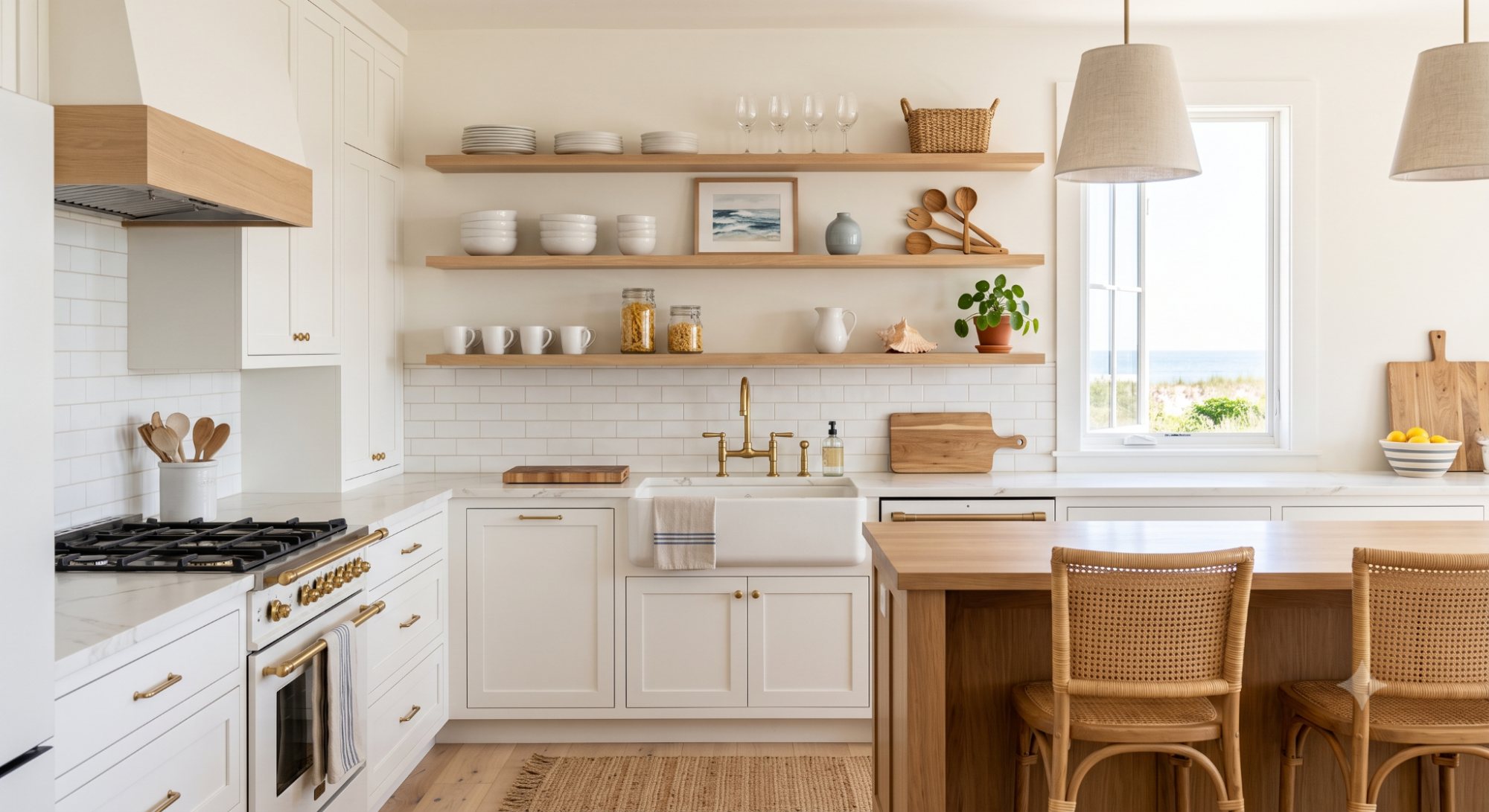
Open shelves can make a kitchen feel airier and more open. Fill shelves with white dishes, glassware, wood bowls, and just a few coastal accents.
Resist the urge to overcrowd them. One plant or a single piece of framed art often adds all the softness a shelf needs.
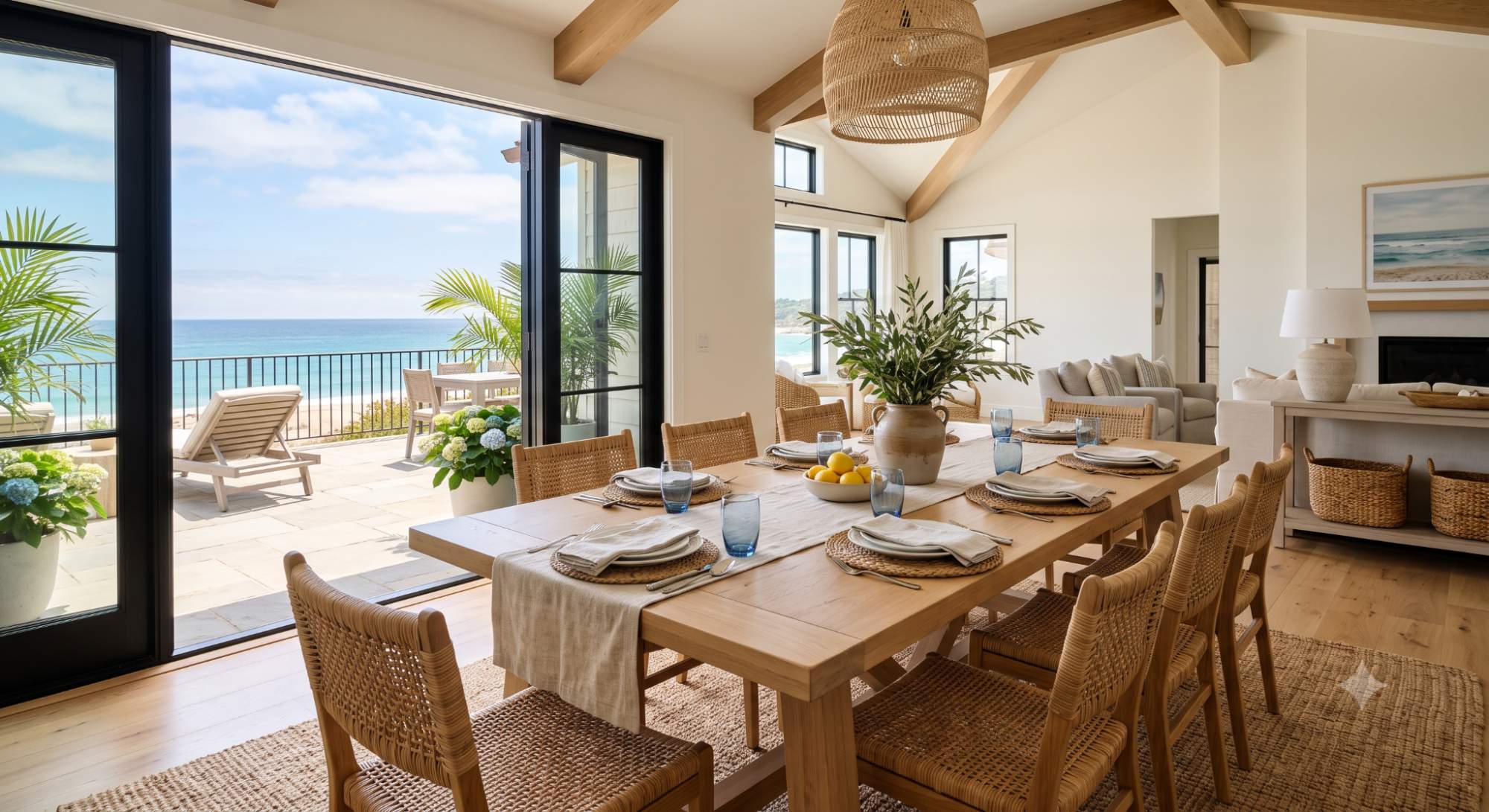
A light wood dining table, woven chairs, a linen table runner, and a simple centerpiece make for an easy, welcoming dining space. Blue glasses, white plates, or seagrass placemats add coastal detail without much effort. Keep the whole area casual and family-friendly.
If your home has patio access, consider connecting the dining area to outdoor seating for warm-weather meals.
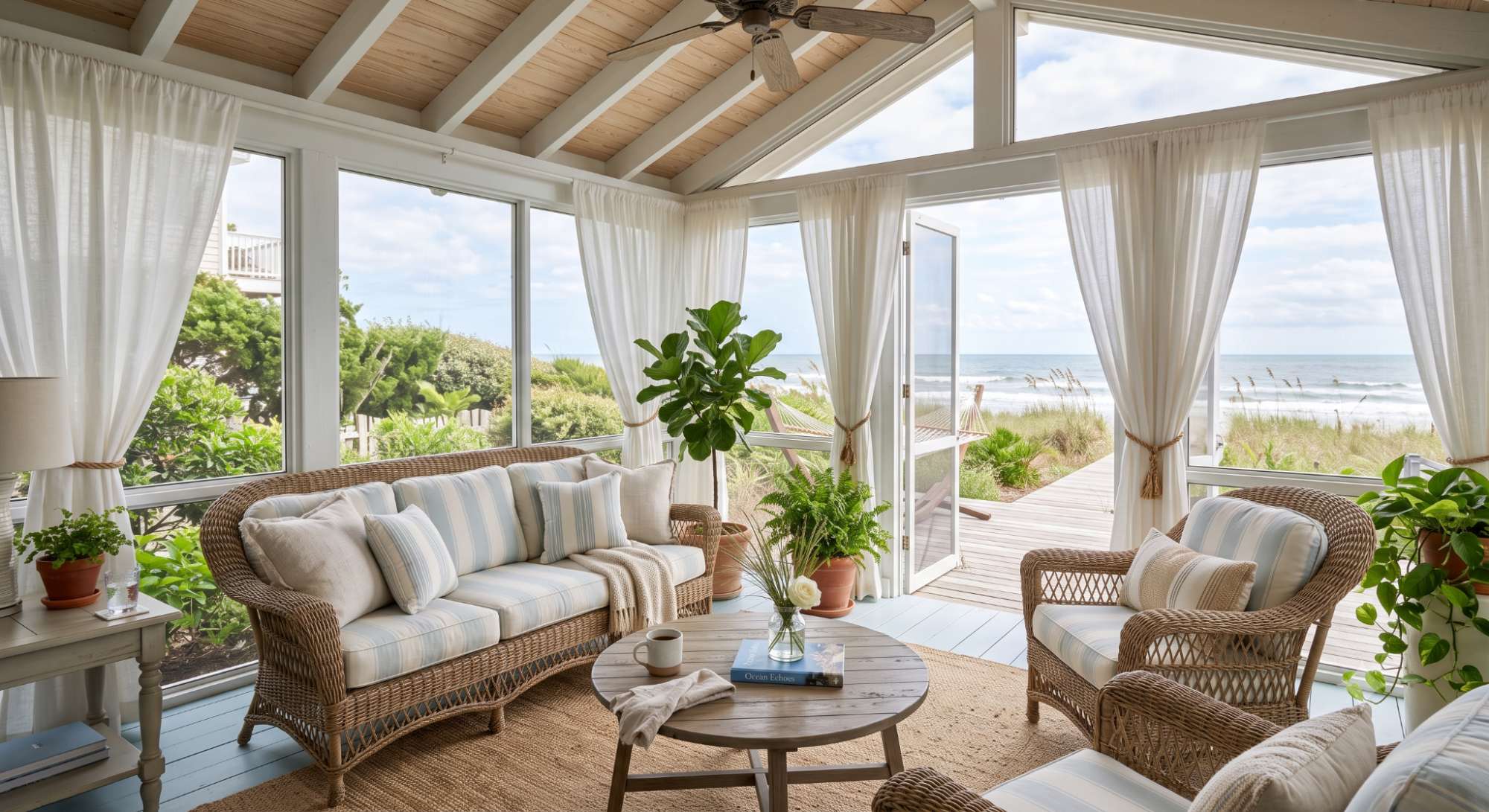
A beach house interior should connect naturally with the outdoors. Wicker seating, outdoor-friendly cushions, light curtains, and a few plants bring that connection indoors, even in a sunroom or enclosed porch.
This kind of space is perfect for morning coffee, quiet reading, or casual entertaining.
Screened porches are a favorite feature in classic beach house design, and wicker seating is a smart pick here since it holds up well and is easy to clean.
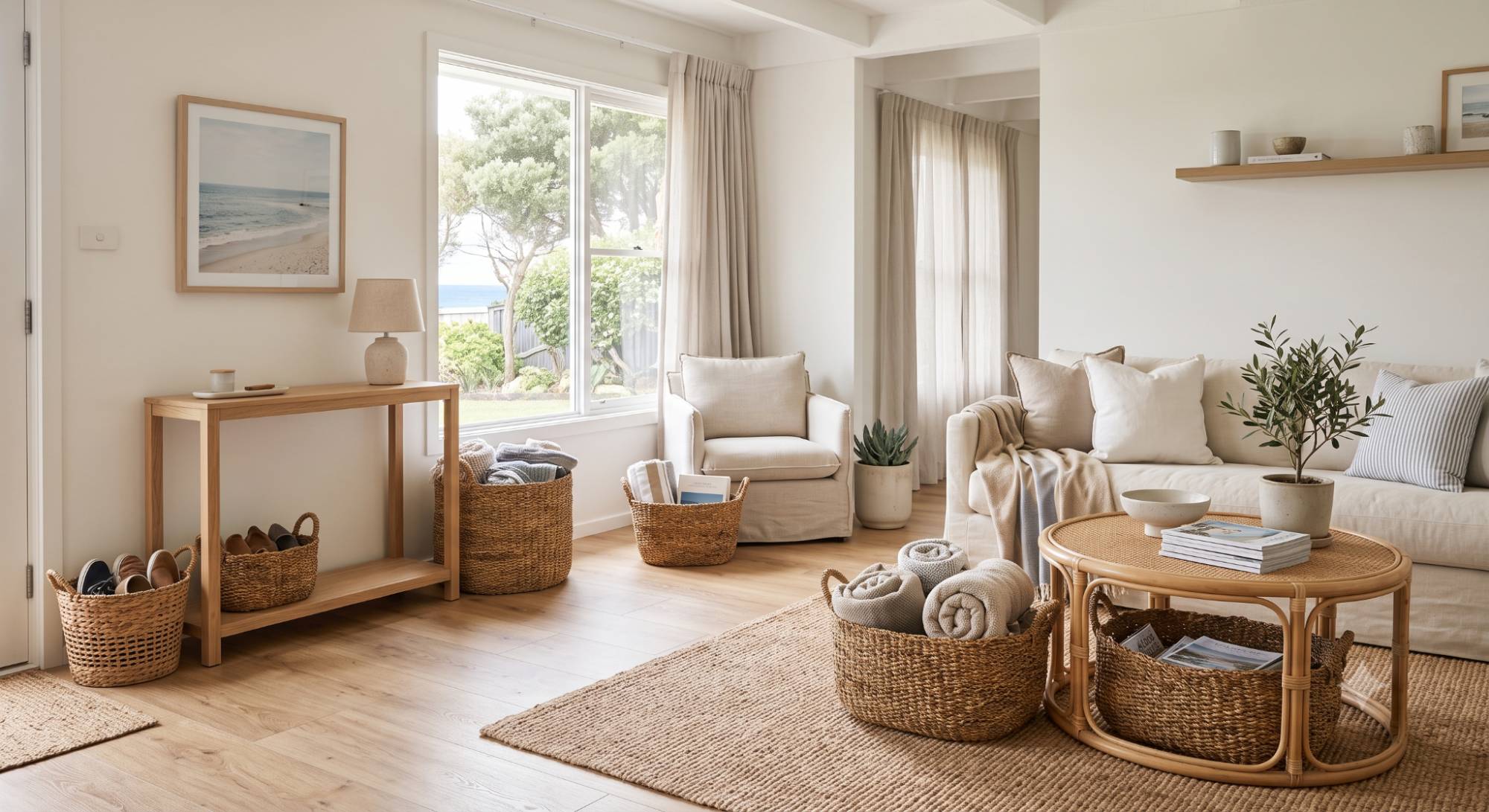
Baskets are both decorative and genuinely useful. Use them to store blankets, shoes, towels, toys, magazines, or laundry. They add natural texture while helping cut down on visible clutter.
Seagrass baskets work especially well in entryways, bedrooms, bathrooms, and living rooms.
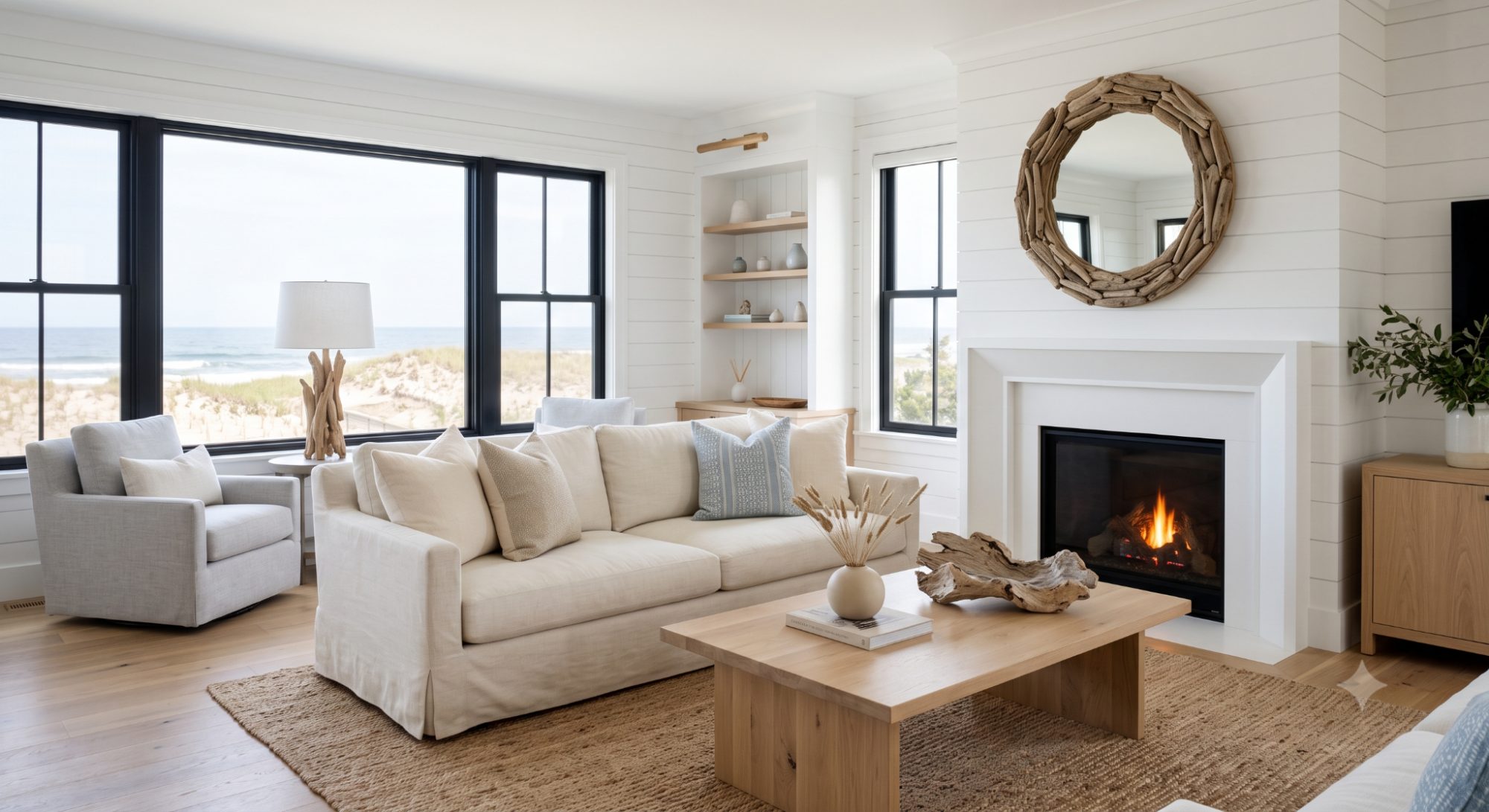
Driftwood brings a distinctly natural, coastal character into a room. Try it as a lamp base, a mirror frame, a small sculpture, or a coffee table accent.
Keep the amount minimal so the room still feels clean and current rather than cluttered. Pairing driftwood with more modern pieces helps balance out its rustic texture.
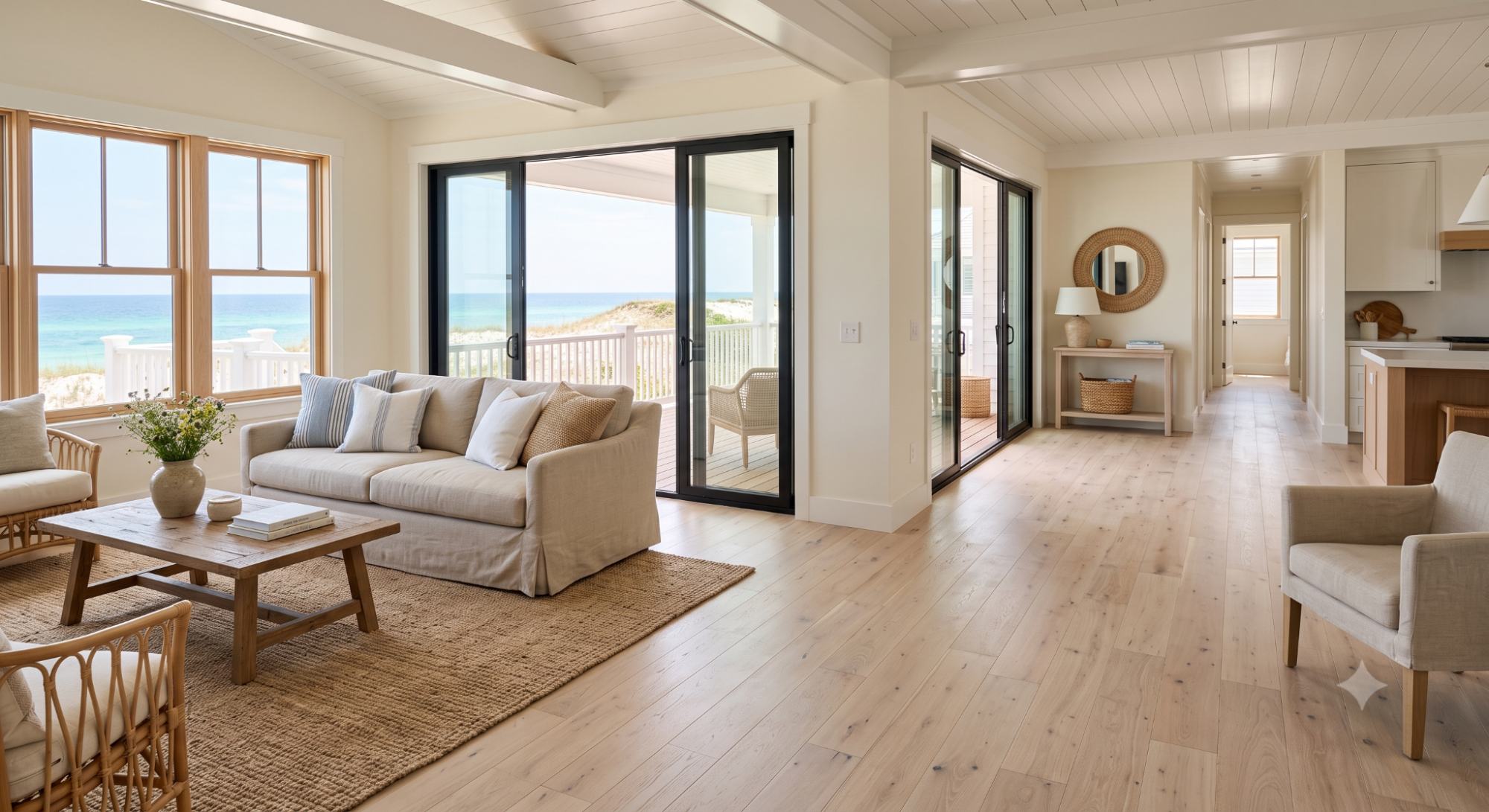
Light flooring makes a home feel bigger and brighter overall. Whitewashed wood, pale oak, and other natural wood tones all work beautifully in a coastal home. Choose a durable finish that can handle sand and water without showing wear too quickly. Layer in rugs for added comfort and warmth underfoot.
Painted floors are a popular beach house choice, and a durable polyurethane topcoat is worth the investment for high-traffic areas and sandy feet.
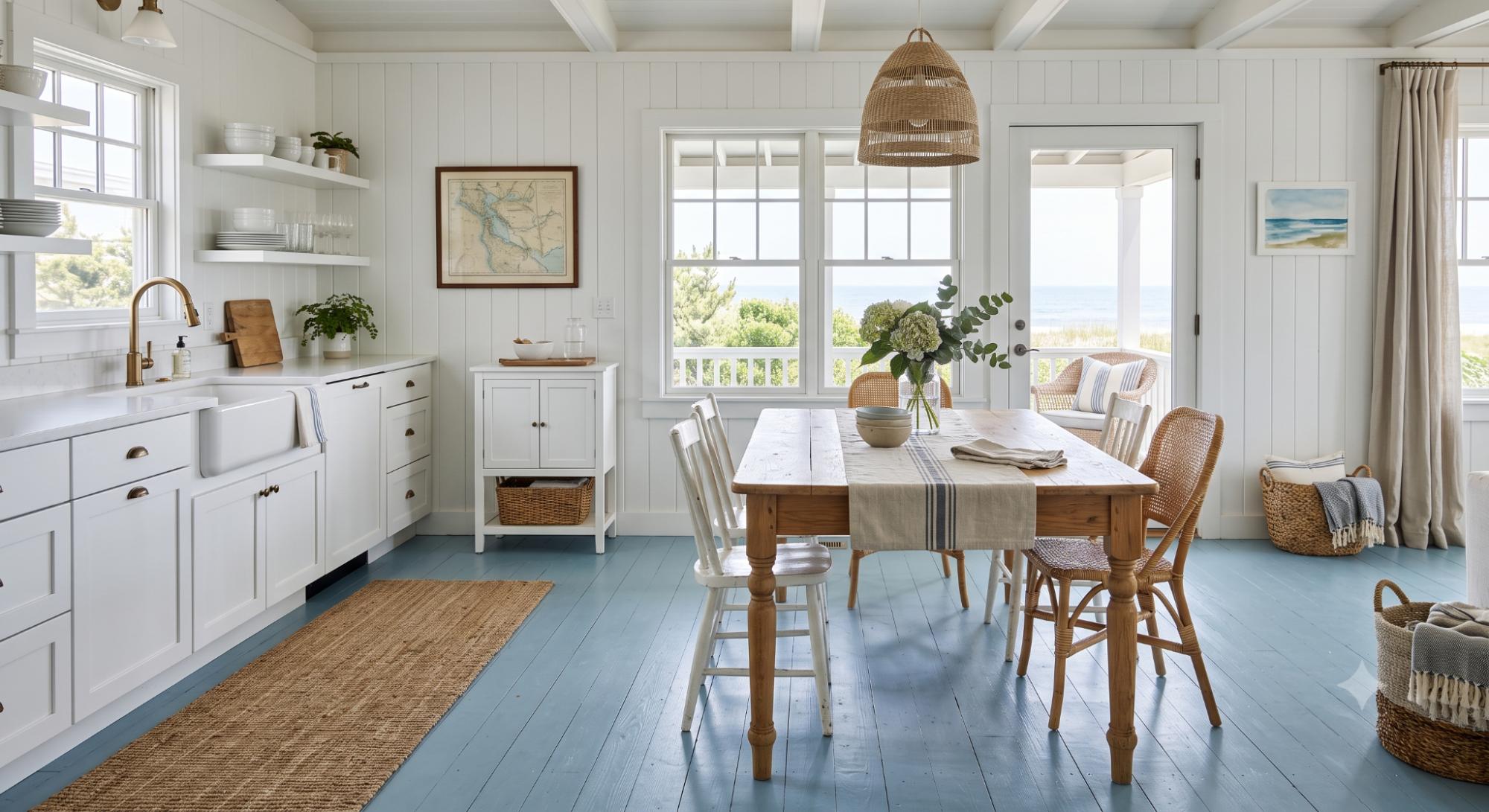
Blue painted floors make a bold, memorable coastal statement. This works especially well in kitchens, cottages, porches, or other casual spaces.
Choose a soft, watery blue rather than a very bright or saturated shade. Balance the floor with white walls and simple, uncomplicated furniture.
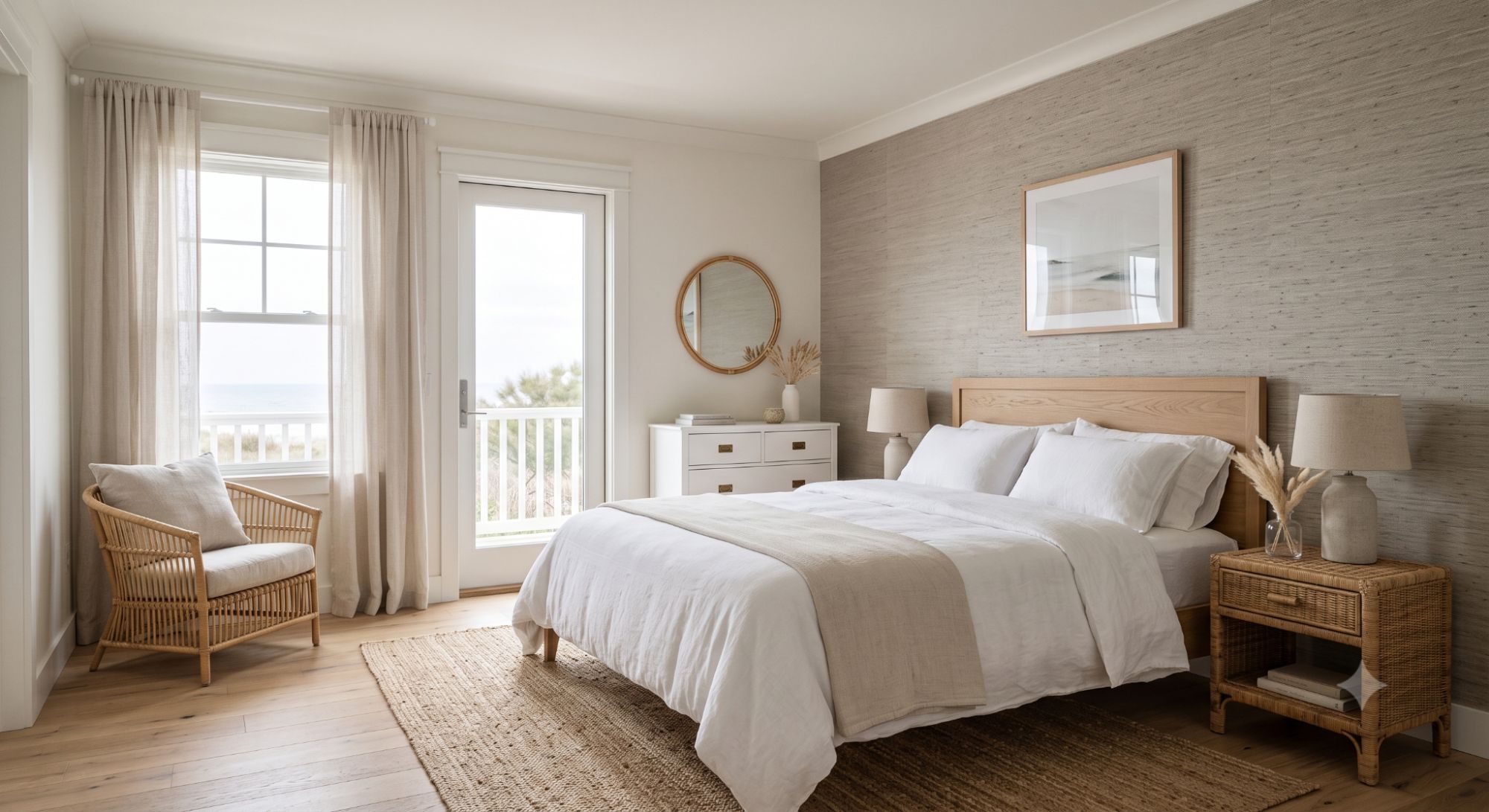
Grasscloth-style wallpaper adds texture to a wall without introducing a heavy pattern. It works well in bedrooms, powder rooms, dining rooms, or as an accent behind a bed. Stick with beige, pale blue, gray, or seafoam tones, and keep the rest of the room's decor simple so the wallpaper can shine.
Grasscloth-inspired or striped wallpaper is a great way to add color, pattern, and depth to a beach house bedroom without overwhelming the space.
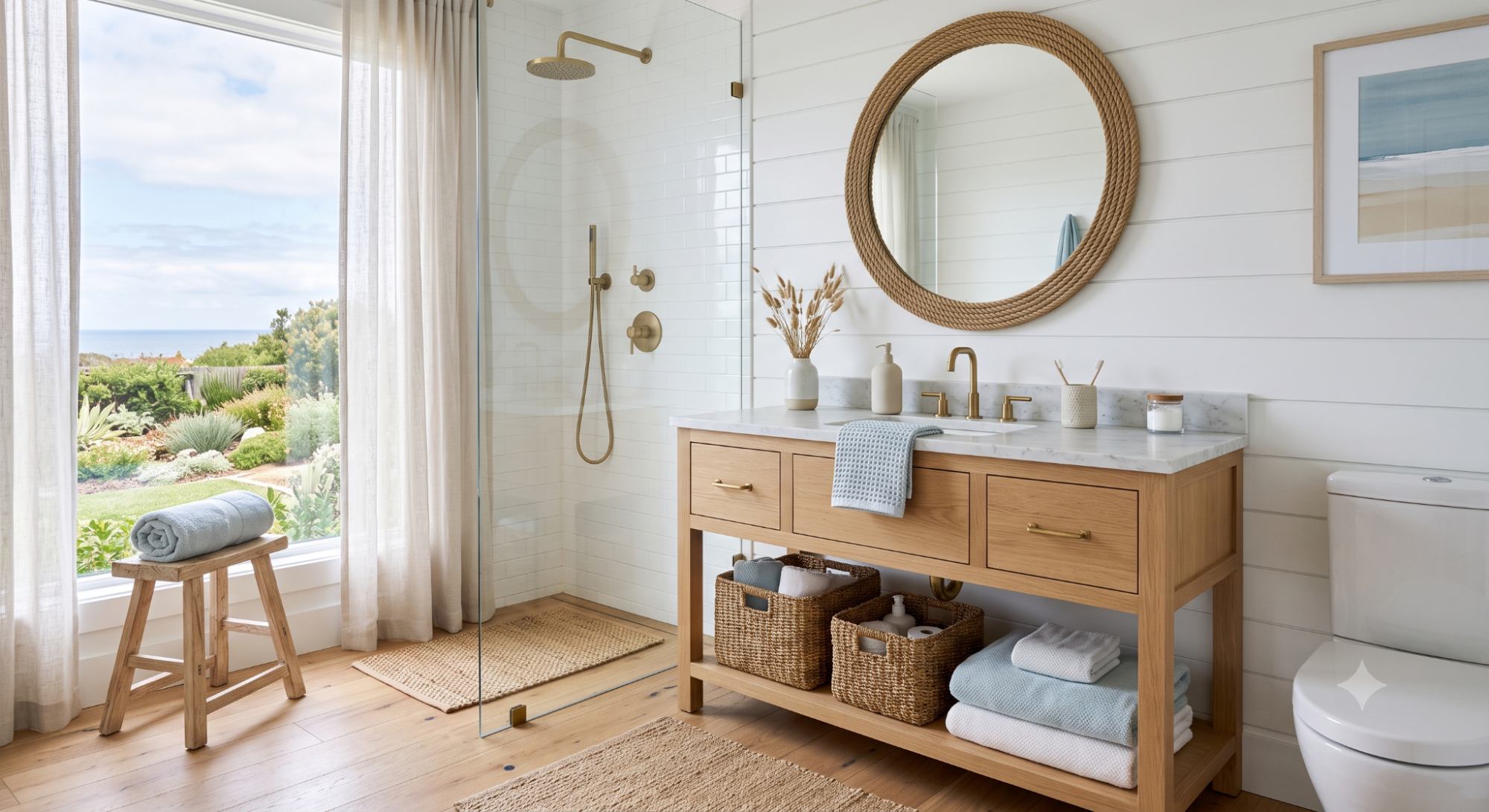
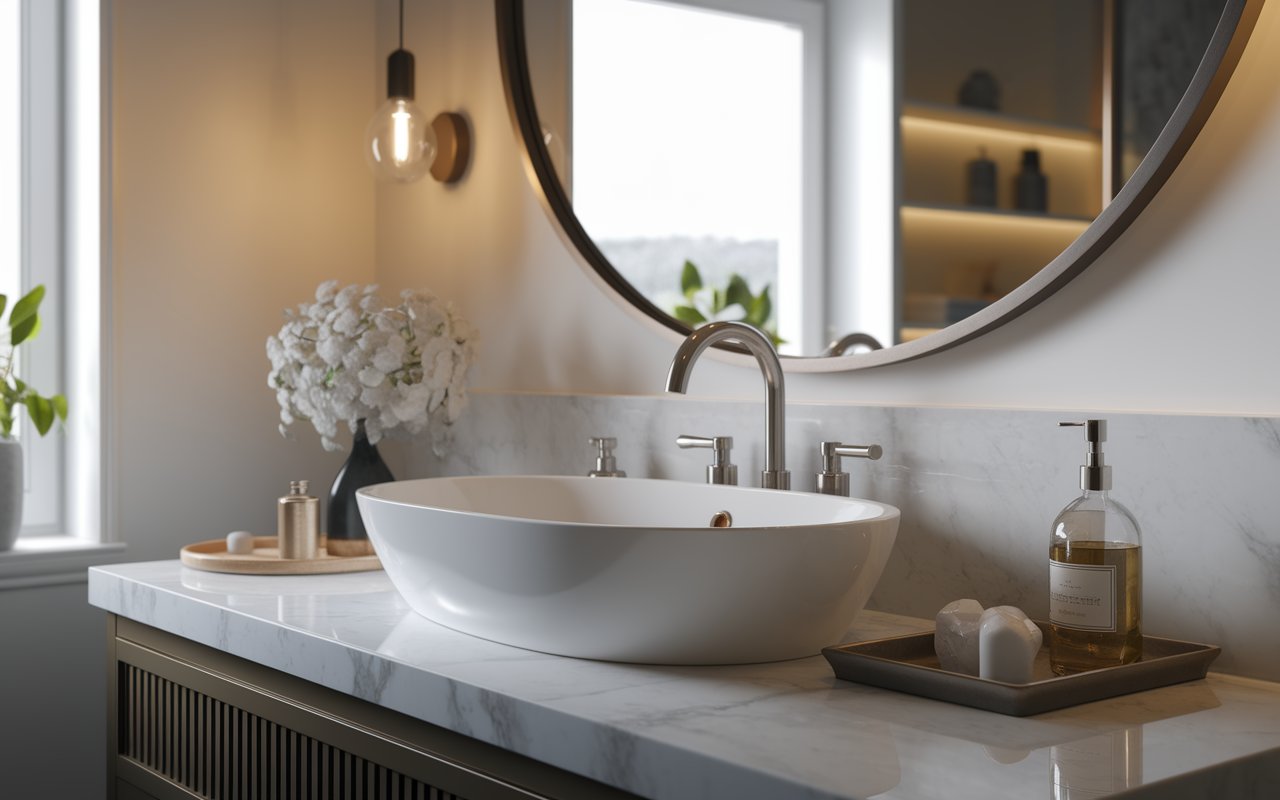
White walls, a light wood vanity, woven baskets, brass fixtures, and soft blue towels bring coastal calm into the bathroom. A rope mirror or a simple piece of coastal art adds just the right finishing touch. Keep countertops clear and uncluttered, and lean on natural textures instead of piling on shell-shaped decorations.
In humid coastal climates, make sure bathroom paint and any wallpaper are rated for moisture. This helps prevent peeling, bubbling, or mildew over time.
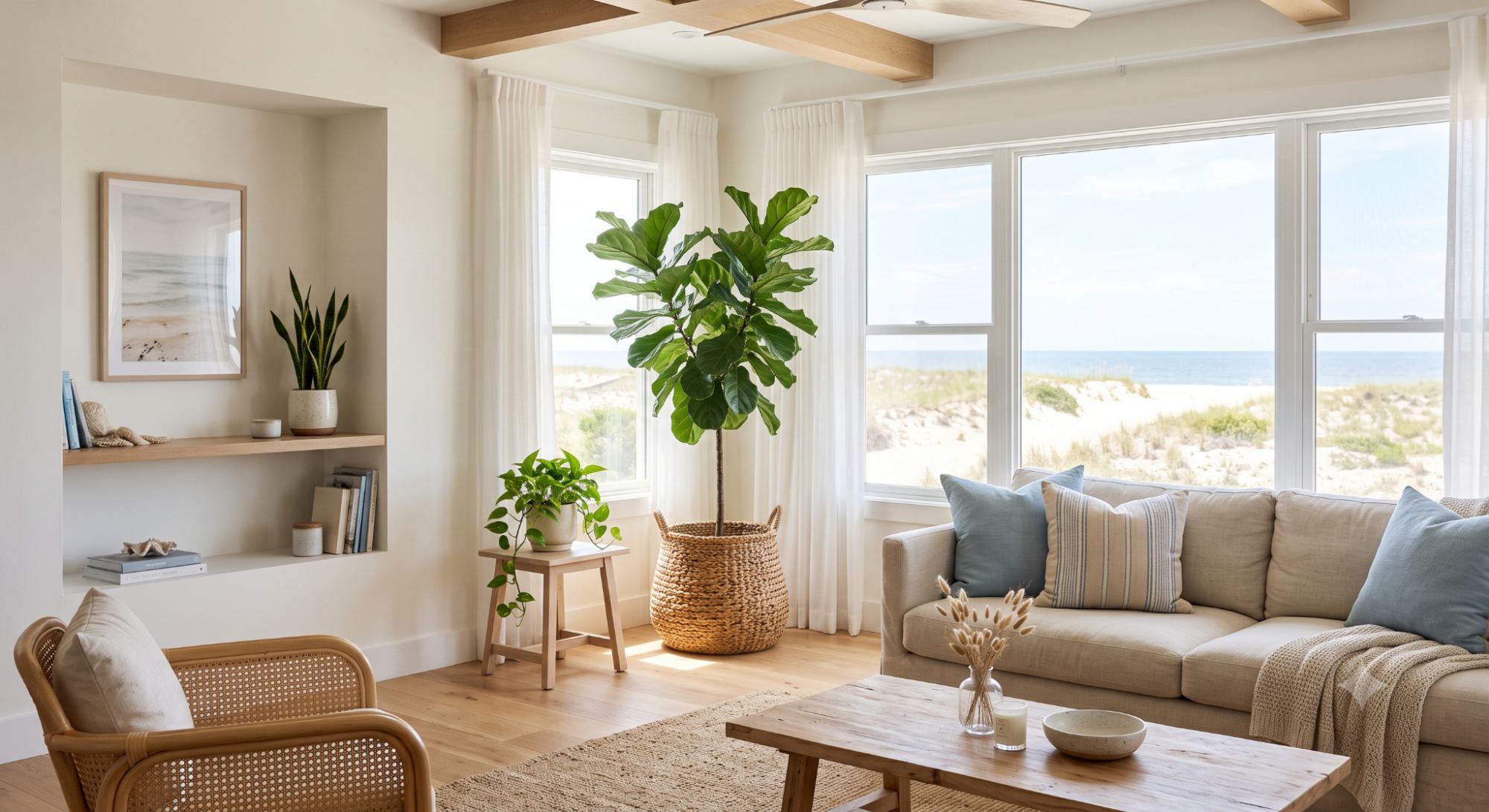
Plants make any coastal home feel fresh and alive. Palms, snake plants, pothos, olive trees, or small herb pots all fit the relaxed beach house mood.
Choose woven baskets or simple ceramic pots to hold them. Place plants near windows and other bright corners where they'll naturally thrive.
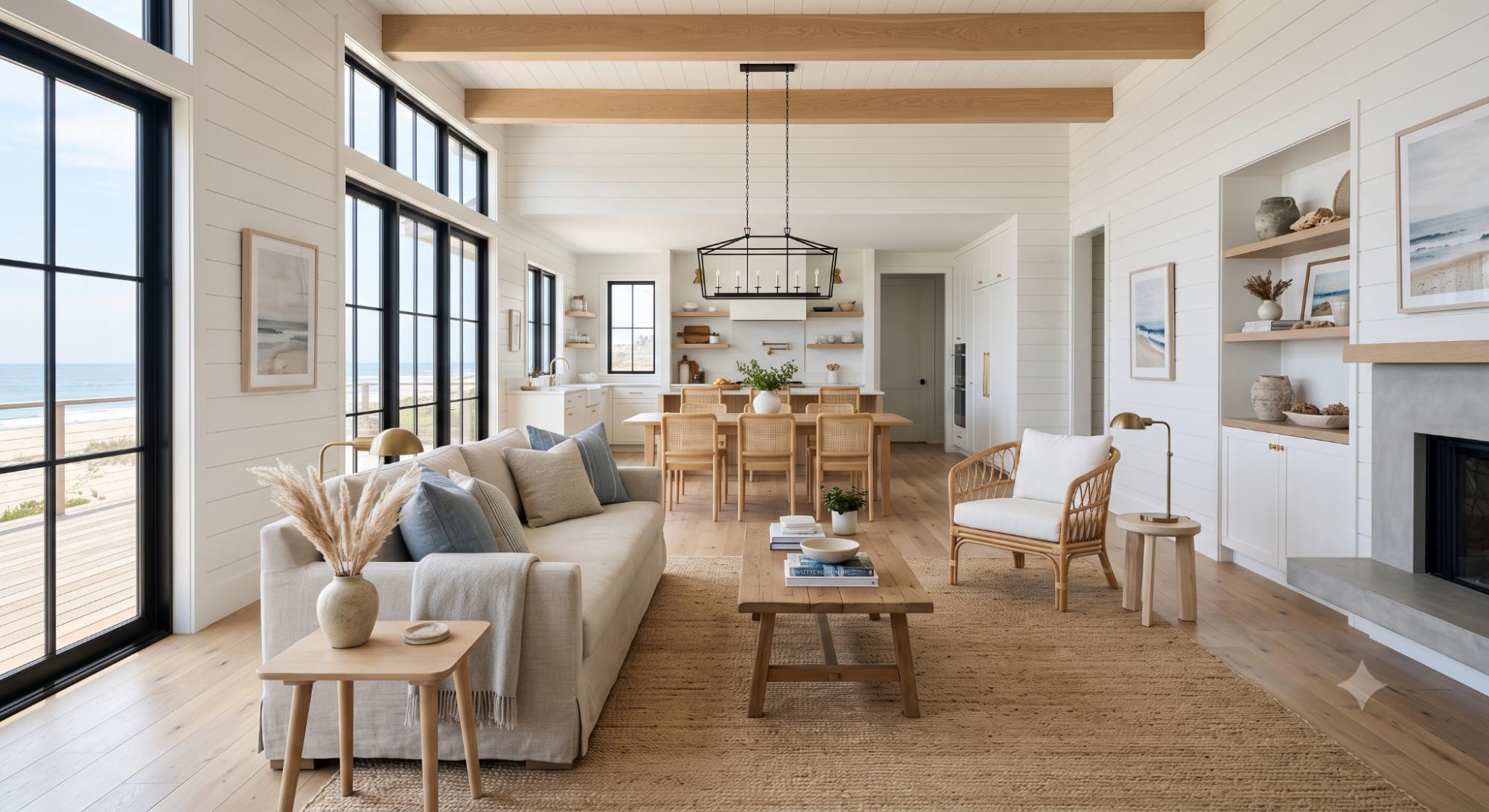
Modern beach house interiors feel clean, simple, and uncluttered rather than fussy. Pair furniture with simple, straight lines alongside coastal materials like rattan and linen. White walls combined with wood, rattan, linen, and black or brass accents keep the style feeling current instead of dated.
This modern take on beach house style blends clean lines, neutral palettes, open layouts, and coastal charm into one cohesive look.
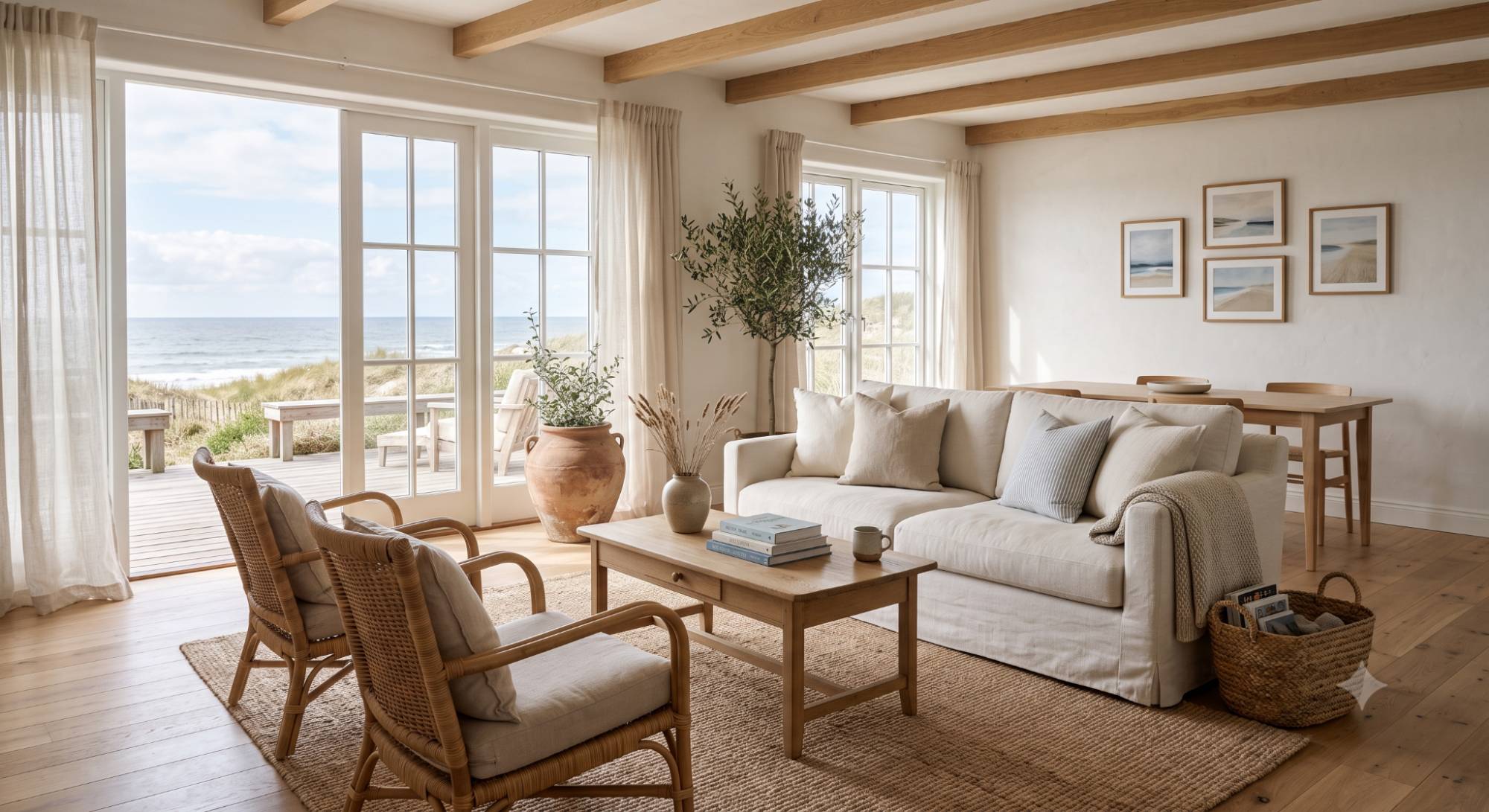
The best beach house interior feels natural, calm, and genuinely lived-in. Avoid overusing shells, anchors, signs, or heavily themed decor throughout the home. Instead, let light, texture, color, and comfort do most of the work.
Remember that the goal here is a relaxed coastal home, not a staged beach shop display.
Here's a closer look at how these ideas come together room by room.
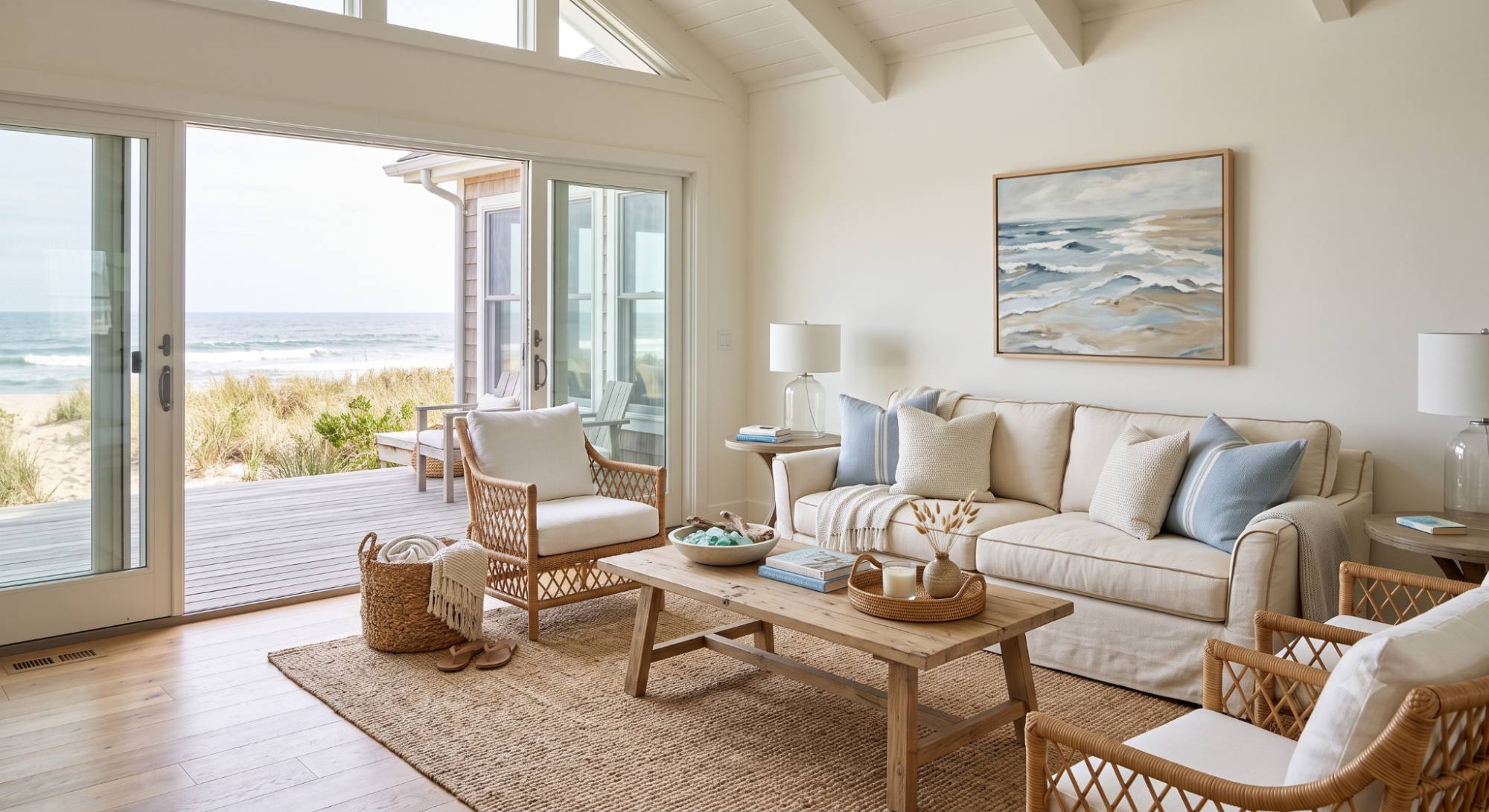
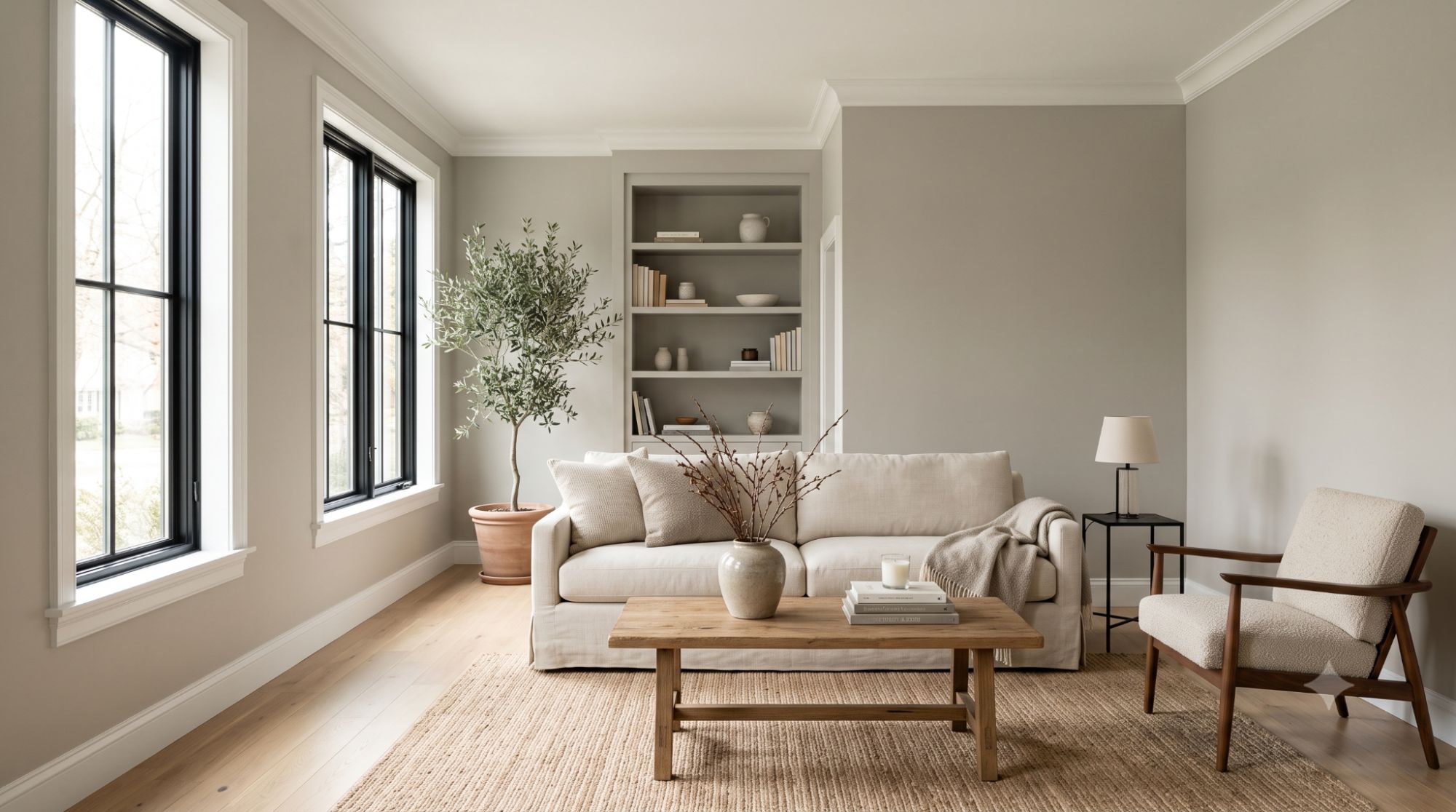
A beach house living room should feel open, comfortable, and easy to maintain. Start with a slipcovered sofa, then add a jute rug, woven chairs, and a light wood coffee table. Layer in blue pillows and a piece of coastal art for personality, and keep the overall layout simple so the room feels relaxed instead of crowded.
If the room gets heavy daily use, from kids, pets, or vacation guests, choose performance fabric on the sofa and an indoor-outdoor rug near any door leading outside. Both hold up far better than delicate materials under constant traffic.
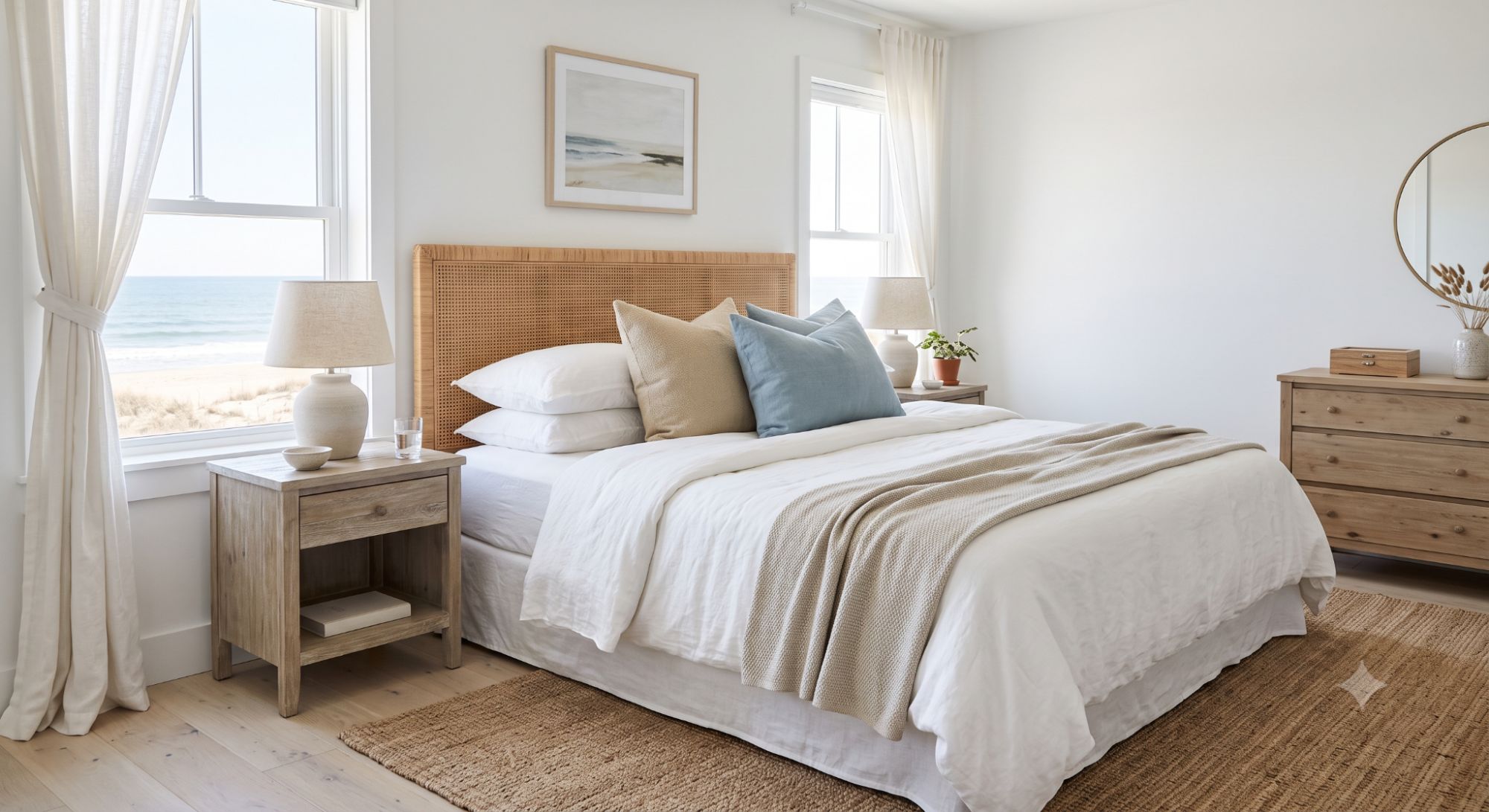
A coastal bedroom should feel calm enough to help you unwind at the end of the day. White bedding, linen curtains, and a rattan headboard set a soft, restful tone, while wood nightstands and soft blue or beige accents round out the look. Keep nightstands and dressers lightly styled so the room stays peaceful rather than busy.
For a guest room or rental property, stick with lightweight, easy-to-wash bedding. It handles frequent changeovers better than heavier bedding sets and still looks crisp between guests.
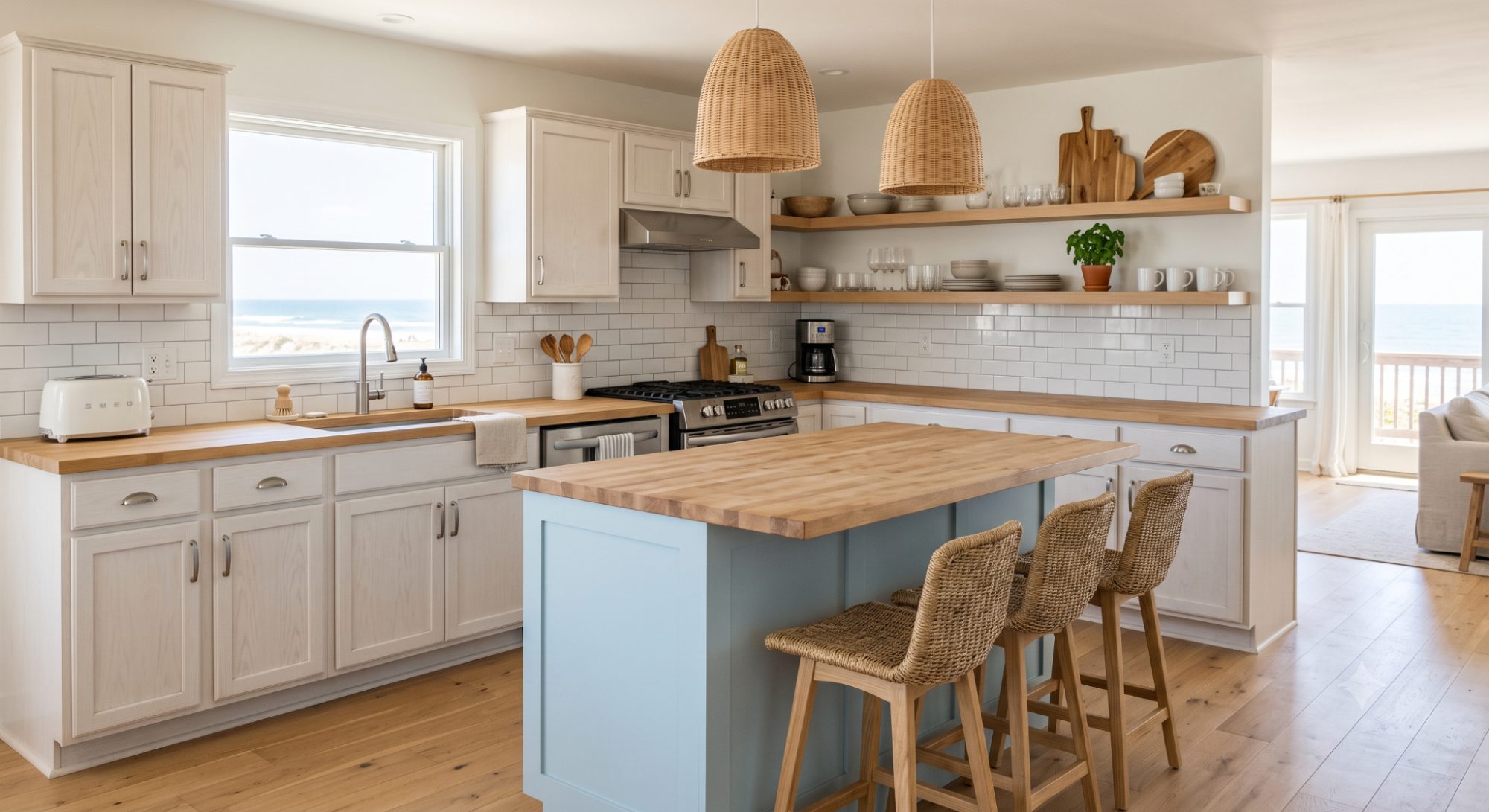
A coastal kitchen works best when it stays light, functional, and easy to clean. White cabinets and light wood surfaces form the base, while woven pendants and open shelves add warmth and texture above. A blue island or backsplash brings in color without overwhelming the space, and natural textures like seagrass or rattan stools tie the whole room together.
If you're decorating an older or smaller kitchen, painting the cabinets rather than replacing them is often the most budget-friendly way to bring in that light, coastal base.
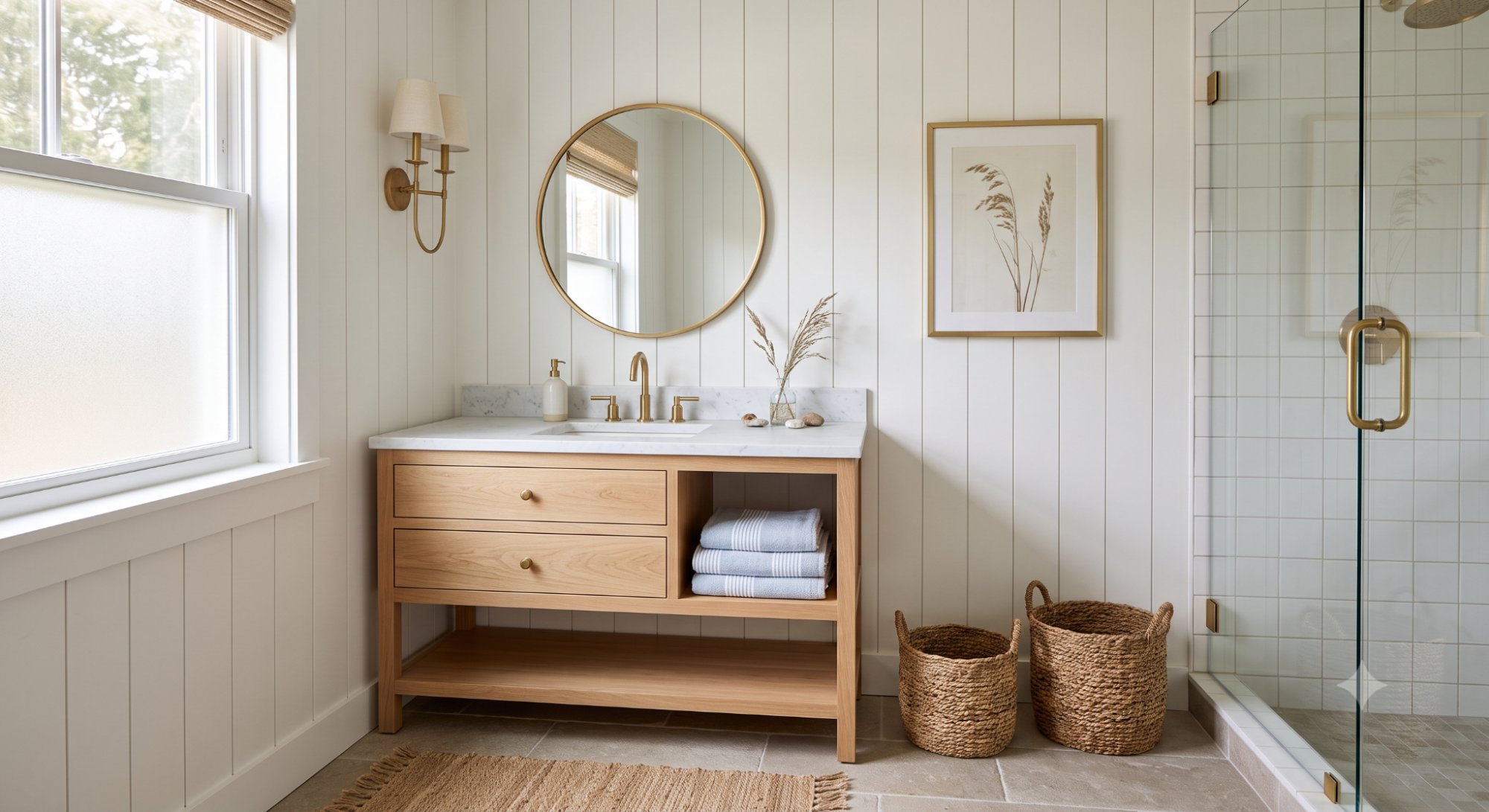
A coastal bathroom should feel like a small, calm retreat rather than just a functional space. White tile and a light wood vanity create a clean foundation, while woven baskets and soft blue towels add texture and color. Brass or chrome fixtures give the room a bit of polish and tie in nicely with metal accents used elsewhere in the home.
In humid or coastal climates, choose moisture-resistant finishes on paint, wallpaper, and cabinetry so the room holds up well over time instead of showing damage after a year or two.
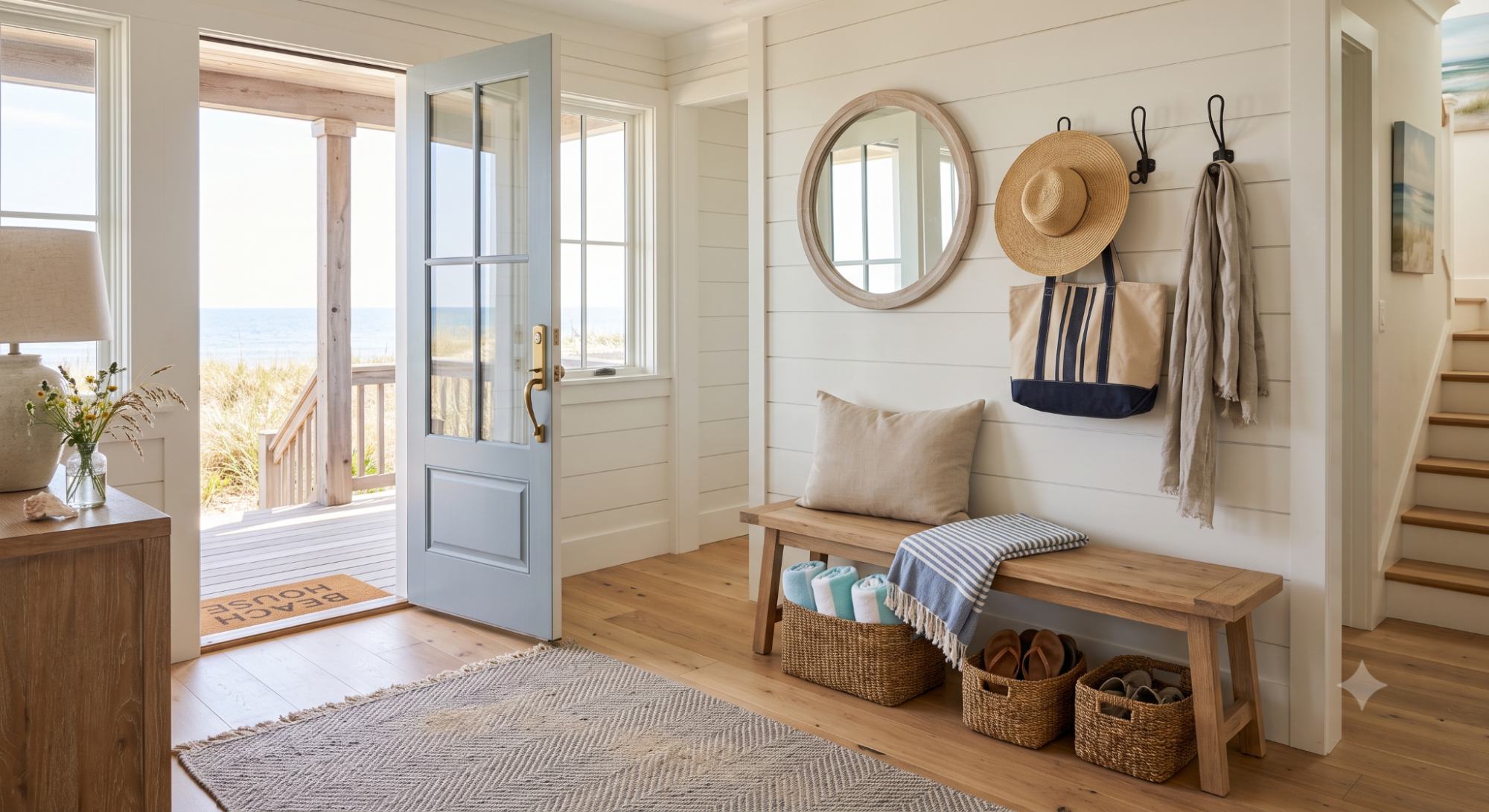
An entryway sets the tone for the rest of a coastal home, so it should feel welcoming but also practical. A simple bench, a few hooks, and seagrass baskets give guests and family a place to drop shoes, bags, and beach gear. A durable, easy-to-clean rug and a simple mirror finish the space without adding clutter.
For homes near sand or water, an indoor-outdoor rug is a smart choice right at the entry, since it stands up to grit and moisture far better than a natural fiber rug in that exact spot.
Even the best intentions can lead a coastal room astray. Here are the most common mistakes to watch out for.
A few shells or a single anchor accent can look charming. A room packed with them starts to feel like a novelty shop rather than a real home. Coastal style should feel natural and lived-in, not overly themed from wall to wall.
Blue and white is a classic combination, but it's not the whole story. Beige, cream, wood tones, green, gray, and natural texture all play an important role in a well-rounded beach house interior. Leaning only on blue and white can make a room feel one-note.
An all-white room without texture can feel cold and clinical instead of warm and inviting. Jute, linen, rattan, wood, and other woven details add the depth a plain white space needs. Texture is often the missing ingredient when a room feels flat.
Beach homes see a lot of wear from sand, water, sunscreen, and everyday life. Delicate fabrics and finishes wear out fast under these conditions. Choose furniture built to handle daily use and easy cleaning instead, especially performance fabric or slipcovered pieces if the home sees frequent guests.
Too much furniture or too many decor pieces can crowd out the open, breathable feeling that defines this style. Beach house interiors should feel spacious and relaxed, with enough room to move comfortably. When in doubt, simplify.
You don't need ocean views or a coastal zip code to bring this style home. A few focused changes go a long way, even in a landlocked house or apartment.
If you're on a tight budget, prioritize paint and textiles first. A fresh coat of warm white paint and a few linen or striped pillows change the feel of a room more than almost anything else, and both are inexpensive compared to new furniture.
You can create a beach-house feeling without living near the coast at all by focusing on light colors, natural fabrics, coastal-inspired accents, and uncluttered spaces. The style is really about mood and materials, not location.
A great beach house interior comes down to a few simple ingredients: light colors, natural textures, relaxed furniture, simple coastal accents, and genuine comfort. You don't need to overhaul your entire home at once to get the feeling right.
Start small. Try one or two ideas from this list — maybe white walls, a jute rug, linen curtains, or a rattan chair — and build from there. Over time, these small changes add up to a home that feels calm, bright, and effortlessly coastal, no matter where you actually live.
Eggshell or satin finishes work best for most walls because they're easier to wipe clean than flat paint. Semi-gloss is a better choice for trim, doors, and cabinets, since it holds up to more handling. In humid coastal climates, look for durable, mildew-resistant paint on rooms that see a lot of moisture.
Luxury vinyl plank, tile, sealed hardwood, and engineered wood are all practical choices. Real coastal homes need flooring that can stand up to sand, moisture, and heavy foot traffic without showing damage right away. These options balance durability with the light, natural look coastal style calls for.
Stick with light colors, multi-purpose furniture, wall hooks, baskets, and mirrors instead of too many large decor pieces. Keep walkways clear and open. Furniture with visible legs, rather than pieces that sit flush to the floor, also helps a small room feel more spacious.
Avoid leaning too heavily on dark, heavy colors in rooms that don't get much natural light, since they can make the space feel smaller and dimmer. Overly bright tropical colors can also clash unless your home is specifically going for a tropical look. Save bold colors for accents rather than making them the main palette.
Paint, linen-look curtains, thrifted wood furniture, woven baskets, simple art, updated lighting, and matching hardware all go a long way without a big budget. A clean, cohesive color palette paired with good texture often reads as more expensive than a room packed with decor. Focus on a few quality touches rather than filling every surface.
Clara Jameson is an interior design specialist with more than 10 years of experience helping people create stylish and functional spaces. She blends aesthetics with practicality to make sophisticated design approachable and achievable. Clara earned her B.A. in Interior Design from Savannah College of Art and Design. She enjoys traveling, visiting art galleries, and studying architecture to gather fresh inspiration that she brings to every project.


No Comments