

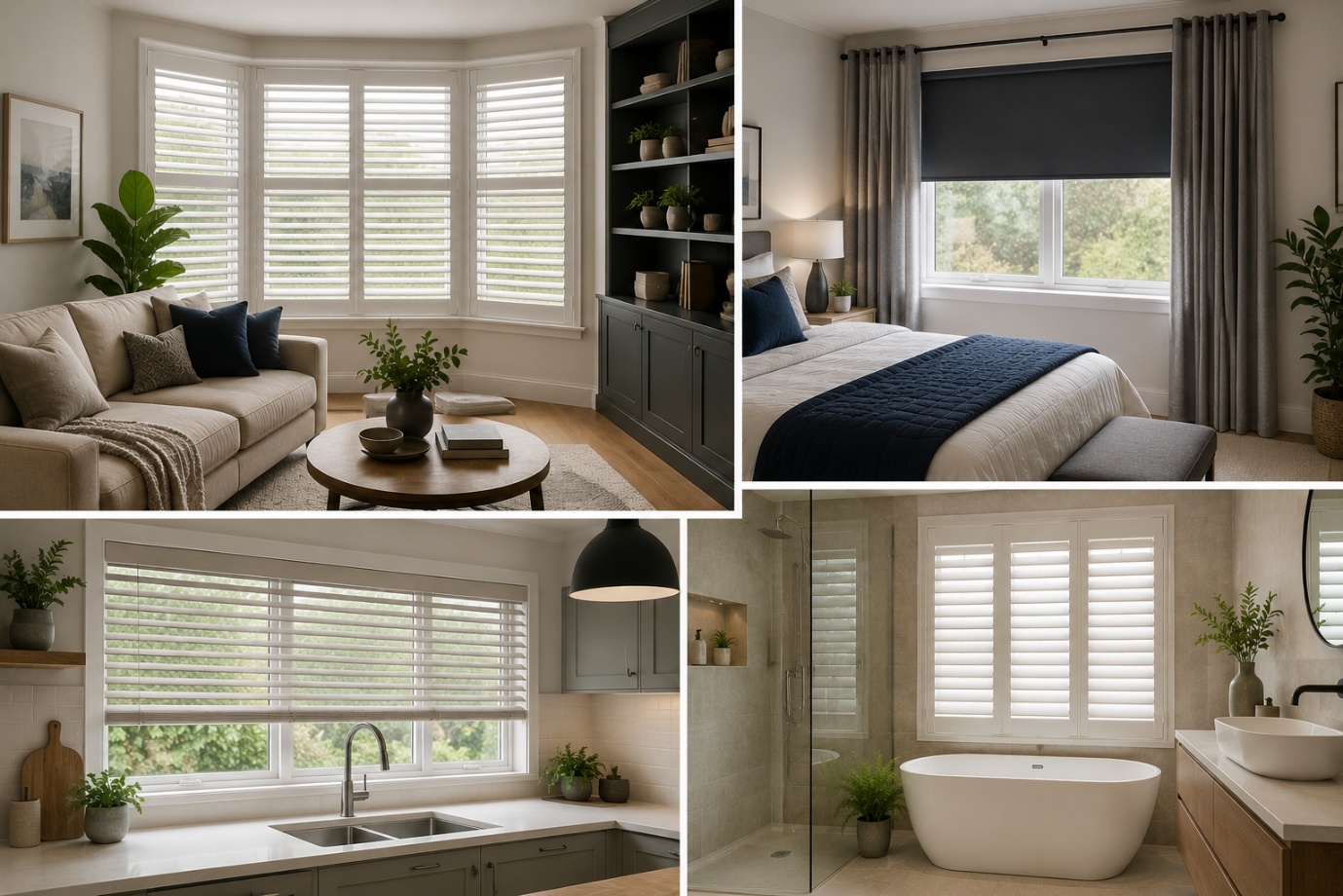
How to Choose the Perfect Window Coverings for Your Home
Window coverings are more than just decorative features. They influence


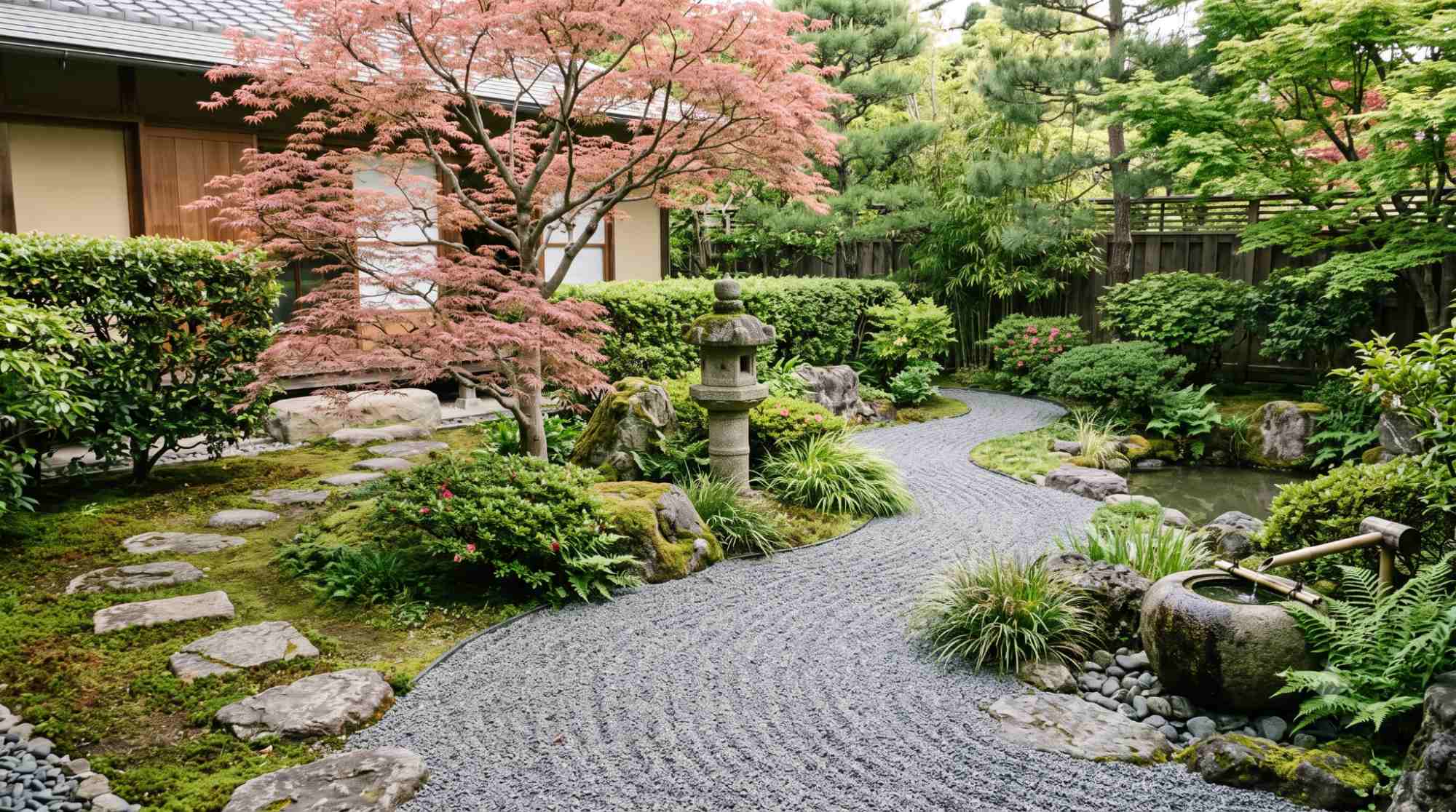
Japanese gardens are known for one thing above all: peace. They bring together rocks, plants, water, and open space in a way that feels calm and balanced. If you've been searching for Japanese garden ideas, you're probably hoping to bring some of that quiet beauty into your own yard.
The good news is that you don't need a huge budget or yard to make it happen. A small patio, side yard, or quiet corner can feel restful with the right mix of rocks, plants, water, gravel, and paths. Below, you'll find 21 ideas plus practical tips to help you get started.
Before jumping into the ideas, it helps to understand what makes this style different from a typical backyard.
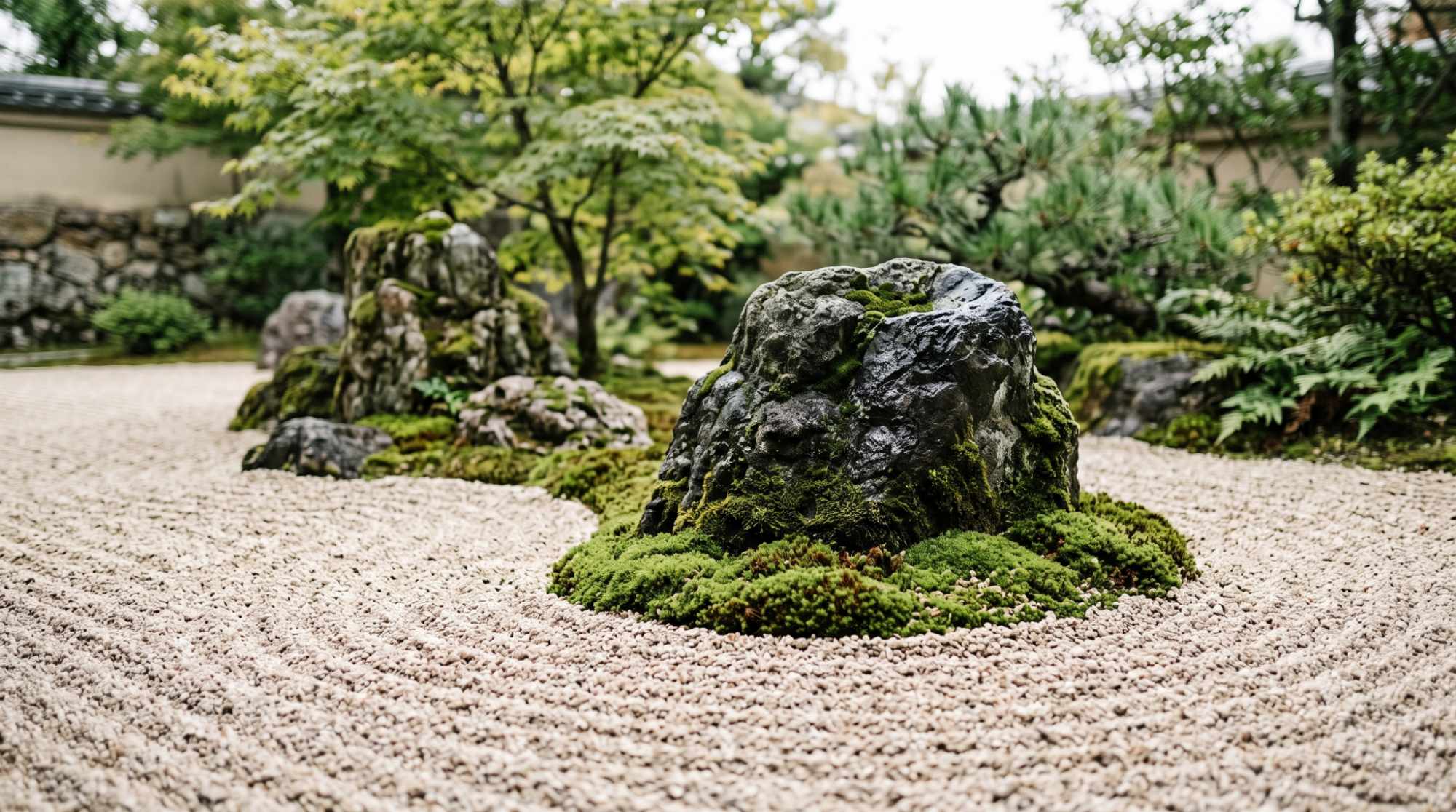
Japanese gardens are designed for reflection, not for impressing with bright colors or busy layouts. They use nature in a thoughtful way, drawing on rocks, water, gravel, moss, evergreen plants, paths, bridges, and lanterns—but rarely all at once. A good Japanese garden feels natural rather than staged, and nothing looks forced or overdone.
Symbolism also plays a big role. Rocks often stand in for mountains, and raked gravel can suggest flowing water. A winding path can create a slow, thoughtful journey from one end of the garden to the other, with every element serving a purpose.
Before diving into the 21 ideas, it helps to know the core building blocks most Japanese-style gardens share.
Rocks give a Japanese garden its structure and meaning, and they're usually the first thing placed when a garden is designed.
Gravel is a signature feature of Zen-style and dry Japanese gardens—simple, low-cost, and full of meaning.
Water adds sound, reflection, and gentle movement to a garden.
If you don't have room for a pond, a compact fountain or water bowl can create the same effect in a much smaller footprint.
Japanese gardens use controlled, thoughtful planting rather than a mix of every flower you like—less is usually more here.
Common choices include:
Paths guide the eye and slow down the walk through the garden, which is part of what makes these spaces feel so restful.
Now that you know the basic elements, here are 21 ideas to bring this style into your own outdoor space.
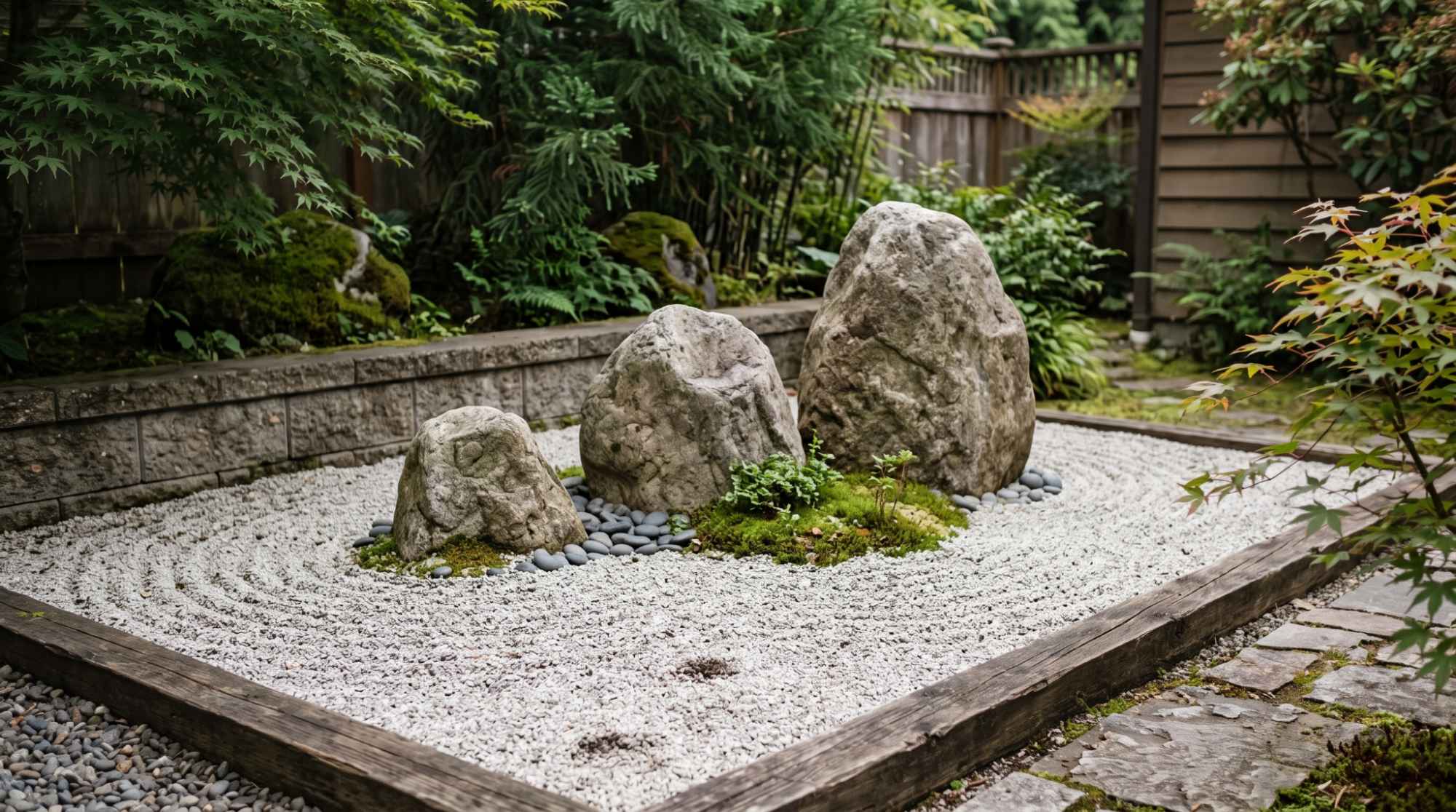
A Zen rock garden uses gravel, sand, and a handful of natural stones to create a quiet, minimal space, stripping the garden down to essentials so nothing distracts the eye. It's perfect for patios, tight corners, or small yards where a full bed isn't realistic—rake the gravel into simple wave patterns and keep plants to a minimum.
Tip: Start with just three stones of different sizes. It's a classic layout that always looks balanced.
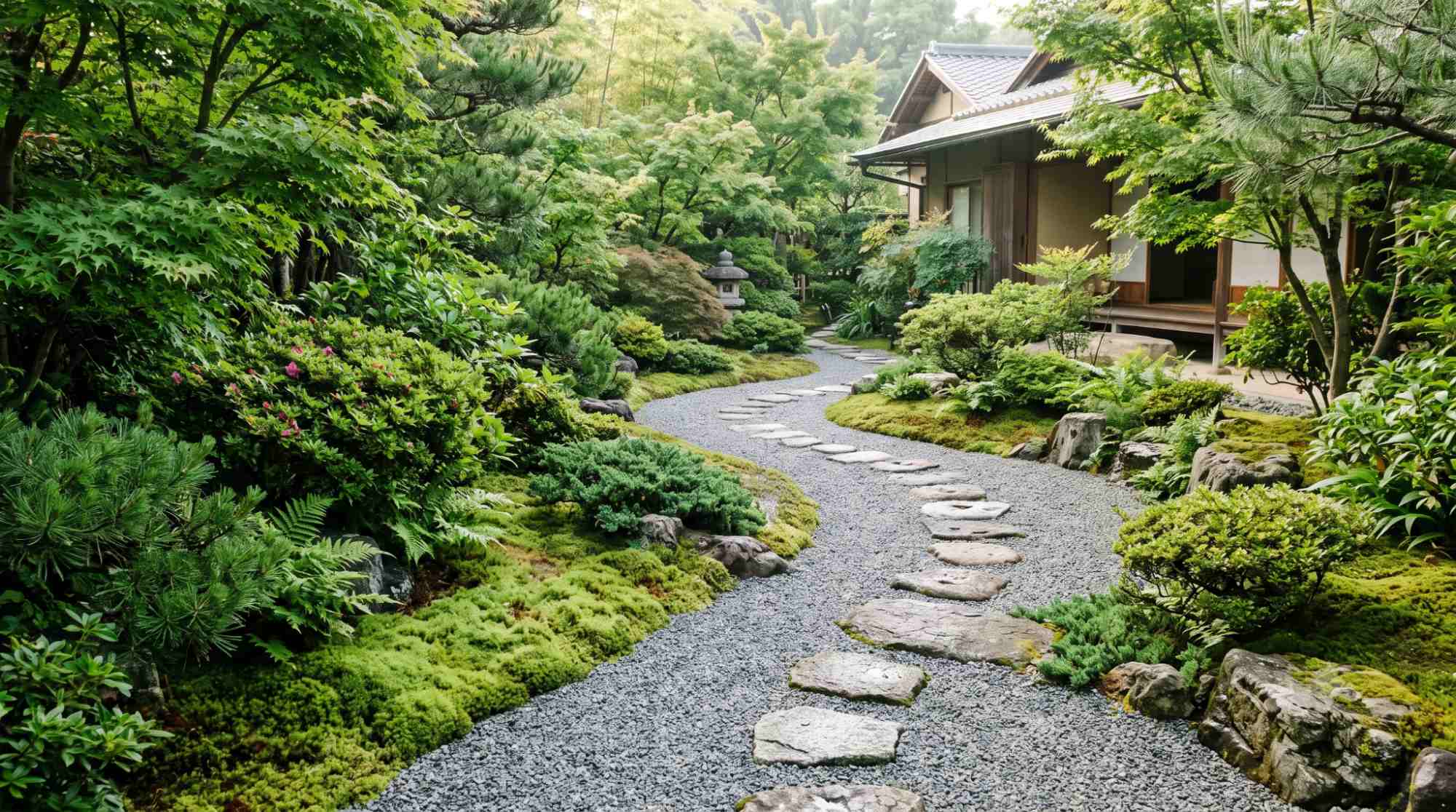
Straight paths feel rushed. Curved paths make a garden feel slower and more natural—use gravel, stepping stones, or natural stone slabs, letting the path wind gently rather than cut straight across the yard.
Tip: Add low plants or moss along the edges to soften the line between the path and the garden bed.
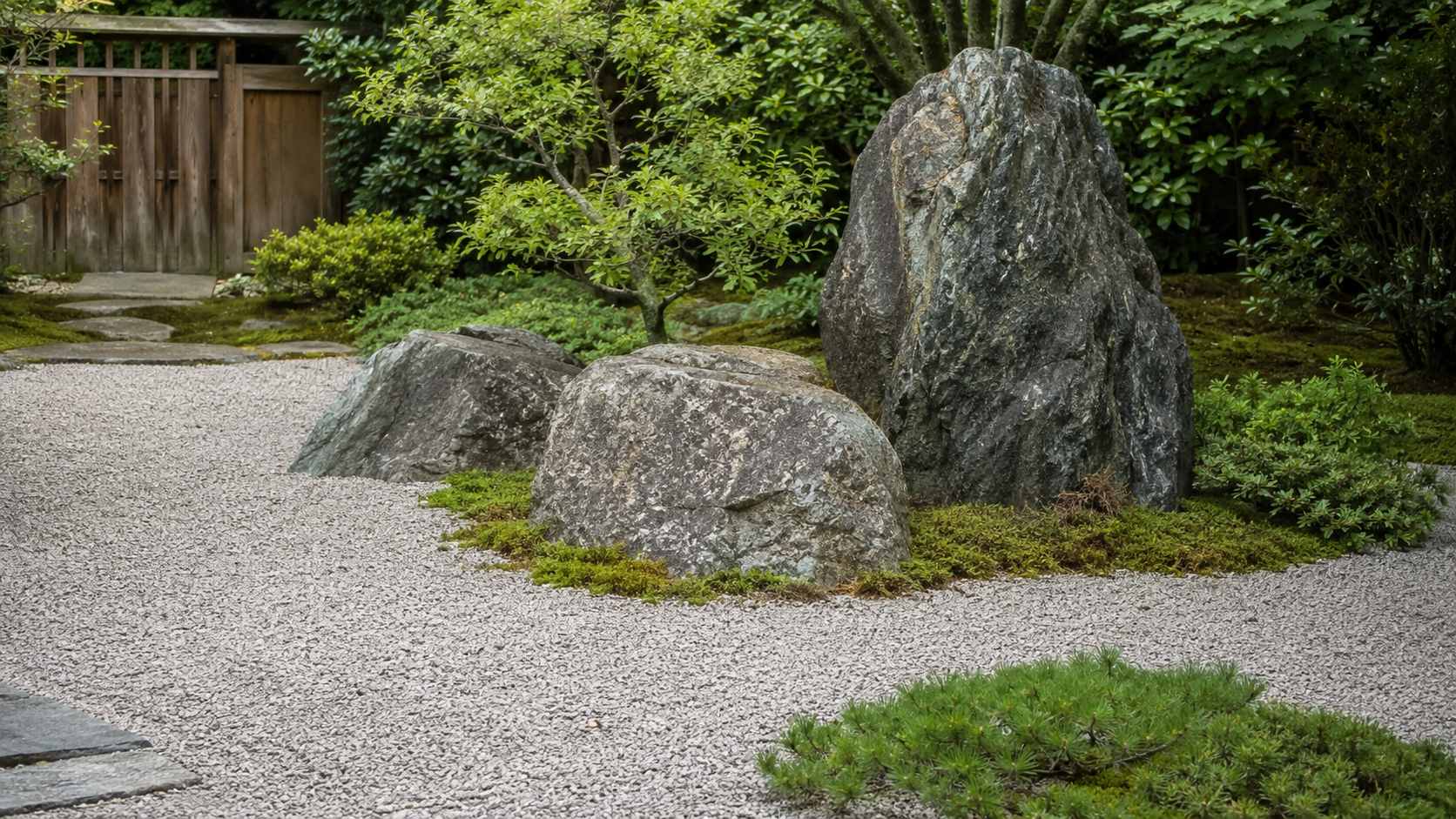
A few large rocks can anchor an entire garden, giving it weight and permanence. Place them off-center rather than in the middle, use odd-numbered groupings like three or five, and surround them with gravel, moss, or low shrubs.
Tip: Bury the base of each rock slightly so it looks settled, not placed on top of the soil.
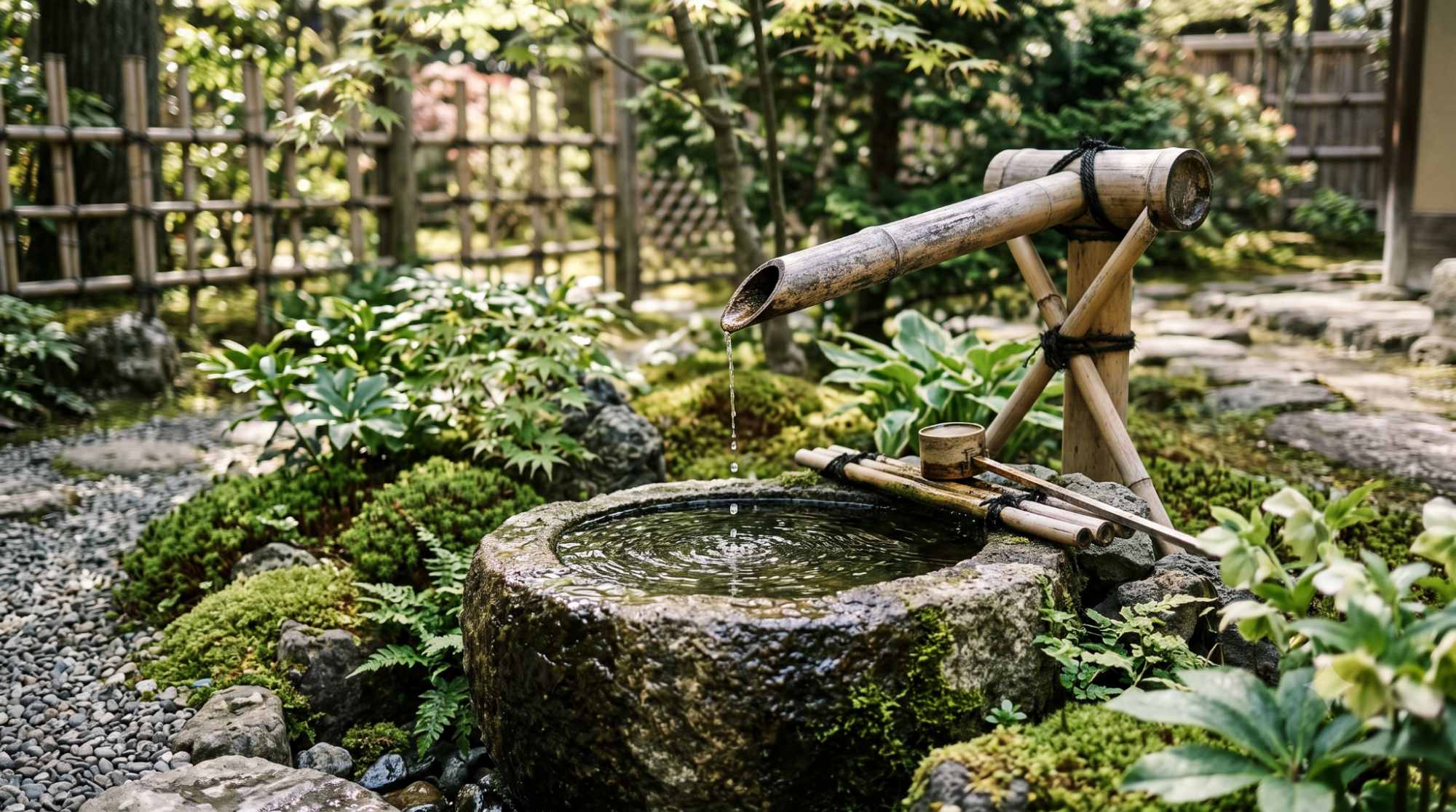
A bamboo fountain, sometimes called a shishi-odoshi, gives you the sound and movement of water without needing a full pond.These work well near patios or seating areas, where you can enjoy the sound up close. Pair the fountain with a stone basin to catch the water.
Tip: Keep the water flow gentle—a slow trickle sounds more peaceful than a strong stream.
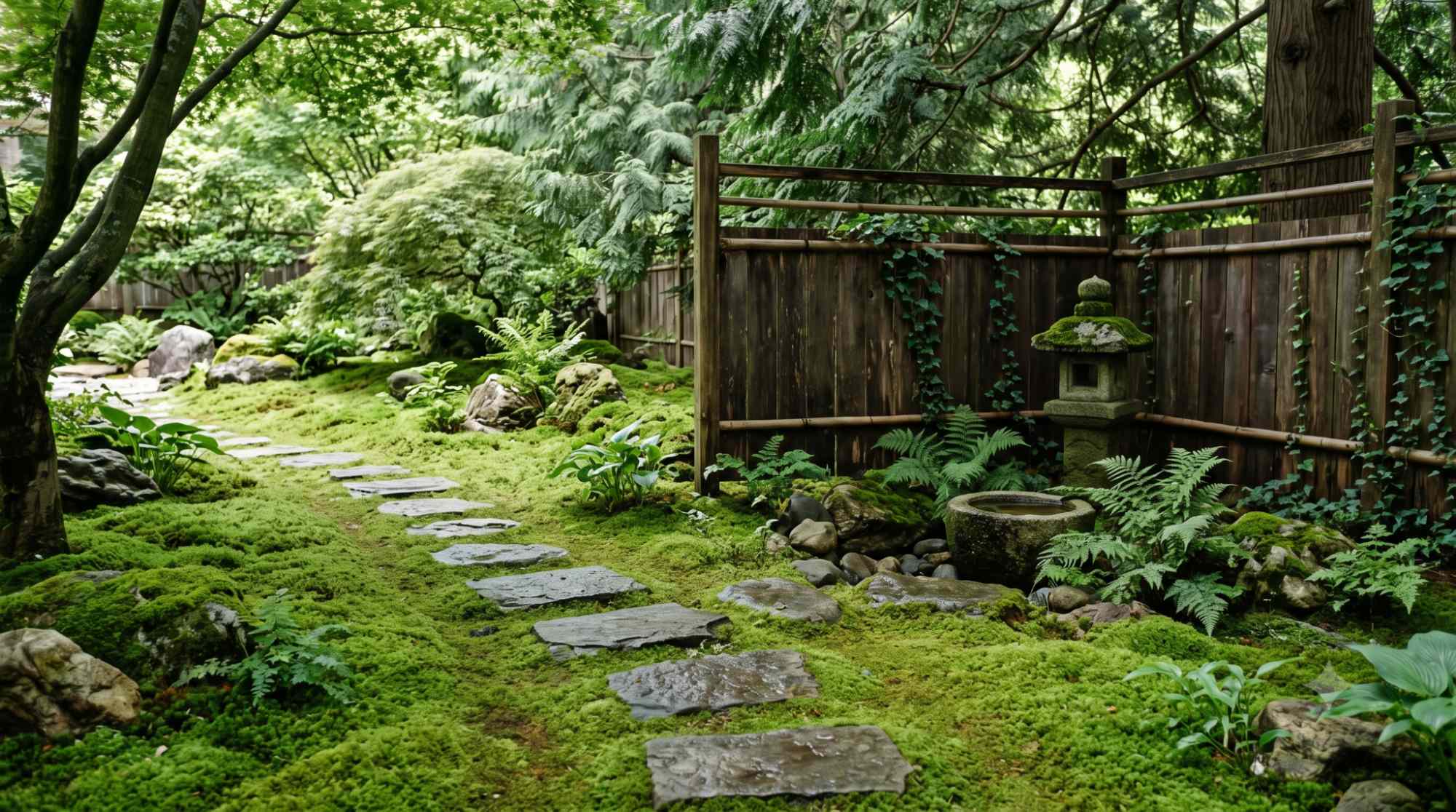
Moss brings a soft, old, peaceful feeling few other plants can match. It thrives in shady, moist areas, so look for a spot under trees or along a fence. Pair it with stones and ferns, and add stepping stones so people don't walk directly on it.
Tip: Keep moss areas away from high foot traffic, since it doesn't hold up to being walked on.
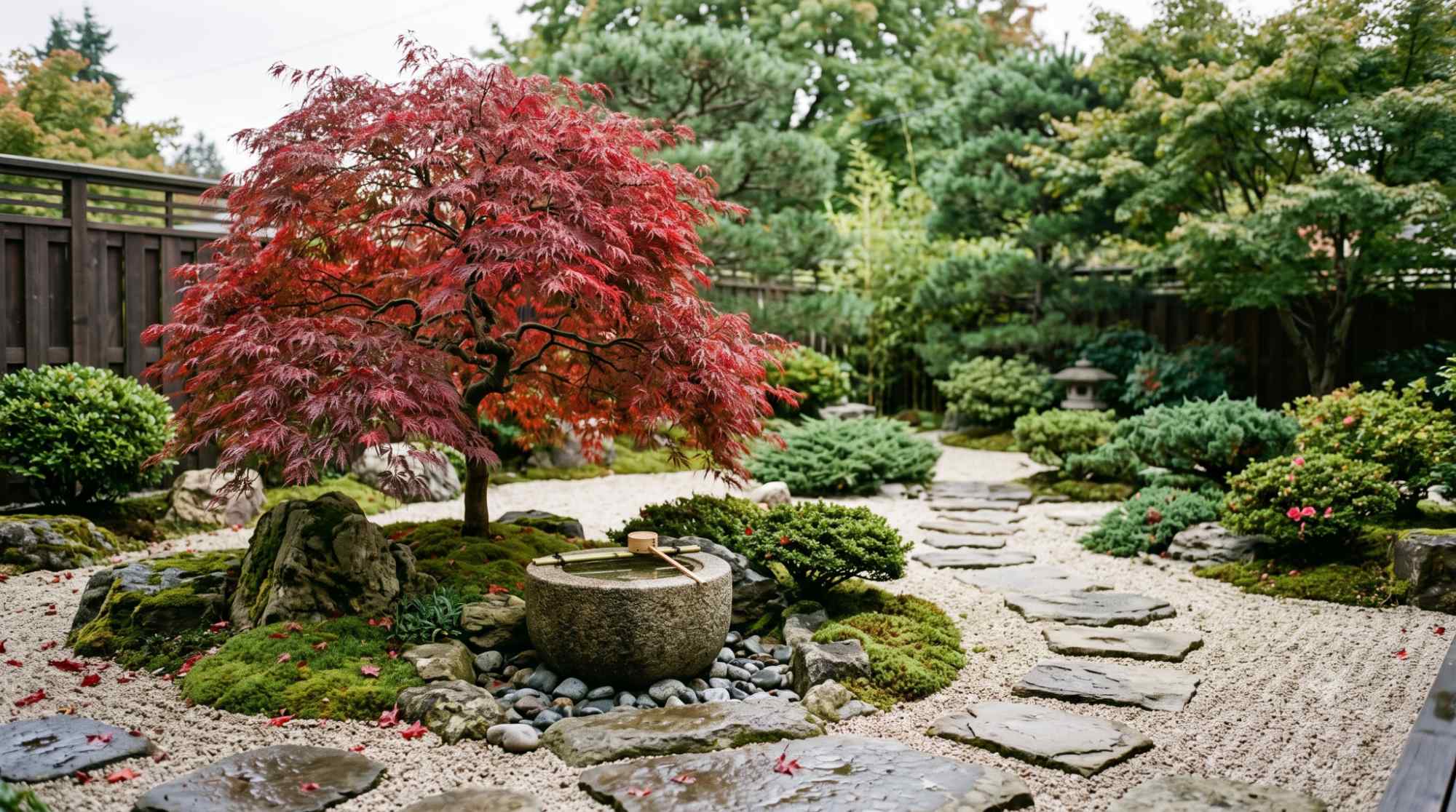
The Japanese maple is one of the most popular feature trees for this style, thanks to its layered shape and stunning seasonal color, often shifting from green to deep red in fall. It also works well in small yards, since many varieties stay compact.
Tip: Plant it near gravel, water, or stone so its colorful leaves stand out against a neutral background.
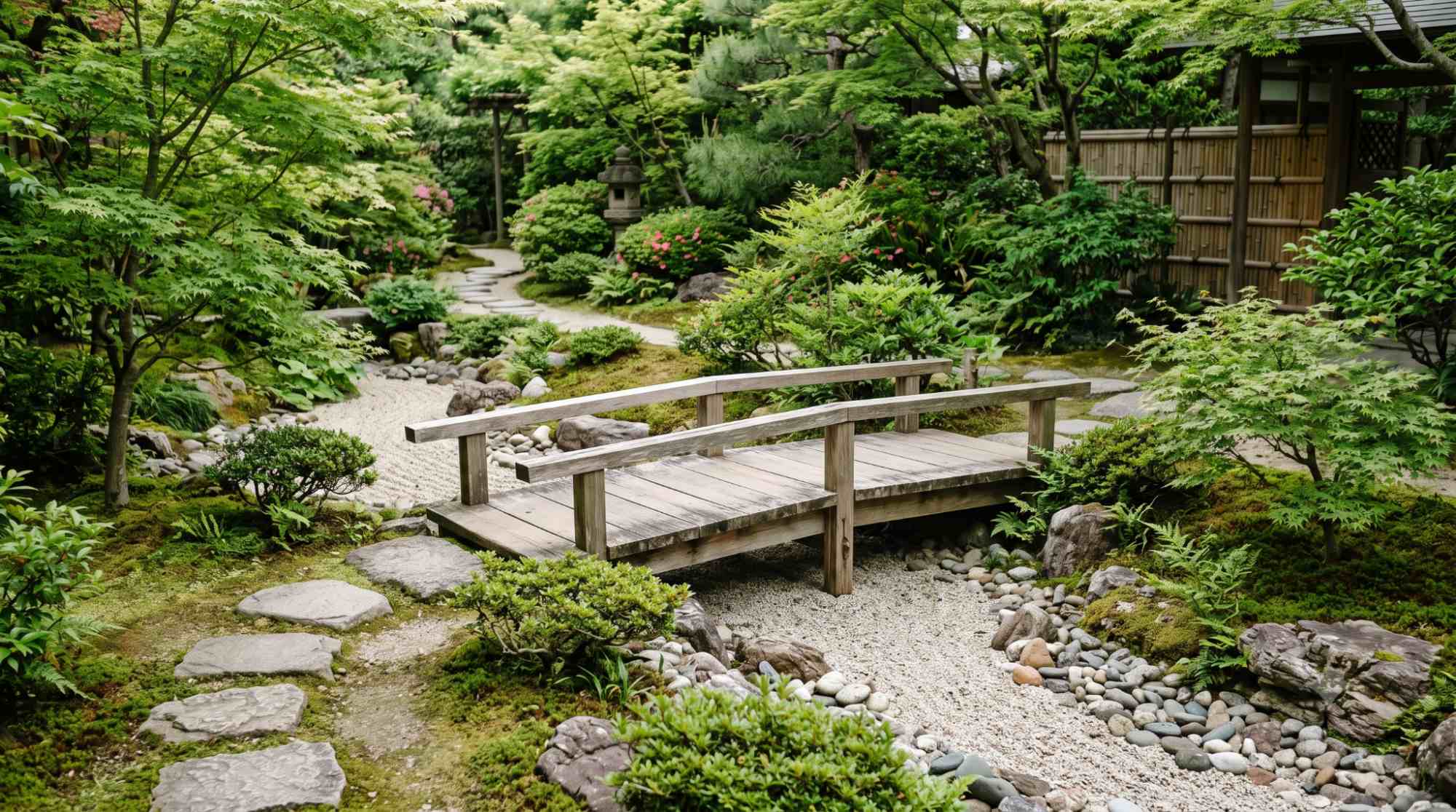
A small bridge adds a sense of movement and journey, even crossing just a few feet of space. It can span a real pond, a dry stream bed, or a bed of gravel—the key is keeping the design simple rather than ornate.
Tip: Choose natural, unpainted wood—it blends in far better than bright paint or stain.
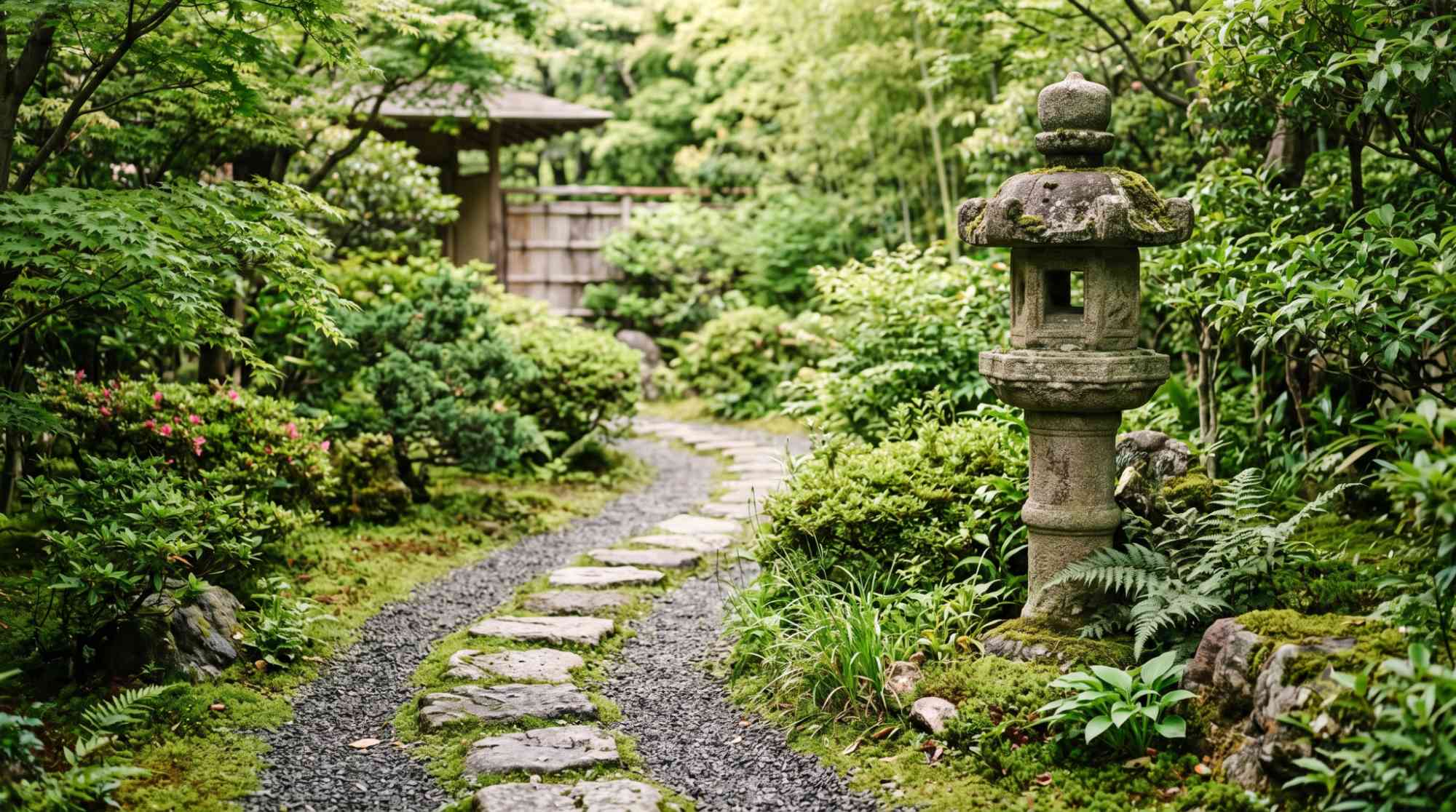
Stone lanterns, or toro, add traditional character to a garden. Place one near a path, water feature, or entry point, and use only one or two total—too many will feel cluttered.
Tip: Avoid cheap plastic versions—a real stone or concrete lantern looks far more authentic outdoors.
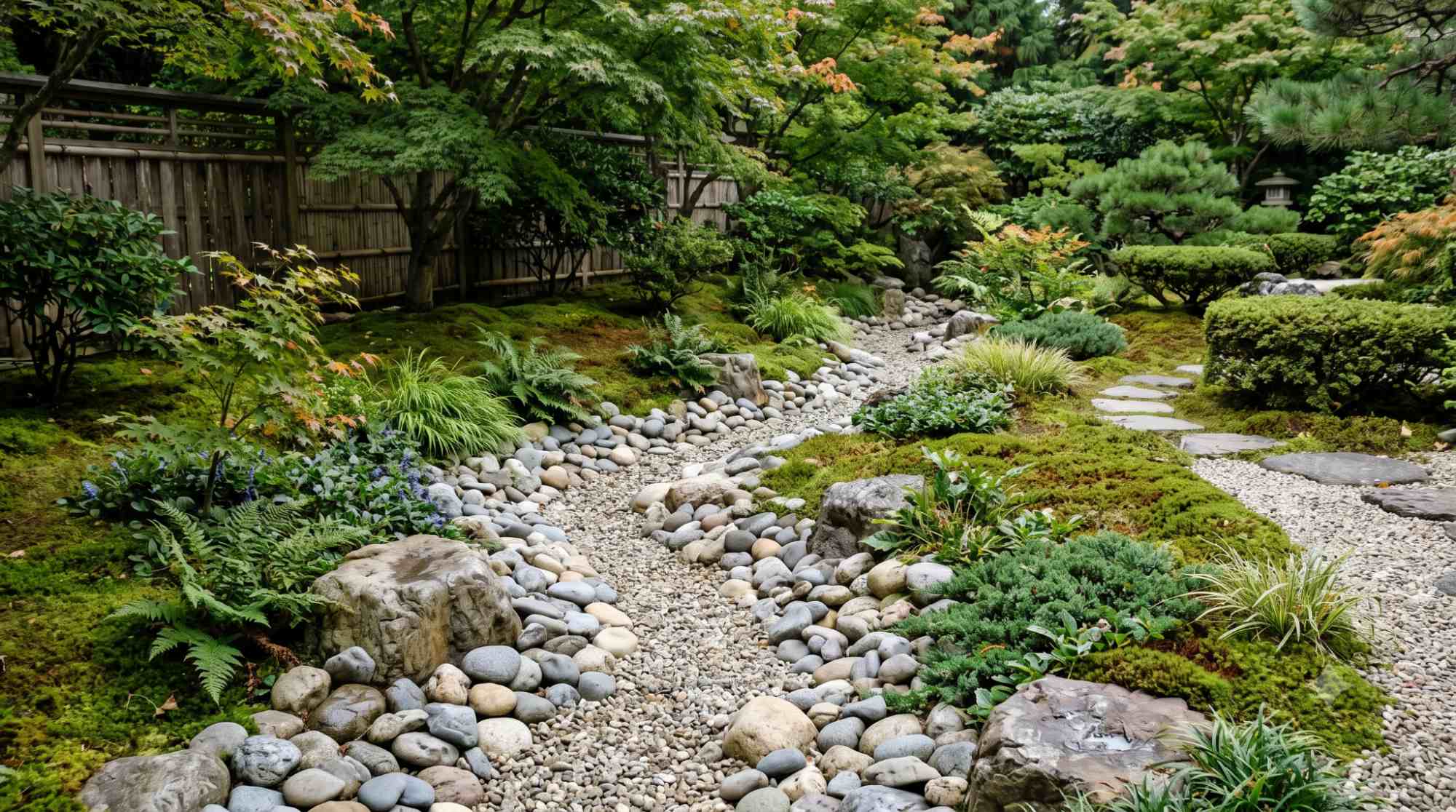
A dry stream bed gives the impression of flowing water without any actual water. Use river rocks and gravel to form the "stream," curving it naturally. This idea also works well in low spots with drainage issues.
Tip: Add plants along the edges, the way real vegetation grows along a natural creek.
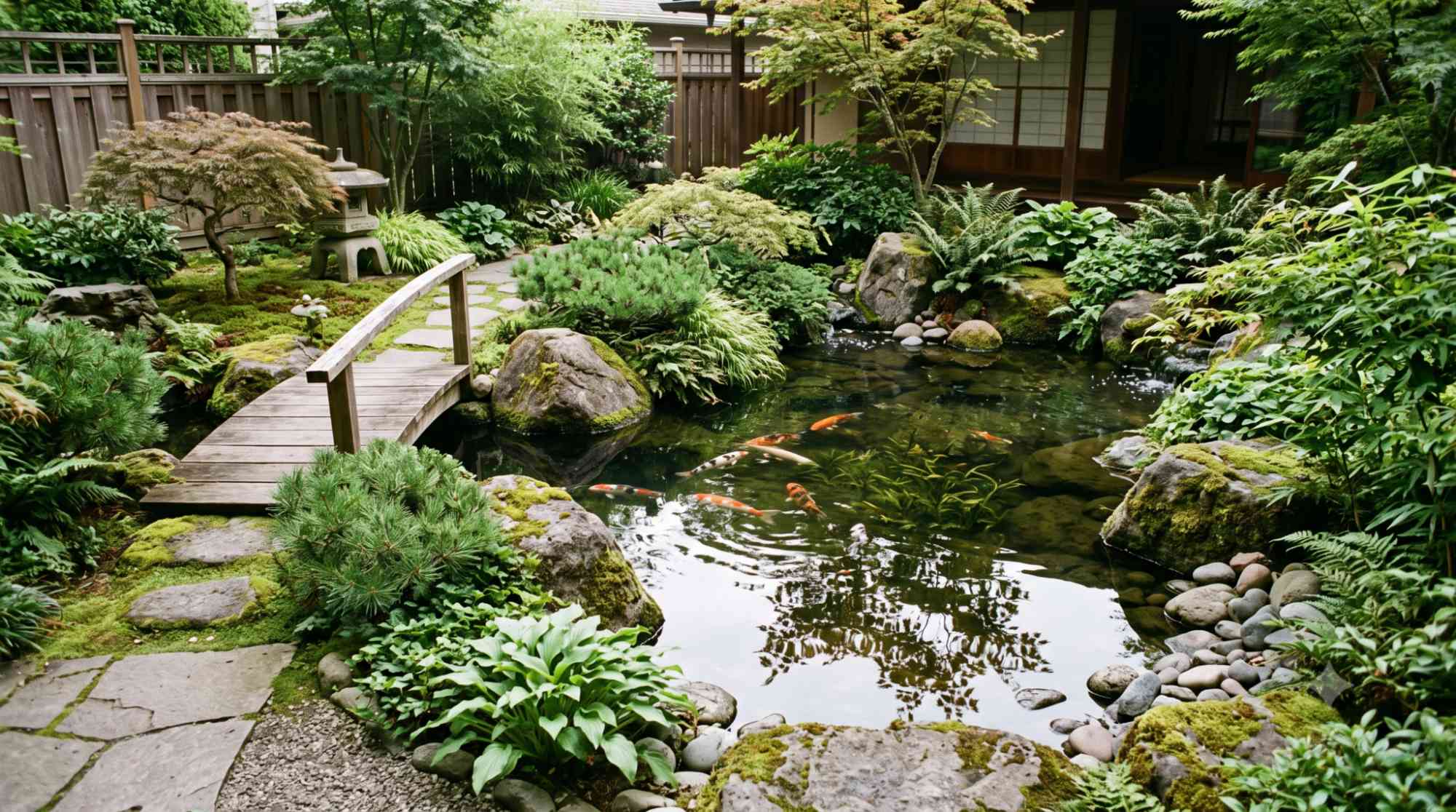
A koi pond is one of the most iconic Japanese garden features, but it takes more planning than most ideas on this list. It works best in larger yards, since koi need room and proper filtration. Surround the pond with rocks and plants, plus a small bridge for a finished look.
Tip: Beginners should start with a small pond to learn the maintenance first.
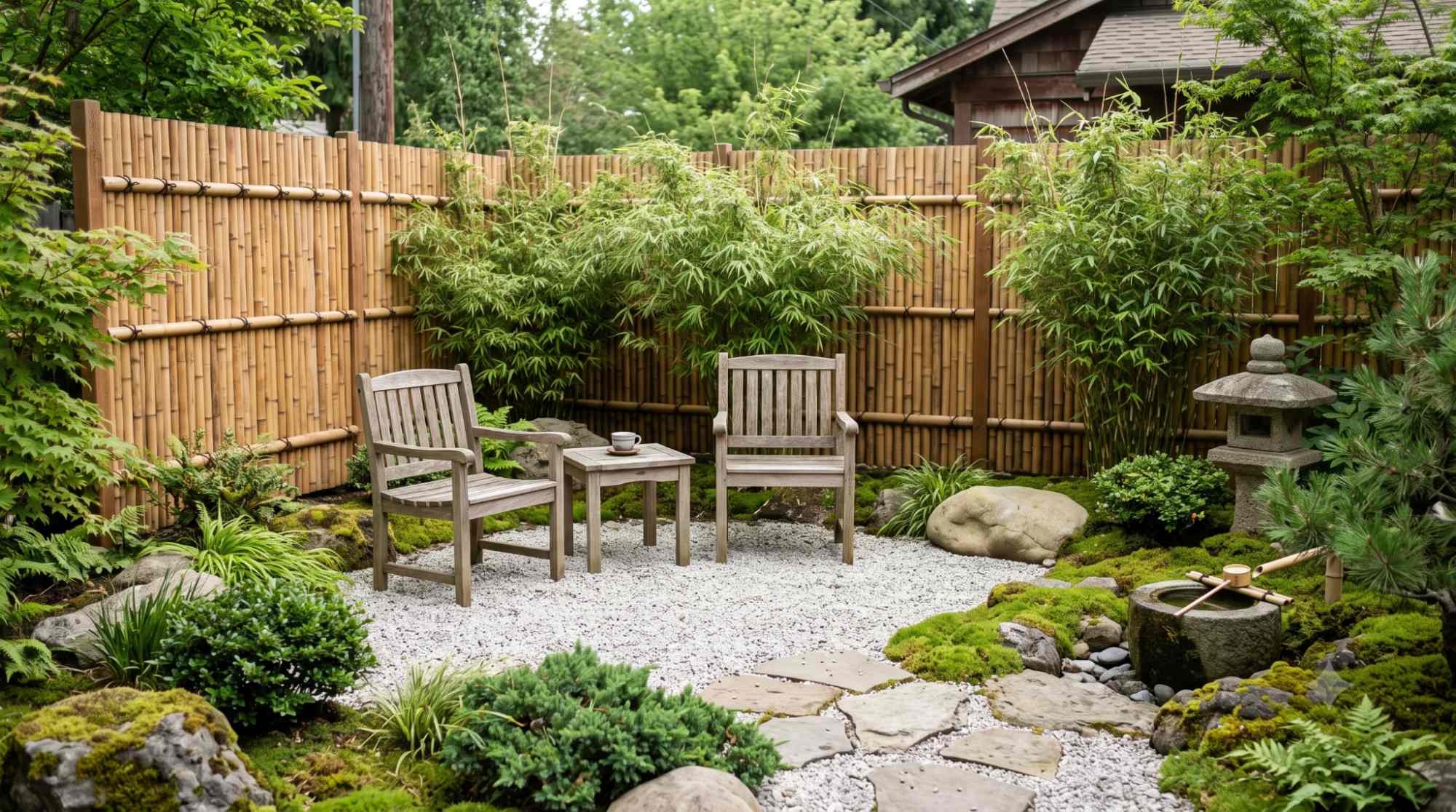
Bamboo creates a natural screen that blocks views without feeling like a hard fence. The easiest option is bamboo fencing, which gives you the look with no maintenance. If planting real bamboo, choose a clumping variety, since running bamboo spreads aggressively.
Tip: Bamboo works well around patios and seating areas where you want a sense of enclosure.
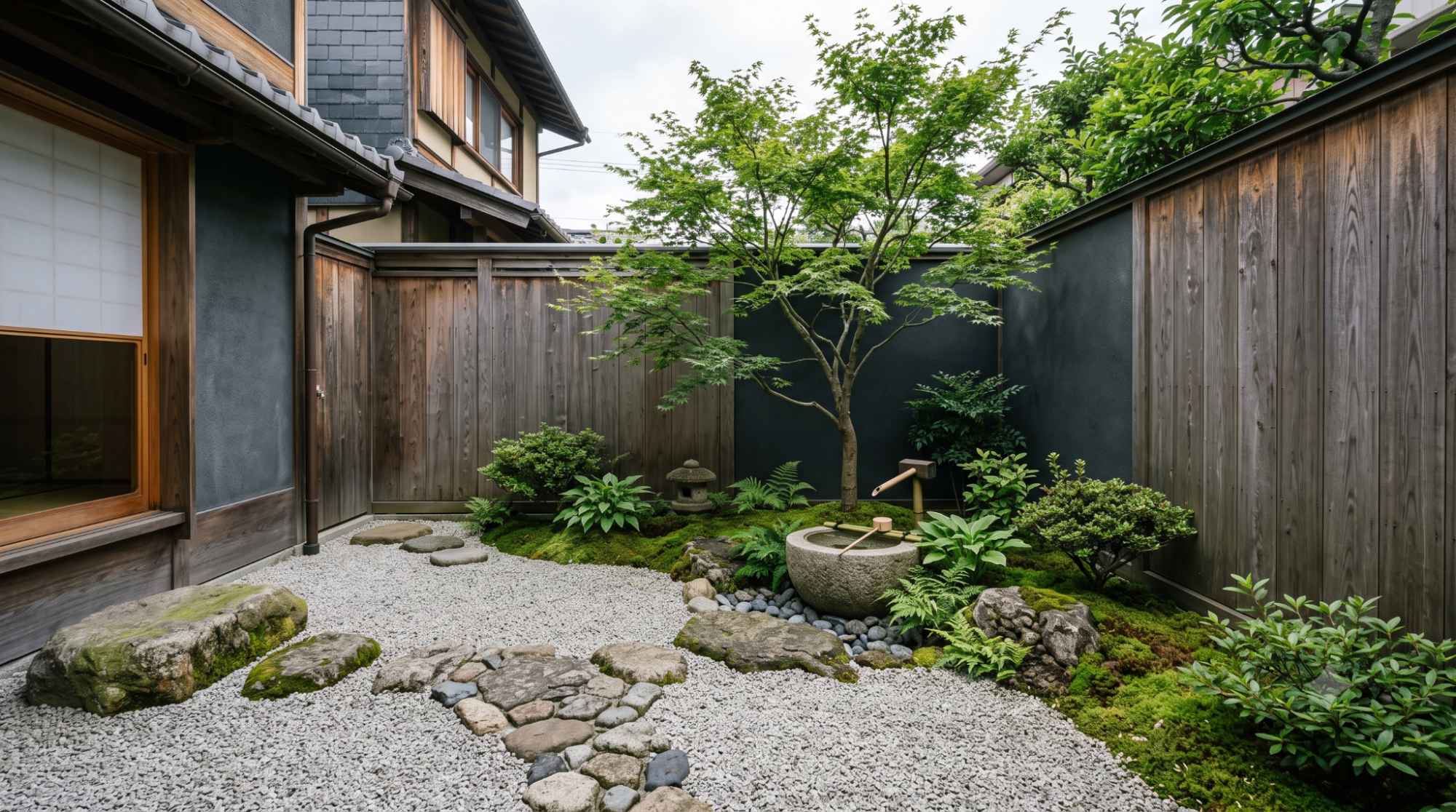
A small, enclosed courtyard can feel remarkably tranquil, even in a tiny footprint. Use gravel, a few well-placed stones, one small tree, and a water bowl—this idea is especially good for townhomes and limited outdoor space.
Tip: Keep the color palette simple. A courtyard with too many colors will feel busy instead of restful.
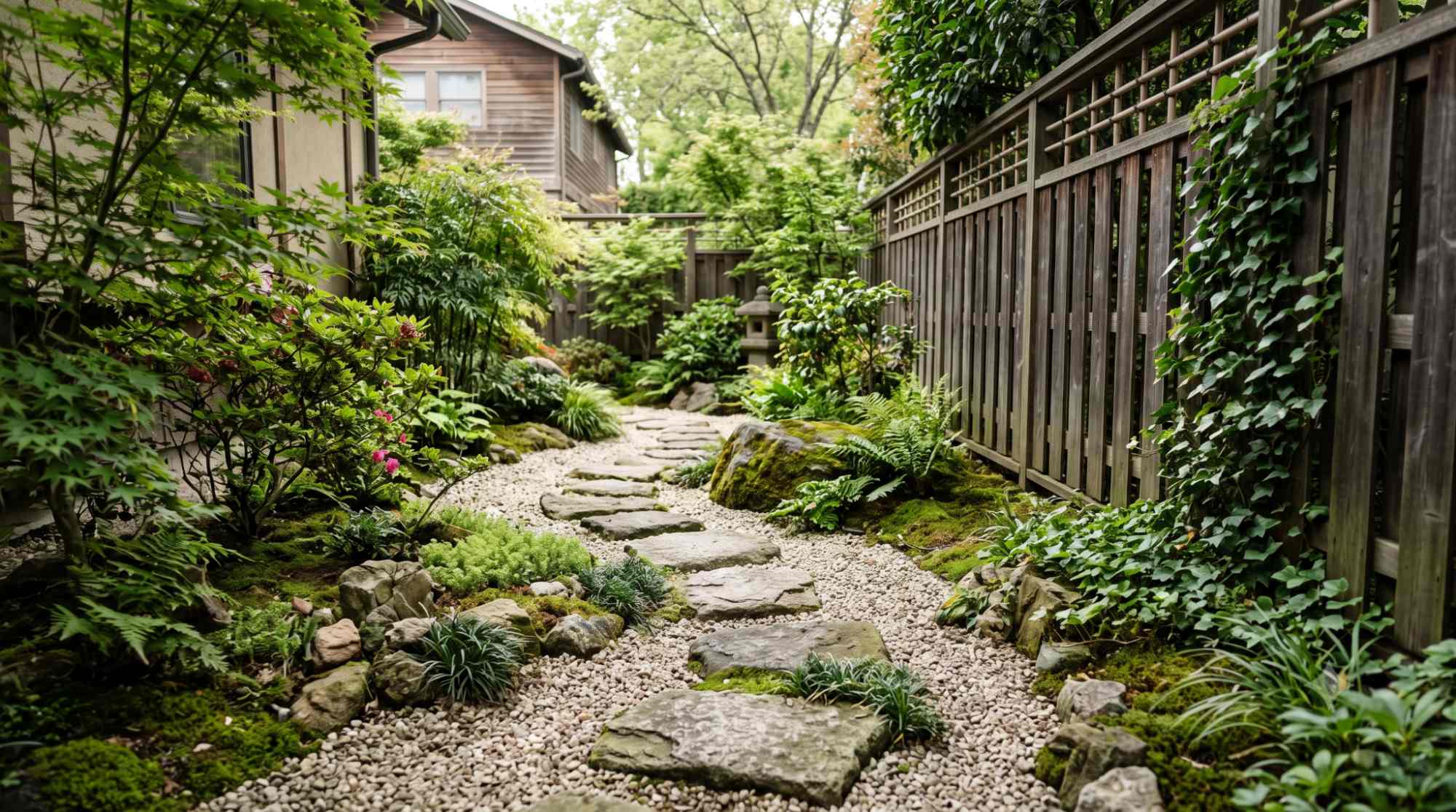
Stepping stones create a natural rhythm and guide people through the garden one step at a time. Space them unevenly, the way footsteps naturally fall, and pair them with moss, gravel, or low plants growing between the gaps.
Tip: This idea works well in side yards and narrow gardens where space is tight.
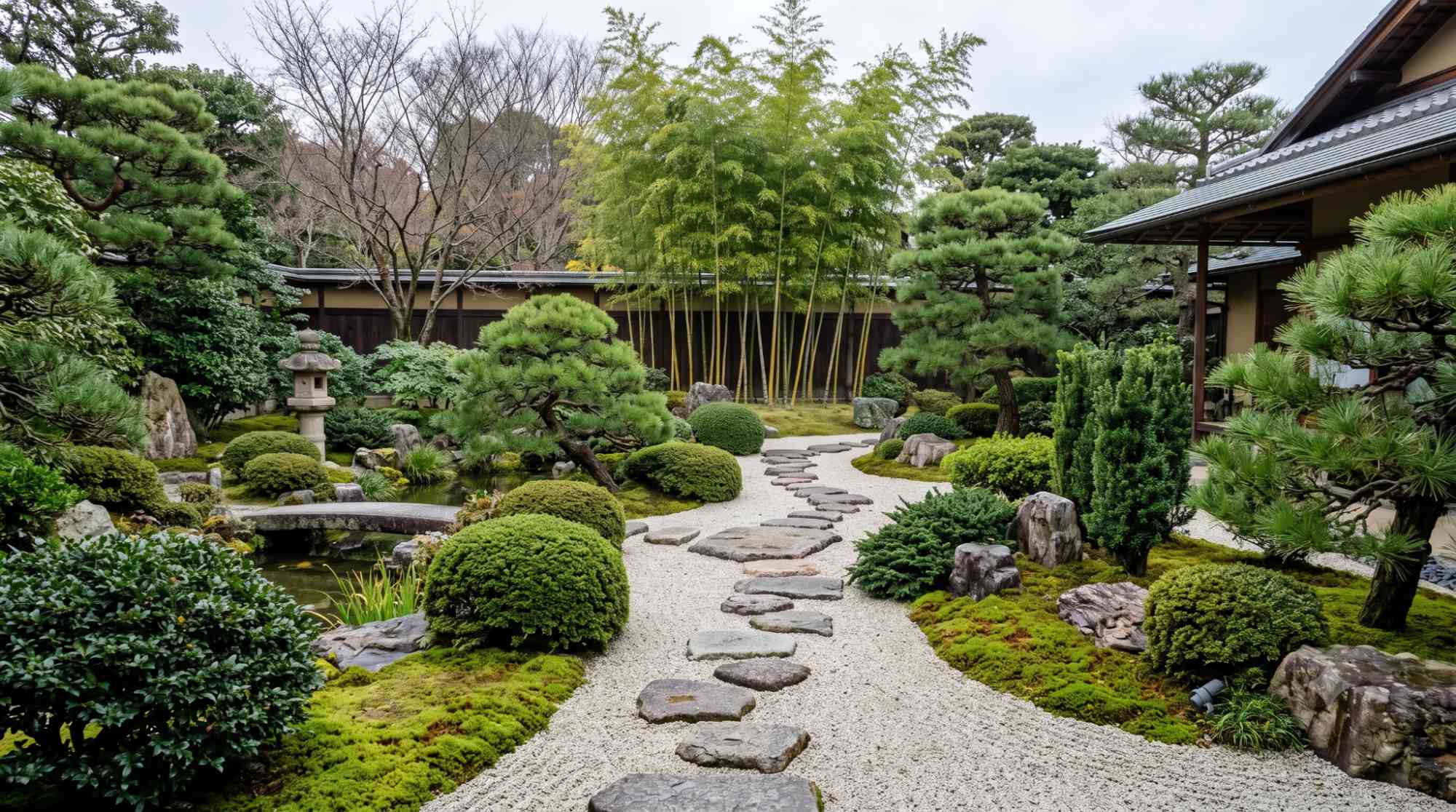
A Japanese garden should look good in every season, not just spring and summer. Evergreens like pine, boxwood, holly, yew, and bamboo hold their shape and color all year, giving structure even in winter.
Tip: Mix a few evergreen shapes and heights so the garden doesn't look flat once the deciduous plants lose their leaves.
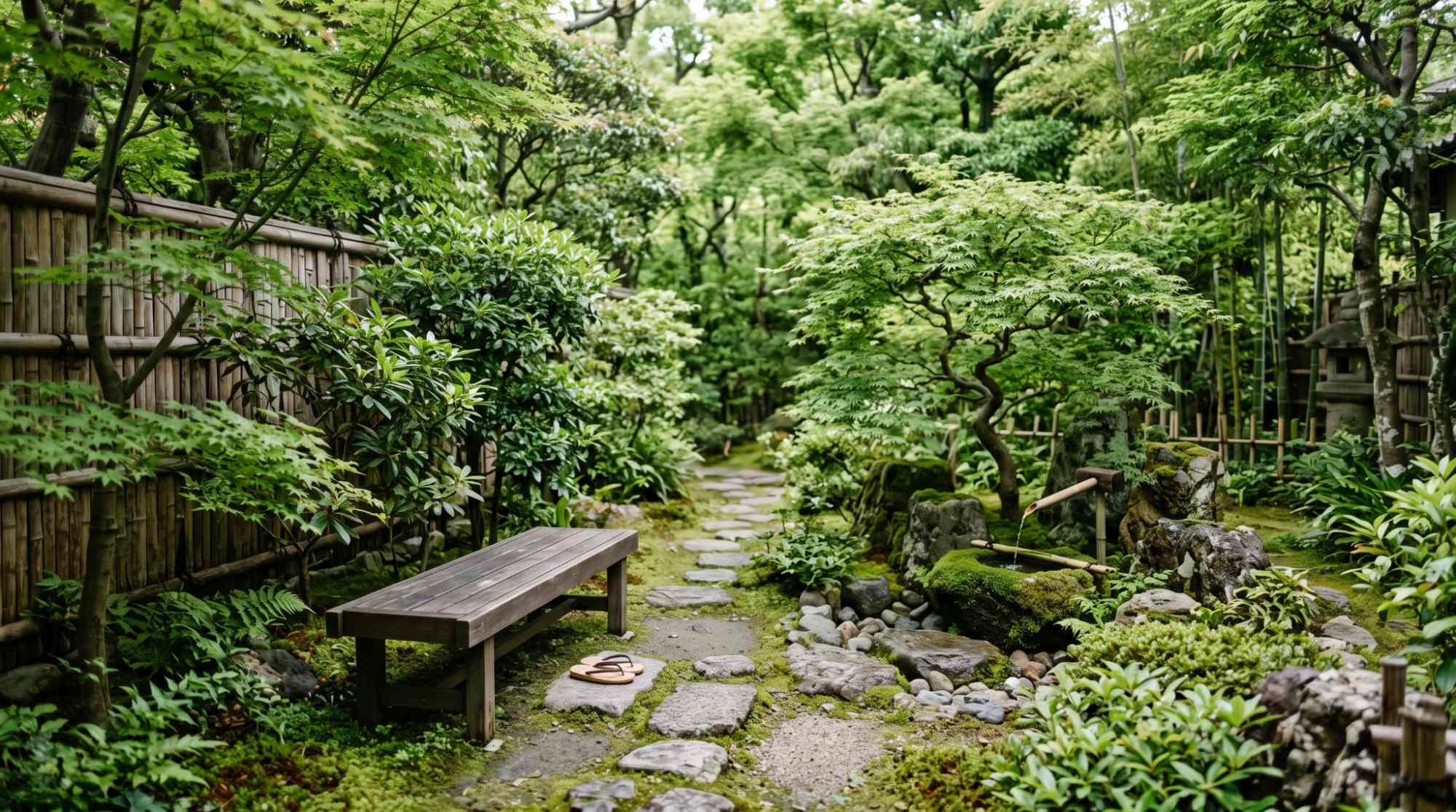
You don't need a full traditional tea house to bring this idea into your yard. Add a simple bench along a quiet path, and use plants or fencing for privacy. The goal is a small, restful spot that feels a little hidden from the rest of the yard.
Tip: Face the bench toward your favorite view in the garden, whether that's a rock arrangement, a tree, or a water feature.
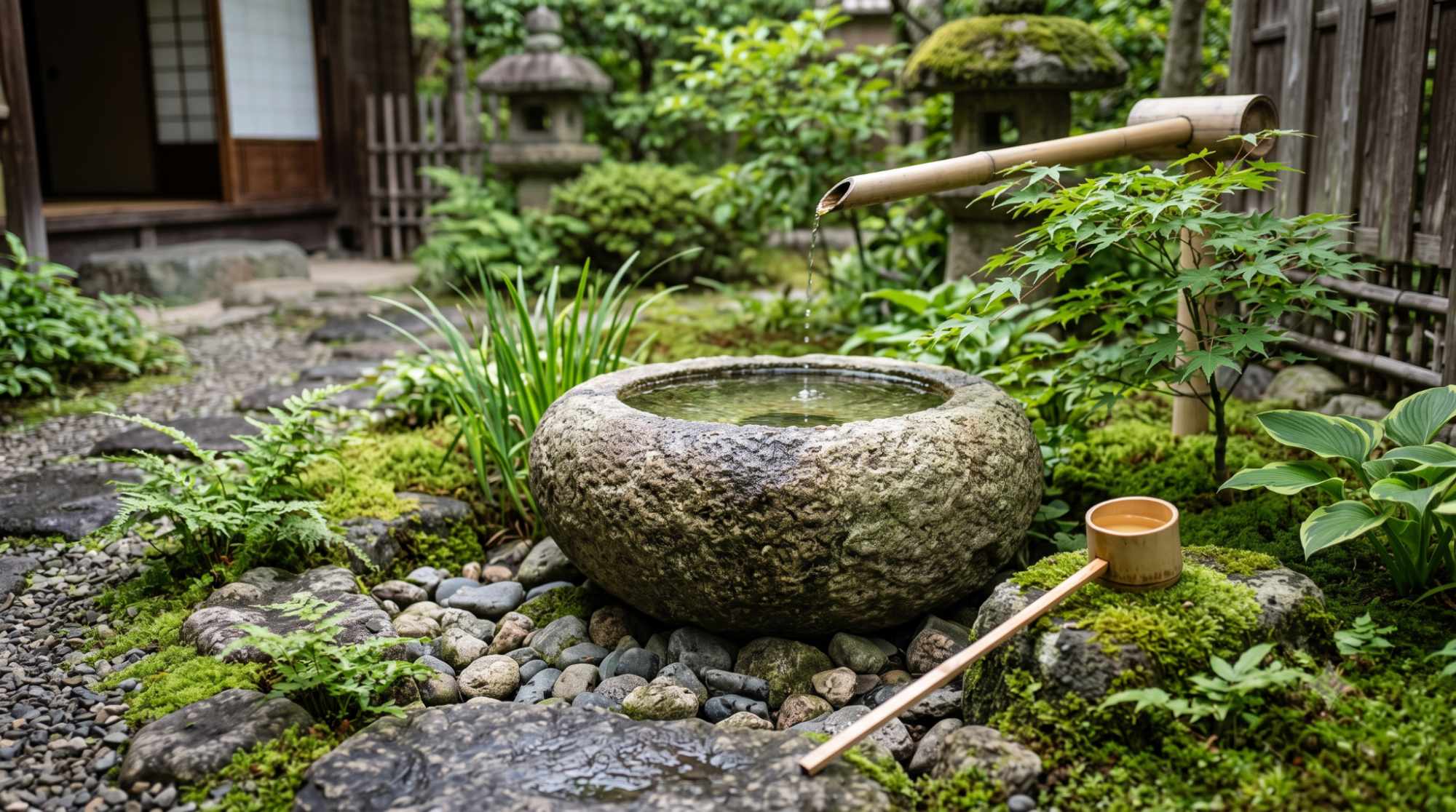
A stone water basin, or tsukubai, is a great small-space alternative to a full pond. It works well near an entrance, patio, or path, and only needs to hold still water. Pair it with moss, bamboo, or a few stones.
Tip: Add a small bamboo ladle beside the basin for an authentic touch.
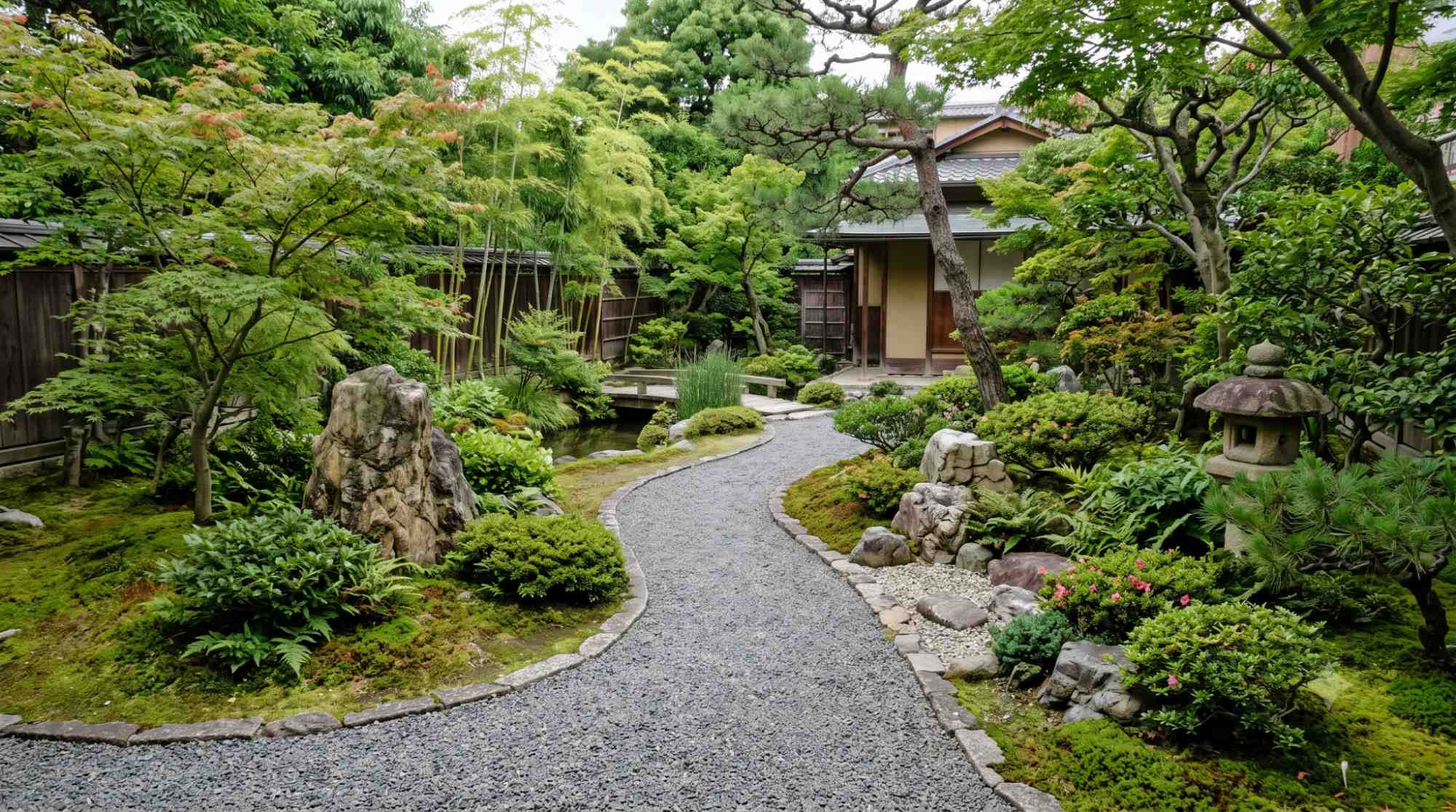
Japanese garden design is balanced but never perfectly mirrored, which is part of what makes it feel natural. Place rocks off-center, use plants of different heights instead of matching pairs, and avoid making both sides look identical.
Tip: Step back and look at the garden as a whole—if it feels too neat, loosen it up a little.
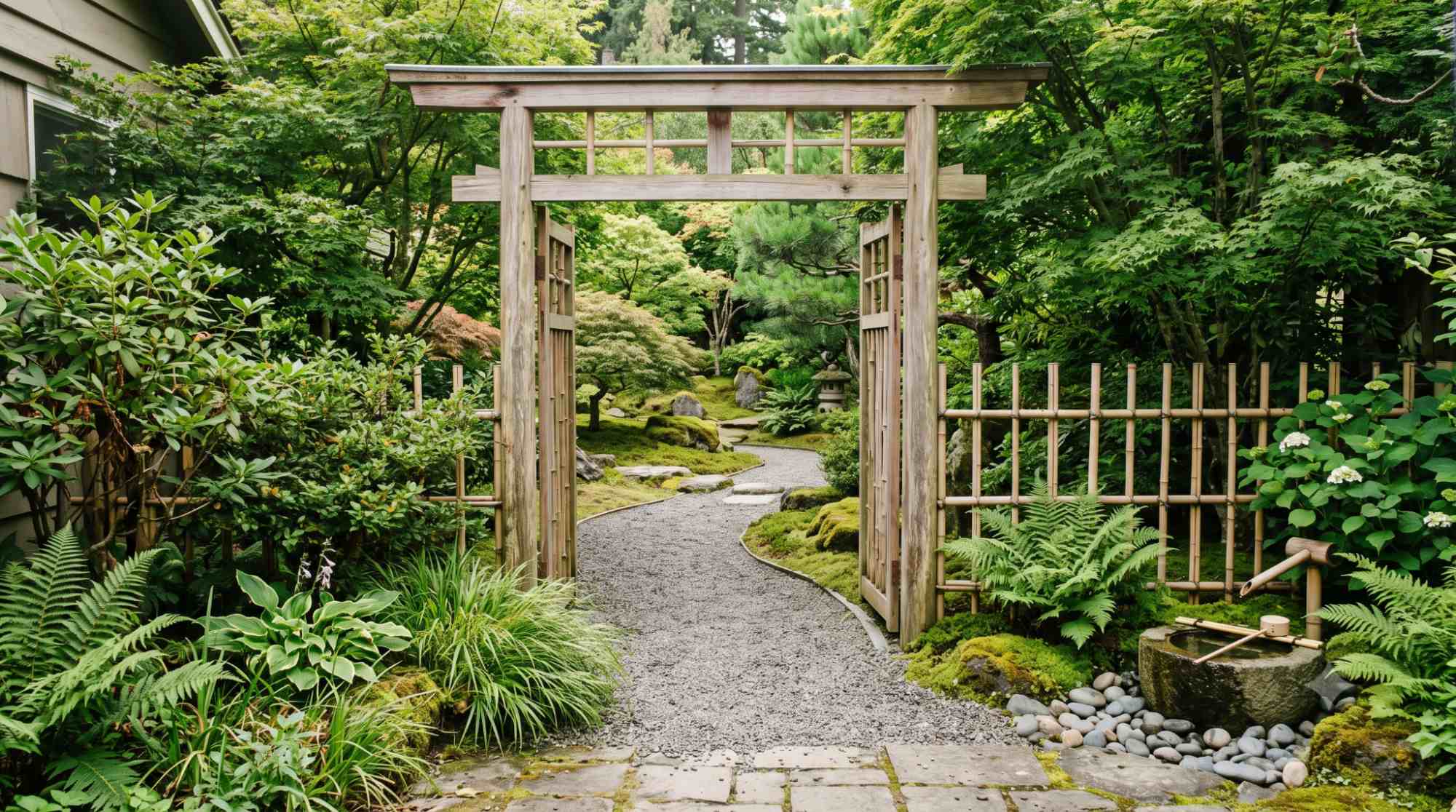
An entrance point makes the whole space feel a little more special. A bamboo gate, wooden arbor, or simple opening in a fence can do the job, adding a sense of mystery as it hints at something peaceful on the other side.
Tip: Use the gate or arbor as a transition point between your everyday yard and your garden retreat.
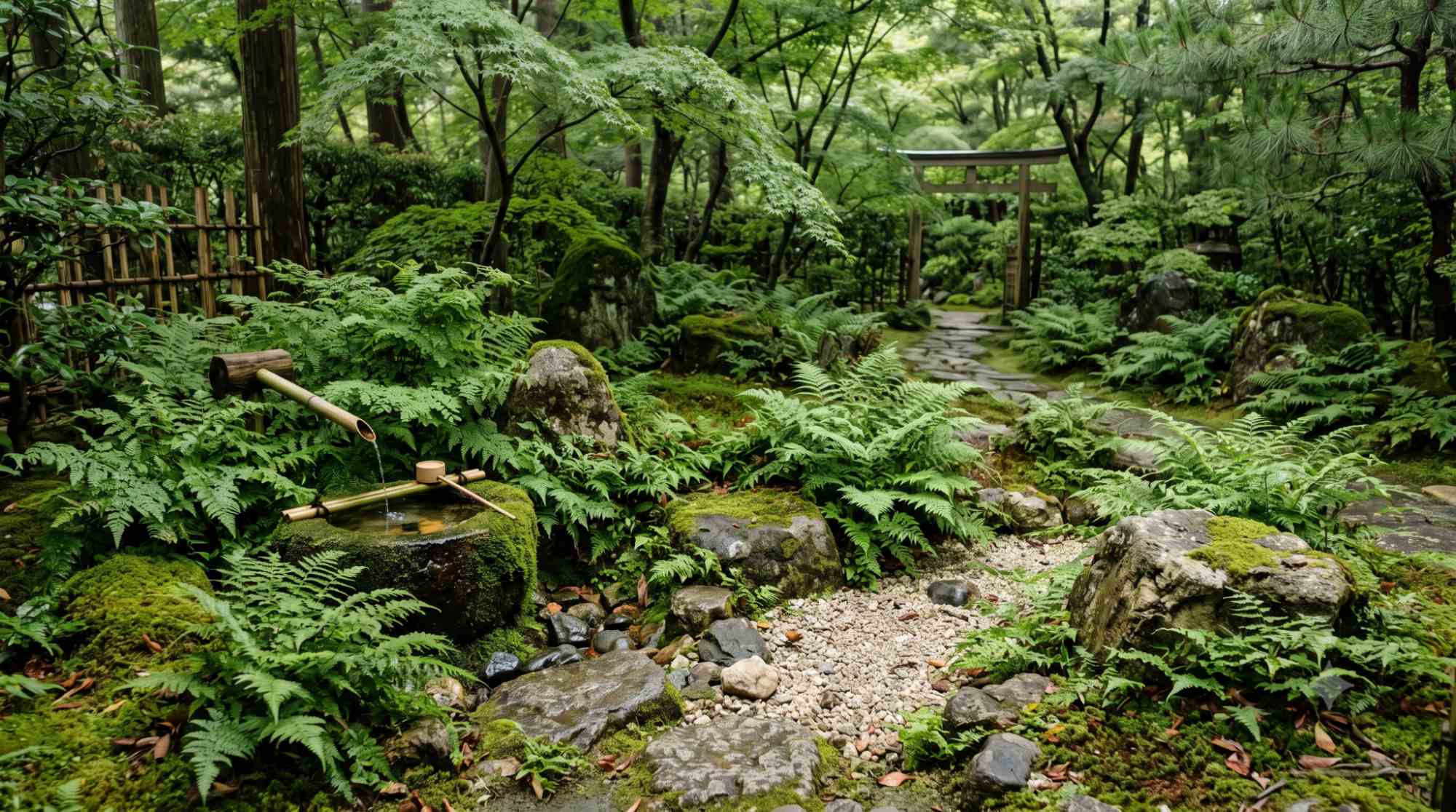
Ferns bring a soft, lush texture that works beautifully in shaded, woodland-style gardens. Pair them with moss and rocks for a layered look, and place them near water features, where extra humidity helps them thrive.
Tip: Ferns are a great choice for shaded corners where grass and flowers usually struggle to grow.
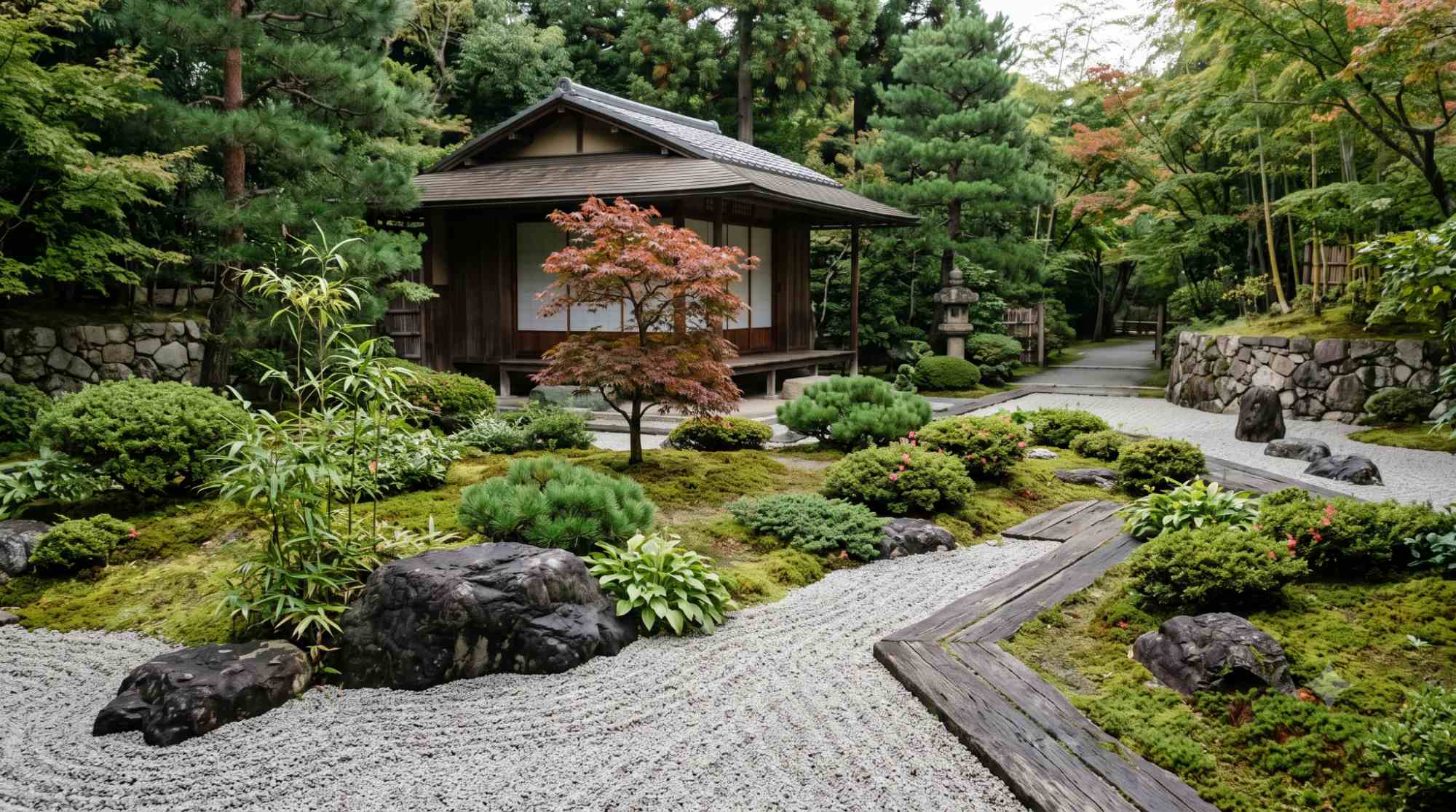
Part of what makes Japanese gardens feel so restful is that they don't rely on lots of color. Stick mostly to green, gray, brown, black, and other soft, natural tones, and let texture and shape carry the visual interest instead of bright flowers.
Tip: If you want a pop of color, let it come from something seasonal, like Japanese maple leaves in fall, rather than a permanent flower bed.
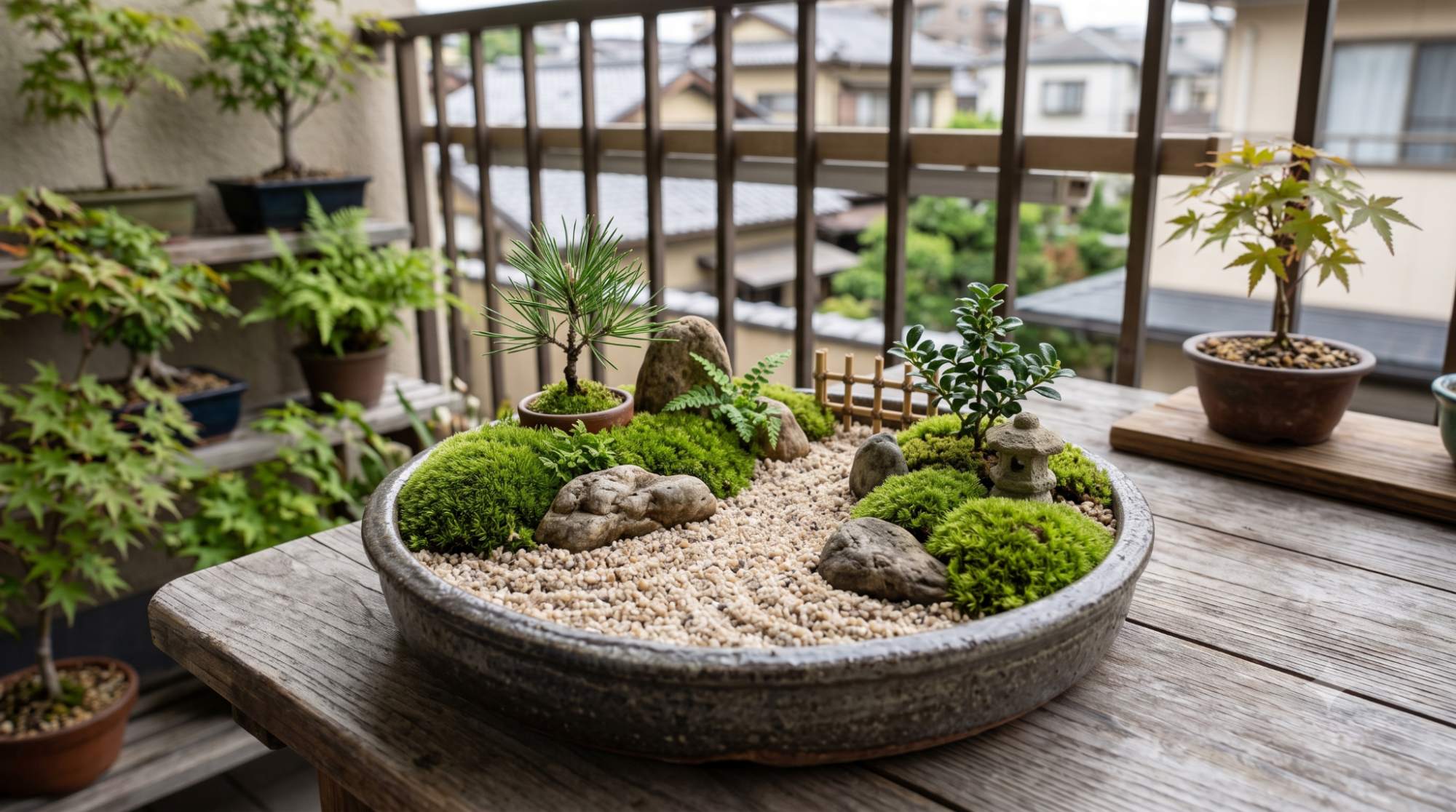
Renters and homeowners with small spaces can still enjoy this style using containers. Fill a shallow container with gravel, moss, small stones, and dwarf plants to create a miniature version of a full garden—perfect for balconies, patios, or even a tabletop.
Tip: Choose slow-growing dwarf plants so your mini garden doesn't outgrow its container too quickly.
This style already values simplicity, which makes it a natural fit for small spaces. Small Japanese gardens work well in a variety of spots, including:
If you're working with limited room, a few practical tips can make a big difference:
These small Japanese garden ideas prove you don't need a large yard to create something peaceful. A smaller space can even make the design easier, since there's less to plan.
Plant choice depends on your climate, sunlight, shade, water needs, and local growing zone, so treat this table as a starting point rather than a strict list.
| Plant | Best Use | Why It Works |
| Japanese maple | Feature tree | Adds shape and seasonal color |
| Bamboo | Privacy or screen | Adds height and movement |
| Moss | Ground cover | Creates a soft, peaceful look |
| Ferns | Shade planting | Adds green texture |
| Azaleas | Seasonal flowers | Adds controlled color |
| Pine | Structure | Gives year-round shape |
| Boxwood | Low shrubs | Easy to shape and maintain |
| Hostas | Shade borders | Large leaves and soft texture |
| Ornamental grass | Movement | Adds natural flow |
Not every plant here suits every U.S. climate. Japanese maples and moss generally prefer milder, humid regions, while pine and boxwood handle heat and dry spells better. Check your local growing zone or ask a nearby nursery which varieties fit your area.
Different yards call for different approaches. Here's how to apply these ideas depending on the space you're working with.
A backyard usually gives you the most room, so it's the natural spot for bigger features like a koi pond or wooden bridge. Combine a gravel path with a Japanese maple and a few large rocks, then finish with a seating area.
Front yards call for a tidier look, since curb appeal and an easy path to the door matter here. Keep it simple with a clean walkway, a stone lantern near the entrance, and low evergreen shrubs.
A patio suits container gardening, since pots and gravel trays let you shape the space without digging up concrete. Add a small fountain or bamboo screen for sound and privacy while you relax.
Side yards are often narrow, which suits stepping stones and a dry stream bed better than large features. Bamboo fencing along the border adds privacy without eating into the limited width.
Once you've picked a few ideas you like, use this simple plan to put them together.
Before buying anything, decide what feeling you want your garden to have. A few common directions include:
Choose a single feature to build the rest of the garden around, such as:
Rocks, paths, gravel, and water features should go in before any plants. This gives you a clear structure to plant around instead of adding hardscaping later.
Resist the urge to add every plant on your wish list at once. Fewer plants, placed thoughtfully, look better than a crowded bed.
Empty space isn't wasted space. It's part of the design, and a big reason why Japanese gardens feel so restful compared to busier garden styles.
You don't need every element on this list. The best Japanese-style gardens often use just a few elements well, rather than trying to fit everything in.
A few common mistakes can work against the peaceful feeling you're going for:
A Japanese-style garden isn't maintenance-free, but the upkeep is usually simple:
A Japanese-style garden doesn't need to be large, expensive, or complicated to feel peaceful. A few thoughtful elements—rocks, gravel, water, plants, and a simple path—can turn almost any outdoor space into a restful retreat.
Whether you have a full backyard or just a small patio corner, these Japanese garden ideas give you plenty of ways to get started. Pick one or two that speak to you and let the space grow over time.
They can be affordable if you start small. A gravel corner with a few stones, a water bowl, and a couple of plants costs far less than a koi pond, a wooden bridge, or a full backyard redesign. Many homeowners begin with a small feature and expand it gradually as time and budget allow.
Yes, absolutely. Many Japanese-inspired gardens use gravel, sand, stones, moss, and dry stream beds to suggest the feeling of water without including any. This approach also cuts down on maintenance, since you won't need to worry about filtration, algae, or fish care.
A Zen garden is usually more minimal, often relying mainly on gravel, sand, and stones arranged for meditation and quiet reflection. A Japanese garden is a broader term that can include ponds, bridges, trees, moss, lanterns, paths, and a much wider mix of plants and features.
It can be, especially if your design leans on gravel, rocks, evergreen shrubs, and simple planting. These elements need little upkeep. However, features like moss, ponds, bamboo, and detailed pruning can add more maintenance, so it's worth balancing low-care and higher-care elements based on how much time you want to spend.
Start with one small corner rather than trying to redesign your whole yard at once. Use gravel, three natural stones, one plant, and maybe a small lantern or water bowl. This lets you learn the style and see what you enjoy before committing to a larger project.
Logan Tate is an outdoor and landscape specialist with more than 10 years of experience creating functional, elegant, and inviting environments. He focuses on combining style with practicality to help people make the most of their outdoor spaces. Logan enjoys traveling, exploring global landscape trends, and discovering new ideas to enhance outdoor living. His approach emphasizes thoughtful design, functionality, and aesthetic appeal for welcoming and usable outdoor spaces.


No Comments