

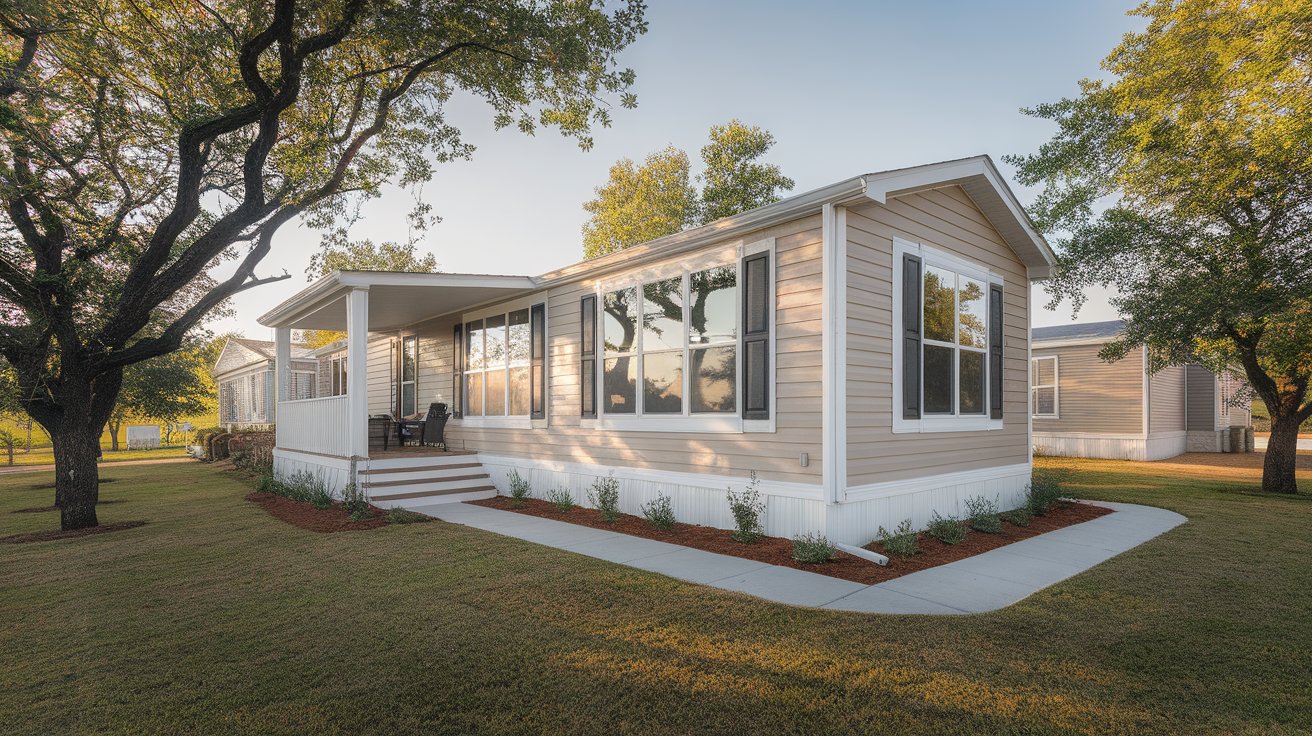
Looking for more space without breaking the bank? Double wide mobile homes offer a smart solution for families who want affordable housing with room to grow. These popular homes combine two sections to create a spacious living area that feels just like a traditional house.
Compared to single wide mobile homes, double wides offer nearly double the space and a layout closer to traditional houses. In 2025–2026, more people are choosing double wides because they cost 40-60% less than regular houses. You get modern features, flexible layouts, and plenty of space for your family. Plus, you can move into your new home in just weeks instead of waiting months for construction.
In this guide, you’ll discover everything about double wide sizes, real costs you can expect, and helpful tips to make the right buying decision for your family. Let’s get started!
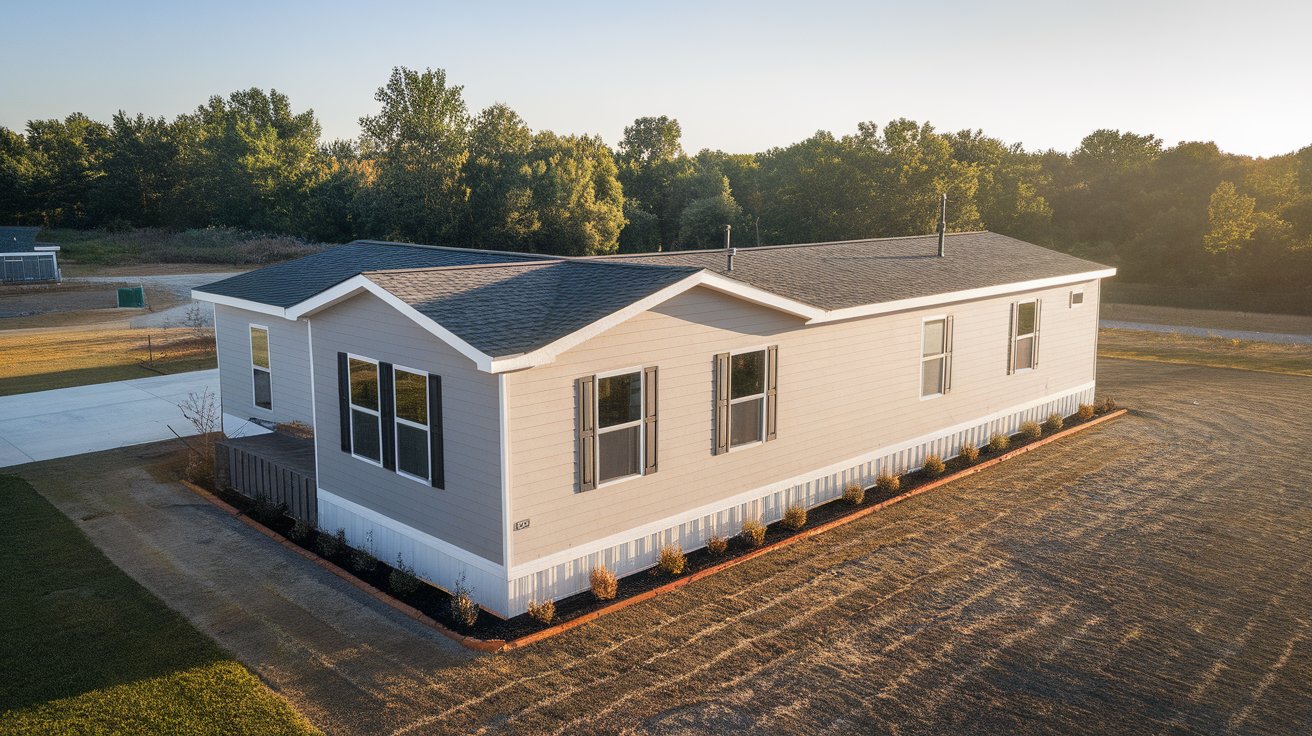
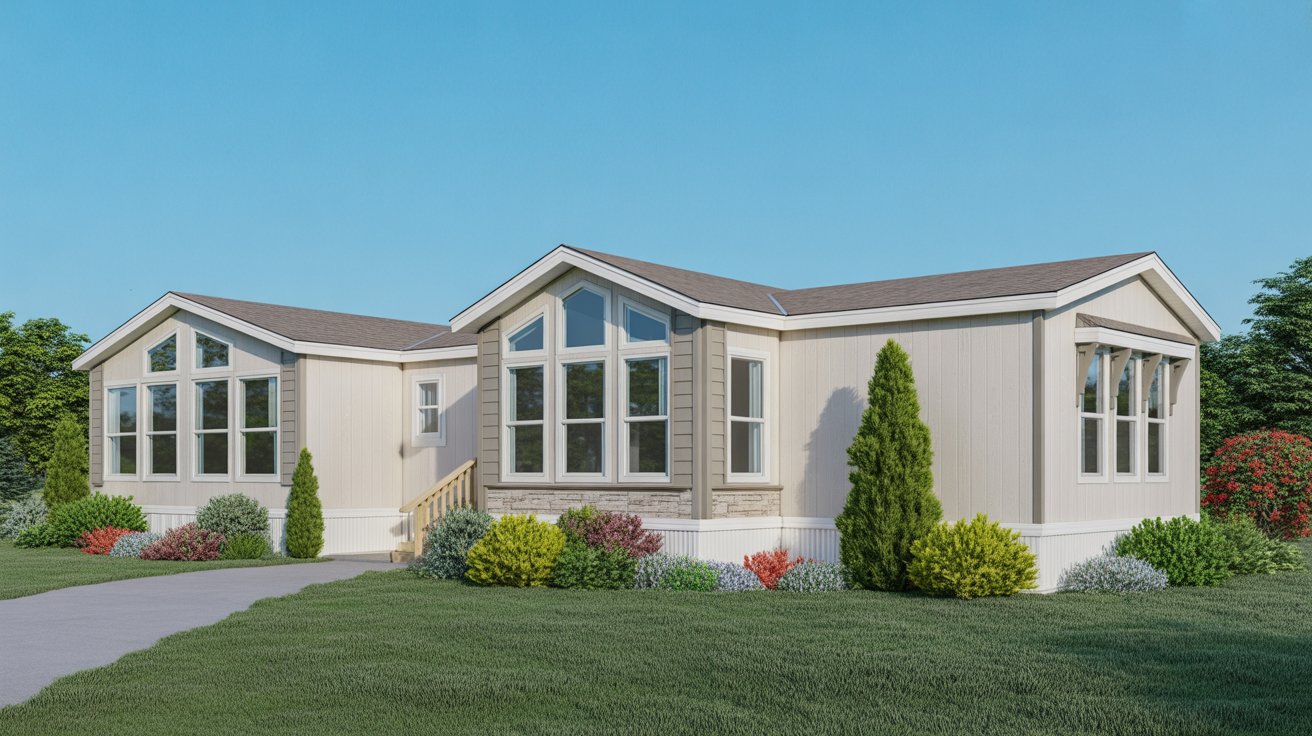
A double wide mobile home is a manufactured house built in two separate sections at a factory. Workers then transport both sections to your land and join them together on-site. Once connected, you get one large home that looks and feels like a regular house.
The main difference between single wide and double wide:
Single wide homes have just one section and are narrower (usually 14-18 feet wide). Double wide homes connect two sections side by side, giving you much more width and space.
Mobile home vs manufactured home – what’s the difference?
Many people use these terms the same way, but there’s a small difference. “Mobile homes” usually refers to homes built before 1976. “Manufactured homes” are those built after 1976 when new safety rules started.
Today, most people just say “mobile home” for both types, and that’s perfectly fine.
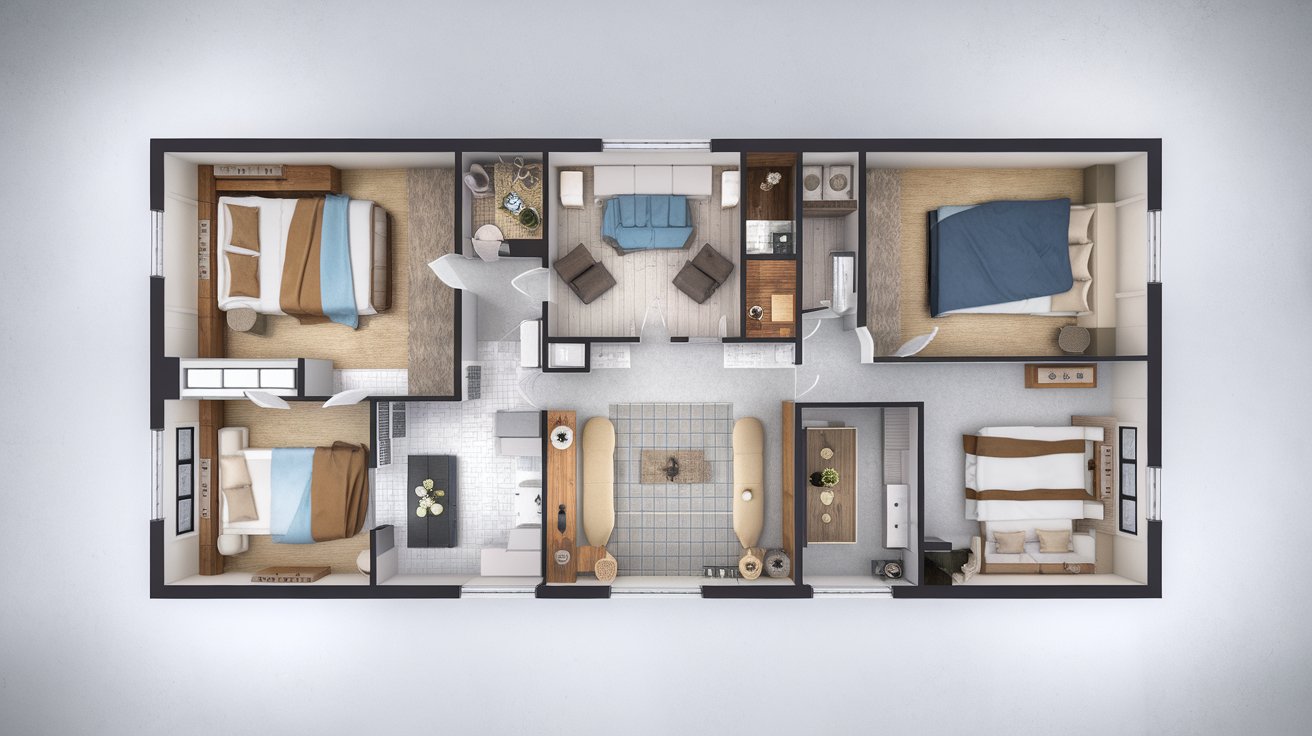
Double wide mobile homes come in fairly standard sizes, though you can find some variation.
Width: Most double wides are between 20 and 36 feet wide. The most common width is 24 to 28 feet.
Length: You’ll typically find lengths ranging from 42 to 76 feet. Popular lengths are 56, 60, and 66 feet.
Square footage: Based on these measurements, most double wide homes offer between 1,000 and 2,300 square feet of living space. The average sits around 1,500 to 1,800 square feet.
This gives you plenty of room for bedrooms, bathrooms, a nice kitchen, and comfortable living areas.
2 Bedroom Layouts
Perfect for couples, small families, or those who want a home office. These usually include 2 bathrooms and range from 1,000 to 1,400 square feet.
You get a master bedroom with its own bathroom, plus a second bedroom for guests or kids.
3 Bedroom Layouts
The most popular choice for families. These homes typically offer 1,200 to 1,800 square feet with 2 bathrooms.
The extra bedroom gives you flexibility – use it for kids, a home office, or a craft room.
4 Bedroom Layouts
Great for larger families or those who need extra space. These bigger models range from 1,800 to 2,300 square feet and often include 2 or 3 bathrooms.
Some layouts even feature split bedroom designs where the master is on one end and the other bedrooms are on the opposite side for more privacy.
In 2025–2026, you can expect to pay between $60,000 and $150,000 for a new double wide mobile home. The final price depends on size, features, and where you live.
Base home cost breakdown:
Price per square foot: On average, double wide homes cost between $50 and $80 per square foot.
Compare this to traditional site-built homes that often cost $150 to $300 per square foot. That’s a huge savings!
The sticker price isn’t your only expense. Here are other costs you need to budget for.
Delivery & Transportation: Moving your home from the factory to your land costs between $5,000 and $15,000. The distance and how easy your land is to reach will affect this price.
Installation & Setup: Professional crews need to join the two sections, install skirting, and make sure everything is level. This typically costs $3,000 to $8,000.
Foundation & Site Prep: Your home needs a solid base. Preparing the land and building a foundation (concrete pads, piers, or a basement) can cost $4,000 to $12,000 depending on what you choose.
Utility Hookups: Connecting water, electricity, and sewage runs between $2,000 and $10,000. Rural areas where utilities are farther away will cost more.
Total move-in cost: Add everything together, and you’re looking at roughly $74,000 to $195,000 for a complete setup. Still much cheaper than a traditional house!
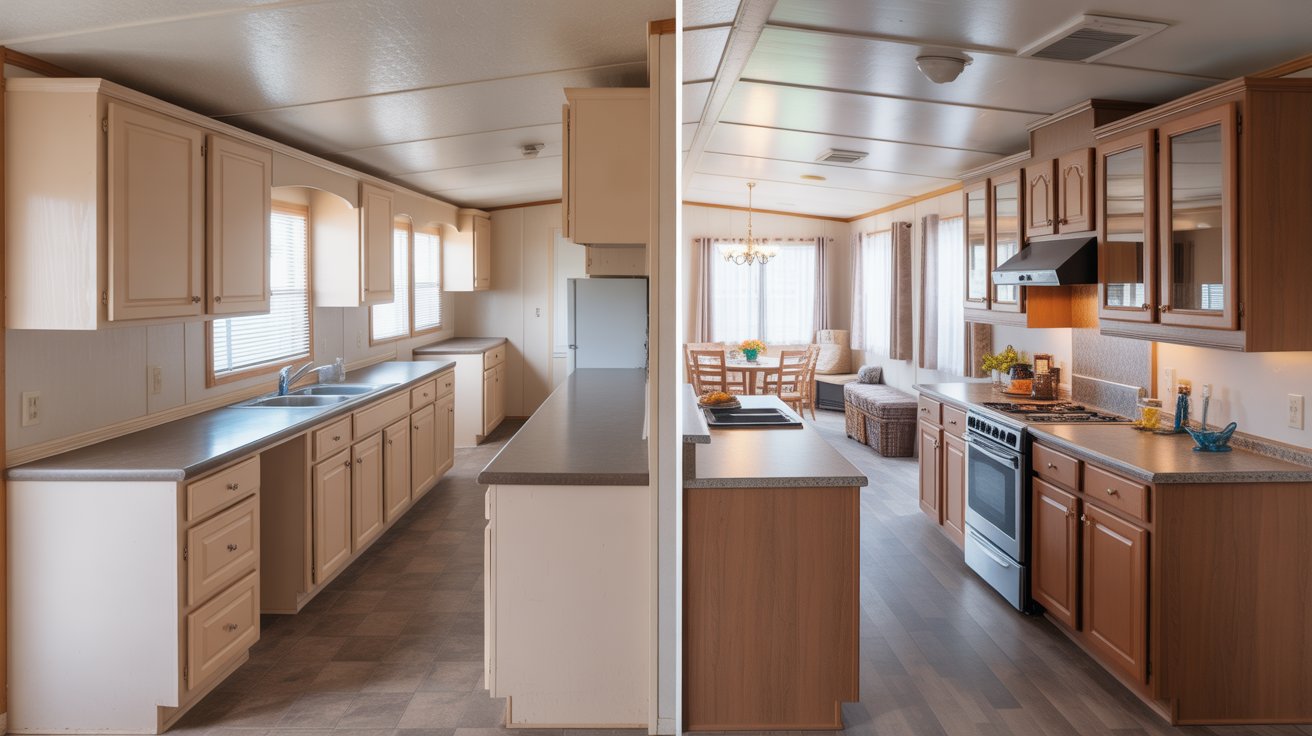
Modern double wide homes come with nice features, and you can add upgrades to make your home perfect for you.
Standard interior features typically include:
Kitchen & bathroom options let you personalize these important spaces:
Energy-efficient upgrades save you money every month:
Exterior siding & roofing choices affect both looks and durability:
More space for your family
With up to 2,300 square feet available, you get plenty of room for everyone. Kids can have their own bedrooms, you can set up a home office, and there’s space for family gatherings.
Affordable compared to site-built homes
Save 40-60% compared to building a traditional house. This means you can own a home sooner and have money left over for furniture, landscaping, or savings.
Flexible layouts that work for you
Choose from many floor plans or customize one to fit your lifestyle. Want an open concept kitchen? Need a split bedroom design? There’s probably a layout that matches what you’re looking for.
Faster to move in
Unlike building a house that takes 6-12 months, your double wide can be ready in just 4-8 weeks after ordering.
Transportation can be complex
Moving two large sections requires permits, pilot cars, and careful planning. Some areas have restrictions on moving manufactured homes on certain roads.
Zoning restrictions in some areas
Not all neighborhoods or cities allow mobile homes. Some areas require homes to be placed only in mobile home parks. Always check local rules before buying land.
Resale value considerations
Mobile homes typically don’t appreciate in value like traditional houses. However, if you own the land underneath, your property value holds up much better.
If you’re looking for even more space, you might want to exploretriple wide mobile homes as another option.
Financing can be trickier
Getting a loan for a mobile home is sometimes harder than for a regular house, especially if you don’t own the land.
Here’s a quick comparison to help you decide which type fits your needs:
Feature | Double Wide | Single Wide |
Size | 20-36 feet wide, 1,000-2,300 sq ft | 14-18 feet wide, 600-1,300 sq ft |
Cost | $60,000-$150,000+ | $35,000-$80,000 |
Layout | Spacious, feels like a regular house | Narrow, hallway-style layout |
Mobility | Harder to move once set up | Easier to relocate if needed |
Best for | Families, permanent living | Singles, couples, temporary housing |
Bedrooms | Usually 2-4 bedrooms | Typically 1-3 bedrooms |
Resale | Better resale potential | Lower resale value |
Zoning & land rules
Call your local city or county office and ask these questions:
Budget planning
Make a realistic budget that includes:
Local dealer reputation
Research dealers carefully:
Cost differences:
Pros of buying new:
Risks of buying used:
Smart tip: If you buy used, hire a home inspector who knows manufactured homes. They can spot problems that might cost you thousands later.
Understanding your payment options helps you plan better.
Cash purchase
If you have the money saved up, paying cash is simplest. You avoid interest charges and own your home outright immediately. However, most people need financing.
Chattel loans
These are personal property loans specifically for mobile homes. They’re easier to get than mortgages but have higher interest rates (7-10% typically) and shorter terms (15-20 years).
You can get a chattel loan even if you don’t own the land.
Mortgage loans (land-owned)
If you own the land or buy it with the home, you might qualify for a regular mortgage or FHA loan. These offer:
What you’ll need for financing:
Double wide mobile homes offer an affordable way to own a spacious house without the high cost of traditional construction. With 1,000 to 2,300 square feet of living space, modern features, and prices starting around $60,000, they make homeownership possible for many families.
You should consider a double wide if you:
You might want other options if you:
The best decision comes from understanding your priorities. Visit local dealers, walk through display models, and imagine your family living in the space.
Calculate all the costs, check your financing options, and make sure you understand local zoning rules.
For many families, a double wide mobile home provides the perfect balance of space, comfort, and affordability. With proper research and planning, you can find a home that fits your needs and budget perfectly.
Ready to start looking? Contact local manufactured home dealers, get pre-qualified for financing, and begin your journey to homeownership today!
With proper care, a double wide can last 30 to 55 years. The key is regular maintenance – fix roof leaks quickly, maintain the heating and cooling system, and keep the home’s exterior in good shape.
Homes on permanent foundations with good drainage last longer than those on temporary blocks.
Technically yes, but it’s expensive and complicated. Once the two sections are joined and the home is set up, moving it requires:
This can cost $15,000 to $30,000 or more. Most people only move a double wide if absolutely necessary.
It depends on your situation. Double wides are not great if you’re looking to flip properties or see big appreciation.
However, they ARE a good investment if you:
Think of it as an investment in your quality of life rather than a money-making investment.
Yes, if you meet certain requirements:
FHA, VA, and conventional loans are all possible for manufactured homes that meet these rules.
Olivia Bennett has over 12 years of experience helping homeowners transform their spaces with practical, thoughtful solutions. She guides projects of all scales, blending creativity with efficiency and attention to detail to achieve lasting results. Olivia holds a degree in Interior Architecture from the University of Michigan and draws inspiration from global design trends and architecture, ensuring every space is both functional and beautifully considered.


No Comments