


12 Modern Christmas Decor Ideas Garland for Every Room
There's something magical about walking into a home decorated with


Cleaning a kitchen sink drain is one of such chores that we usually keep put off until it is actually a problem..
When you have to experience slow drainage, unpleasant smell or strange gurging sound, the problem of a kitchen sink is a pressing issue.
The upside to this is that one does not need to have costly goods or hardcore chemicals to clean a kitchen sink.
Kitchen sink drain can be cleaned in no time and using minimal equipment that is available in the house, with the appropriate methods. For keeping the sink itself shiny, see How to Clean a Stainless Steel Kitchen Sink.
The maintenance of the kitchen sink drain and regular cleaning helps to avoid the serious blockages and helps to keep your kitchen working.
Watch for these warning signs that tell you it’s time to clean your drain:
Water draining slowly – If water sits in your sink longer than usual, something is blocking the drain. This is often the first sign of trouble.
Unpleasant odours – Bad smells coming from your drain mean food and grease are rotting inside the pipes. These odours can make your whole kitchen stink.
Gurgling sounds – When water goes down with strange bubbling or gurgling noises, air is trapped in the pipes. This means there’s a blockage somewhere.
Frequent minor clogs – If you notice small bits of food or debris backing up often, your drain needs a good cleaning.
Don’t wait until these problems get worse. It’s much easier to clean a slightly dirty drain than a completely blocked one.

You probably have most of these items already:
These simple tools can solve most drain problems. You don’t need expensive or harsh chemicals.
The first thing to do when odors come from your sink is to rule out the simple causes. Make sure all dirty dishes are washed since leftover food can quickly create smells.
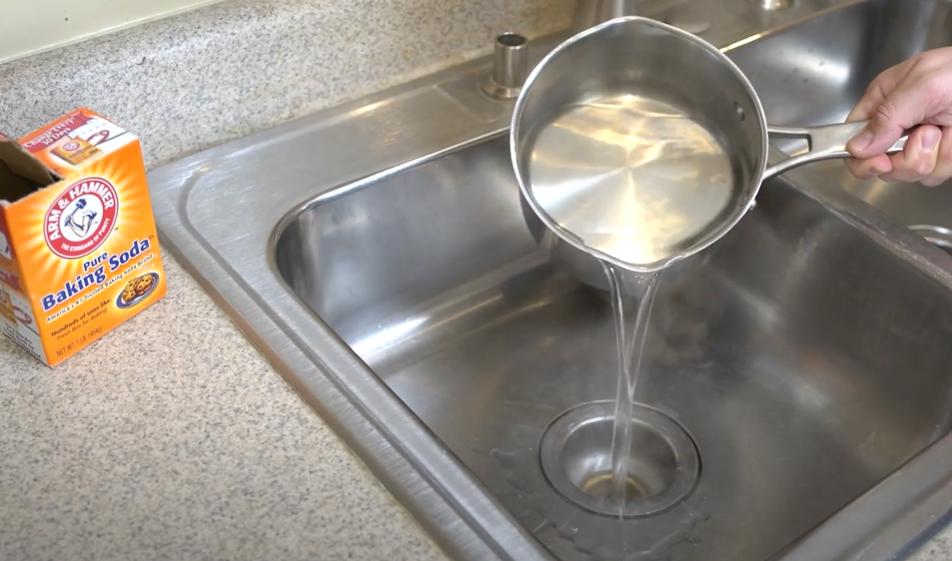
If odors remain, try the classic home remedy: pour baking soda into the drain, then add vinegar. Let it fizz for a few minutes, and finally flush with boiling water. If you have a garbage disposal, check for food stuck beneath the black rubber guard and give it a good clean.
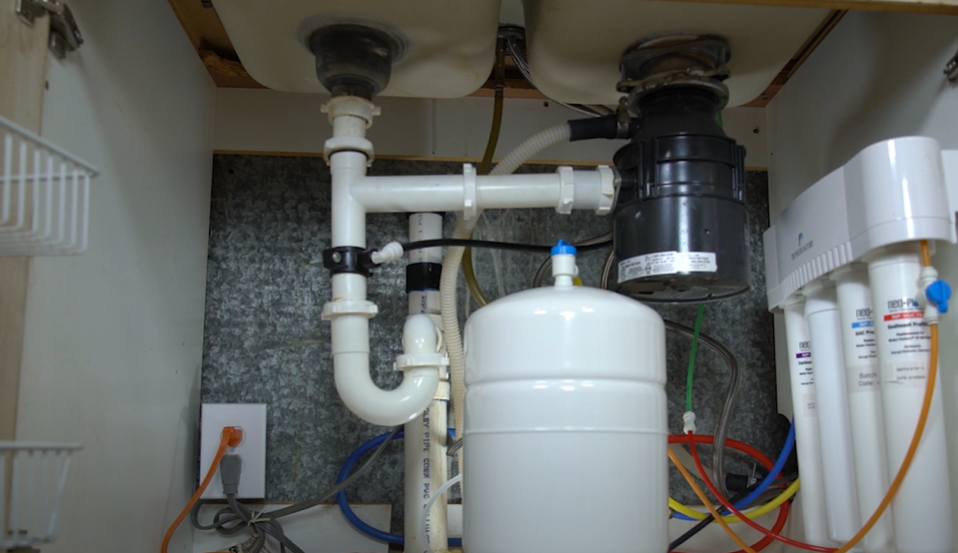
When surface cleaning doesn’t help, the issue may lie deeper. Odors often come from pipes before the P-trap, where grease, oils, and food waste collect. Over time, this buildup creates sour smells.
Before disconnecting anything, take a picture of your setup. This helps ensure you can reassemble everything correctly later.
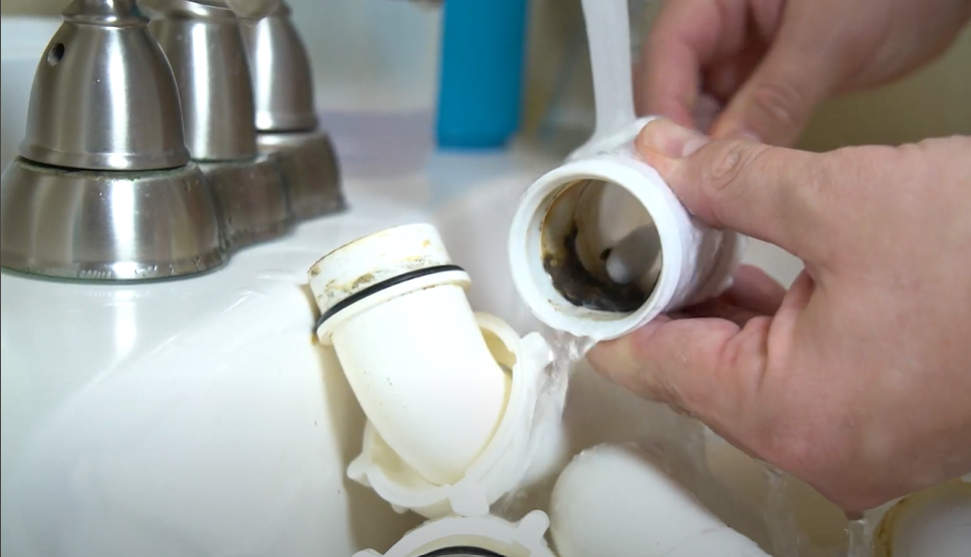
Place a bucket or bowl under the P-trap to catch water before loosening the pipes. Carefully disconnect the sections and clean them out.
Use paper towels to wipe away buildup, then scrub the inside with warm soapy water, a sponge, or even a toothbrush for tight spots.
Be sure to check the dishwasher drain hose and reverse osmosis line as well—these can trap food particles and contribute to odors.
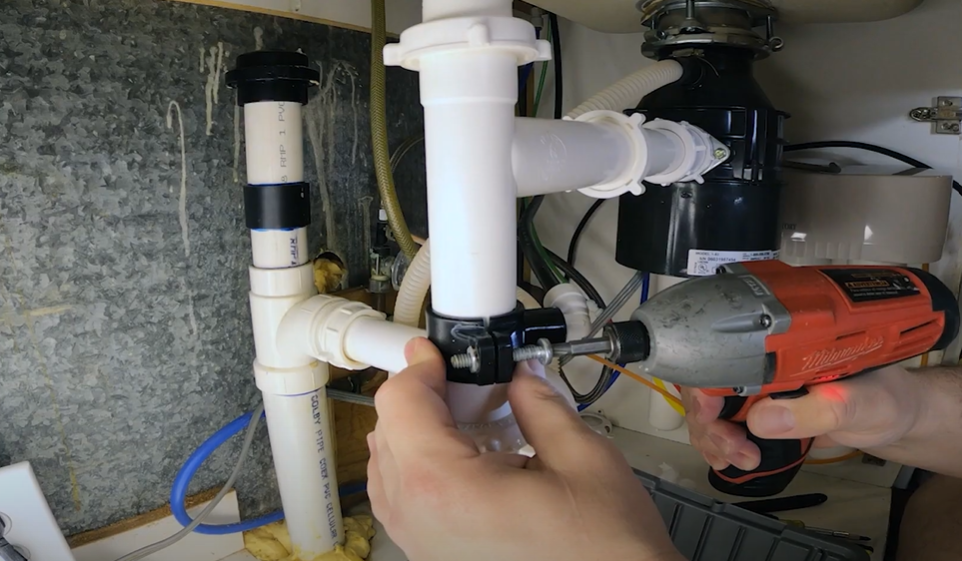
Once the pipes are cleaned, it’s time to put them back together. Dry-fit the parts first without tightening, then secure them once everything is in place.
Pay attention to the direction of the washers—the wider side should face upward for a proper seal. After reassembly, dry the area under the sink so leaks are easy to spot.
Fill both sinks with water, let them drain, and watch carefully for drips. If you notice leaks, tighten the connections as needed.
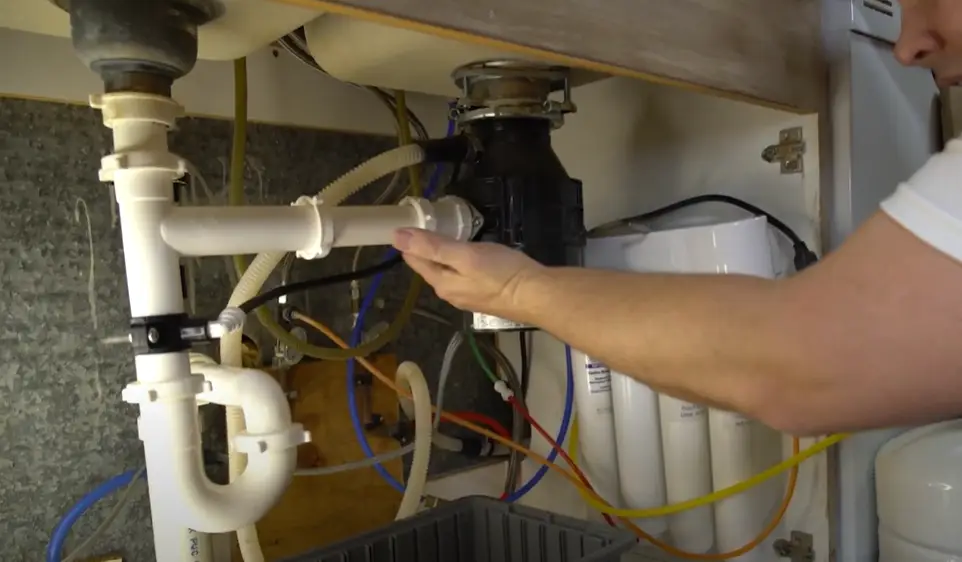
If you’ve done all these steps and odors persist, the problem may not be inside the pipes you can reach. Issues like poor venting or deeper clogs sometimes require professional attention.
In such cases, plumbers may recommend pipe jetting to fully clear the line. If everything looks and smells good after your cleaning, then you’ve successfully solved the problem and can enjoy a fresh kitchen sink again.
Watch the full step-by-step process here:
The best way to deal with drain problems is to prevent them in the first place.
Dispose of grease and food waste properly – never pour cooking grease down the drain. Let it cool and throw it in the trash. Scrape food scraps into the garbage before washing dishes.
Use a sink strainer – A simple mesh strainer catches food bits before they go down the drain. Empty it after each use.
Regular hot water flush – Run hot water down your drain for 30 seconds after each use. This helps wash away soap and small debris.
Monthly baking soda and vinegar treatment – Do the baking soda and vinegar method once a month, even if your drain seems fine. This keeps it clean and fresh.
These simple habits will save you time and trouble later.
Sometimes you need expert help. Call a plumber when:
Persistent or severe clogs – If you’ve tried everything and water still won’t drain, the problem might be deep in your pipes.
Foul odours that won’t go away – Bad smells that come back quickly after cleaning could mean a bigger problem.
Pipe damage or leaks – If you see water leaking under your sink or notice damaged pipes, don’t try to fix it yourself.
Multiple drains are clogged – When several sinks or drains in your home are backing up, the problem is probably in your main sewer line.
Don’t feel bad about calling for help. Some problems are too big for DIY methods.
Cleaning a kitchen sink drain often actually saves you time, money and frustration.
Using such easy steps to clean a drainage sink in a kitchen, you will be keeping the water flowing correctly and to get rid of unpleasant odors.
Do not forget to clean a kitchen sink drain as a part of the monthly cleaning.Then do not delay until a drain in a kitchen sink is an emergency repair.
As long as you take care, cleaning a kitchen sink drain is a small challenge, which ensures that your kitchen continues running smoothly.
Jackson Reed is a home DIY and projects expert with over eight years of experience turning everyday ideas into practical, achievable improvements. He specializes in hands-on projects, creative solutions, and budget-friendly upgrades that homeowners can tackle with confidence. Jackson enjoys breaking down complex projects into simple, step-by-step guidance, helping readers choose the right materials, tools, and techniques for the job. His goal is to make DIY more approachable while inspiring people to take on projects themselves and create spaces that are both functional and personal.








[…] you have installed your sink, it is important to maintain it. You canread our guide on how to clean a kitchen sink drain to make your kitchen sparkling and […]